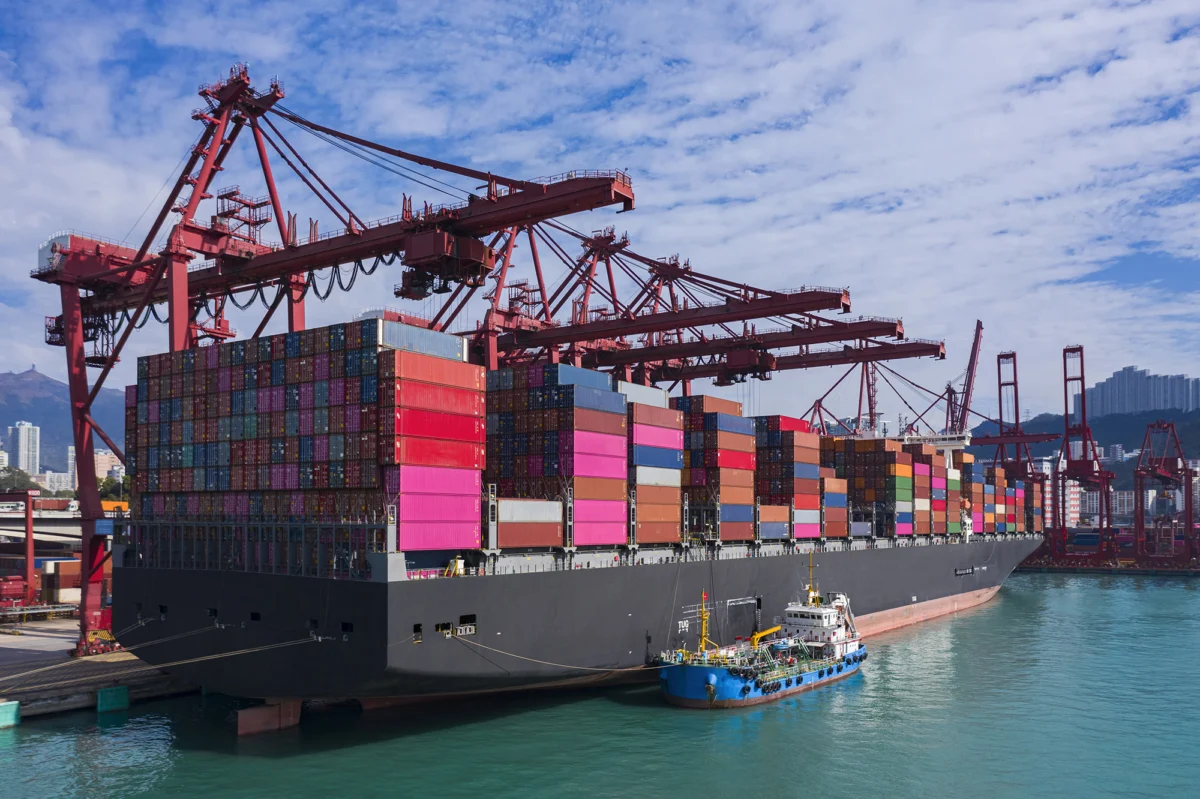
The global shipping industry, responsible for transporting approximately 90% of the world’s traded goods, has become a primary frontier in the battle against financial crime, money laundering, and sanctions evasion. As geopolitical tensions escalate and international sanctions regimes become increasingly complex, financial institutions find themselves under unprecedented pressure to monitor the vast and often opaque networks of ocean-borne trade. A newly released industry guide addresses these mounting challenges, providing a framework for financial institutions to navigate the sophisticated deceptive practices employed by illicit actors. While technological advancements have provided new tools for surveillance, the sheer scale of maritime activity—comprising over 100,000 commercial vessels and millions of individual shipments annually—ensures that detecting illicit activity remains one of the most resource-intensive tasks in the global financial sector.
The Evolving Landscape of Maritime Financial Crime
The complexity of maritime trade provides a natural cover for various forms of financial crime, ranging from the financing of terrorism and weapons proliferation to the evasion of economic sanctions. Historically, the primary concern for financial institutions was the physical security of cargo and the legitimacy of the parties involved in a transaction. However, the last decade has seen a paradigm shift. Criminal organizations and sanctioned states have moved beyond simple smuggling, adopting sophisticated methods of corporate obfuscation and digital manipulation to bypass the international financial system.
Financial institutions, particularly those involved in trade finance, occupy a unique position in this ecosystem. Unlike standard retail or corporate banking, trade finance requires the handling of detailed documentation, including bills of lading, certificates of origin, and insurance documents. This documentation provides a window into the physical movement of goods that is often absent in other banking activities. Yet, this visibility is a double-edged sword; with greater access to information comes a higher regulatory expectation that banks will identify and block transactions involving sanctioned entities or illicit goods.
A Chronology of Regulatory Pressure and Deceptive Innovation
The current regulatory environment is the result of a multi-year escalation in both the tactics used by sanctioned actors and the responses from global authorities.
In 2018 and 2019, the U.S. Department of the Treasury’s Office of Foreign Assets Control (OFAC) began issuing specific advisories targeting the shipping industry, particularly focusing on petroleum shipments involving Iran and Syria. These advisories marked a significant shift, as they began to hold non-maritime entities—including banks and insurers—accountable for failing to conduct due diligence on the vessels involved in their transactions.
By 2020, a landmark global advisory was issued by OFAC, the U.S. State Department, and the U.S. Coast Guard, detailing a "toolkit" of deceptive shipping practices. This was followed by similar guidance from the United Kingdom’s Office of Financial Sanctions Implementation (OFSI) and the United Nations. The onset of the Russia-Ukraine conflict in 2022 further accelerated this trend, leading to the emergence of the so-called "shadow fleet"—a massive collection of aging tankers with opaque ownership structures designed specifically to transport sanctioned oil under the radar of Western authorities.
In 2023 and early 2024, the focus shifted toward the technological aspects of evasion, such as "spoofing" Automatic Identification System (AIS) signals and the use of complex ship-to-ship (STS) transfers in high-seas corridors. The latest industry guide arrives at a critical juncture, as financial institutions struggle to keep pace with these rapidly evolving "dark fleet" tactics while maintaining the efficiency of global trade flows.
Sophisticated Deceptive Practices and Technical Challenges
The core of the challenge for financial institutions lies in the technical nature of maritime operations. The guide identifies several key deceptive practices that have become standard tools for sanctions evasion:
- AIS Manipulation and Spoofing: The Automatic Identification System (AIS) was originally designed as a safety tool to prevent collisions. However, vessels frequently "go dark" by turning off their transponders or using sophisticated software to broadcast false coordinates (spoofing). This allows them to visit sanctioned ports without detection.
- Ship-to-Ship (STS) Transfers: While STS transfers are a legitimate part of maritime logistics, they are increasingly used in deep-sea locations to mix sanctioned oil with non-sanctioned cargo, making the origin of the goods impossible to trace through traditional documentation.
- False Flagging and Flag Hopping: Sanctioned vessels often switch their registration between different national registries (flags) with lax oversight, a practice known as "flag hopping." Some vessels have even been found to fly the flags of countries that do not have a functional maritime registry.
- Complex Ownership Structures: Utilizing "shell" and "shelf" companies, illicit actors create layers of ownership that hide the Ultimate Beneficial Owner (UBO). A single vessel may be owned by a company in the Marshall Islands, managed by an entity in Dubai, and operated by a crew from a third jurisdiction, all while the profits flow to a sanctioned state.
Supporting Data: The Scale of the Maritime Compliance Burden
The scale of the problem is reflected in the sheer volume of data financial institutions must process. According to industry estimates, there are over 50,000 "large" merchant ships currently in service. Monitoring these vessels requires real-time data feeds, which can generate millions of alerts annually for a single global bank.
Recent data from maritime analytics firms suggests that the "shadow fleet" involved in carrying Russian, Iranian, and Venezuelan oil now comprises over 10% of the global tanker fleet. For financial institutions, this means that one out of every ten tankers they might encounter in a trade transaction could potentially be involved in sanctions evasion. Furthermore, the cost of compliance is rising; global spending on financial crime compliance across all sectors reached an estimated $274 billion in 2023, with a significant portion of that growth driven by the need for specialized maritime tracking software and expert analysts.
Key Insights and Industry Recommendations
The guide provides a roadmap for financial institutions to refine their approach to maritime risk. It emphasizes that a "one-size-fits-all" screening process is no longer effective. Instead, institutions must adopt a sophisticated, risk-based approach.
Enhanced Visibility Through Documentation
Financial institutions involved in documentary trade transactions—such as Letters of Credit—have a distinct advantage. They can scrutinize the Bill of Lading and other shipping documents to look for inconsistencies. The guide recommends that banks cross-reference these documents with independent maritime data to verify that the vessel was actually at the reported port at the reported time.
Focusing on High-Risk Corridors and Commodities
Not all trade carries the same risk. The guide suggests that institutions should focus their most intensive screening on high-risk commodities, such as crude oil, refined petroleum products, and dual-use electronics. Similarly, certain geographic regions, such as the Eastern Mediterranean, the South China Sea, and the waters off West Africa, are noted as high-risk zones for STS transfers and AIS manipulation.
Defining the Limits of Bank Responsibility
One of the most critical aspects of the new guide is the clarification of the role of financial institutions. It acknowledges that banks are not private intelligence agencies. While they must conduct reasonable vessel compliance checks, the responsibility for vetting also lies with shipowners, charterers, and port authorities. This "shared responsibility" model aims to prevent banks from being the sole gatekeepers of maritime integrity, which could otherwise lead to the "de-risking" of entire regions and the disruption of legitimate trade.
Official Responses and the Need for Collaboration
The release of these guidelines has prompted reactions from various sectors of the global economy. Regulatory experts suggest that the emphasis on collaboration is a response to the fragmentation of current enforcement efforts. "The maritime industry is too vast for any single regulator or bank to police," noted one senior compliance official. "We need a ‘system of systems’ approach where data from insurers, port authorities, and banks is synthesized to create a clear picture of vessel behavior."
Enforcement agencies have signaled their support for the guide’s recommendations, particularly the call for increased information sharing. There is a growing consensus that public-private partnerships are the only way to effectively combat the "dark fleet." By sharing "red flag" indicators and typologies of new deceptive practices, authorities can help financial institutions fine-tune their automated screening systems, reducing the number of false positives that currently plague the industry.
Broader Impact and Future Implications
The long-term implications of these strengthened maritime controls are significant. For the shipping industry, the increased scrutiny will likely lead to higher operational costs as owners invest in better compliance and transparency tools. For the global economy, there is a risk that increased compliance burdens could slow the speed of trade finance, potentially widening the "trade finance gap," which currently stands at approximately $2.5 trillion globally.
However, the benefits of a more transparent maritime sector are substantial. By making it harder for sanctioned regimes and criminal organizations to exploit global trade, these measures contribute to international security and the integrity of the financial system. As technology continues to advance, the industry is looking toward Artificial Intelligence (AI) and blockchain to provide more secure and immutable records of vessel movements and cargo ownership.
In conclusion, the guide serves as a vital reminder that in the interconnected world of global trade, the financial and maritime sectors are inextricably linked. The challenge of identifying financial crime risks in ocean-borne trade is no longer just a matter of checking names against a sanctions list; it is a complex exercise in maritime logistics, digital forensics, and geopolitical analysis. For financial institutions, the message is clear: staying ahead of the curve requires not only better technology but also a deeper understanding of the high seas and a commitment to unprecedented levels of industry-wide collaboration.
About the Author