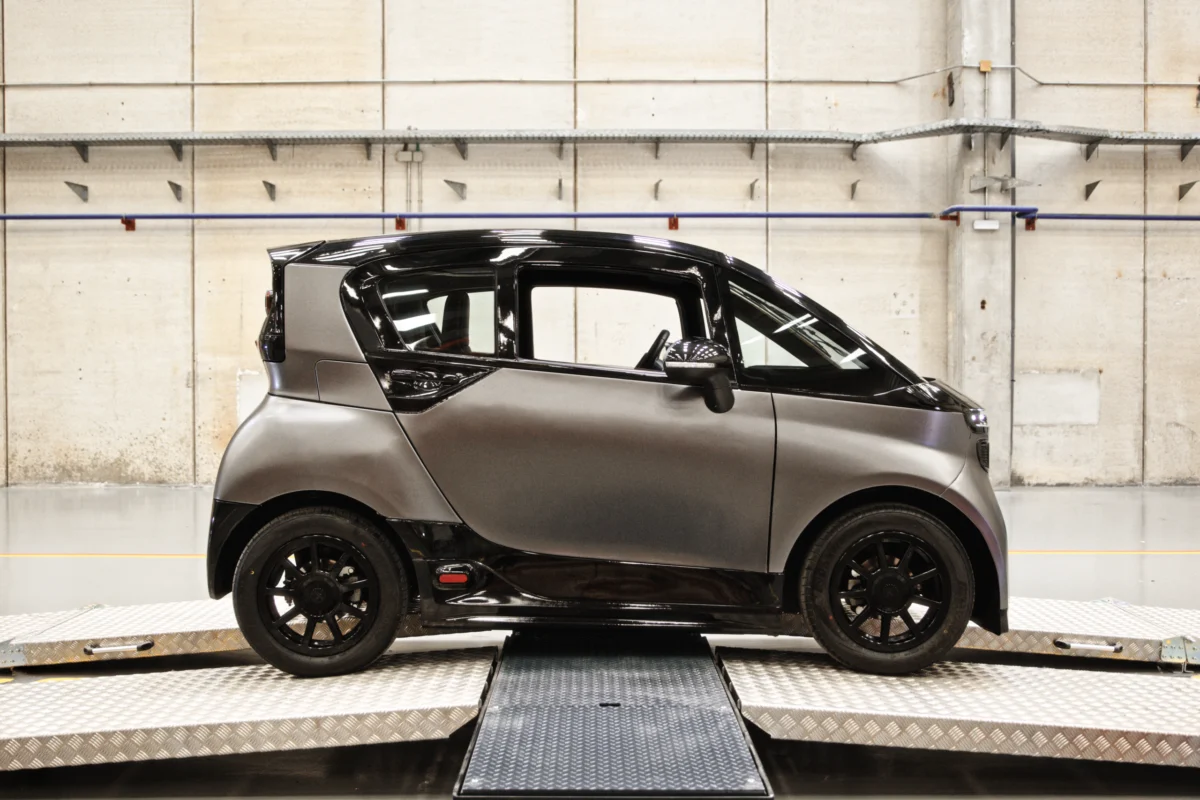
The bustling urban landscapes of European cities are increasingly defined by a new generation of compact vehicles, a trend that sees cars shrinking in size but growing in technological sophistication and environmental ambition. This shift, however, has largely favored non-European manufacturers, with the once-iconic Italian "yoghurt pots" giving way to a surge of small electric vehicles (EVs) predominantly originating from China. Even renowned ultracompact brands like Smart have relocated their manufacturing operations to the East, underscoring a significant transformation in the automotive landscape. Amidst this evolving market, Spanish startup Liux is boldly stepping onto the scene, aiming to carve out a distinctive niche with its innovative microcar, the Liux Big, built on an uncompromising foundation of sustainability and local European production.
The Evolving European Microcar Landscape and the Rise of Chinese EVs
Europe’s affinity for smaller vehicles is not new, deeply rooted in its dense urban centers, narrow streets, and premium on parking space. For decades, the market saw a steady presence of diminutive city cars, affectionately dubbed "yoghurt pots" – vehicles like the original Fiat 500, various microcars from French manufacturers such as the Citroën Ami, and later, the revolutionary Smart Fortwo. These vehicles epitomized urban mobility, offering agility and efficiency in cramped environments. However, the advent of electric propulsion and globalized manufacturing has introduced new dynamics. The past decade has witnessed an exponential rise in demand for micro-EVs, driven by tightening emission regulations, government incentives for electric vehicles, and a growing consumer desire for eco-friendly transport options. Analysts project the global micro-mobility market to grow significantly, with Europe being a key driver due to its policy push for decarbonization and urban planning focused on reducing private car dependency.
This surge in demand has inadvertently created a vacuum, which Chinese manufacturers have been quick to fill. Leveraging their extensive supply chains, advanced battery technology, and aggressive pricing strategies, Chinese EV brands have rapidly become dominant players in the European microcar segment. They offer a range of affordable, feature-rich electric vehicles that appeal to a broad demographic, from first-time buyers to those seeking a second household car for urban commutes. The strategic decision by established European brands like Smart to move manufacturing to China highlights the perceived cost efficiencies and industrial scale offered by Asian production hubs, posing a significant challenge to the notion of a ‘European-made’ microcar. This context sets the stage for Liux, a company determined to redefine European automotive manufacturing by prioritizing local production and ecological responsibility.
Liux’s Ambitious Vision: Sustainability as a North Star
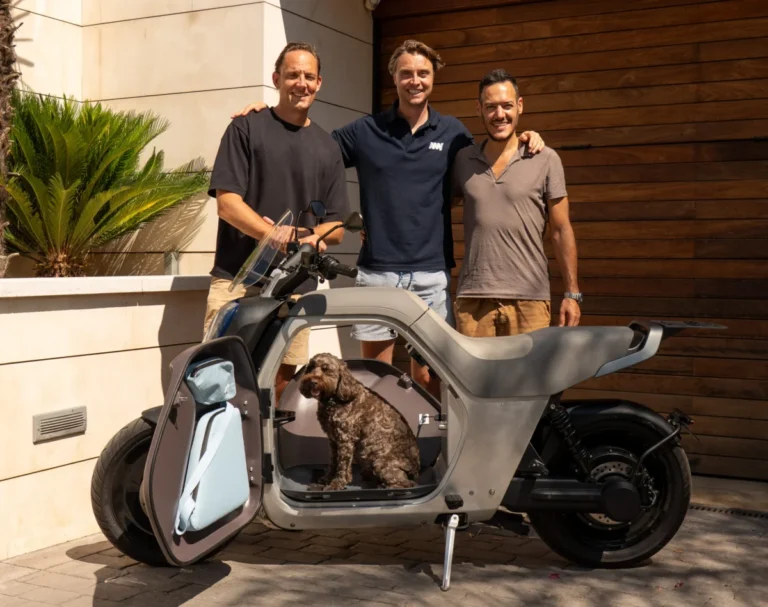
Liux, following in the footsteps of pioneering European micro-mobility ventures like Switzerland’s Microlino, is not merely entering the market; it aims to disrupt it. Its upcoming microcar, aptly named the "Liux Big"—a playful moniker that belies its compact dimensions and underscores the company’s grand aspirations—is designed to stand out. While small enough to park perpendicularly to the curb, its name also reflects the oversized ambitions of a team that consciously eschews conventional wisdom. Antonio Espinosa de los Monteros, co-founder and CEO of Liux, articulated a surprising perspective to TechCrunch: "The idea of a European car does not exist." This statement, coming from the head of a startup making headlines for its "Made in Spain" vehicles, reveals a profound insight into Liux’s strategic priorities. Espinosa and co-founder David Sancho acknowledge the inherent complexities of achieving a fully sovereign European supply chain in the current global economic climate. Instead, their strategy revolves around navigating this reality while maintaining an unwavering commitment to sustainability.

This commitment is deeply embedded in every aspect of the Liux Big. The vehicle’s batteries, while not currently manufactured in Europe, are designed for maximum utility and environmental consideration. They are home-rechargeable, seamlessly integrating with renewable energy sources like household solar panels, thereby promoting a decentralized and cleaner energy ecosystem for vehicle charging. This approach aligns with the growing trend of smart grids and residential solar adoption across Europe. Furthermore, the car is engineered for longevity and ease of maintenance, consciously resisting the accelerated obsolescence cycles prevalent in modern automotive manufacturing. This design philosophy aims to extend the vehicle’s lifespan, reducing waste and resource consumption over time, a critical component of circular economy principles.
Perhaps the most groundbreaking innovation lies in the Liux Big’s fiber body, crafted from a novel linen-based biocomposite. This material choice is not merely aesthetic; it is a fundamental pillar of Liux’s circular economy model. Linen, a natural fiber, offers several environmental advantages over traditional materials like steel or carbon fiber, including lower energy consumption during production and reduced carbon footprint. The biocomposite is designed specifically to facilitate material extraction and recycling at the end of the vehicle’s life, a crucial step towards true closed-loop manufacturing. Espinosa elaborated on this, stating, "Recycling isn’t just a lab concept. You can recycle almost anything in a lab. What makes something recyclable has to do with how it’s built. When you build something, you have to try to preserve the integrity of the material and the components so that a second life is possible." This ethos reflects a holistic approach to sustainability, moving beyond mere eco-friendly materials to embed recyclability into the very design and manufacturing process, setting a potential precedent for future automotive material science.
A Foundation in Circularity and Engineering Excellence
The visionary leadership behind Liux stems from a unique blend of expertise. Antonio Espinosa de los Monteros brings a deep understanding of circular economy principles, honed during his time as co-founder of Auara, a Spanish B Corp renowned for selling natural mineral water in recycled and recyclable bottles. Auara’s successful acquisition by a larger player, Corporación Hijos de Rivera, provided Espinosa with the impetus and experience to embark on a new, even more ambitious chapter in sustainable enterprise. His partner, David Sancho, is an an accomplished electric vehicle engineer with a formidable track record in high-performance automotive design. Sancho’s most notable prior achievement was the Bóreas, a hybrid supercar unveiled at the prestigious 24 Hours of Le Mans in 2017, showcasing his capability to push the boundaries of automotive engineering. After a strategic realignment, Sancho teamed up with Espinosa, combining his engineering prowess with Espinosa’s circular economy vision to found Liux.
Their initial collaboration resulted in the Liux Animal, a fully electric five-seater SUV unveiled in 2022. The Animal was an ambitious project, designed almost entirely from recycled or plant-based materials, demonstrating the founders’ commitment to sustainability from the outset. However, in a pragmatic pivot, the co-founders soon determined that achieving Europe-wide homologation would be significantly more feasible with a smaller, more focused vehicle. This strategic decision led to the development of the Liux Big, a testament to the startup’s adaptability and commitment to bringing its sustainable vision to market efficiently. This chronological progression highlights a learning curve and a refined focus on achievable goals within a challenging regulatory environment, demonstrating a pragmatic approach to innovation and market entry.
Establishing a New Manufacturing Paradigm in Spain
In a significant milestone for Spanish industry, Liux has successfully opened Spain’s first new car plant in over 30 years. This achievement alone underscores the scale of their undertaking and their commitment to revitalizing local manufacturing, particularly in a region eager to attract high-tech industrial investment. Fast forward to 2026, Liux has secured Europe-wide homologation for the Liux Big, a critical regulatory hurdle that signifies compliance with stringent European safety and environmental standards, and anticipates commencing sales in the first half of the following year. The company has rapidly expanded its team to 65 employees and is actively preparing to scale up production across three facilities within Spain.

TechCrunch visited the Azuqueca de Henares factory, located approximately an hour’s drive from central Madrid. This facility, while compact, operates on Toyota’s renowned "lean management" principles, focusing primarily on the final stages of the assembly process. This methodology emphasizes waste reduction, efficiency, and continuous improvement, allowing for high-quality production with a smaller footprint. Beatriz Belda González, Liux’s head of production and a Spanish-born engineer with prior experience at BMW in Munich, emphasized that the factory’s modest size is not indicative of its potential. Liux projects its production capacity to reach an impressive 20,000 cars per year by 2030, a substantial volume for a microcar manufacturer and a strong signal of its growth trajectory. This lean approach, combined with distributed production, allows Liux to maintain agility and cost-efficiency while keeping manufacturing within Europe, potentially creating a new model for localized, high-tech automotive production.
The Liux Big: Designed for Urban Living and Real-World Sustainability
The design and engineering of the Liux Big reflect a deep understanding of its intended urban environment and a relentless pursuit of practical sustainability. While microcars often face inherent limitations in terms of weight and size, Liux’s Head of R&D, Celso Fernández Llorens, notes that many existing models tend to be quite similar, despite regulatory distinctions between ultralight L6e and slightly heavier L7e four-wheelers. The L7e category, for instance, allows for a higher unladen mass (up to 450 kg for passenger vehicles) and power output (up to 15 kW) compared to L6e, providing more flexibility for features and safety. Liux strategically leveraged its L7e homologation to maximize utility and performance within the category. Through a series of ingenious design decisions, the startup managed to integrate a surprisingly capacious 260-liter trunk into the vehicle, a practical feature often lacking in ultra-compact cars and highly valued by urban dwellers seeking convenience for shopping or small cargo transport.
Beyond cargo capacity, a core focus for Liux has been to ensure that users experience the Liux Big as a legitimate car, rather than a glorified two-wheeler. This commitment extends directly to safety. David Sancho emphasized the importance of designing a car that feels robust and stable, asserting that a lightweight vehicle should not compromise structural integrity or stability, especially in dynamic driving conditions. Despite the fact that the L7e category does not mandate crash tests, Liux has proactively subjected the Big to rigorous testing, demonstrating its capabilities in maneuvers such as slalom courses and emergency braking. These tests, documented through internal assessments and public demonstrations, aim to instill confidence in consumers regarding the vehicle’s handling and safety performance, differentiating it from perceived vulnerabilities of some lighter microcars. TechCrunch experienced these capabilities firsthand during a short ride and test drive of an upcoming off-road version, underscoring the company’s dedication to perceived and actual safety performance.
Market Reception, Pricing, and Future Models
Early indications suggest strong market interest in the Liux Big. Over 7,500 prospective buyers have joined the waiting list, which, while not requiring a fee, has provided invaluable demographic data for the startup. The most common profile identified is a city dweller aged 55 to 60, suggesting that the Liux Big is likely to serve as a second vehicle within many households, complementing a larger family car for daily urban commutes and errands. While this might temper initial hopes of microcars completely replacing traditional car ownership models, Espinosa acknowledges the need to prioritize battles and adapt to market realities. Rather than attempting to predict or force market shifts, Liux is maintaining flexibility, exploring potential partnerships with B2B fleet management companies and firms specializing in autonomous driving technologies, signaling an openness to diverse future applications in urban logistics and smart cities.
In terms of pricing, Liux aims to position the Big as an accessible yet premium sustainable option. While the final price tag is yet to be confirmed, the company has indicated it will be below €18,000 (approximately $21,000 USD) before any potential EV subsidies. This places the Liux Big at the higher end of the microcar price spectrum, where models like the Citroën Ami retail for under €8,000, and other European light EVs can range from €10,000 to €15,000. However, Liux believes its unique blend of sustainability, build quality, enhanced safety features, and car-like driving experience will allow it to "punch above its weight," offering compelling value that justifies its price point.

Looking ahead, Liux plans to launch two main urban versions of the Big, featuring 15 kWh and 20 kWh battery options, offering varying ranges suited to different urban commuting needs. A cargo variant is also in the pipeline, catering to last-mile delivery and commercial applications, a growing segment in urban logistics. With David Sancho’s background in supercar engineering, the possibility of more performance-oriented or specialized models is never far from consideration, as the company explicitly stated in a LinkedIn post that it does not intend to be "a one-car brand."
The €16 million (approximately $18.5 million) in funding secured so far, including significant European funding, will be instrumental in bringing the urban version of the Liux Big to market. The company plans to leverage partnerships with car dealerships across Europe to facilitate sales and distribution, aiming for a broad reach. The showroom experience itself, as described by head of brand Ana Terrado Leyva, is meticulously designed to reflect Liux’s brand identity. Textile screens, 3D models showcasing the Big’s three color options (notably, two more than the historic Ford Model T’s "any color as long as it’s black"), and a linoleum floor – a subtle nod to the linen-based biocomposite – are all aesthetic choices intended to differentiate Liux from its competitors, particularly those from China. These elements collectively reinforce the narrative of a thoughtfully designed, sustainably produced, and distinctly European product, aiming to create an immersive brand experience for potential buyers.
Broader Implications: Redefining the "European Car"
The emergence of Liux and the Liux Big carries significant implications for the European automotive industry and the broader discourse on sustainable manufacturing. In an era dominated by global supply chains and intense competition, Liux’s commitment to building a new car plant in Spain after three decades is a powerful statement. It demonstrates that with innovative materials, lean manufacturing principles, and a clear vision, localized production can be viable, offering a potential blueprint for other European startups. This localized approach could foster economic resilience, create skilled jobs, and reduce the environmental footprint associated with long-distance supply chains.
Liux’s focus on "real circularity" through its linen-based biocomposite body and design for longevity could set new benchmarks for environmental responsibility in the automotive sector. As regulatory pressures intensify and consumer awareness of ecological footprints grows, such innovations become increasingly critical. The Liux Big positions itself not just as an EV, but as an embodiment of a more responsible approach to consumption and production, potentially influencing material choices and design philosophies across the industry.
Furthermore, Liux’s strategy in the microcar segment speaks to the future of urban mobility. As cities grapple with congestion, pollution, and limited space, compact, efficient, and sustainable vehicles become indispensable. The Liux Big, with its small footprint, electric propulsion, and thoughtful design, offers a compelling solution for navigating the complexities of modern urban life. Its potential as a second household car also highlights a pragmatic approach to market integration, catering to specific use cases rather than attempting a wholesale transformation of car ownership. This incremental adoption can still lead to substantial environmental benefits over time.
Antonio Espinosa’s initial provocative statement, "The idea of a European car does not exist," ultimately serves as a call to action. Liux, through its commitment to innovation, sustainability, and strategic local manufacturing, is actively engaged in crafting a new definition of what a "European car" can be in the 21st century. It is a definition not necessarily rooted in full supply chain sovereignty, but in a profound dedication to environmental stewardship, intelligent design, and a resilient, locally-driven industrial spirit that can indeed
About the Author