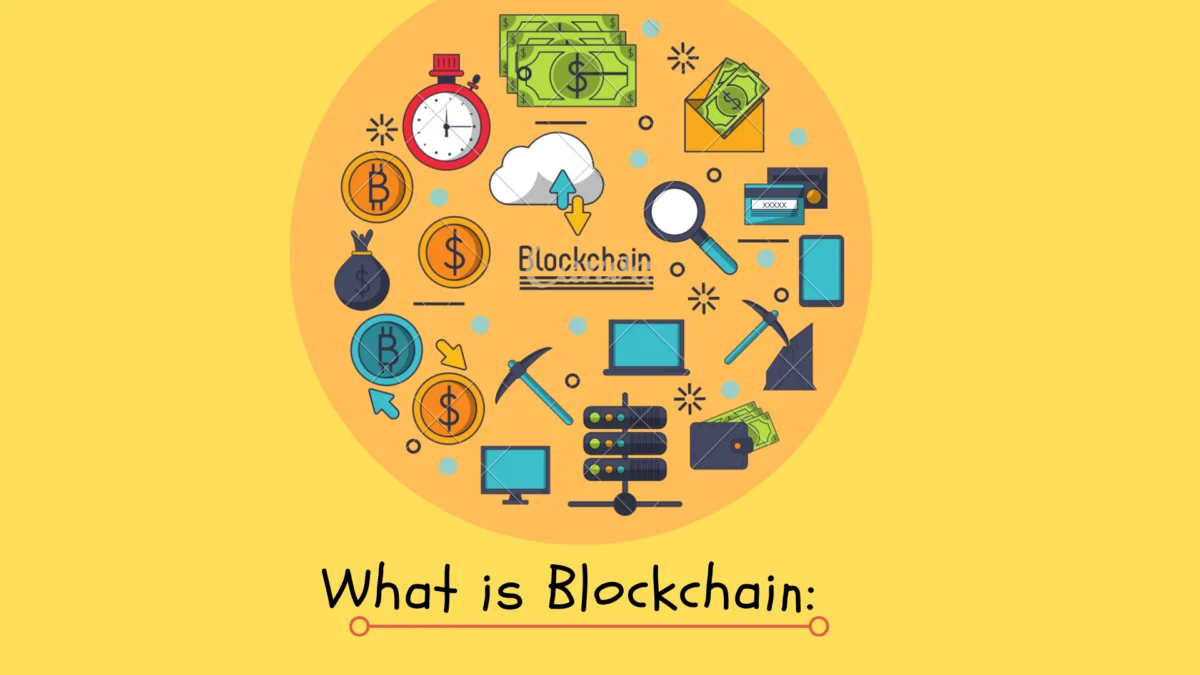
The traditional landscape of digital commerce and data management is undergoing a fundamental shift as decentralized protocols begin to challenge the long-standing dominance of centralized financial institutions and administrative bodies. For decades, online transactions have necessitated a reliance on intermediary entities, requiring users to provide sensitive personal information, credit card details, or bank transfer authorizations to facilitate the exchange of value. However, the emergence of blockchain technology has introduced a paradigm where security, transparency, and data integrity can be maintained without a central authority. By utilizing a distributed network of computers to validate and record transactions, blockchain offers a robust alternative to the "client-server" models that have governed the internet since its inception.
The Chronological Development of Decentralized Systems
While blockchain gained mainstream prominence following the 2008 financial crisis, its conceptual foundations date back more than three decades. The history of this technology is a progression of cryptographic innovations aimed at solving the problem of digital trust.
In 1991, mathematicians Stuart Haber and W. Scott Stornetta proposed a system for "time-stamping" digital documents to prevent them from being backdated or tampered with. Their work introduced the use of a cryptographically secured chain of blocks to store time-stamped data, marking the first formal appearance of what we now recognize as blockchain architecture.
By 1998, computer scientist Nick Szabo advanced the concept further with "Bit Gold," a proposal for a decentralized digital currency. Although Bit Gold was never fully implemented, it introduced the mechanism of "Proof of Work," where participants solve complex mathematical puzzles to secure the network. This period of academic and theoretical development reached a turning point in October 2008, when an individual or group using the pseudonym Satoshi Nakamoto published the whitepaper "Bitcoin: A Peer-to-Peer Electronic Cash System."
Nakamoto’s innovation was the successful integration of Haber and Stornetta’s time-stamping with a decentralized consensus mechanism, creating the first functional blockchain. In January 2009, the Bitcoin network went live, proving that a digital asset could be transferred securely without a bank or government oversight. Since then, the technology has evolved from a niche cryptographic experiment into a global industry with a market capitalization reaching into the trillions of dollars.
Mechanics of the Distributed Ledger: How Blockchain Functions
At its core, a blockchain is a distributed database or "ledger" that is shared among the nodes of a computer network. Unlike a traditional database, which is typically stored on a central server controlled by a single entity, a blockchain stores information in digital formats across thousands of independent computers.
The data structure of a blockchain is organized into "blocks." Each block contains a set of transactions or data entries. When a block reaches its storage capacity, it is closed and linked to the previously accepted block using a cryptographic hash—a unique digital fingerprint. This creates a chronological chain of data. If a single character in a previous block is altered, its hash changes, which in turn invalidates every subsequent block in the chain. This "immutability" is the primary security feature of the technology; once data is recorded, it cannot be altered without the consensus of the entire network.
The process of adding a new block involves several steps:
- Transaction Initiation: A user requests a transaction, which is broadcast to a peer-to-peer network consisting of computers known as nodes.
- Validation: The network of nodes validates the transaction and the user’s status using established algorithms.
- Block Creation: Once verified, the transaction is combined with other transactions to create a new block of data for the ledger.
- Hashing and Linking: The new block is given a timestamp and a unique cryptographic hash. It also receives the hash of the previous block, securing the link.
- Completion: The block is added to the existing blockchain, and the transaction is considered permanent and irreversible.
Decentralization as a Security Paradigm
The primary advantage of blockchain technology lies in its decentralized nature. In a centralized system, such as a traditional bank database, a single point of failure exists. If the bank’s central server is compromised by hackers or experiences a hardware failure, the entire system’s data is at risk.
Blockchain mitigates this risk by distributing the ledger across a global network. Every node in the network holds a complete copy of the blockchain’s history. If one node experiences a technical failure or is targeted by a cyberattack, the other thousands of nodes continue to function, maintaining the integrity of the record. To successfully "hack" a blockchain, an attacker would theoretically need to gain control of more than 51% of the network’s computing power simultaneously—a feat that is computationally and financially prohibitive for established networks like Bitcoin or Ethereum.
Furthermore, decentralization ensures transparency. In public blockchains, every transaction is visible to anyone with an internet connection. While the identities of the participants are often masked by alphanumeric addresses (pseudonymity), the flow of value is entirely auditable. This transparency reduces the likelihood of fraud and eliminates the need for expensive third-party auditors.
Real-World Applications Beyond Cryptocurrency
While often synonymous with Bitcoin, blockchain technology has applications that span nearly every major industry. Its ability to provide a "single source of truth" makes it invaluable for complex logistical and administrative tasks.
Global Supply Chain and Food Safety
One of the most significant non-financial applications of blockchain is in supply chain management. Large-scale corporations like Walmart, Unilever, and Nestlé have partnered with IBM’s Food Trust initiative to track products from farm to shelf.
Historically, tracing the source of a contaminated food product—such as those carrying E. coli or Salmonella—could take weeks. Using blockchain, companies can trace the journey of a product in seconds. For instance, Walmart demonstrated that by using blockchain, the time required to track a package of mangoes back to its source was reduced from seven days to just 2.2 seconds. This capability allows for "surgical recalls," where only the affected batches are removed from shelves, significantly reducing food waste and protecting public health.
Healthcare and Patient Data
In the healthcare sector, blockchain is being explored as a method for securing patient records. Currently, medical data is often fragmented across different hospitals and clinics. A blockchain-based health record system would allow patients to own their data and grant temporary access to providers, ensuring that medical histories are accurate, private, and easily accessible during emergencies.
Smart Contracts and Legal Services
The introduction of "Smart Contracts"—self-executing contracts with the terms of the agreement directly written into code—has revolutionized the legal and insurance industries. These contracts automatically trigger actions (such as a payout) once certain conditions are met, removing the need for manual processing and reducing the potential for disputes.
Comparative Analysis: Blockchain vs. Traditional Databases
To understand the transformative potential of blockchain, it is necessary to contrast it with traditional database management systems (DBMS).
| Feature | Traditional Database | Blockchain Technology |
|---|---|---|
| Authority | Centralized (controlled by one admin) | Decentralized (peer-to-peer) |
| Architecture | Client-Server | Distributed Ledger |
| Integrity | Data can be edited or deleted | Data is immutable (read-only/append) |
| Transparency | Restricted access | Public or permissioned visibility |
| Performance | High speed, high volume | Slower due to consensus requirements |
While traditional databases are superior in terms of raw speed and transaction volume, they lack the inherent trust and security of blockchain. For applications where the "trustworthiness" of the data is more important than the speed of the entry—such as property titles, voting records, or financial settlements—blockchain is the preferred architecture.
Economic Impact and Market Data
The economic implications of blockchain adoption are substantial. According to market research data from Grand View Research, the global blockchain market size was valued at approximately USD 17.46 billion in 2023 and is projected to grow at a compound annual growth rate (CAGR) of 37.7% from 2024 to 2030.
This growth is driven by the increasing demand for secure and transparent payment systems, as well as the rising adoption of "Web3" technologies. Major financial institutions, including JPMorgan Chase and Goldman Sachs, have already begun developing proprietary blockchain platforms (such as Onyx) to facilitate cross-border interbank transfers, which can save billions in annual transaction fees.
Critical Evaluation: Challenges and Limitations
Despite its potential, blockchain technology faces several hurdles that have slowed its universal adoption.
- Scalability: Because every node in a network must reach a consensus to validate a transaction, decentralized networks are often slower than centralized ones. Bitcoin, for example, can process roughly 7 transactions per second (TPS), whereas Visa can handle over 24,000 TPS.
- Environmental Concerns: "Proof of Work" mining, the process used to secure the Bitcoin network, requires significant electrical power. While many newer blockchains are moving toward "Proof of Stake"—a much more energy-efficient consensus mechanism—the environmental footprint of legacy systems remains a point of contention.
- Regulatory Uncertainty: Governments worldwide are still grappling with how to regulate decentralized technologies. The lack of a clear legal framework for digital assets and smart contracts has led to hesitation among some institutional investors.
- Complexity: For the average user, managing "private keys" and navigating decentralized applications (dApps) remains difficult. Improving the user interface and experience is essential for mass adoption.
Future Outlook and Strategic Implications
The trajectory of blockchain suggests that it will become an "invisible" foundational layer of the internet, much like the TCP/IP protocol. In the coming five to ten years, users may interact with blockchain-based systems daily without even realizing it. Whether it is verifying the authenticity of a luxury good, participating in a decentralized autonomous organization (DAO), or receiving an insurance payout automatically due to a flight delay, the applications are expanding.
Industry analysts suggest that the period between 2024 and 2026 will be a "maturation phase" for the technology. As scalability solutions (such as Layer 2 protocols) improve and regulatory clarity emerges in major economies like the EU and the US, the barrier to entry for small and medium-sized enterprises will lower.
The shift from centralized to decentralized systems represents more than just a technological upgrade; it is a shift in how society conceptualizes trust. By moving trust from human institutions—which are fallible—to cryptographic mathematics, blockchain provides a framework for a more transparent and equitable global economy. While challenges remain, the fundamental utility of an immutable, decentralized ledger ensures that blockchain will remain a cornerstone of the Fourth Industrial Revolution.
About the Author