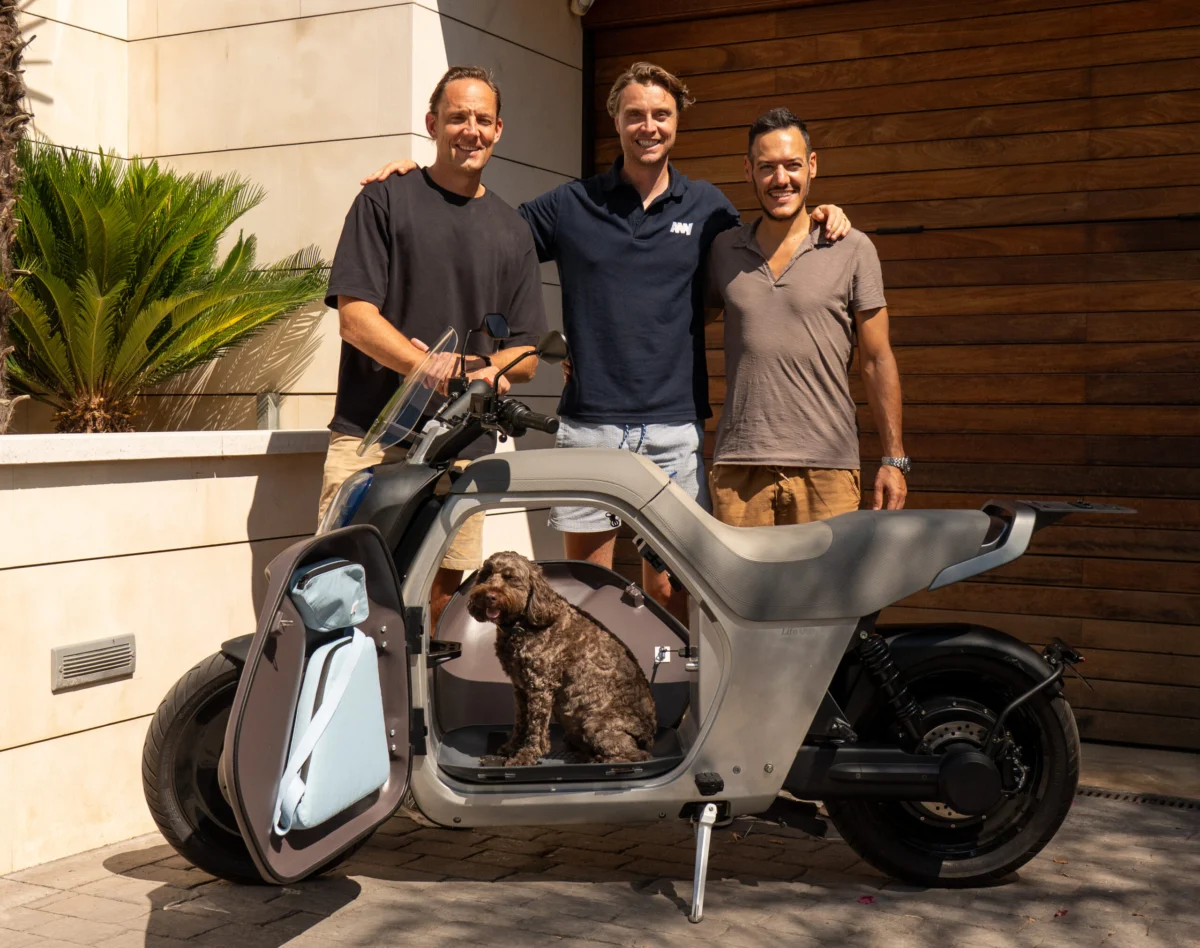
Despite Europe’s reputation for pedestrian-friendly urban centers, the automobile remains the default mode of personal transport in its cities, a deeply entrenched status quo that Belgian startup Any is now determined to disrupt. With a focus on practical, "designed for real life" solutions, Any has unveiled its groundbreaking modular electric motorcycle, the LUV1, aiming to bridge the critical gap between agile two-wheelers and the cargo capacity traditionally offered by cars. This innovative approach has already garnered significant attention, translating into substantial early traction with over 600 pre-orders and a robust €2.75 million in seed funding, signaling a potential paradigm shift in urban mobility.
The Enduring Challenge of Urban Mobility and the Rise of Micromobility
Urban landscapes across Europe grapple with multifaceted mobility challenges, ranging from crippling traffic congestion and limited parking availability to escalating air pollution and the urgent need for sustainable transport options. While public transport networks are extensive and cycling culture is prevalent in many cities, the convenience and utility of private cars, particularly for carrying groceries, sports equipment, or family members, have ensured their continued dominance. This reliance on internal combustion engine vehicles contributes significantly to greenhouse gas emissions and diminishes urban quality of life, prompting a growing imperative for cleaner, more efficient alternatives.
The global push for decarbonization and the increasing digitalization of services have fueled the rapid expansion of the micromobility sector. Electric scooters, e-bikes, and various forms of light electric vehicles (LEVs) have emerged as viable solutions for short-distance travel, offering speed, flexibility, and environmental benefits. However, a persistent challenge for these two-wheeled options has been their limited carrying capacity, often forcing users to default back to cars for tasks requiring significant storage – the "missing link" that Any aims to fill. Market analysis from industry bodies like the European Association of Motorcycle Manufacturers (ACEM) projects that powered two-wheeler markets in Europe will be predominantly electric by 2030, highlighting the ripe conditions for innovative electric solutions that cater to diverse consumer needs beyond mere commuting.
Introducing the LUV1: A New Category of Life Utility Vehicle
At the heart of Any’s strategy is the LUV1, a modular electric motorcycle engineered to redefine utility on two wheels. Unveiled to considerable acclaim during Milan Design Week in May, the LUV1 immediately captured headlines with its distinctive aesthetic and revolutionary functionality. The core principle behind its design is to offer the practical load-carrying capability of a cargo bike without compromising the speed, range, and versatility of a motorcycle. This ambition materializes in the LUV1’s remarkable storage capacity of up to 120 liters, a figure not arbitrarily chosen but derived from a meticulous analysis of real-life consumer needs. As the startup articulated on LinkedIn, "120L wasn’t a number we picked to sound impressive… It came from asking a simple question: what does a real week actually need? Groceries, weekend bags, suitcases… the stuff you don’t want to leave behind just because you’re on two wheels, not four." This capacity directly addresses the primary functional limitation of conventional motorcycles and scooters, offering a genuine alternative to car trunks for daily errands and weekend adventures alike.
Beyond its impressive storage, the LUV1’s modularity is its defining characteristic. Customers can opt for an open frame or choose from various panel types, allowing for customization to transport pets, work equipment, or camping gear. This adaptability extends to a host of optional accessories, including a windshield, racks, and even a rain poncho, making the LUV1 appealing to a broad spectrum of users, from daily commuters and urban families to outdoors enthusiasts. This flexible design ethos positions the LUV1 not merely as a new electric motorcycle, but as the pioneer of a novel hybrid category: the "Life Utility Vehicle" (LUV), a term coined by Any to encapsulate its multifunctional purpose.

The Visionary Design and Strategic Leadership Behind Any
The LUV1’s striking design and innovative modularity are the brainchild of Lowie Vermeersch, a luminary in the automotive design world. As the former design director at Pininfarina, the legendary Italian design house responsible for iconic Ferrari and Alfa Romeo models, Vermeersch brings an unparalleled pedigree and an acute understanding of both aesthetic appeal and functional engineering to Any. His involvement as the creative director and an investor through his Granstudio consultancy underscores the serious intent behind Any’s ambition. Vermeersch’s reputation was instrumental in the LUV1’s immediate recognition at Milan Design Week, an event renowned for showcasing cutting-edge design and future trends. His philosophy, deeply rooted in user-centric design, aligns perfectly with Any’s mission to create vehicles that seamlessly integrate into people’s daily lives.
Any’s leadership team is further bolstered by strategic hires with deep industry expertise. Pieter Van de Velde, a former venture capitalist, assumed the role of CEO a year ago, bringing a strong financial and strategic acumen to the startup. Erik de Winter, co-founder and CCO, previously co-founded the successful Dutch e-cargo bike-sharing service Cargaroo, demonstrating a proven track record in the micromobility space. The engineering department is headed by Alessandro Mangano, whose extensive experience at automotive giants such as Aprilia, Ferrari, and Piaggio Group provides critical expertise in vehicle development and production. This blend of design brilliance, entrepreneurial experience, financial strategy, and engineering prowess forms a formidable foundation for Any’s ambitious plans.
Market Positioning, Early Traction, and Financial Backing
The LUV1 is strategically priced to appeal to a wide market segment. Starting at approximately €7,000 (around $8,150), it significantly undercuts the cost of most new cars while remaining competitive with higher-end electric cargo bikes. This accessible price point, coupled with its advanced features and versatility, makes it an attractive proposition for consumers seeking a cost-effective yet highly functional alternative to traditional urban transport. Furthermore, Any has ensured that the LUV1 will typically require only an A1 license, which is relatively easy to obtain in most European countries, lowering the barrier to entry for potential riders who might not possess a full motorcycle license. This regulatory advantage broadens its potential customer base considerably.
The market’s enthusiastic response to the LUV1 has been remarkable. Following its high-profile unveiling in May, Any launched a pre-order campaign alongside a user-friendly configurator, allowing prospective customers to customize their LUV1. Within its first 100 days, the company secured over 600 reservations, as confirmed by CCO Erik de Winter. Each reservation requires a refundable €49 ($57) fee, which is credited towards the final purchase price, indicating a strong level of commitment from early adopters. This early traction not only validates Any’s product concept but also provides crucial data for refining production and distribution strategies.
To fuel its rapid growth and bring the LUV1 to market, Any has successfully raised significant capital. The startup secured €1.5 million in November, followed by an additional €1.25 million top-up in May, bringing its total seed funding to €2.75 million ($3.2 million). This investment reflects investor confidence in Any’s vision, leadership, and the LUV1’s market potential. The funding rounds have attracted backers and advisors with deep roots in the automotive sector, further enhancing Any’s credibility and access to industry expertise. This financial backing is crucial for scaling production and navigating the complexities of launching a new vehicle in a competitive market.
Navigating a Competitive Landscape and Future Ambitions
The European electric two-wheeler market is rapidly expanding and becoming increasingly competitive. Established players like Piaggio, with its rich legacy in scooter manufacturing, and even iconic brands such as Harley-Davidson, are actively launching new electric models. To stand out, Any is betting heavily on the LUV1’s unique cargo capacity and modularity as its primary differentiators. Erik de Winter emphasizes that the LUV1 is designed to appeal to a customer base far beyond traditional motorcycle riders, encompassing anyone seeking a practical, sustainable, and versatile urban transport solution.

The startup’s vision extends beyond the LUV1. Any intends to develop a "portfolio of vehicles," with discussions already underway with last-mile delivery companies, hinting at the potential for specialized variants or entirely new vehicle types tailored for commercial use. This long-term strategy includes the exploration of a three-wheeler concept, which could further enhance stability and cargo capacity, potentially addressing a broader range of utility needs and market segments. This forward-looking approach positions Any as an innovator not just of products, but of an entirely new category of urban mobility solutions.
Before it can fully realize these broader ambitions, Any’s immediate priority is to ramp up production of the LUV1 and commence initial customer deliveries. This critical phase will require substantial additional investment. The company is actively seeking to raise a Series A funding round of at least €10 million ($11.65 million), with the aim of closing it by the end of the year. This capital will be instrumental in establishing robust manufacturing capabilities, expanding its team, and scaling its operations to meet the anticipated demand, ensuring a smooth transition from pre-orders to widespread availability.
Broader Implications for Urban Living and the Future of Transport
The emergence of vehicles like the LUV1 carries significant implications for urban planning, environmental sustainability, and consumer behavior. By offering a compelling alternative to cars for a wide array of daily tasks, Any’s Life Utility Vehicle could play a crucial role in reducing urban congestion and improving air quality. The shift from four-wheeled to two-wheeled transport, particularly electric variants, aligns perfectly with municipal efforts to create greener, more livable cities.
For consumers, the LUV1 represents a liberation from the high costs associated with car ownership – purchase price, fuel, insurance, maintenance, and parking – while still providing practical utility. Its modular design encourages a more versatile approach to personal transport, allowing a single vehicle to adapt to varying needs, from daily commute to weekend leisure. This flexibility could accelerate the adoption of micromobility solutions, pushing beyond niche markets into mainstream acceptance.
From an industry perspective, Any’s success could inspire further innovation in the light electric vehicle segment, challenging manufacturers to think beyond traditional vehicle classifications and embrace multi-functional designs. The focus on user-centric design and practical utility, rather than just speed or power, marks a mature evolution in the electric vehicle market, signaling a future where transport solutions are more integrated with the realities of urban life. As cities evolve and the demand for sustainable, efficient, and adaptable personal mobility grows, Any’s LUV1 stands as a compelling example of how innovative design and strategic vision can reshape the urban transport landscape. The journey from prototype to widespread adoption will be challenging, but with its strong team, innovative product, and clear market traction, Any is well-positioned to carve out a significant niche in the future of European urban mobility.
About the Author