The digital marketing sphere is currently abuzz with a critical new skill: optimizing websites for AI-powered search engines. This surge in demand is directly correlated with the rapid expansion of users engaging with these advanced tools. Data from Wix Studio reveals a significant upward trend, with monthly unique visitors to major AI answer engines climbing from 634 million in the first quarter of 2025 to a substantial 904 million in the first quarter of 2026. This represents an impressive growth of over 40% within a single year, underscoring the urgency for marketers to adapt their strategies.
While the rise of AI search, also termed Answer Engine Optimization (AEO), is transformative, it has not rendered traditional Search Engine Optimization (SEO) obsolete. Instead, the two disciplines are intricately linked. The fundamental principles that drive organic rankings in conventional search engines also serve as the bedrock for achieving visibility and citations within AI-generated responses. Given that consumers increasingly leverage both classic search engines and AI answer engines for their research, businesses must ensure a robust presence across both platforms to effectively connect with their target audience.
This comprehensive guide provides a repeatable framework designed to remain effective even as the underlying large language models (LLMs) that power these AI search tools undergo continuous updates. It delves into the essential technical configurations, the creation of content that AI models are likely to quote, the nuanced differences between various AI search engines, and methodologies for assessing the actual traffic generated by an AI SEO strategy.
The Enduring Significance of SEO in the Age of AI Search
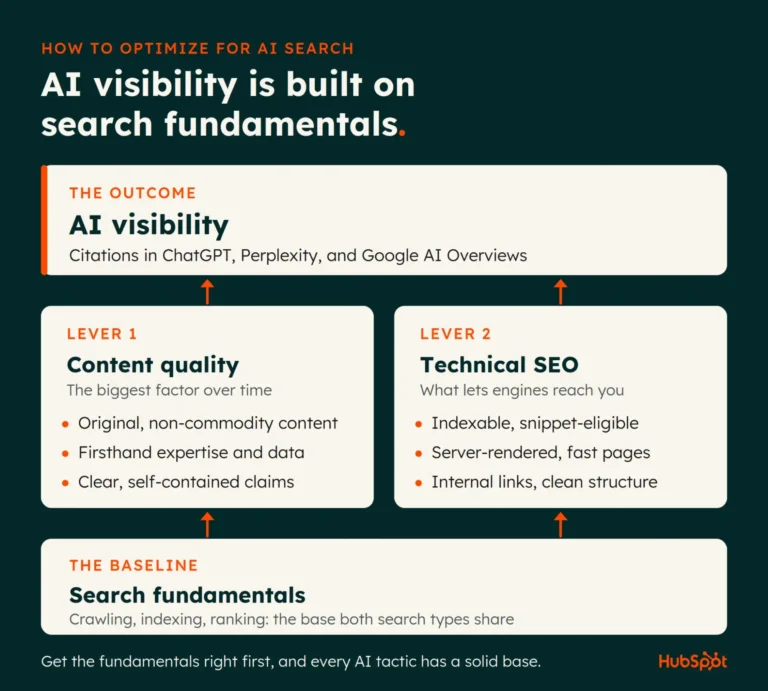
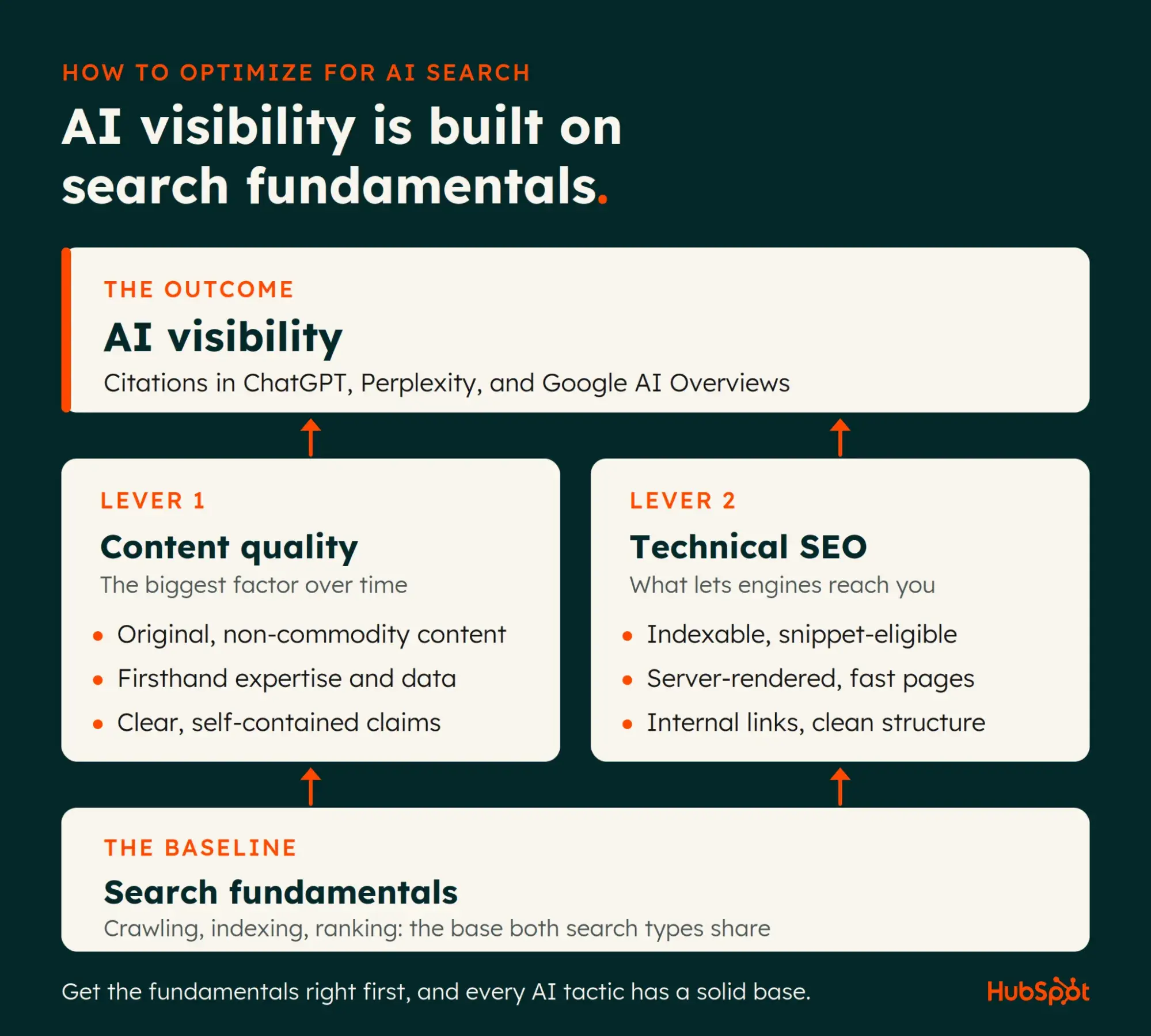
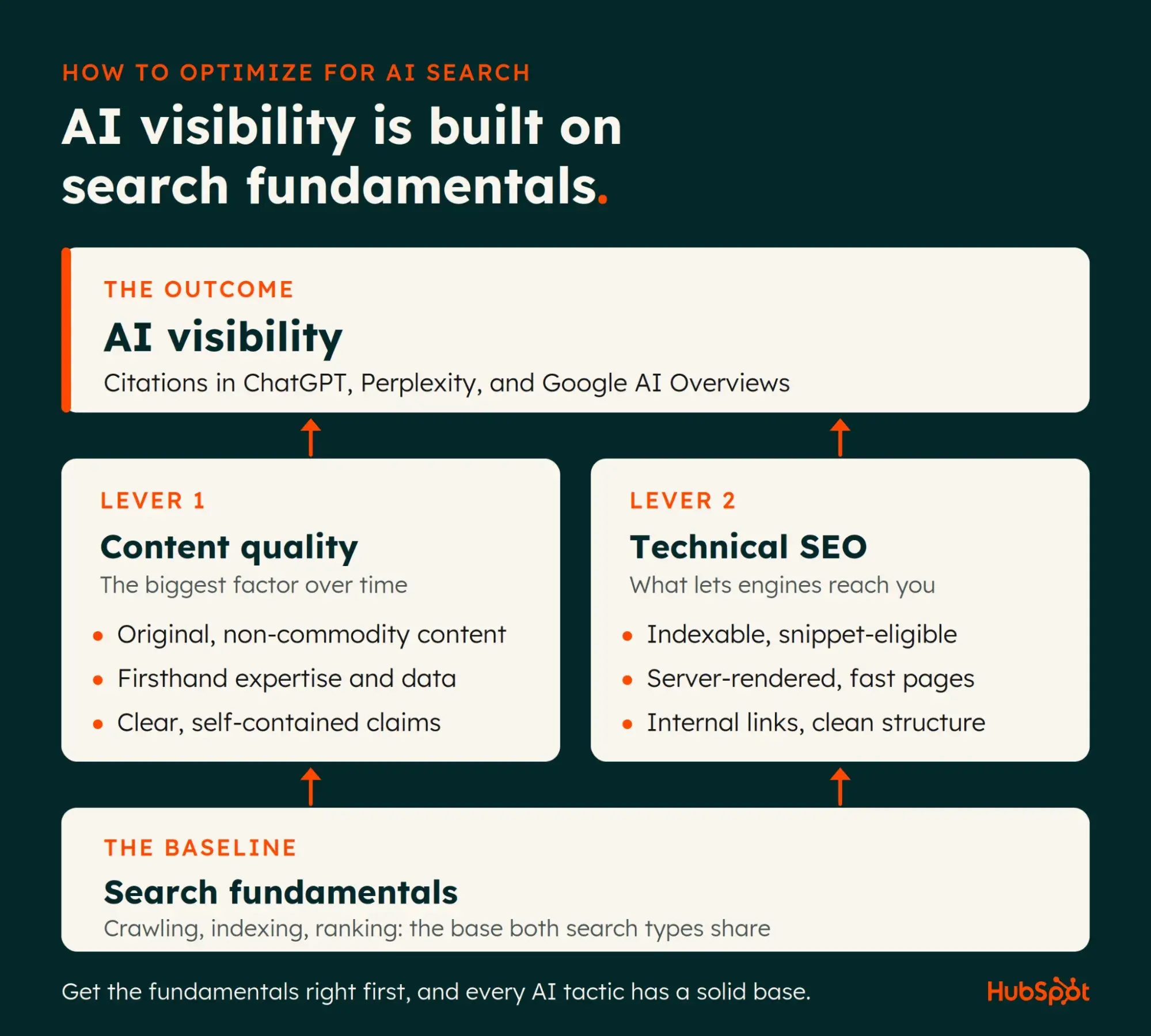
AI search often operates on the same foundational infrastructure as traditional search engines. A thorough understanding of how established search engine ranking algorithms function offers invaluable context for navigating both channels. Answer engines, at their core, must still perform the essential tasks of crawling web pages, indexing their content, and evaluating their authority and relevance against a vast digital landscape before they can confidently cite them in a response.
Google, for instance, has publicly stated that its AI Overviews are powered by a customized iteration of its Gemini model, which integrates seamlessly with its existing Search systems. Similarly, ChatGPT’s web search capabilities often rely on providers that, in certain contexts, incorporate Bing. This interconnectedness means that the signals that contribute to traditional search discoverability also feed into the algorithms of AI answer engines.
This shared technological foundation is precisely why AI search optimization builds upon, rather than replaces, core SEO principles. A website that is not readily crawlable, renderable, or indexable by search engines inherently possesses fewer pathways to be discovered and subsequently cited by AI systems. The quality of content remains paramount; AI engines prioritize and cite sources that they can reliably parse and trust. The established standards for earning traditional search rankings therefore directly correlate with the criteria for earning AI citations.
Before embarking on any AI search optimization efforts, it is crucial to confirm that a website meets the fundamental SEO baseline. All subsequent optimization strategies are contingent upon these essential prerequisites.
Cultivating People-First Content for Enhanced AI Search Visibility
Content quality emerges as the most significant long-term determinant of AI search visibility. According to Google’s own guidelines, content that is "unique, compelling, and useful" likely influences a site’s presence in generative AI search more profoundly than any other optimization step. Google distinguishes between "commodity content," which merely repackages existing knowledge, and "non-commodity content," which is distinguished by genuine expertise and firsthand experience.
An AI answer engine has a diminished incentive to cite a page whose information it could readily synthesize from its own vast training data. People-first, non-commodity content significantly boosts citation potential by providing elements that an AI model inherently cannot replicate: original data, deep subject-matter expertise, and a genuine human perspective.
Empirical data supports this correlation. An analysis conducted by SE Ranking on over 216,524 web pages revealed that content quoting experts received, on average, 4.1 ChatGPT citations, compared to 2.4 for content lacking expert input. Similarly, pages incorporating 19 or more distinct data points averaged 5.4 citations, whereas data-light pages averaged only 2.8.
To maximize the chances of being cited, insights should be articulated with clarity and precision, presenting them as distinct, self-contained claims. This directness makes original thinking inherently more valuable and quotable for AI models.
Establishing Robust Technical Foundations for AI Search Optimization
Answer engines can only cite web pages that they can successfully access and index. Google has explicitly stated that for a page to appear in AI Overviews or AI Mode, it must be indexed and eligible to be displayed in Google Search with a snippet, without requiring any additional technical prerequisites beyond these core requirements. Therefore, verifying that a page is crawlable and eligible for snippets is paramount. Website speed further reinforces this principle. SE Ranking’s research indicated that pages with a First Contentful Paint (FCP) under 0.4 seconds averaged 6.7 ChatGPT citations, a figure nearly three times higher than the 2.1 citations received by pages with an FCP exceeding 1.13 seconds.
The strategic use of internal links is instrumental in aiding search engines to discover related content, thus improving overall findability. Furthermore, ensuring a seamless and accessible page experience across all devices is critical. The primary content should be readily available as plain text and easily distinguishable from other page elements, avoiding reliance on scripts that crawlers might overlook.
JavaScript can often present a significant hurdle. While Googlebot is capable of rendering JavaScript when not explicitly blocked, many other AI crawlers process only raw HTML and do not execute scripts. This can result in client-side rendered content appearing as a blank page to AI models like ChatGPT or Perplexity. To mitigate this, primary content should be served via server-rendered HTML, adhering to established JavaScript SEO best practices.
Finally, Google recommends implementing a clear structural hierarchy for web pages. Descriptive headings and logically organized sections not only enhance readability for human users but also facilitate easier navigation and parsing by AI models.
Leveraging Structured Data and Snippet Controls for AI Search Advantage
Structured data acts as a machine-readable roadmap for answer engines, significantly reducing the need for them to infer the meaning of content and assess its suitability for citation. However, the effectiveness of this roadmap is contingent upon its accuracy. Google’s guidance emphasizes that structured data markup must faithfully reflect the visible text on a page. Schema should accurately describe the content presented rather than making unsubstantiated claims. Presenting different versions of content to crawlers versus human visitors constitutes cloaking, which is explicitly discouraged. Schema serves to amplify already clear and credible content; it cannot compensate for a lack of substance on a page.
Snippet controls play a crucial role in determining the extent to which an AI engine can extract content from a page, thereby acting as gatekeepers for AI visibility. Google surfaces pages in AI Overviews or AI Mode only if they are indexed and eligible for snippet display. Consequently, directives that restrict snippets will also limit AI answer inclusion.
Three primary preview controls govern this process. Two are page-level directives set within the robots meta tag or the equivalent X-Robots-Tag HTTP header:
noindex: This directive prevents a page from being indexed, thereby excluding it from both traditional search results and AI answers.max-snippet:[seconds]: This sets a maximum length for the snippet displayed, directly impacting the amount of context available to AI models. A value of0effectively functions as anosnippetdirective.
The third control, data-nosnippet, operates differently. It is an inline HTML attribute applied to a specific element within the page body, rather than a page-level directive. This attribute withholds only the designated passage, which is useful for sensitive content that should not be quoted out of context, while the rest of the page remains eligible for AI inclusion.
It is important to note that these controls influence both classic search results and AI answers. Therefore, restricting a snippet will inevitably impact AI visibility. If a high-quality page is not being discovered, it is essential to first examine its robots meta tag for any unintended nosnippet directives or max-snippet:0 settings, which can effectively exclude the page. Similarly, an overly restrictive character cap can starve AI models of the necessary context for accurate citation. To modify these settings, the robots meta tag can be edited within the page’s HTML head, or the directives can be served via an X-Robots-Tag HTTP header. Most Content Management Systems (CMS) and SEO plugins provide accessible fields for these adjustments without requiring direct code manipulation.
Optimizing for AI Search with Multimodal Content and Rich Data
Generative AI results increasingly incorporate images and videos alongside text links, creating additional avenues for website visibility. This integration does not necessitate separate file formats; pairing well-written content with strong, relevant image and video assets, adhering to standard SEO best practices, also optimizes them for AI features. Video content, in particular, is proving to be a significant driver of visibility. A study by Fan Out on off-site AEO found YouTube to be the second most frequently cited platform, accounting for 1,531 citations.
It is crucial to understand that AI search systems do not interpret video content in the same way humans do. They often rely heavily on the surrounding textual context to gauge relevance. Therefore, providing transcripts, writing descriptive summaries of the video’s content, and including timestamps are essential. Fan Out’s research indicated that 13.7% of YouTube citations pointed to a specific timestamped moment within a video.
For queries related to purchases or specific businesses, local and merchant data becomes highly relevant. Google has indicated that its generative AI responses can, where appropriate, incorporate product listings, product details, and information about local businesses. To ensure eligibility for these responses, maintaining up-to-date Merchant Center feeds and Google Business Profiles is vital. Google highlights both as key tools for enhancing visibility in AI responses and other search results. Depending on the business sector, Google also directs merchants towards newer offerings such as Business Agent, a conversational interface on Search that allows customers to interact directly with a brand.

Strategic Question-and-Answer Formatting for AI Search
AI answer engines prioritize pages that directly address user queries at the outset. Analysis by CXL of AI Overview citations revealed that the majority of cited passages originated from the top third of a web page, with only approximately one-fifth coming from the bottom 40%. This emphasizes the importance of leading with the answer. HubSpot’s AEO guide advocates for placing the primary answer within the initial 40 to 60 words of a section, followed by supplementary details.
The use of question-led subheadings further reinforces this strategy. A study by Kevin Indig on ChatGPT citations found that cited text was twice as likely to contain a question mark, and headings accounted for a significant 78.4% of citations linked to questions. Phrasing an H2 or H3 heading as the exact question a user might pose can provide the AI model with a precise prompt and a readily identifiable paragraph to extract as its response.
Supporting bullet points and concise summaries facilitate the extraction of this core answer. Research on structural formatting published in 2026 indicated that lists and tables achieved 43% higher extraction accuracy compared to the same information presented in prose. By adopting an answer-first formatting approach, a web page effectively transforms into a collection of self-contained, quotable units that AI answer engines can cite cleanly and efficiently.
Navigating AI Search Across Perplexity and ChatGPT
The way a web page is interpreted and cited can vary significantly between different AI search engines. Perplexity, for instance, is a notably more prolific citer, accounting for 59% of off-site citations and drawing upon approximately 10.8 sources per answer. In contrast, ChatGPT tends to be more selective, citing around 3.3 sources per query, according to data from Fan Out. Their content preferences also diverge. Perplexity shows a preference for discussion forums (such as LinkedIn, G2, and Reddit), which constitute 17.35% of its citations. ChatGPT, on the other hand, tends to favor traditional long-form articles, as identified by Wix Studio. Within Fan Out’s dataset of B2B SaaS queries, a striking 96% of LinkedIn citations were attributed to Perplexity alone.
Timing also distinguishes these platforms. In a controlled experiment conducted by SE Ranking and Search Engine Land, Perplexity surfaced newly published pages at the top of its results within one to three days. However, its citations often directed users to supporting test domains rather than the primary brand site. ChatGPT exhibited a slower response time but progressively strengthened its citations for the test brand over the course of the month.
These distinct operational habits rarely overlap. Fan Out’s research indicates that only 7.7% of cited URLs appear across more than one AI engine, meaning that achieving citations in one platform does not guarantee similar success on another. It is therefore advisable to approach each AI engine as a distinct channel, rather than assuming a single optimization strategy will satisfy all.
Developing AI Content Optimization Workflows for Sustained Visibility
The most effective AI search optimization strategies are implemented as repeatable processes rather than one-off efforts. A robust workflow can guide a page from initial research through to ongoing refinement.
- Research and Map Entities: Begin by grouping the questions your target audience asks into thematic clusters. Subsequently, construct an entity map that illustrates the relationships between your brand, products, and core topics. This mapping helps AI engines understand the interconnectedness of your offerings.
- Draft Answer-First: Structure each section to directly address its central question within the opening lines. Employ question-led subheadings and answer-first formatting, presenting the primary claim upfront and substantiating it with original data and expertise.
- Incorporate Structured Data: Apply schema markup that accurately reflects the content visible on the page. Adhering to structured data guidelines ensures that the markup supports comprehension rather than misrepresenting the content.
- Quality Assurance Pre-Publication: Prior to publishing, verify that the page is crawlable, renders its main content in server-side HTML, and validates successfully using a schema testing tool. A page that cannot be parsed by an AI engine is unlikely to be cited.
- Publish and Establish Baseline: Record the page’s performance in AI answer engines at the time of launch to establish a benchmark for measuring future improvements.
- Schedule Refresh Cadence: Implement a fixed schedule for reviewing and updating statistics, examples, and claims. This prevents content from becoming outdated between comprehensive audits. The measurement section provides guidance on prioritizing which pages require refreshing first.
Dispelling Myths in AI Search Optimization
Not all AEO tactics circulating in the digital marketing community are based on solid evidence or align with official search engine guidance. Several commonly repeated tips lack empirical support or contradict established best practices and are therefore best avoided.
Measuring and Iterating for AI Search Success
Visibility signals, such as mentions and citations, indicate whether answer engines are recognizing your content. Conversion data, however, reveals whether this visibility translates into tangible business outcomes. Tracking both is essential for a holistic understanding of your AEO strategy’s effectiveness.
AI Search Optimization Checklist: A Pre-Publish Guide
This checklist serves as a final review for any page intended to be surfaced and cited by AI answer engines.
Foundations:
- Is the page crawlable and indexable?
- Does the page load quickly across devices?
- Is the content structured logically with clear headings?
Content:
- Is the content original, unique, and based on expertise?
- Does the content directly answer user questions upfront?
- Are insights presented clearly as self-contained claims?
Technical and Structured Data:
- Is primary content rendered in server-side HTML?
- Is structured data implemented accurately and reflecting visible content?
- Are robots meta tags and snippet controls configured appropriately?
Multimodal, Local, and Product:
- Are images and videos relevant and optimized with descriptive text?
- Are transcripts and timestamps provided for videos?
- Is local and product data accurate and up-to-date?
Formatting:
- Is the answer presented within the first 40-60 words of a section?
- Are question-led subheadings used effectively?
- Are bullet points and short summaries employed for clarity?
Per Engine and Measurement:
- Has content been tailored for specific engine preferences (e.g., Perplexity vs. ChatGPT)?
- Are key visibility and conversion metrics being tracked?
Skip These:
- Over-reliance on keyword stuffing.
- Duplicate or thin content.
- Misleading or inaccurate structured data.
Building an Evolving AI SEO Strategy
AI search optimization, much like traditional SEO, requires continuous maintenance and adaptation. The initial 90 days should focus on establishing a foundational AEO strategy, after which it can be managed on a pre-defined cadence.
- Establish Clear Cadence: Define regular intervals for reviewing and updating content, technical configurations, and performance metrics.
- Maintain Guardrails: Ensure that core brand messaging, factual accuracy, and ethical considerations remain consistent across all AI optimization efforts.
- Foster Iterative Improvement: Regularly analyze performance data to identify areas for refinement and adapt strategies based on evolving AI engine behaviors and user search patterns.
By adopting this approach, an AI SEO strategy can achieve sustained improvement. The established framework of people, cadence, and guardrails provides stability, even as AI search engines continue to evolve.
Frequently Asked Questions About AI Search Optimization
Do I need special markup to appear in AI Overviews?
No. Google has stated that AI features do not require dedicated schema. A page simply needs to be indexed and eligible for snippet display. While adding markup is beneficial for general SEO practices, it does not guarantee citations on its own.
Should I add an llms.txt file?
There is no evidence to support the efficacy of an llms.txt file. SE Ranking’s analysis of nearly 300,000 domains found no correlation between this file and AI citations, and their predictive model improved once the file was removed.
How often should I update content for AI search?
Instead of adhering to a universal frequency, establish a fixed refresh cadence and prioritize pages based on the staleness of their statistics, examples, or claims.
How do I increase my chances of getting cited in Perplexity?
Publish current, well-structured content that cites its sources. Perplexity favors such content and cites generously, averaging approximately 10.8 sources per answer, according to Fan Out. It also leans heavily on discussion content, with 17.35% of its citations originating from these platforms, a rate more than double the cross-model average, as noted by Wix Studio.
Does AI search replace classic SEO?
No. Answer engines continue to crawl, index, and rank pages before citing them, establishing a symbiotic relationship between classic SEO and AI search. Google’s AI Overviews operate on its existing Search systems, meaning the fundamental principles that drive traditional rankings also pave the way for AI answer inclusion.
About the Author