The landscape of commerce has always been defined by questions. From the direct inquiries of a customer to a salesperson, to the broader queries posed to search engines, the pursuit of information has driven transactions. Now, with the advent of Artificial Intelligence, a new layer of complexity has been introduced, raising a critical question for businesses: how can we ascertain if our AI search optimization efforts are yielding tangible results? This article delves into the nuances of measuring AI search visibility ROI, offering a framework for understanding and reporting on the impact of AI-generated answers across platforms like ChatGPT, Gemini, and Google’s AI Overviews.
AI search visibility ROI quantifies the business impact of a brand’s presence within AI-generated responses. It bridges the gap between how frequently AI systems cite or mention a brand and concrete business outcomes such as website traffic, sales pipeline generation, and ultimately, closed revenue. The challenge lies in the inherent ambiguity of AI’s influence on consumer journeys, a lack of clarity that can prove costly for businesses. This guide aims to provide clarity by introducing a three-layer measurement framework designed to assess AI search impact, calculate ROI, and effectively communicate findings to leadership.
The Elusive Nature of Attribution in AI Search
Attributing success in AI search is particularly challenging due to the non-linear nature of user journeys. While some AI answers provide direct citations that generate referral traffic, many users may engage with a brand through indirect means. A common scenario involves a buyer querying an AI for recommendations, with a brand being mentioned. Subsequently, the buyer might perform a separate search for the brand name on a traditional search engine days later, potentially clicking on a paid advertisement. In this instance, traditional last-click attribution models would credit the paid search campaign, leaving AI’s influence entirely unaccounted for.
This disconnect is particularly significant given recent trends in search behavior. Data from January 2026 indicated a 2.5% year-over-year decline in U.S. organic search traffic, while AI referral traffic to retail sites surged by an astonishing 693% during the same period. This shift highlights a fundamental change in how consumers initiate their research, even if traditional organic search remains a viable channel. However, the scarcity of referral data shared by AI search engines means that their true impact often gets lost within the broader buyer’s journey. The solution is not to abandon attribution altogether, but rather to augment existing methods with a layer that specifically captures AI touchpoints.
Key Metrics for Proving AI Search Visibility ROI
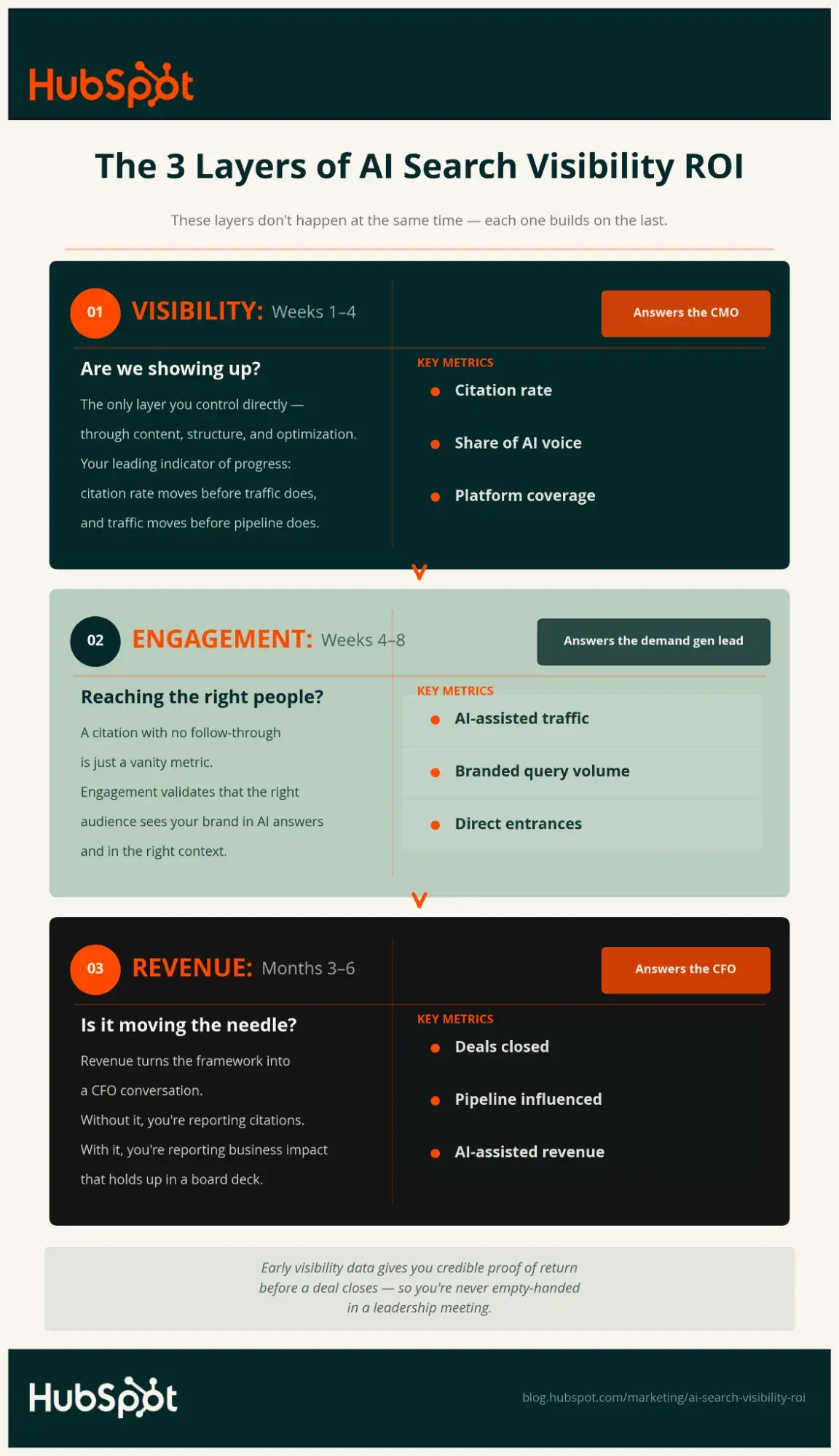
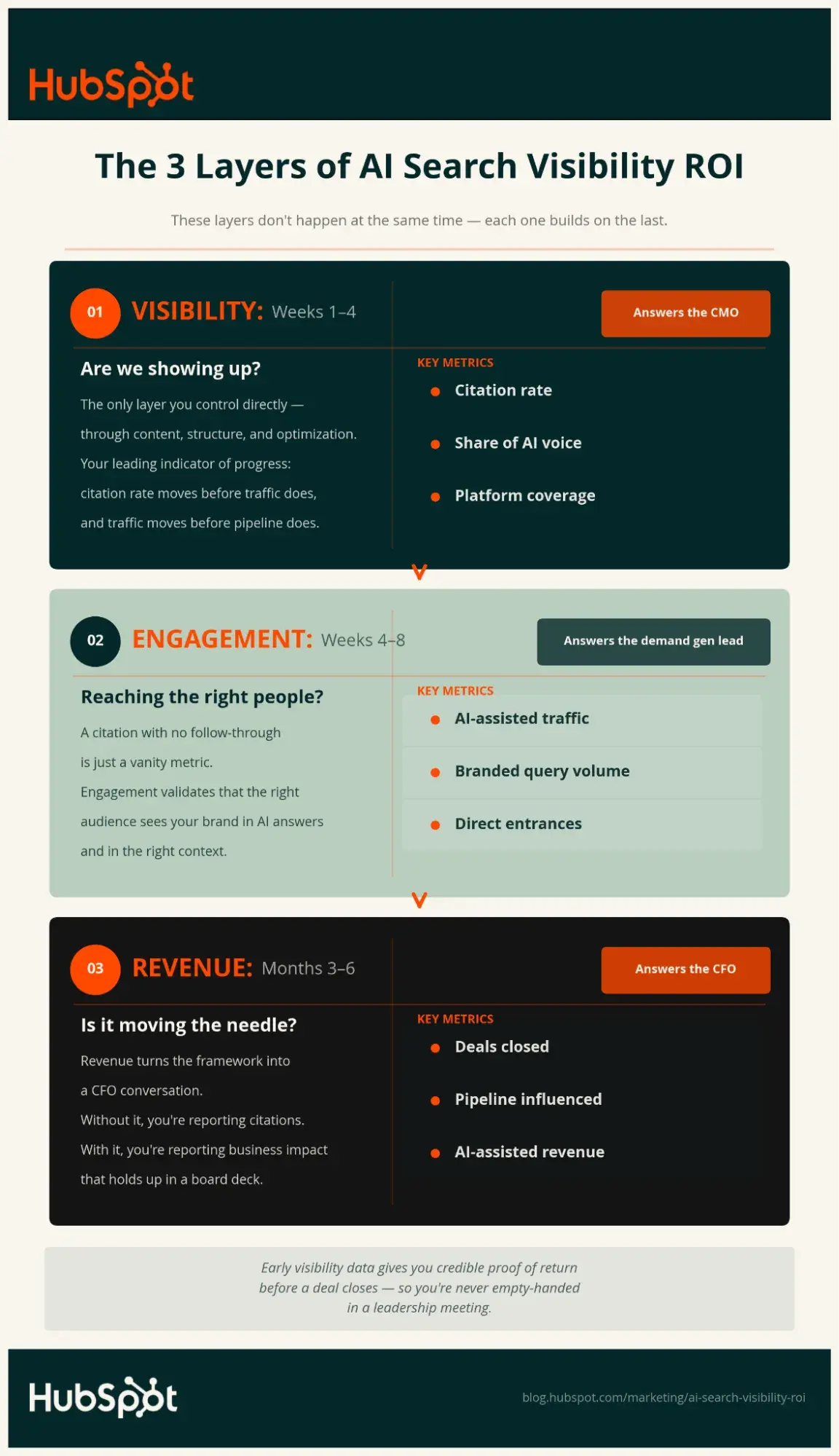
AI search visibility ROI is the measure of the return on investment derived from a brand’s appearance in AI-generated answers. While specific metrics may vary by industry and team, a comprehensive approach typically encompasses three distinct layers, each serving a crucial role in painting a complete picture:
-
Visibility Metrics: These focus on how often and how prominently a brand appears in AI-generated responses. This layer is foundational, indicating whether a brand is even part of the AI’s knowledge base for a given query.
-
Engagement Metrics: This layer assesses how users interact with a brand after encountering it in an AI search result. It moves beyond mere presence to understand if the AI mention sparks further interest and action.
-
Revenue Metrics: The ultimate layer connects AI visibility and engagement to tangible business outcomes, such as pipeline generation and closed revenue. This is where the true ROI is demonstrated.

It is essential to recognize that these three layers do not occur simultaneously. They form a delayed funnel, with visibility preceding engagement, which in turn, precedes revenue realization. Each layer also addresses potential skepticism from different stakeholders within an organization. Visibility metrics provide early, credible data on AI’s potential, even before deals close, while engagement and revenue metrics offer the context and proof required to satisfy leadership.
Visibility: Tracking Share of AI Voice and Citations
Share of AI Voice (SAIV) represents the percentage of tracked prompts for which a brand appears in the AI’s answer. Citation tracking goes a step further, determining whether the brand is linked as a source, signaling that AI systems recognize the content as authoritative.
How to Calculate SAIV:
- Define a comprehensive prompt set: This should include queries relevant to your product or service across different stages of the buyer’s journey, from initial research to purchase decisions.
- Execute prompts across AI platforms: Regularly query AI models such as ChatGPT, Gemini, and Perplexity using your defined prompt set.
- Record brand appearances: Note whether your brand is mentioned in the AI’s response for each prompt.
- Calculate the percentage: Divide the number of prompts where your brand was mentioned by the total number of prompts executed.
Citation Tracking:
- Identify citations: For prompts where your brand is mentioned, meticulously record if your brand’s website or content is cited as a source.
- Measure citation rate: Calculate the percentage of mentions that include a citation. This indicates the depth of AI’s reliance on your content.
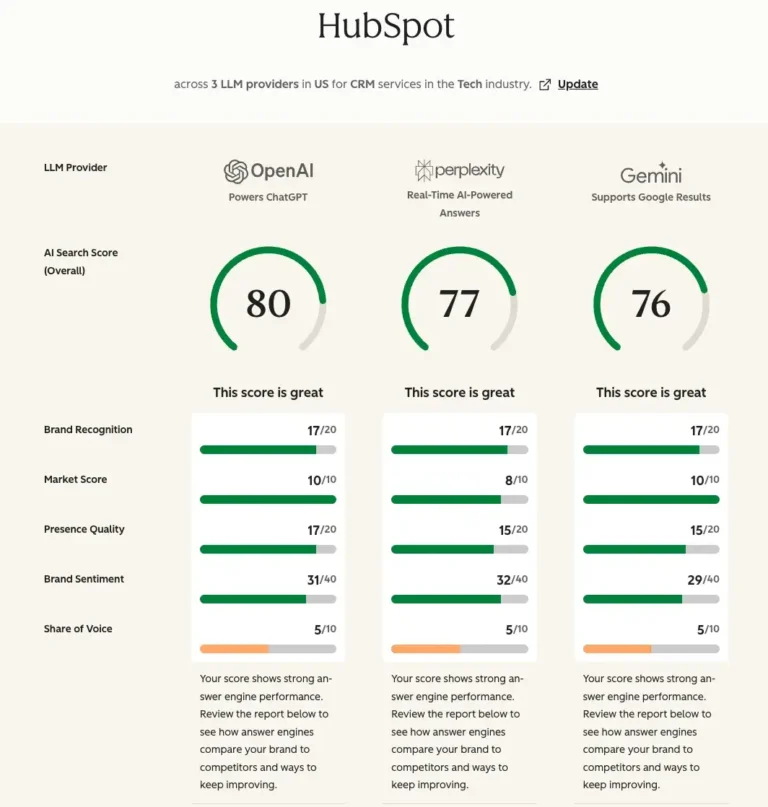
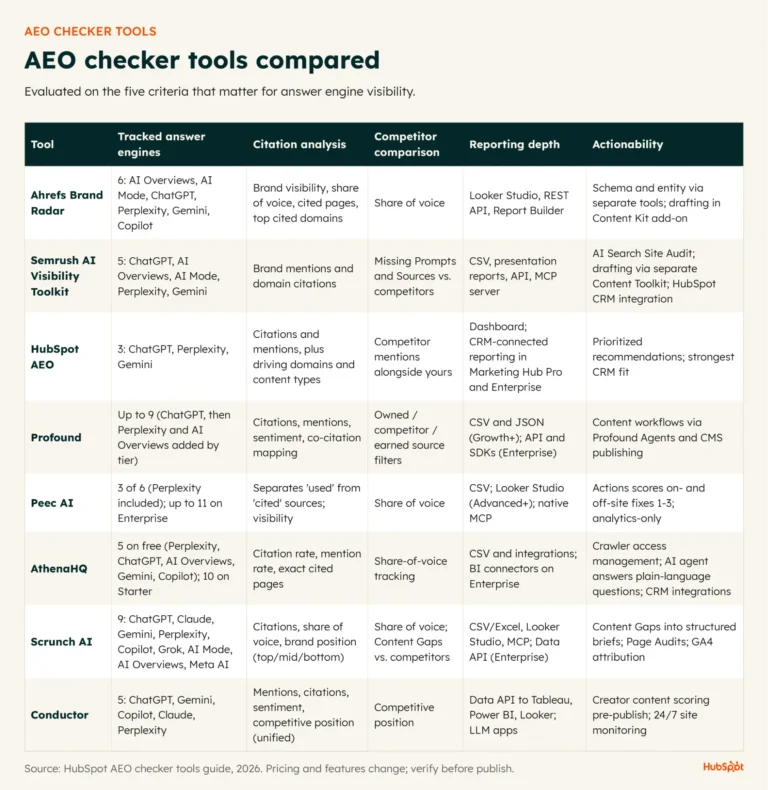
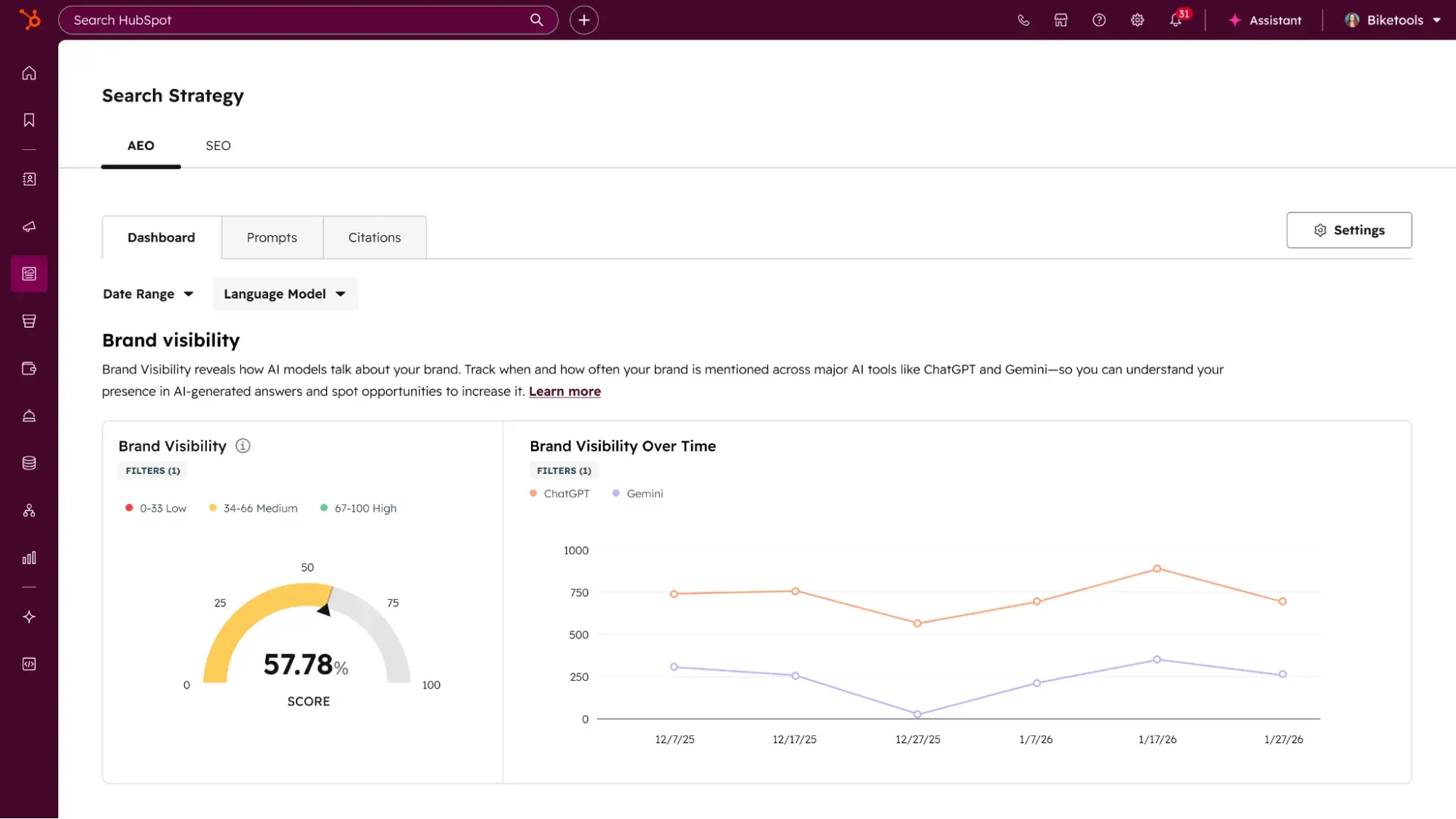
Tools like HubSpot’s AI-powered SEO (AEO) offer automated solutions for tracking Brand Visibility Scores across multiple AI platforms, monitoring competitor mentions, identifying content gaps, and integrating this data directly with CRM systems. This streamlined approach allows for continuous monitoring and analysis of AI search performance.
Engagement: Leveraging Branded Search Lift and Direct Traffic
When a brand is featured in AI answers, users often initiate a direct search for that brand later, resulting in an increase in branded keyword searches and direct website traffic, even without a direct click from the AI response.
How to Measure Engagement:
- Monitor Branded Search Lift: Analyze Google Search Console and Google Analytics 4 (GA4) for significant increases in branded keyword searches that correlate with AI visibility efforts. A sustained uplift in branded search volume without corresponding paid search campaigns is a strong indicator of AI-driven awareness.
- Track Direct Traffic: Observe trends in direct website traffic within GA4. An increase in users navigating directly to your site, particularly after periods of high AI visibility, suggests that AI mentions are driving brand recall and interest.
Revenue: Attributing Pipeline Influence in Your CRM
While perfect AI attribution remains elusive, the goal is to achieve assisted attribution by recognizing AI’s role in influencing conversions. Data from a HubSpot survey of over 3,000 CRM purchase decision-makers in January 2026 revealed that AI search was the most significant predictor of purchase intent, outperforming demos, review sites, and sales calls. Buyers who utilized AI search were 36% more likely to make a purchase.
How to Calculate Revenue Influence:

- Integrate AI touchpoints into CRM: Ensure your CRM system can track when contacts have interacted with AI-generated content or have been influenced by AI searches. This may involve custom fields or integrations with AI monitoring tools.
- Employ an assisted attribution model: Instead of relying solely on direct clicks, implement a model that assigns partial credit to AI touchpoints that precede a conversion. This acknowledges AI’s role in moving a prospect through the funnel.
- Analyze pipeline impact: Correlate AI-influenced contacts with their progression through the sales pipeline. Look for trends in MQL generation, deal velocity, and ultimate close rates among these contacts.
Benchmarking Brand Visibility in AI Search
Benchmarking is crucial for providing context to AI visibility data, offering both a competitive reference point and a trend line. A competitive benchmark reveals how a brand’s AI voice share compares to that of its direct competitors, while a trend line illustrates the impact of optimization efforts over time. Without both, it becomes difficult to assess performance, identify opportunities, or justify strategic decisions to leadership.
1. Identifying Answer Competitors
AI answer competitors are not always direct product competitors. AI systems prioritize content authority and clarity. Therefore, competitors often include industry media sites, analyst blogs, review platforms (like G2 and Yelp), and niche newsletters, alongside traditional rivals. Understanding these diverse competitors is key to tailoring an effective strategy. For instance, if an industry publication consistently ranks higher than a brand for critical buying-stage prompts, it indicates a content gap that needs addressing.
It is essential to document all sources that appear in AI answers for a given topic cluster, not just direct brand competitors. This comprehensive approach maps the entire citation landscape, providing a clearer understanding of where a brand stands relative to all authoritative sources.
2. Building a Share of Citations Chart
Regularly running a full prompt set allows for the aggregation of cited sources by topic cluster. A share of citations chart visually represents a brand’s performance against its top competitors, highlighting areas of strength and weakness. For example, a chart might show a brand leading in "Email marketing tools" citations but trailing significantly in "Sales pipeline management." This data directly informs content strategy, prioritizing areas needing improvement.
3. Interpreting Trends
Changes in citation share can be attributed to several factors: improvements in a brand’s own content, a decline in a competitor’s content quality, or shifts in AI model preferences due to updates. It is important to establish a baseline after major AI model releases to accurately interpret trend data. The trend line over several months is more indicative of strategic success than a single month’s snapshot. Integrating this benchmark data with marketing automation platforms can provide a unified view of AI citation share alongside other marketing channel metrics.
Planning for Sustained AI Search Visibility Measurement
A robust measurement plan for AI search visibility requires a structured approach:
1. Defining the Prompt Set
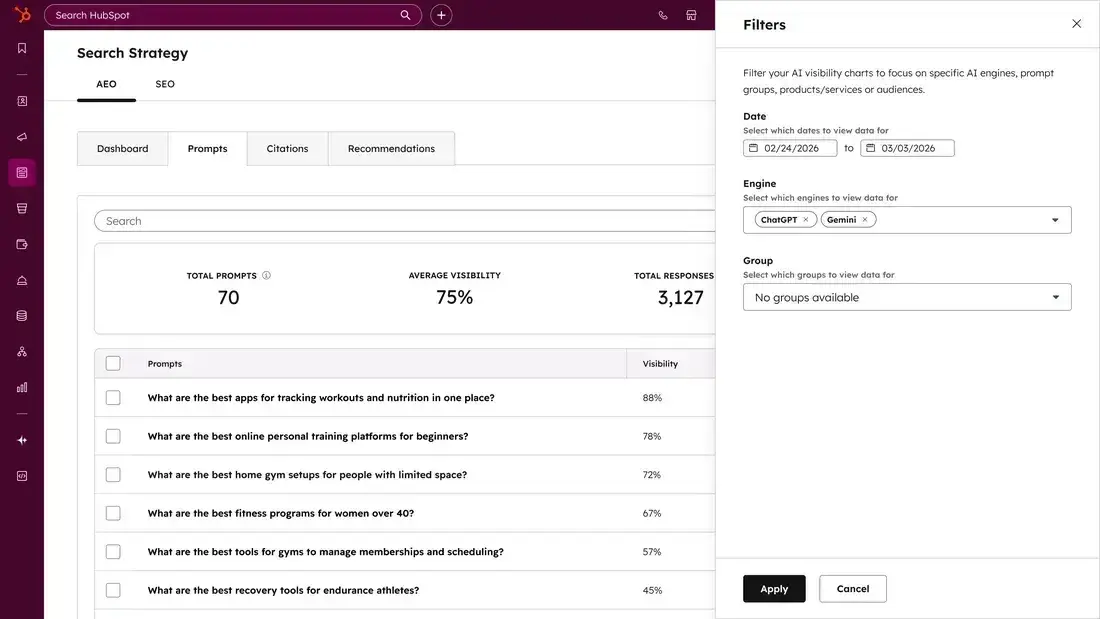
A critical first step is to curate a set of 20-30 prompts that accurately reflect how potential buyers research a brand’s category across all funnel stages. These prompts should originate from sales call recordings, customer support interactions, and existing keyword research to ensure they align with real-world buyer queries. Prioritizing specificity in prompts yields more reliable tracking data.
2. Inputting Prompts into AI Visibility Tools
Executing these prompts manually across various AI platforms can be time-consuming. Utilizing specialized tools, such as HubSpot AEO, automates this process, providing daily updates on citations across platforms like ChatGPT, Perplexity, and Gemini. Multi-platform tracking is essential, as the AI search landscape is fragmented. Reports indicate that ChatGPT’s share of B2B AI referrals has declined, with other platforms like Claude and Gemini gaining traction. Therefore, tracking needs to encompass all major AI surfaces.
3. Recording Brand Visibility Score
Each prompt execution should be scored based on brand mention, citation as a source, or recommendation. Aggregating these scores across all prompts and platforms establishes a baseline Brand Visibility Score, which should be re-evaluated monthly to track progress.
4. Auditing Existing Content
A comprehensive audit of existing content is vital. Tools like HubSpot’s AI Search Grader can identify where a brand is visible and where competitors are gaining an advantage. This audit should inform content optimization efforts, focusing on clarity, direct answers, and E-E-A-T (Experience, Expertise, Authoritativeness, Trustworthiness) signals.
5. Repeating the Process
Consistent tracking and analysis are key. Repeating the same prompts weekly or bi-weekly allows for the identification of trends and the assessment of strategy effectiveness.
Calculating AI Search Visibility ROI
Given the complexities of AI attribution, calculating AI Search Visibility ROI requires a nuanced approach. The formula is as follows:
*ROI (%) = (AI-Assisted Revenue – AI Costs) / AI Costs 100**
AI-Assisted Revenue
Since AI search rarely provides direct click attribution, marketers must develop an assisted revenue model that accounts for AI touchpoints influencing conversion. This relies on:
- Unified visibility and pipeline data: Integrating AI visibility metrics with CRM data to identify contacts who have demonstrated AI-influenced behavior.
- Assisted credit: Assigning a percentage of revenue to AI touchpoints based on their contribution to the buyer’s journey, acknowledging that AI is often one of several influencing factors.
- Multi-touch attribution: Utilizing marketing automation platforms to track the cumulative influence of various channels, including AI, on a conversion.
AI Costs
AI costs are generally more straightforward and typically include:
- AI visibility tools: Subscription fees for platforms that track AI mentions and citations.
- Content optimization efforts: Resources dedicated to improving content for AI discoverability.
- Data analysis and reporting: Time and tools required for processing and interpreting AI performance data.
Example Calculation:
Suppose a team invests $2,000 per month in AI visibility tools and content optimization, totaling $6,000 over a quarter. If their CRM identifies $30,000 in pipeline where contacts had confirmed AI touchpoints before converting, and a 25% assisted credit is applied, this results in $7,500 in AI-assisted revenue.
Applying the ROI formula:
*ROI (%) = ($7,500 – $6,000) / $6,000 100 = 25% ROI**
This provides a concrete, defensible figure for leadership.
Making the Leadership Case for AI Search
Presenting a compelling case to leadership requires framing the discussion around three key pillars: opportunity cost, competitive risk, and a clear measurement plan.
Opportunity Cost
AI-referred leads exhibit a conversion rate three times higher than those from traditional search. Every month without AI measurement and optimization represents a loss of high-intent buyers who are making decisions without the brand’s input. This is not a hypothetical risk but a tangible loss of potential revenue.
Competitive Risk
Companies actively optimizing for AI search are generating significantly more Marketing Qualified Leads (MQLs) and deals compared to those that are not. The gap between proactive and passive approaches to AI visibility is already widening, presenting a clear competitive risk for lagging organizations.
Measurement Plan
Leadership requires concrete roadmaps. A 30/60/90-day plan, including a defined baseline, prompt set, metric framework, and CRM attribution model, demonstrates a clear path to understanding AI’s impact. This plan should detail how success will be measured and when results can be expected.
Expected Timelines for AI Search Visibility
It is crucial to set realistic expectations regarding AI search visibility timelines, as they differ significantly from paid media or even traditional SEO. AI visibility strategies do not yield immediate pipeline movement.
Typical AI Search Visibility Milestone Windows
- Days 1-30: Baseline established, prompt set running. Report on initial visibility scores and competitor benchmarks.
- Days 30-60: First citation data emerges, branded search trends begin to appear. Report on Share of AI Voice and direct traffic deltas.
- Days 60-90: AI-influenced contacts appear in CRM, indicating early pipeline impact. Report on AI-influenced MQL rates and pipeline touch data.
- Days 90-180: Pipeline influence data solidifies, revenue models become live. Report on AI-assisted close rates and deal velocity.
Leading Indicators to Watch
While pipeline data matures, leading indicators provide early signals of strategy effectiveness:
- Rising Share of AI Voice: An increasing percentage of AI answers featuring the brand.
- Increased Citations: More instances where the brand is cited as a source.
- Branded Search Lift: A noticeable increase in direct searches for the brand.
- Direct Traffic Growth: An uptick in users navigating directly to the website.
- Positive Sentiment in AI Answers: AI responses about the brand are generally favorable.
If two or more of these indicators move positively within 60 days, it provides a credible basis for demonstrating that the strategy is on the right track, even before significant pipeline data is available.
Frequently Asked Questions About AI Search Visibility ROI
How can I improve visibility with an AI search optimization strategy?
Begin by optimizing content structure. AI systems favor direct, clear answers. Ensure the initial content directly addresses prompts, use question-based headings, and implement FAQ and Article schema. Additionally, focus on building brand reputation and securing citations from authoritative third-party sources. A multi-platform strategy is essential, as different AI engines have varying retrieval logics and citation behaviors.
What timeline should I expect for improvements in AI search visibility?
Content improvements typically reflect in citation rates within 30-60 days, with measurable pipeline influence emerging 90-180 days later. Branded search lift and direct traffic can show shifts within four to six weeks. High-intent buying prompts, especially against established competitors, may take longer. Tracking early and reporting on leading indicators is crucial.
How should I pick prompts to track AI share of voice?
Select prompts from sales call recordings, customer support tickets, and existing keyword research. Prioritize specificity to reflect real buyer intent. Structure prompts across awareness, consideration, and decision stages of the funnel. Aim for 5-10 prompts per topic cluster initially and refresh the set quarterly.
What if my brand is rarely mentioned today?
A low visibility score presents a clear opportunity. Audit topic clusters with low citation rates to identify who is appearing and why. Address content gaps by optimizing high-priority pages for clarity, direct answers, and E-E-A-T signals. Focus on winning a few key clusters first before expanding. Visibility tends to compound over time.
Conclusion: Securing Your Brand’s Place in AI Answers
The fundamental truth of commerce remains unchanged: whoever best answers buyer questions wins. AI search has altered where those answers are found, but not the underlying principle. Businesses do not require massive budgets or dedicated AI teams to begin measuring their AI search visibility. By utilizing tools like HubSpot AEO to track Brand Visibility Scores, flagging AI-influenced contacts in the CRM, and monitoring branded search trends, a clearer picture of AI’s impact emerges rapidly. Every data point collected now provides a crucial advantage in building a compelling case for AI investment. The shift towards AI-driven information retrieval is already underway, and the only question remaining is whether a brand is consistently present in those answers.
About the Author