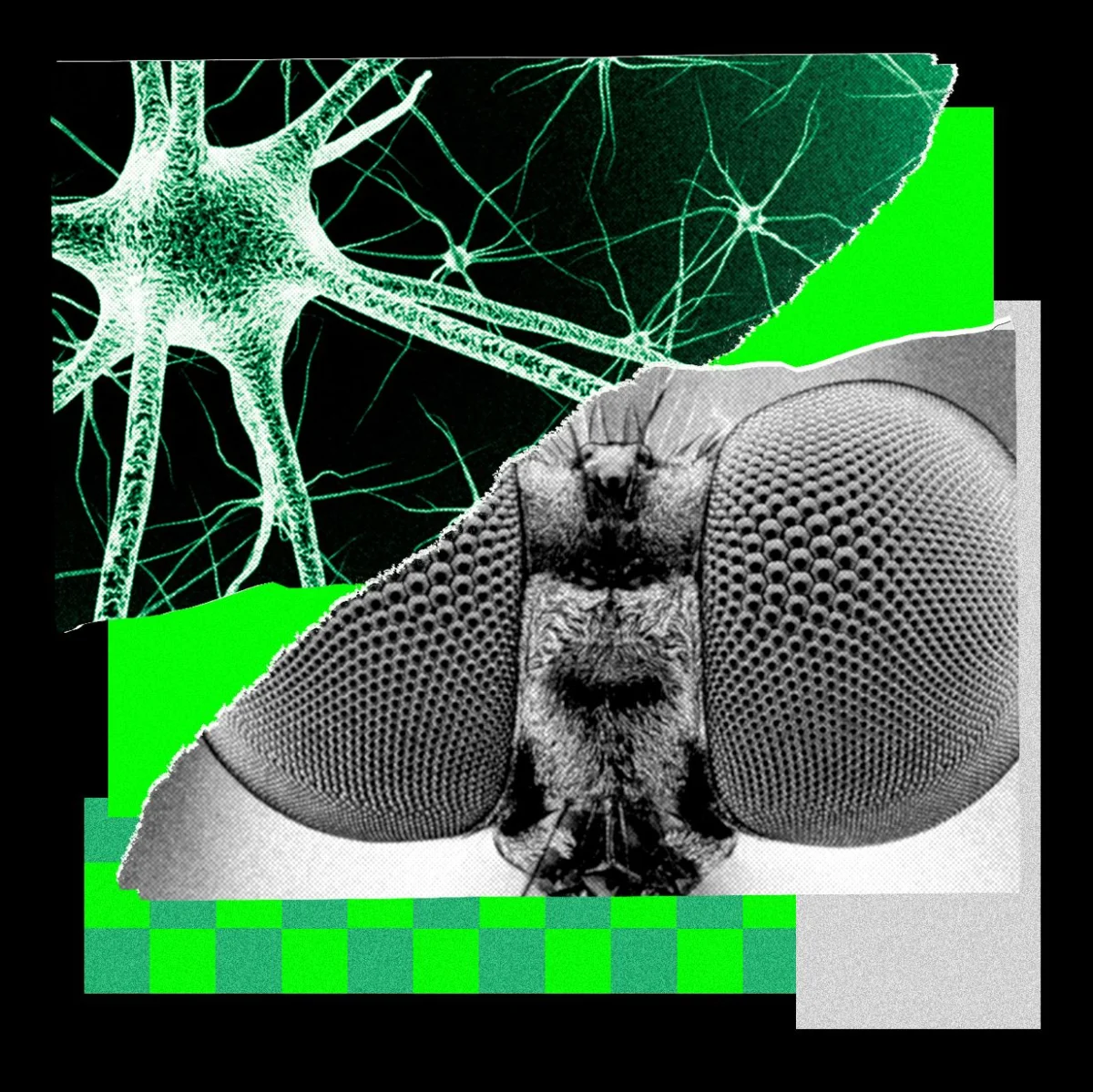
The field of artificial intelligence has reached a unique intersection where high-level computational linguistics meets the intricate biological mapping of the insect world. At the center of this convergence is PitchFly, a specialized digital entity developed as an experimental editorial recruit for the technology publication WIRED. PitchFly is not a standard large language model (LLM) in the vein of GPT-4; rather, its cognitive architecture is built upon a foundation of 165,112 neurons, all of which are digital replications of the biological neural pathways found in a male drosophila, commonly known as the fruit fly. This project represents a broader trend in "biological AI," where researchers and developers utilize the open-sourced maps of simple organisms to simulate complex behaviors, ranging from creative brainstorming to stock market speculation.
The primary engine behind PitchFly is a detailed connectome—a comprehensive map of every neuron and synapse within the brain of a fruit fly. This map, developed through a massive collaborative effort involving researchers from Google and various academic institutions, captures approximately 125 million connecting synapses. By simulating how these neurons fire in response to specific stimuli, developers can create a digital version of biological intelligence. In the case of PitchFly, this intelligence has been repurposed to generate editorial story ideas. Early outputs from the system include headlines such as "The Hidden Weather Problem Inside Surveillance" and "The Engineers Who Think Elon Musk Needs Less Computer Security," as well as more abstract combinations like "Everyone Wants Cooking. Nobody Has Solved Donald Trump." While some results border on the nonsensical, they demonstrate a unique form of pattern remixing that differs fundamentally from the statistical word-prediction models used by mainstream AI companies.
The Genesis of the Drosophila Connectome
The release of the full fruit fly connectome in early September 2024 marked a watershed moment for both neuroscience and computer science. The project was the culmination of years of intensive research aimed at deciphering the neurological "wiring diagram" of a complex organism. Historically, the only creature to have its entire nervous system mapped was the roundworm C. elegans, which possesses only 302 neurons. Moving from 302 neurons to the 166,000 found in the fruit fly represents a massive leap in complexity and required the use of advanced electron microscopy and machine learning to identify and trace individual neural fibers.
The data was made available to the public via open-source platforms, allowing developers to import the connectome into their own software environments. This accessibility triggered a wave of "vibe coding"—a contemporary development style where programmers use natural language prompts and AI assistants like Codex to build complex systems without traditional manual coding. By feeding the drosophila brain a dataset of popular headlines from the past year, developers were able to train the simulated neural network to recognize linguistic patterns. The process involved transforming headlines into mathematical representations that the neural network could process, essentially teaching a fly’s brain to "think" in the language of tech journalism.
A Chronology of Biological Simulation and Open-Source Innovation
The timeline of this breakthrough reflects a rapid transition from academic research to public experimentation. In early 2024, partial maps of the drosophila brain were used to study specific behaviors, such as flight control and odor recognition. However, the release of the complete CNS (central nervous system) map in September provided the necessary infrastructure for full-brain simulations.
Within weeks of the data’s release, the developer community on platforms like X (formerly Twitter) and GitHub began showcasing a variety of "fruit fly intelligence" projects:
- September 10-15, 2024: Initial release of the connectome data by the FlyWire consortium and Google Research.
- September 20, 2024: Software engineers begin integrating the connectome into game engines. Projects like "DoomFly" and "PongFly" emerge, testing whether a simulated fly brain can navigate virtual 3D environments or react to fast-moving objects.
- September 25, 2024: The emergence of "StonkFly," a project by Coinbase software engineer Alex Wormuth. This application uses the fly’s neural circuitry to make real-time decisions in stock trading.
- October 2024: The launch of PitchFly, demonstrating that the connectome could be applied to generative text and creative brainstorming tasks.
This chronology highlights the speed at which open-source biological data can be weaponized for diverse computational tasks once the barrier to entry—namely, the sheer complexity of the data—is lowered by AI-assisted coding tools.
Technical Analysis: Biological Intelligence vs. Large Language Models
To understand why PitchFly and its contemporaries are significant, one must distinguish between the "top-down" approach of LLMs and the "bottom-up" approach of connectomics. Large Language Models are trained on trillions of words to predict the next token in a sequence; they have no underlying biological structure. In contrast, a connectome-based model simulates the physical architecture of a brain.
The drosophila brain does not "understand" English. When PitchFly generates a headline, it is not contemplating the political implications of Donald Trump or the technical nuances of Elon Musk’s security protocols. Instead, it is responding to data inputs by firing digital synapses that have been conditioned by the patterns of previously successful headlines. This is a form of "remixing" that mimics biological response mechanisms rather than linguistic logic.
Alex Wormuth, the creator of StonkFly, noted that while his fly-based trading bot was losing money, its decision-making process was surprisingly coherent. The fly brain provides a "lighthearted, humorous relief" in an era dominated by fears of existential risk from super-intelligent AI. However, the philosophical implications remain profound. If a digital replication of a fly’s brain can solve a Rubik’s cube or play Beat Saber, it raises questions about the nature of consciousness and the ethics of replicating biological life in a digital vacuum.
Broader Applications: From Gaming to Neuroscience
The diversity of projects powered by fruit-fly intelligence underscores the versatility of the connectome. Beyond editorial pitches and stock trading, the map has been used to train virtual flies to:
- Play Beat Saber: An X user, Lyra Bubbles, demonstrated a project where the fly brain was trained to hit blocks in rhythm with music, showcasing the temporal processing capabilities of the drosophila circuitry.
- Navigate Minecraft: Researchers have explored how the fly’s innate sense of spatial awareness translates to the block-based world of Minecraft.
- Drive Virtual Cars: Experiments in "FlyHard" showed that while the fly brain can handle basic navigation, it struggles with complex human tasks like parallel parking, highlighting the limitations of an insect-scale intelligence in a human-centric world.
While some of these projects are satirical or "spoofs," others serve serious scientific purposes. Tools like FlyBrainLab and the Connectome Interpreter allow neuroscientists to manipulate neural circuitry in real-time to see how damage—such as the loss of specific neurons—affects behavior. This provides a safe, digital environment to test theories about brain repair and the biological foundations of intelligence.
Scientific and Industrial Implications
The successful simulation of a fruit fly’s brain is a stepping stone toward more ambitious neurological goals. While the human brain contains 86 billion neurons—making a full connectome currently impossible with existing technology—the drosophila model provides a blueprint for how we might eventually map higher-order mammals.
From an AI development perspective, the "fruit-fly frivolity" observed in late 2024 proves that massive, resource-heavy models are not the only path forward. Specialized AI models that utilize the efficiency of biological structures can perform specific tasks with a fraction of the energy and data required by a model like GPT-4. This shift toward "efficient AI" is likely to define the next decade of the industry, as companies seek to build functional tools that do not require massive data centers to operate.
Furthermore, the integration of biological maps into AI allows for a more "grounded" form of intelligence. Traditional AI often suffers from "hallucinations" because it lacks a physical or biological frame of reference. By basing an AI’s "thought" process on a biological connectome, developers are experimenting with a system that has evolved over millions of years to interact with the physical world, even if that world is now a digital simulation.
Conclusion and Future Outlook
The average writer or trader may not be in immediate danger of being replaced by a digital fruit fly. As the creator of PitchFly noted, the system’s "lunatic ideas" suggest that human intellectual superiority remains intact for the time being. However, the proof of concept is undeniable. The ability to download a brain, "vibe code" a wrapper for it, and have it perform tasks ranging from journalism to financial analysis represents a radical democratization of both neuroscience and AI.
As neuroscientists continue to refine these maps and developers continue to find "weird and wonderful" uses for them, the line between biological intelligence and artificial simulation will continue to blur. The fruit fly, once a staple of high school biology labs, has now become a foundational architect of the next generation of digital innovation. The future of AI may not just be found in bigger GPUs and larger datasets, but in the tiny, 166,000-neuron brains of the world’s most common insects.
About the Author