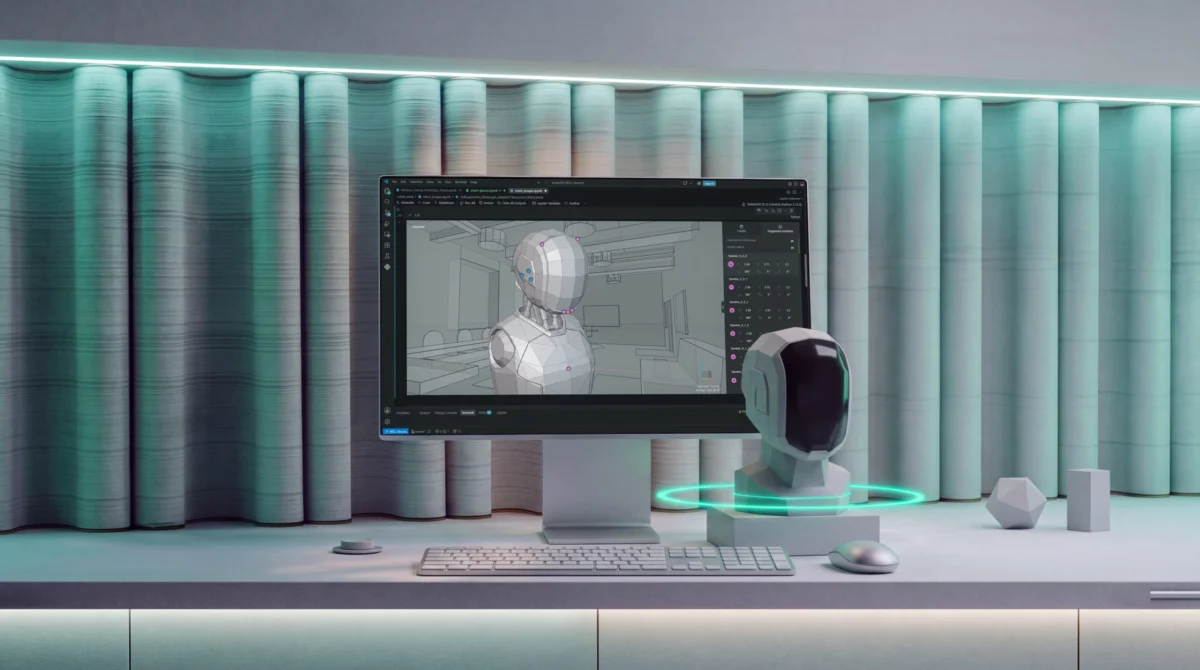
The burgeoning field of voice artificial intelligence (AI) is experiencing an unprecedented surge in investment, with billions of dollars flowing into a diverse array of applications. From streamlining customer support and automating sales interactions to developing sophisticated meeting notetakers and pioneering AI-powered smart glasses that prioritize voice as the primary interface, the potential of voice AI is rapidly being realized. Concurrently, leading AI laboratories are in a race to release increasingly advanced models, while hardware manufacturers are striving to create seamless and intuitive user experiences for interacting with these devices. Amidst this rapid innovation, a critical need has emerged for robust testing and feedback mechanisms to refine and improve these cutting-edge technologies. Enter Treble, an Iceland-based startup that is strategically positioning itself at the epicenter of the voice AI industry with its advanced simulation platform, designed to cater to a broad spectrum of stakeholders including model developers, robotics companies, and consumer hardware manufacturers.
The company, co-founded in 2020 by acoustic engineers Finnur Pind and Jesper Pedersen, has successfully secured an $18 million extension to its Series A funding round. This latest infusion of capital was led by Paladin Capital Group, with significant participation from existing investors KOMPAS VC, Frumtak Ventures, EIC, and Omega ehf. This brings Treble’s total funding raised to date to over $40 million, following an initial $12 million investment received in 2024. The startup’s growing influence is underscored by its impressive client roster, which includes industry giants like Amazon and Logitech.
The Critical Need for Advanced Simulation in Voice AI
The exponential growth of voice AI has brought to the forefront a fundamental challenge: the creation and validation of high-quality data. As AI models become more sophisticated, their performance is directly tied to the richness and diversity of the data they are trained on. Traditionally, audio-related AI development has relied heavily on recordings and datasets scraped from the internet. While this approach has yielded significant progress, it often lacks the control and specificity required for advanced applications, particularly in challenging acoustic environments or for specialized use cases.
Finnur Pind, co-founder of Treble, articulated this challenge, stating, "Audio AI is really a data challenge, and this is where the most opportunities to enable next-generation models and hardware lie. To date, pretty much all sound-related AI has been made from recordings and data scraped from the internet. We believe that accurate physics simulation can be an alternative way to create data for sound." This perspective highlights the limitations of relying solely on real-world recordings, which can be difficult to capture in diverse conditions, prone to noise, and may not cover all desired scenarios for comprehensive model training and testing.
Treble’s Simulation Platform: A Versatile Solution
Treble’s core offering is a sophisticated simulation platform that addresses this data deficit and testing bottleneck. The platform is structured around several key verticals, each designed to provide unique value to different segments of the AI ecosystem.
Synthetic Data Generation for Voice AI
For voice AI companies, Treble provides a powerful synthetic data generation platform. This technology is crucial for a range of applications, including speech enhancement, noise suppression, and, most importantly, model training. By generating highly realistic and customizable audio data, Treble enables developers to train their models on a vast array of scenarios that might be impractical or impossible to capture in the real world. This includes simulating different background noises, speech patterns, accents, and acoustic environments. This approach not only accelerates the training process but also leads to more robust and adaptable AI models.
Model Evaluation and Benchmarking
Beyond data generation, Treble’s platform excels in evaluating voice AI models under diverse and controlled conditions. This rigorous testing provides invaluable feedback to AI labs, allowing them to identify weaknesses and areas for improvement. A significant milestone in this area was Treble’s partnership with Hugging Face earlier this year. Together, they launched a benchmark for speech recognition models, specifically designed to assess their performance across a spectrum of realistic acoustic conditions. This initiative offers a standardized and transparent method for comparing the capabilities of different speech recognition models, fostering competition and driving innovation.
Hardware Design and Acoustic Prototyping
Treble’s expertise extends beyond software models to encompass the physical realm of hardware. The company collaborates with manufacturers of headphones, speakers, and other audio devices to facilitate virtual prototyping. This process allows companies to simulate and understand the acoustic performance of their products before committing to expensive physical prototypes. For instance, Treble can model how a particular speaker design will impact sound quality or how a smart speaker will interpret commands based on its placement and surrounding environment. This capability is particularly relevant for consumer electronics companies seeking to optimize user experience and product performance.
Expanding into Wearables and Physical AI
In recent times, Treble has broadened its scope to include simulation testing for smart glasses and other emerging AI-powered wearable devices. This expansion is driven by the increasing demand for voice-activated interfaces in everyday technology. Pind expressed particular enthusiasm for the potential of wearables to enhance human hearing.

"I’m really excited about the next generation of these devices like headphones and smart glasses that can enable [a feature like] superhuman hearing," Pind remarked. "That’s an area where you can really just hear better in challenging acoustic environments. Maybe you are in a restaurant, and you only want to hear people within two meters of range, or you are in a seminar, and want to mute people around you." This vision underscores Treble’s commitment to pushing the boundaries of what voice AI can achieve, moving towards applications that offer tangible improvements to daily life.
Looking ahead, Treble aims to further deepen its engagement in the "physical AI" space. This includes providing its simulation and testing services to companies developing robots, autonomous vehicles, and drones. The integration of sound-based functions into these physical systems requires sophisticated acoustic understanding and validation, areas where Treble’s platform is well-positioned to provide critical support.
Investor Confidence and Future Outlook
The significant investment secured by Treble reflects strong confidence from the venture capital community in the company’s vision and technological capabilities. Francois Ruether, VP at Paladin Capital Group, highlighted the unique value proposition of Treble’s platform.
"Treble’s platform, which simulates different models and devices, stands out; the platform’s importance will increase as it gets involved in more areas," Ruether stated. He further elaborated on the strategic rationale behind Paladin’s investment: "Our thesis is that, as more products depend on understanding sound, this infrastructure becomes increasingly valuable across voice AI, wearables, robotics, and physical AI. Customers retain ownership of their models, products, and development workflows, while benefiting from a shared foundation of a simulation-native acoustic infrastructure layer."
This analysis by Paladin Capital Group points to a growing trend where acoustic intelligence is becoming an indispensable component across a wide range of technologies. As devices and systems become more reliant on processing and responding to sound, the need for specialized infrastructure that can simulate, test, and optimize these capabilities will only intensify. Treble’s approach of providing a foundational simulation layer that respects customer ownership of intellectual property is a key factor in its appeal to sophisticated technology developers.
The Broader Implications for the AI Landscape
Treble’s success and strategic direction have significant implications for the broader AI industry. Firstly, it validates the critical role of simulation in accelerating AI development. As AI models become more complex and their applications more diverse, the ability to test and iterate in virtual environments becomes paramount. This not only reduces development costs and time-to-market but also allows for the exploration of edge cases and scenarios that are difficult or impossible to replicate in the physical world.
Secondly, Treble’s focus on acoustic simulation addresses a vital but often overlooked aspect of AI. While much attention has been given to visual and natural language processing, the nuanced world of sound and its interaction with AI systems is a rapidly expanding frontier. From understanding human speech in noisy environments to enabling robots to navigate and interact using sound, acoustic intelligence is poised to unlock new levels of functionality and user experience.
Thirdly, the company’s expansion into physical AI, including robotics and automotive applications, signals a convergence of software and hardware development driven by AI. As more physical systems become "smart" and interact with their environment, the ability to accurately simulate their acoustic behavior and responsiveness will be essential for their safe and effective deployment.
The $18 million Series A extension positions Treble to further scale its operations, enhance its platform’s capabilities, and expand its market reach. With a clear understanding of the data and testing challenges facing the rapidly evolving voice AI sector, and a strategic vision that extends into the broader realm of physical AI, Treble is poised to become a cornerstone technology provider in the next generation of intelligent systems. The company’s journey, from its origins as a startup founded by acoustic engineers to its current standing as a key player attracting significant investment, exemplifies the dynamic and innovation-driven nature of the modern AI landscape.
About the Author