Answer Engine Optimization (AEO) is fundamentally reshaping the search engine landscape, moving beyond the established paradigms of keyword density, backlink acquisition, and domain authority. The predictability of traditional Search Engine Optimization (SEO) has given way to a more dynamic and nuanced approach, where brands are not necessarily those with the largest digital footprints but rather those that have meticulously cultivated content that AI-powered answer engines deem trustworthy and reliable. This shift has profound implications for businesses aiming to capture audience attention in the digital sphere.
Recent analyses, including an in-depth examination of citation data across major answer engines and the comprehensive "State of AEO" report by HubSpot, which analyzed thousands of citation data points from over six answer engines and surveyed more than 4,000 global marketers, reveal a consistent pattern in the behavior of brands that are successfully earning citations at scale. This pattern eschews a single "magic bullet" tactic in favor of a multifaceted strategy centered on building and maintaining trust with AI systems.
The core of this transformation lies in the very nature of how AI-powered search functions. As AJ Ghergich, VP of AI & Consulting Services at Botify, articulated on the "Found in AI" podcast, "You don’t rank in AI. It’s stochastic." This means that achieving a top position through conventional ranking metrics is not the primary objective. Instead, the goal is to become a trusted source that an AI engine consistently references when responding to user queries. While traditional SEO historically rewarded pages for their discoverability, AEO prioritizes content for its quotability. AI engines require clean, accurate, and properly attributed content that can be seamlessly integrated into generated answers with confidence.
The data indicates that brands achieving high citation rates exhibit remarkably consistent behaviors. Five key strategies have emerged as particularly impactful:
1. Consistent Content Structure for Extractability
AI answer engines do not consume content like human readers; they parse, segment, and extract information. Content that is not structured for easy extraction poses a significant challenge. The HubSpot "State of AEO" report highlights a strong correlation between citation rates and content structure, specifically noting that pages with a greater number of headings and deeper heading hierarchies (utilizing H3s and H4s beyond just H2s) tend to achieve higher citation rates. The data suggests a sweet spot for H2 headings, with citation rates peaking for pages containing seven to fifteen H2s. This indicates that clearly labeled, self-contained sections of information are more readily identified and utilized by AI engines.
Brands that excel in this area prioritize scannable content. They employ clear headings and subheadings, state definitions upfront, use concise paragraphs, incorporate lists, and label sections effectively. This meticulous organization makes it significantly easier for machines to pinpoint the precise information needed to answer a query.
2. Robust E-E-A-T Signals: The Foundation of Trust
The principle of Experience, Expertise, Authoritativeness, and Trustworthiness (E-E-A-T), a cornerstone of Google’s search quality guidelines, has become even more critical in the age of AI. Answer engines rely heavily on these signals because their own credibility is directly linked to the accuracy and reliability of the information they present.
Pages that garner citations typically display visible trust markers. These include author biographies detailing credentials, outbound links to authoritative sources and data, original research, and consistent brand signals across the web. AI engines effectively perform a validation process, asking, "Can we vouch for this source?"
High-citation brands actively integrate E-E-A-T signals into their website content, blog posts, and social media presence. The more frequently AI engines associate a brand or individual with a specific topic, the stronger their entity authority becomes in the eyes of these systems.
3. Multi-Format, Multi-Channel Presence: Beyond the Website
Answer engines do not limit their information retrieval to a single website. They actively seek answers across the broader internet, including social media platforms and community forums. Data from the "State of AEO" report reveals that text-heavy platforms and long-form video channels, such as LinkedIn and YouTube, are particularly effective in generating citations. Krista Doyle, Founder at Fan Out, emphasized in the report that "LinkedIn signals practitioner authority, and YouTube signals demonstrated expertise." These platforms serve as crucial evidence that a brand not only exists but also possesses genuine knowledge beyond its own domain.
The influence extends beyond major platforms. Doyle also noted that AI engines can draw from niche, industry-specific communities in indirect ways. For instance, summaries of Slack community discussions published as blog posts or content from niche Substack newsletters can be indexed and utilized. For Business-to-Business (B2B) sectors, in particular, a mention within a tight-knit industry community can carry more retrieval weight than a generic high-authority backlink.
Brands that achieve high citation rates demonstrate their presence and corroborate their expertise across a diverse range of online channels, effectively reinforcing the answers found on their primary website.
4. Regular Publishing and Refresh Cadence: Signaling Currency
Answer engines prioritize content that signals recency and active maintenance. Freshness is a key trust signal, not in the sense of high-volume, daily publishing, but in demonstrating ongoing engagement and updates. The "State of AEO" report found that including the publication year in H1 tags and meta titles correlates with higher citation rates, particularly for Google AI Overviews and Microsoft Copilot. Visible "last updated" dates also contribute to this perception.
Brands that consistently earn citations treat their most valuable pages as living assets, revisited and updated with current data and refreshed with the latest publication year. This practice signals to AI engines that the content is actively managed and reliable. Even if no substantial changes have occurred, adding a brief note such as "What’s next?" or "As of [year]" can effectively communicate to an AI engine that the information is being actively overseen.
5. Schema Markup and Technical Hygiene: The Engine’s Blueprint
Structured data, or schema markup, provides AI engines with a clear, labeled map of a webpage, eliminating the need for them to infer meaning. This is akin to handing an engine a pre-organized blueprint rather than expecting it to decipher a complex architectural drawing. FAQ schema, in particular, has shown a strong relationship with citation rates.
Descriptive FAQ headings, when paired with FAQ schema, offer AI engines pre-packaged question-and-answer pairs that are almost tailor-made for AI-generated answers. By implementing fundamental schema types such as article schema, author schema, and FAQ schema where appropriate, brands ensure their content is easily understandable and citable. Maintaining strong technical hygiene on a website is a quiet but essential practice for brands aiming for high citation performance.
The Synergy of Content Structure and Trust Signals
While ranking position can enhance the likelihood of a citation, it does not guarantee it. A well-structured and trustworthy page can outperform a higher-ranking competitor that lacks these attributes. The page that is easiest to trust and extract information from often wins the citation, even if it doesn’t hold the top organic ranking. This is a critical distinction in the evolving search landscape.
Page Types Most Likely to Earn Citations
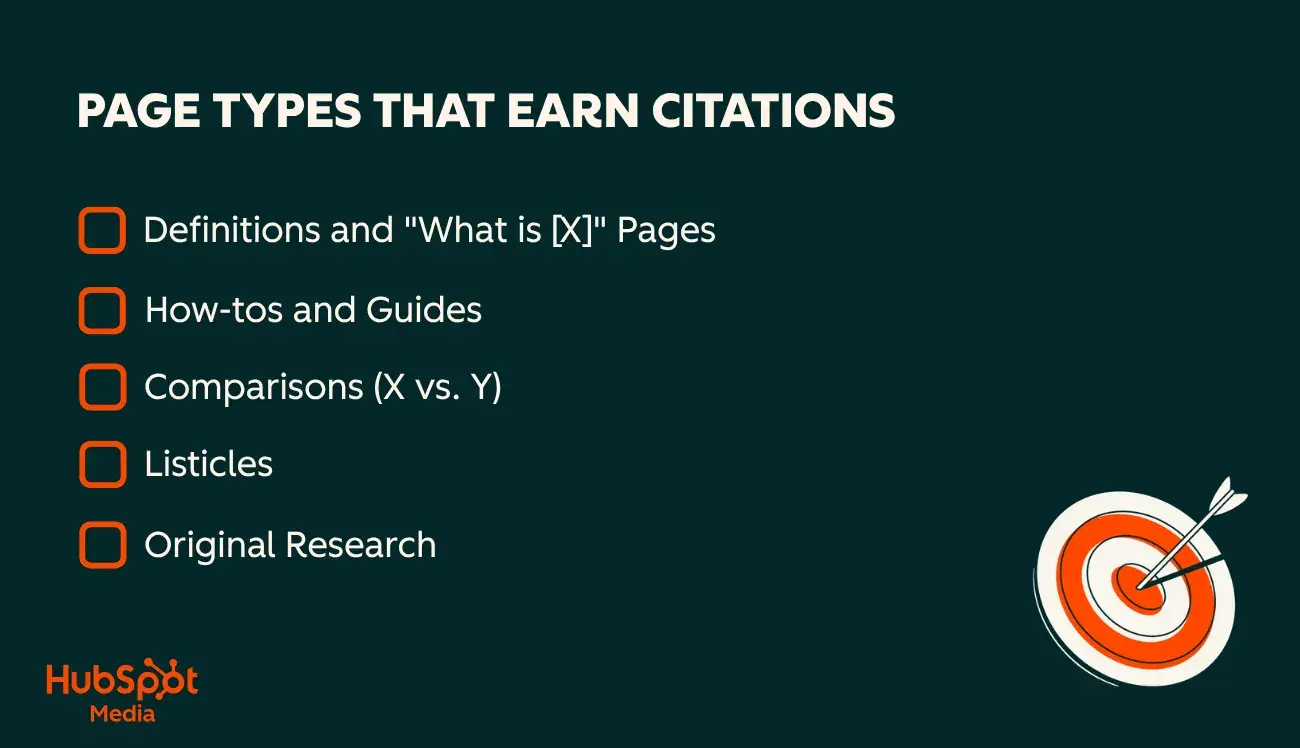
Not all content formats are equally favored by answer engines. Some are "citation magnets," while others struggle to gain traction. Based on citation analysis, the following page types are particularly effective:
- Definitions and "What is [X]" Pages: Concise definitions are precisely what AI engines seek when faced with "what is" queries. Leading with a clear answer and then elaborating is a highly effective strategy.
- How-tos and Guides: Step-by-step content aligns perfectly with how engines structure procedural answers. Clearly numbered and labeled steps pre-format the content for AI consumption.
- Comparisons (X vs. Y): Comparative content stands out as a powerful citation format, particularly in platforms like ChatGPT, where comparison pages were cited at a remarkably high rate. Users frequently ask AI engines to compare options, making clean comparison tables highly valuable.
- Listicles: "Best [X]" lists and numbered listicles perform well across multiple engines due to their inherent structure, scannability, and ease of extraction.
- Original Research: Proprietary data is the ultimate trust signal. Publishing original research positions a brand as the definitive source, prompting other content and engines to link back.
Title and Heading Patterns: Aligning with Engine Parsing
The pattern of titles and headings significantly impacts citation rates, with different patterns proving more effective on different engines. The "State of AEO" report provides a helpful guide:
- Google AI Overviews: Favors keyword-rich H1s and deep heading structures (H2s, H3s, H4s).
- Microsoft Copilot: Responds well to content that includes the year in H1s and meta titles, and a robust H2 structure.
- ChatGPT: Benefits from clear definitions in H1s and structured headings.
- Perplexity: Appreciates clear, descriptive titles and headings that facilitate quick information retrieval.
The overarching takeaway is to align content formatting with the specific engines targeted. Keyword-rich H1s, genuine heading depth, and the previously mentioned sweet spot of seven to fifteen H2s are beneficial across the board.
Schema Markup: Enhancing Understandability
Schema markup is essential for communicating the meaning of content to AI engines. FAQ schema, in particular, packages content into ready-to-cite question-and-answer pairs. Article and author schema further reinforce the source and subject matter of the content. Implementing these structures removes ambiguity and leads to engines favoring content that is easily understood.
E-E-A-T Signals: Building the Trust Layer
On-page E-E-A-T signals include author bios with verifiable credentials, cited sources, original data, and brand consistency. Off-page E-E-A-T, often referred to as third-party validation, encompasses mentions, reviews, and references from other entities that confirm a brand’s existence and reputation beyond its own digital presence. Both on-page and off-page efforts are crucial for establishing a brand as citable.
Platform-Specific Nuances in AEO
AEO is not a monolithic strategy; it builds upon SEO principles but requires tailored approaches for different platforms. The same ranking and authority that drive clicks also increase the likelihood of citations, particularly in Google AI Overviews. However, answer engines have distinct citation appetites, as evidenced by the "State of AEO" content-type data:

- Google AI Overviews: This platform favors structured, authoritative content and demonstrates the strongest correlation with existing Google organic rankings. Blog posts and informative articles are its most frequently cited content types, indicating that traditional SEO investments yield significant returns here.
- Gemini: While leveraging Google’s trust signals, Gemini leans towards conversational and multi-step interactions. It cites a broad range of content types, including blog posts, product pages, and listicles, rewarding content that can support iterative, follow-up-heavy exchanges.
- ChatGPT: This platform shows a marked preference for comparison content, user reviews, and content with clear sourcing. It tends to favor well-established brands and original research, making comparison pages and authoritative, sourced content particularly valuable.
- Perplexity: Perplexity is most likely to surface recent, specific, and niche content. Its aggressive linking strategy makes citations particularly valuable for driving referral traffic. Product pages and blog content are cited well, emphasizing the importance of freshness and specificity.
The practical implication is clear: generic "AI optimization" is inefficient. A segmented approach, mapping specific content formats to the engines that reward them, is far more effective. For instance, comparison pages might be prioritized for ChatGPT, while definitions and how-to guides could be optimized for Gemini.
The Impact of Query Intent on Citation Battles
The types of brands that get cited are heavily influenced by the nature of the user’s query. Citation patterns shift with intent, necessitating an AEO strategy that adapts accordingly. Queries can broadly be categorized by intent:
- Informational: Seeking knowledge or answers to specific questions (e.g., "What is AEO?").
- Navigational: Trying to find a specific website or brand.
- Transactional: Aiming to complete a purchase or task.
- Commercial Investigation: Researching products or services before a purchase.
This intent-driven approach translates into audience-specific strategies:
- B2B Audiences: Often engage in informational and commercial investigation queries, favoring in-depth guides, comparisons, and definitions.
- B2C Audiences: Exhibit a broader range of intents, including transactional and comparison-based queries, benefiting from listicles, reviews, and product comparisons.
A 90-Day Action Plan for Enhanced Citation Visibility
For businesses aiming to transform their AI search visibility and become high-citation brands, a structured 90-day action plan can provide a clear roadmap:
Week 1: Audit and Setup
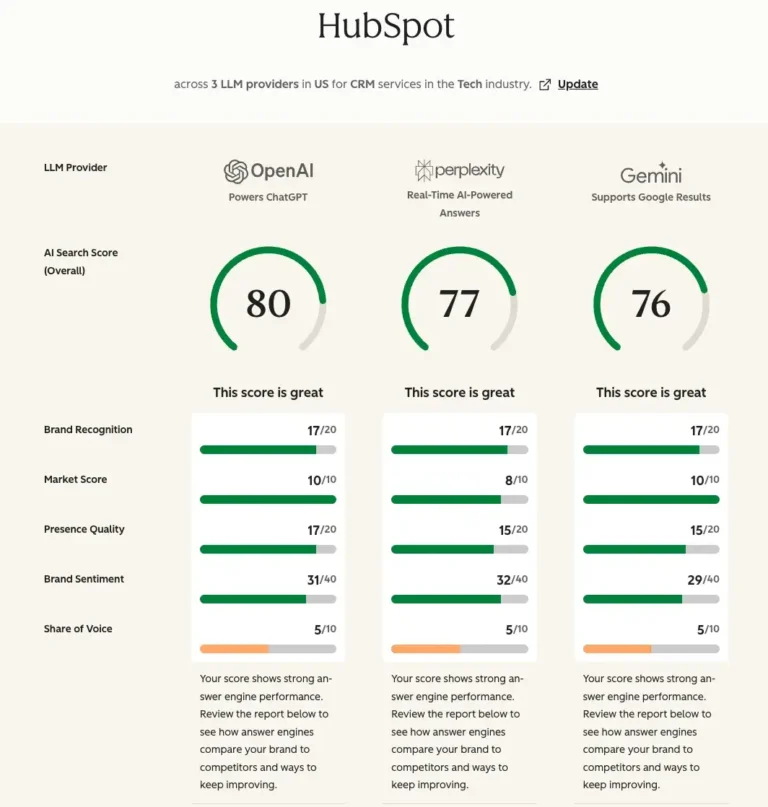
The initial phase involves establishing a baseline for citation performance. Without measurable data, improvement is difficult. Tools like HubSpot’s AI Search Grader can provide a quick snapshot of current brand representation across answer engines, offering a starting point before implementing changes. This external assessment is crucial for understanding existing visibility.
Weeks 2-6: Build and Refresh Priority Pages
With a clear baseline established, the focus shifts to creating or updating content that directly addresses target queries. This involves:
- Prioritizing Content Formats: Identifying and optimizing pages that align with the most effective citation formats for the industry and target engines.
- Enhancing Content Structure: Implementing clear headings, concise paragraphs, and scannable layouts.
- Integrating E-E-A-T Signals: Adding author bios, sourcing, and other trust markers.
- Implementing Schema Markup: Adding relevant structured data, such as FAQ schema.
A strategic tip is to prioritize refreshing existing pages with some existing authority over creating entirely new content, as this can often lead to faster citation acquisition.
Weeks 7-12: Distribute and Reinforce
The final phase of the initial 90-day plan involves distributing content and reinforcing signals across various channels. An active social media presence, particularly on platforms like Reddit, YouTube, and LinkedIn, is increasingly influential in AI search visibility. Citation efforts should extend beyond a brand’s website:
- Leveraging Social Media: Sharing and promoting optimized content on relevant platforms.
- Engaging in Communities: Participating in industry forums and niche communities.
- Cross-Promoting Content: Linking between different content formats and channels.
By the end of 90 days, businesses should have transitioned from speculative efforts to a data-driven approach, with optimized priority pages and a distribution strategy that actively feeds AI engines the signals they reward.
Measurement and "One-View" Visibility: Beyond Clicks
Measuring AEO success has historically been a significant challenge, often cited as a primary blocker for marketers. Traditional dashboards, designed for click-based metrics, can be misleading in the context of AI search, where direct answers often bypass the need for a click. As Ghergich explained, AI crawlers interact with websites at a far higher rate than human users, inflating impression counts while clicks remain static, distorting conversion rate metrics. The dashboards are, in essence, "lying" because they are based on outdated paradigms.
The true goal of search, historically proxied by clicks, is a qualified buyer choosing a brand. Answer engines deliver this outcome directly, without the intermediary click. Therefore, measuring AEO with click-era metrics is not rigorous; it’s a reliance on outdated nostalgia.
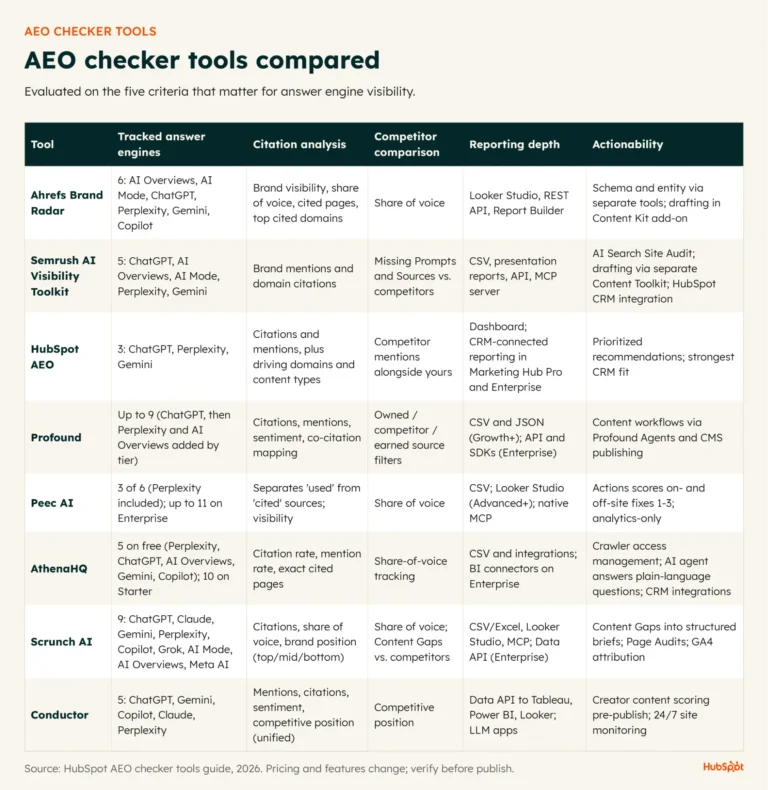
HubSpot’s AEO for Measuring AI Visibility
HubSpot’s AEO platform offers a solution by providing metrics that accurately reflect AI search visibility. Instead of adapting old dashboards, it focuses on what truly matters:

- Brand Visibility Score and Share of Voice: Quantifying how prominently a brand appears in AI-generated answers relative to competitors.
- Sentiment Analysis: Gauging the tone and perception of the brand’s representation in AI responses.
- Prompt Tracking: Understanding the specific queries that trigger AI answers and how the brand is featured.
- Citation Analysis: Identifying which specific content pieces are being cited and by which answer engines.
- Pipeline and Assisted Conversions: Directly linking AEO efforts to tangible business outcomes, such as revenue-qualified pipeline and conversions influenced by AI interactions.
- Reporting Cadence: Establishing regular reporting to monitor progress and adapt strategies.
HubSpot’s AEO tool helps translate visibility gaps into actionable recommendations, guiding marketers on what to create, fix, or distribute to improve their AI search performance. The platform’s effectiveness is demonstrated by HubSpot’s own experience, which saw a 1,850% increase in leads from AI by implementing these strategies.
Governance and Quality Over Time: Maintaining Momentum
Securing a citation is only the first step; maintaining it requires ongoing effort. AI engines continuously re-crawl and re-rank content. A page that is cited today can fall out of favor if it becomes stale or if a competitor implements a superior strategy. To sustain AI search visibility, citations must be treated as a portfolio requiring continuous maintenance. This involves:
- Regular Content Audits: Periodically reviewing content for accuracy, relevance, and structural integrity.
- Performance Monitoring: Tracking citation trends and identifying any declines.
- Competitive Analysis: Staying aware of how competitors are adapting their AEO strategies.
- Iterative Improvement: Continuously refining content and technical elements based on performance data.
The "Express, Tailor, Amplify, Evolve" (ETAE) framework provides an effective operating model for AEO, emphasizing continuous improvement and adaptation. AEO is not a one-time project but an ongoing loop of activity.
The Decision-Makers for AI-Generated Content
A critical but often overlooked aspect of AEO is governance. Most marketing teams treat AI bot governance as an IT issue, focusing on technical controls. However, as Ghergich points out, the moment inaccurate product data or brand positioning appears in an AI answer, it transcends a technical problem and becomes a brand issue.
Effective governance requires a collaborative approach involving marketing, IT, and legal departments. It necessitates defining what brand data AI engines are permitted to access, ensuring its accuracy, and establishing a clear strategy for its representation. Without this oversight, companies risk losing control over how their brand is perceived in AI-generated responses.
Frequently Asked Questions About AEO Brand Visibility
-
How do I select the initial pages for optimization?
Begin by identifying pages where user intent and existing traction intersect. Prioritize pages already receiving some AI visibility or ranking well in Google. Then, focus on content formats most relevant to your industry and target engines, such as comparisons and definitions for B2B, or reviews and listicles for B2C. Refreshing existing authoritative pages often yields faster citation results than creating new ones from scratch. -
Is it possible to gain citations without ranking on page one?
While ranking well, especially for Google AI Overviews, improves your chances, a well-structured, sourced, and schema-marked page can indeed out-cite a higher-ranking competitor. Extractability and trust signals can often outweigh raw ranking position. -
How frequently should content be updated to maintain citations?
Update content frequently enough to ensure it remains genuinely current. A quarterly review is a reasonable baseline for priority pages, with more frequent updates needed in rapidly evolving fields or when data changes. Refreshing publication years in titles, updating statistics, and maintaining visible "last updated" dates signal active maintenance. -
Do branded mentions and off-site content (LinkedIn, YouTube, forums) truly matter?
Yes. LinkedIn and YouTube are among the most frequently cited social sources. Niche community mentions can be more impactful for B2B than generic backlinks. Answer engines evaluate a brand’s entire online footprint, making distribution strategy an integral part of AEO. -
How can I effectively communicate AEO impact to executives in terms they understand?
Demonstrate AEO’s impact by linking it to pipeline generation rather than vanity metrics. AI-sourced visitors often convert at higher rates and exhibit stronger buying intent. Report share of voice and citation growth as leading indicators, then connect them to assisted conversions and revenue-qualified pipeline to justify budget allocation.
The brands that actively adapt to the evolving search landscape are the ones that will win. High-citation brands are not employing arcane tactics; they understand that citation visibility is earned through trust, structure, and consistency, reinforced over time. While 58% of marketers report optimizing for answer engines, many are still in the experimental phase. Businesses that move deliberately, with a clear baseline, a strategic plan, and a robust measurement system, are capturing high-intent traffic and earning citations while others are still contemplating the reality of AEO. The journey begins with selecting key pages, structuring them effectively, distributing them strategically, and meticulously measuring progress.
The comprehensive data and insights behind these claims, including platform-specific citation rates and marketer surveys, are detailed in the "State of AEO" report.
About the Author