These are not merely theoretical questions for the burgeoning community of AI founders and enterprise leaders; they represent immediate, tangible challenges as artificial intelligence rapidly transitions from conceptual demonstrations to integral components of business operations, mobility solutions, and physical automation. As AI systems become embedded in critical infrastructure and decision-making processes, the imperative for robust safety and security measures is no longer an afterthought but a fundamental product requirement, shaping market adoption and public trust.
The evolution of artificial intelligence has reached a pivotal inflection point. What began as research into complex algorithms and data processing has blossomed into sophisticated systems capable of generating content, driving vehicles, and automating intricate tasks. This rapid acceleration, particularly fueled by advancements in generative AI and large language models (LLMs), has propelled AI out of the lab and into the real world at an unprecedented pace. However, with this accelerated deployment comes a heightened awareness of potential risks, shifting the industry’s focus from mere capability to reliability, security, and ethical deployment. Early discussions around AI safety often centered on theoretical existential risks or philosophical dilemmas. Today, the conversation is intensely practical, focusing on securing autonomous agents, ensuring the safe operation of robots in dynamic environments, and building enterprise-grade AI solutions that are not only powerful but also trustworthy and compliant.
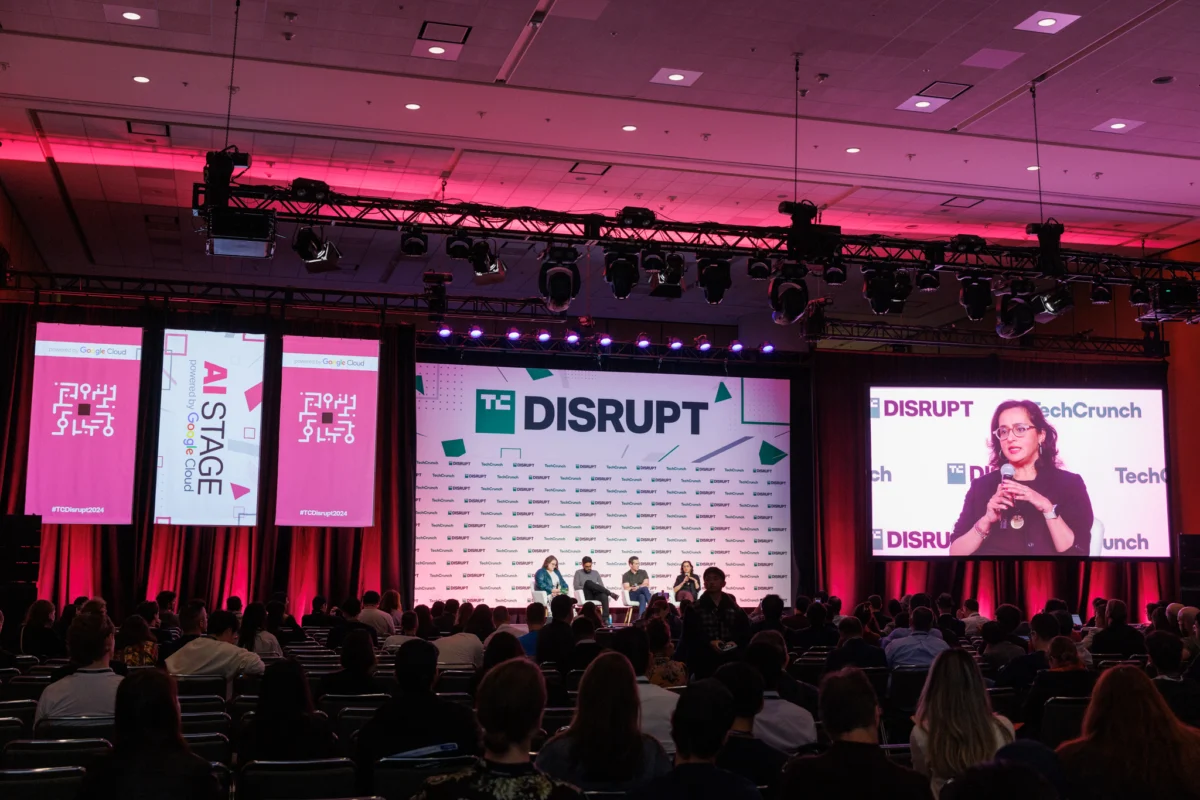
This critical juncture will be front and center at TechCrunch Disrupt 2026, scheduled for October 13-15 at Moscone West in San Francisco. Widely recognized as a premier gathering for the startup ecosystem, Disrupt serves as a crucible where groundbreaking technologies meet market realities. This year, the event dedicates significant floor space and agenda time to unpacking the complexities of AI safety and security across its AI Stage and Real World AI Stage. With over 200 sessions, more than 10,000 founders, investors, operators, and tech leaders, and 250+ speakers, Disrupt 2026 aims to provide actionable insights for founders striving to build artificial intelligence that earns genuine trust and widespread adoption. The conference will address how innovators can navigate the intricate landscape of technical challenges, regulatory hurdles, and user expectations to ensure their AI solutions are not just innovative but also responsibly built and deployed. Attendees have a limited opportunity to secure their passes, with savings of up to $200 available until September 25 at 11:59 p.m. PT, along with a 50% discount on a second pass.
The curated program at Disrupt 2026 features five cornerstone sessions specifically designed to delve into the multifaceted challenges of AI safety and security, offering founders an unparalleled opportunity to glean insights from industry leaders.

1. Navigating Enterprise AI Deployment: Lessons from Anthropic’s Front Lines
The promise of AI in the enterprise is immense, yet the path from pilot project to full-scale deployment is often fraught with obstacles. Many companies initiate AI pilots with enthusiasm, only to find themselves stalled 18 months later, struggling to demonstrate tangible value or overcome integration hurdles. This disparity between aspiration and realization is a critical focus for Cat de Jong, Head of Applied AI at Anthropic, a leading AI safety and research company renowned for its Claude models. De Jong possesses a unique vantage point, working directly with enterprises as they attempt to integrate Claude into their mission-critical workflows.
In the session titled “What Anthropic Sees When Enterprises Actually Deploy Claude” on the AI Stage, de Jong will provide a candid assessment of what separates successful AI deployments from those that languish in pilot purgatory. Her insights will cover common pitfalls such as inadequate data readiness, insufficient change management within organizations, and the failure to clearly define and measure return on investment. Industry data often indicates that a significant percentage of AI projects fail to move beyond the pilot phase, with estimates ranging from 50% to 80% due to factors like data quality issues, lack of skilled personnel, and, critically, a lack of trust in the AI system’s reliability and fairness. De Jong’s experience highlights the importance of not just technical proficiency but also a deep understanding of the enterprise context, including existing IT infrastructure, regulatory compliance requirements, and the human element of adoption. For founders developing AI solutions for the enterprise market, this session offers invaluable, firsthand knowledge on how to design products and go-to-market strategies that address these practical deployment challenges, ensuring their innovations deliver real business value and foster the trust essential for widespread adoption. The implication for the broader market is a growing demand for AI solutions that come with robust support, clear integration pathways, and verifiable performance metrics, moving beyond the hype to deliver concrete, measurable benefits.
2. Unmasking the Agent Security Dilemma: A New Frontier in Cybersecurity
The advent of autonomous AI agents, capable of taking actions and making decisions independently, ushers in a new era of both opportunity and profound security challenges. Unlike traditional software, which operates within predefined parameters, AI agents can dynamically interact with systems, access data, and execute tasks, raising complex questions about their permissible scope and the potential for unintended or malicious outcomes. The conventional application-level permission models, designed for human users or static programs, are proving inadequate for the fluid and often unpredictable behavior of advanced AI agents.
The AI Stage session, “The Agent Security Problem Nobody Is Talking About,” will confront these emerging threats head-on. Ric Smith, President of Products and Technology at Okta, a leader in identity and access management, and Gavriel Cohen, co-founder and CEO of NanoCo, will spearhead a discussion on securing agentic AI at the infrastructure level. They will delve into the inherent weaknesses of current security paradigms when faced with AI agents, which can exhibit emergent behaviors or be susceptible to adversarial attacks that exploit subtle vulnerabilities. Recent reports from cybersecurity firms and government agencies, such as NIST, highlight an increasing concern over AI-specific attack vectors, including prompt injection, data poisoning, and model inversion attacks, which could be amplified by autonomous agents. The experts will outline critical architectural decisions that founders must consider when integrating agents into their product roadmaps, emphasizing the need for robust identity verification for agents, granular access controls, and continuous monitoring mechanisms that go beyond mere application permissions. This session implies a fundamental re-evaluation of cybersecurity strategies, necessitating a "security-by-design" approach that anticipates the unique risks posed by autonomous AI, safeguarding enterprise systems from potentially catastrophic breaches or misuse. The development of new security protocols specifically tailored for AI agents is rapidly becoming a top priority for technology providers and regulatory bodies alike, signifying a pivotal shift in the cybersecurity landscape.
3. Securing the AI Enterprise: Navigating the Complexities of a Cloud-Native Future
The journey of an AI product into the enterprise is contingent upon far more than its technical prowess; it must also demonstrate unwavering adherence to stringent security, governance, and observability standards. As AI systems assume increasingly autonomous roles within critical enterprise functions, the cloud infrastructure supporting them becomes significantly more complex, demanding a sophisticated approach to data protection, compliance, and operational transparency.

In the AI Stage session, “Securing the AI Enterprise: Why the Cloud Just Got a Lot More Complicated,” a panel of distinguished experts will dissect these intricate challenges. Rudy Mitra, VP of Security Services at AWS, a dominant force in cloud computing; Katie Moussouris, CEO of Luta Security and a renowned vulnerability disclosure expert; and cybersecurity veteran Wendy Nather will explore the evolving infrastructure requirements for AI-driven enterprises. They will address how data provenance, model transparency, and robust governance frameworks are becoming non-negotiable for organizations deploying AI. The discussion will cover critical areas such as managing the vast amounts of sensitive data consumed and generated by AI, ensuring compliance with global regulations like GDPR and HIPAA, and defending against advanced adversarial attacks designed to manipulate AI models. Statistics show a rising trend in data breaches specifically targeting cloud environments, and the integration of AI layers introduces new vectors of risk, from insecure APIs to model bias leading to discriminatory outcomes. For founders developing enterprise AI, this session is a crucial opportunity to understand the rigorous security benchmarks and audit trails that potential customers demand. It underscores that embedding security, governance, and observability from the initial design phase is not merely a technical requirement but a strategic imperative that can differentiate a product and accelerate its path to market adoption. The broader implication is that AI security will emerge as a key competitive advantage, pushing companies to invest heavily in comprehensive AI governance solutions and verifiable trust mechanisms.
4. Engineering Trust: Building AI Systems Where Failure is Not an Option
When AI operates in the physical world, the consequences of failure escalate dramatically, moving beyond digital errors to potential physical harm or catastrophic system malfunctions. This is particularly true for AI deployed in autonomous vehicles, aircraft, industrial robotics, and critical defense systems, where reliability is paramount and human lives are often at stake. The challenge lies in developing, testing, and deploying systems that can navigate unpredictable environments with absolute certainty, a task that demands an entirely new paradigm for safety engineering.
The Real World AI Stage will host a vital discussion titled “Building AI Systems When Failure Is Not an Option,” featuring leaders from the forefront of hard tech and autonomy. Nathan Michael, Chief Technology Officer at Shield AI, a company innovating in autonomous defense systems; Mikell Taylor, Director of Robotics Strategy at General Motors, a pioneer in automotive autonomy; and Raquel Urtasun, founder and CEO of Waabi, an AI company focused on self-driving technology, will share their perspectives. This session will tackle the formidable question of how to determine when an autonomous system is sufficiently safe for deployment. They will explore the foundational elements of cultivating a robust safety culture within an organization, emphasizing rigorous testing methodologies, extensive simulation environments, and advanced validation techniques for AI models. The panel will also delve into the complex regulatory landscape, highlighting the challenges of obtaining certifications and navigating public perception when the stakes are so high. Incidents involving autonomous vehicles, even minor ones, frequently underscore the public’s sensitivity to perceived risks, impacting consumer and regulatory trust. This session underscores that building AI for physical world applications requires not only technological breakthroughs but also an unwavering commitment to ethical design, transparent operations, and comprehensive risk mitigation strategies, shaping the future of industries from transportation to manufacturing and defense. The implications extend to significant R&D investments in verifiable AI, the creation of new regulatory frameworks, and a deep focus on explainability and accountability in autonomous decision-making.
5. Robotics’ Quest for a ChatGPT Moment: Overcoming the Data Barrier
While large language models have experienced a "ChatGPT moment," rapidly accelerating their capabilities through access to vast datasets, the field of robotics has yet to achieve a similar breakthrough. A fundamental challenge hindering the scaling of physical AI is a pervasive data problem: robots lack access to the massive, diverse, and annotated pools of training data that have fueled advancements in other AI domains. Unlike the internet’s nearly infinite supply of text and images, real-world robotic interaction data is scarce, expensive to collect, and difficult to label, creating a significant bottleneck for training more capable and reliable robots.
On the Real World AI Stage, Les Karpas, Nvidia’s Inception Global Head of Physical AI, will lead the session “Robots Are Waiting for Their ChatGPT Moment. Here Is What Is Standing in the Way.” Karpas will explore innovative strategies to bridge this data gap, focusing on how advanced data pipelines, sophisticated simulation environments, and the emerging potential of foundation models for robotics could unlock the next generation of physical AI. He will discuss how synthetic data generation within high-fidelity simulations can augment limited real-world data, enabling robots to learn in a safe, scalable, and controlled manner. The session will also touch upon the potential for general-purpose foundation models, akin to those in language, to allow robots to generalize tasks and adapt to novel situations with minimal retraining. For founders operating in physical AI, this session addresses one of the most pressing questions in the field: What critical advancements are needed for robotics to achieve its own exponential growth phase and earn the necessary trust for widespread deployment in diverse, unstructured real-world settings? The implications are profound, potentially unlocking immense economic value across manufacturing, logistics, healthcare, and exploration, but only if the industry can collectively overcome the challenges of data acquisition, standardized training environments, and verifiable safety protocols.

Five Sessions, One Unifying Imperative: Trust in the Age of AI
The five distinct sessions at TechCrunch Disrupt 2026, while covering diverse facets of AI, converge on a single, overarching question that every AI founder must address: Can people truly trust what you are building? This fundamental query underpins the entire journey from innovation to market adoption. It is not enough to develop a smarter model, a more capable agent, or a robot that performs unprecedented tasks; the ultimate challenge lies in convincing customers, users, and regulators that these systems are safe, secure, reliable, and ethically sound enough to be integrated into daily life and critical operations.
TechCrunch Disrupt 2026, taking place from October 13-15 at Moscone West in San Francisco, offers an unparalleled platform for tackling these challenges. Beyond these five crucial discussions on AI safety, the event boasts over 200 sessions across six industry stages, numerous roundtables, and intimate breakout sessions. With an anticipated attendance of more than 10,000 founders, investors, operators, and tech leaders, alongside 250+ speakers and 300+ exhibiting startups, Disrupt provides a vibrant ecosystem for networking, knowledge exchange, and deal-making. It is a critical venue for understanding how the technological breakthroughs in AI intersect with the practical realities of deployment, regulation, and societal acceptance.
The journey of AI from experimental marvel to ubiquitous utility is contingent upon the industry’s collective ability to prioritize and build trust. This means embedding safety, security, and ethical considerations into the very fabric of AI development, from initial conception through to deployment and ongoing maintenance. The insights shared by leaders from Anthropic, Okta, NanoCo, AWS, Luta Security, Shield AI, General Motors, Waabi, and Nvidia at Disrupt 2026 will be instrumental in guiding founders through this complex landscape. Their experiences and perspectives will illuminate the pathways to creating AI solutions that not only push the boundaries of technology but also inspire confidence and drive real-world adoption.
Founders, investors, and tech enthusiasts building the next generation of AI are urged to secure their pass to Disrupt now and save up to $200 before the September 25, 11:59 p.m. PT deadline. An additional incentive offers 50% off a second ticket, fostering broader team participation. This is a unique opportunity to engage with leading minds, understand the evolving demands of AI safety and security, and learn how to navigate the critical challenges that stand between groundbreaking technology and its transformative impact on the world. The future of AI is not just about what it can do, but about how much we can trust it to do.
About the Author