The International Chamber of Commerce (ICC) has announced the forthcoming release of its 2026 Global Trade Intelligence Report, a comprehensive analytical study that serves as the definitive benchmark for the global trade and supply chain finance industry. Built upon a foundation of more than a decade of aggregated data, the 2026 edition represents a significant evolution in trade data transparency, drawing from a massive repository of over $25.7 trillion in transactions. This report, produced in strategic partnership with the Boston Consulting Group (BCG) and Global Credit Data (GCD), aims to provide financial institutions, regulators, and non-bank corporations with actionable insights into risk performance, default rates, and the shifting landscape of emerging market opportunities.
As the global economy continues to navigate the complexities of post-pandemic recovery, geopolitical shifts, and the transition toward digital and sustainable trade, the ICC Global Trade Intelligence Report has become an essential tool for risk management. By leveraging data contributed by 22 of the world’s leading global member banks, the report provides an unparalleled view of the safety and stability of trade finance as an asset class. The upcoming 2026 edition is expected to further refine these insights, offering deeper granular analysis into product-specific performance and regional trends that are critical for informed decision-making in an increasingly volatile global market.
Historical Context and the Evolution of Trade Intelligence
The origins of the ICC’s data initiative date back to the immediate aftermath of the 2008 global financial crisis. During that period, the industry faced a significant challenge: a lack of empirical data to demonstrate the relatively low-risk nature of trade finance compared to other forms of corporate lending. This data deficit led to the implementation of stringent capital requirements under the Basel regulatory framework, which many industry stakeholders argued were disproportionate to the actual risks involved in trade-related transactions.
In response, the ICC launched the "Trade Register" project in 2009. The objective was to create a global database that could provide evidence-based analysis of default and loss rates for trade finance products, such as Letters of Credit (LCs), guarantees, and supply chain finance instruments. Over the last 15 years, this project has evolved from a basic data collection exercise into the sophisticated Global Trade Intelligence Report. The transition from the "Trade Register" branding to "Global Trade Intelligence" reflects a broader scope that now encompasses not only risk metrics but also strategic market intelligence, sustainability tracking, and the impact of digitization.
Strategic Partnership and Data Methodology
The robustness of the 2026 report is underpinned by a collaborative ecosystem involving three primary entities. The International Chamber of Commerce provides the institutional framework and industry leadership, ensuring the report aligns with the needs of the global business community. Global Credit Data (GCD), a non-profit organization owned by over 50 member banks, manages the data collection process, ensuring that the information is anonymized, standardized, and compliant with strict privacy regulations. The Boston Consulting Group (BCG) provides the advanced analytical capabilities required to transform raw transaction data into strategic insights.
The methodology involves the aggregation of transaction-level data from 22 major global banks. These institutions contribute data on millions of individual trade finance transactions, covering various sectors, geographies, and product types. By analyzing default rates (the frequency of a counterparty failing to meet obligations) and Loss Given Default (LGD—the actual financial loss incurred after recovery efforts), the report creates a statistically significant profile of trade finance risk. This methodology allows the ICC to demonstrate that trade finance is consistently one of the safest forms of financing, characterized by high recovery rates and low default correlations with broader market downturns.
Key Focus Areas for the 2026 Report
The 2026 ICC Global Trade Intelligence Report will introduce several new dimensions to its analysis, reflecting the current priorities of the global trade ecosystem. Stakeholders can expect enhanced coverage in the following areas:
1. Sustainability and ESG Integration
As Environmental, Social, and Governance (ESG) criteria become central to corporate strategy and regulatory compliance, the 2026 report will provide new data on the performance of sustainable trade finance. This includes an analysis of how "green" trade instruments perform compared to traditional products. The goal is to provide empirical evidence that can support the development of standardized definitions for sustainable trade finance, helping banks align their portfolios with global climate targets.
2. Digitization and Technological Impact
The shift from paper-based processes to digital trade documents is a primary focus for the ICC’s Digital Standards Initiative (DSI). The 2026 report will examine the impact of digitization on risk profiles and operational efficiency. By tracking the adoption of electronic Bills of Lading (eBLs) and other digital instruments, the report will provide insights into how technology reduces the incidence of fraud and operational errors, thereby further lowering the risk profile of trade finance.
3. Support for MSMEs and the Trade Finance Gap
Micro, Small, and Medium-sized Enterprises (MSMEs) continue to face significant barriers to accessing trade finance, contributing to a global trade finance gap estimated by the Asian Development Bank at approximately $2.5 trillion. The 2026 report will feature dedicated analysis on MSME risk performance, aiming to debunk the perception that smaller enterprises are inherently higher risk. This data is crucial for encouraging banks to expand their lending to underserved segments and for informing policy interventions designed to promote financial inclusion.
Regulatory Influence and Capital Adequacy
One of the most significant impacts of the ICC’s data intelligence is its role in shaping international banking regulations. The findings of previous reports have been instrumental in dialogues with the Basel Committee on Banking Supervision (BCBS). By providing concrete evidence of low default rates, the ICC has successfully advocated for more favorable "Credit Conversion Factors" (CCFs) for trade finance products.
The 2026 report will continue this mission, providing updated data that reflects the performance of trade finance through recent economic cycles, including the inflationary period of 2023-2024. This information is vital for regulators as they finalize and implement the "Basel III Endgame" standards. Without the empirical evidence provided by the ICC, there is a risk that trade finance could be subject to excessive capital charges, which would increase the cost of credit for importers and exporters and potentially stifle global trade growth.
Chronology of the Global Trade Intelligence Initiative
The trajectory of this initiative highlights its growing importance in the financial sector:
- 2009: The ICC Trade Register is established to combat the lack of data on trade finance defaults during the global financial crisis.
- 2011-2015: The project gains momentum as the number of contributing banks increases, and the database begins to cover a wider range of products, including Export Credit Agency (ECA) backed loans.
- 2017: Strategic partnership with BCG and GCD is formalized, bringing advanced data science and professional consulting expertise to the project.
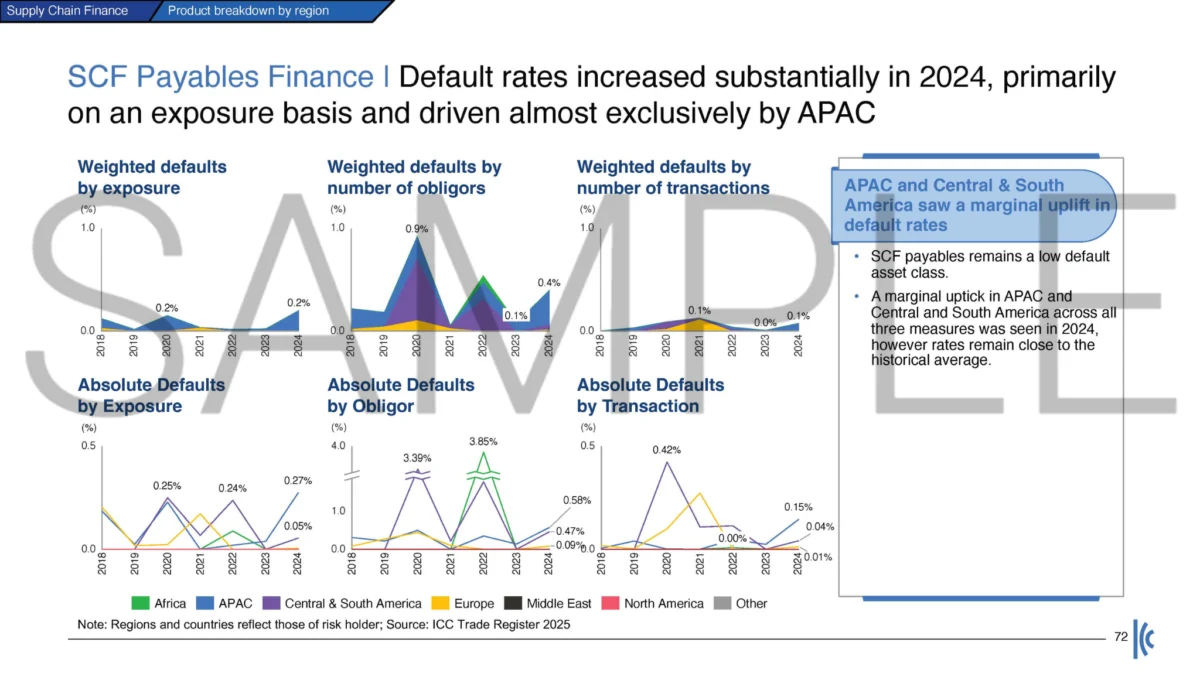
- 2020-2022: The report provides critical data on the resilience of trade finance during the COVID-19 pandemic, showing that despite global supply chain disruptions, default rates remained remarkably low.
- 2024: The ICC rebrands the initiative as "Global Trade Intelligence" to reflect a move toward real-time data and broader strategic insights.
- 2025 (Upcoming): The release of the 2026 report, which will feature the most comprehensive data set to date, incorporating ESG metrics and digitization trends.
Industry Implications and Stakeholder Reactions
While official statements regarding the 2026 report’s specific findings are pending the full release, industry experts suggest that the report will reinforce the status of trade finance as a resilient asset class. Financial institutions are expected to use the report’s benchmarks to optimize their capital allocation and refine their internal risk models.
For non-bank corporations, the report offers a window into the banking sector’s view of trade risk, which can be used to negotiate better financing terms and understand regional risk variations. Sponsorship opportunities within the report also allow non-bank entities to increase their visibility among the world’s leading financial institutions.
Industry analysts observe that the 2026 report arrives at a time when the "flight to quality" is a dominant theme in global markets. As banks become more selective in their lending, the ability to differentiate between perceived risk and actual risk—as documented by the ICC—will be a competitive advantage for both lenders and borrowers.
Conclusion: Shaping the Future of Trade
The ICC Global Trade Intelligence Report 2026 is more than just a collection of statistics; it is a strategic asset designed to foster a more transparent, efficient, and inclusive global trade environment. By quantifying risk with unprecedented precision, the report enables the financial industry to support the movement of goods and services across borders with greater confidence.
As the report’s release approaches, the ICC continues to invite global financial institutions to join the membership, contributing to the collective intelligence that drives the industry forward. With its focus on sustainability, digitization, and MSME support, the 2026 edition is set to provide the roadmap for the next generation of trade finance, ensuring that the industry remains a cornerstone of global economic stability and growth. The full report, which will include the Global Overview, regional data analysis, and product-specific deep dives, is expected to be a primary reference point for the industry for years to come.
About the Author