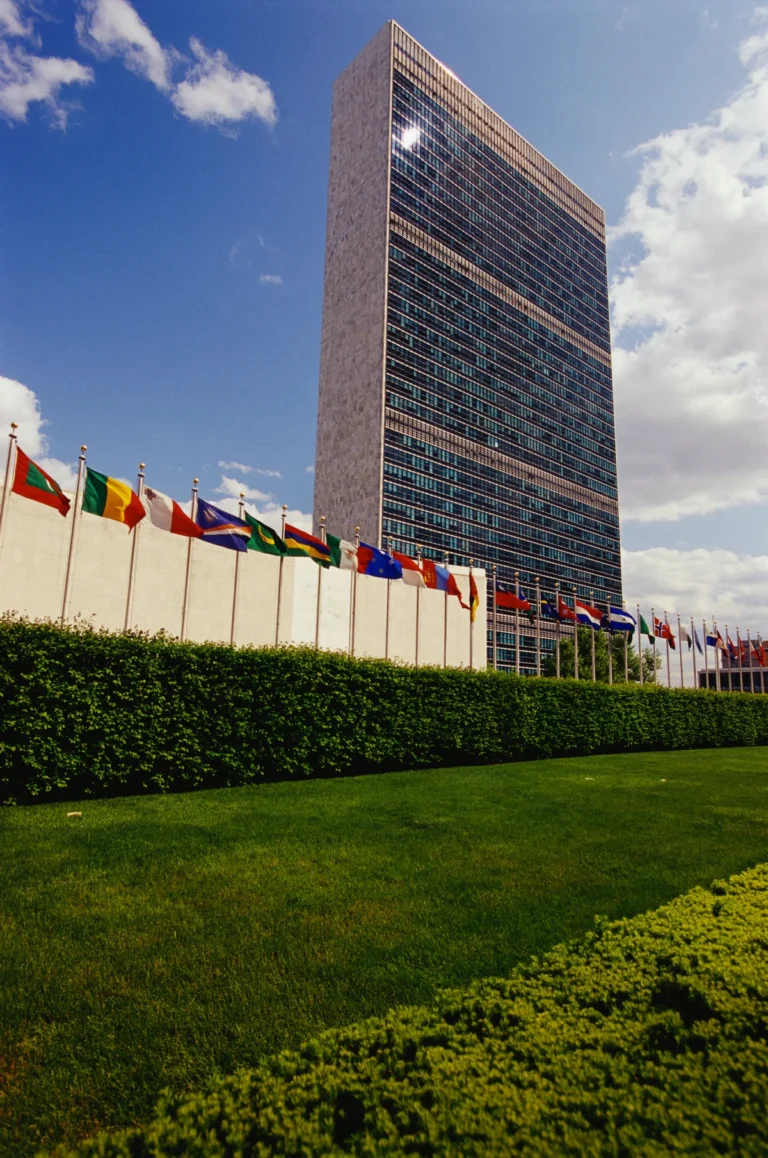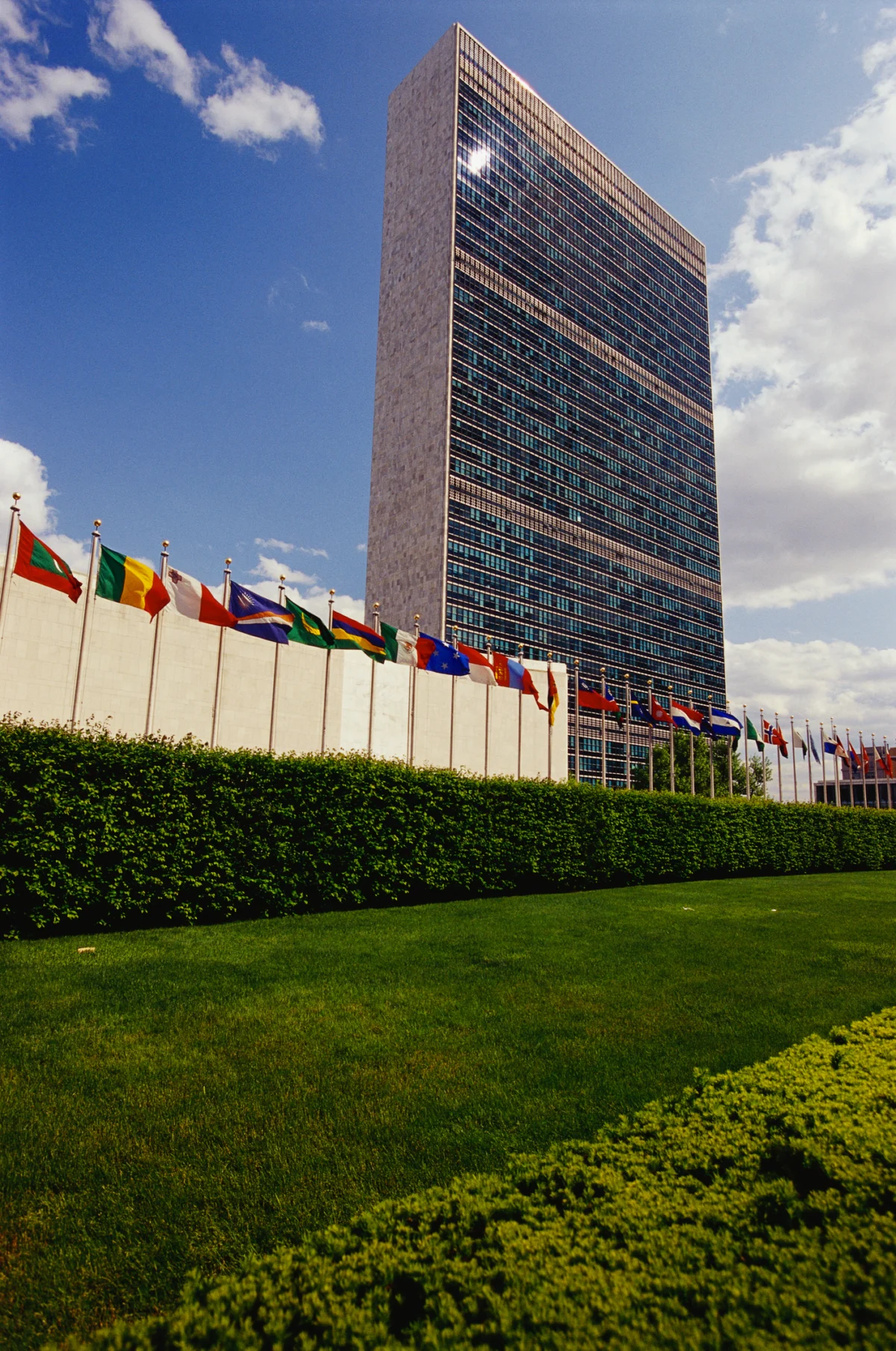
The International Chamber of Commerce (ICC) concluded its high-level engagement at the United Nations General Assembly (UNGA) this month, positioning the global business community as a critical architect in the effort to restore trust and manage global transformations. This year’s UNGA theme, “Restoring trust, managing transformation: a United Nations that delivers for all,” served as the backdrop for a series of strategic interventions by ICC leadership. Throughout the week-long summit in New York, the ICC emphasized that the evolution of international cooperation is no longer a matter of diplomatic preference but a structural necessity to deliver tangible results in an era of polycrisis.
The ICC delegation, led by Secretary General John W.H. Denton AO and Chair Harsh Pati Singhania, navigated a complex agenda spanning food security, humanitarian reform, digital governance, and climate finance. By leveraging its unique position as the only private-sector organization with Permanent Observer Status at the UN General Assembly, the ICC sought to bridge the gap between high-level policy discussions and the practical realities of the "real economy." The organization’s message was consistent: business expertise, capital, and scale are indispensable to the success of the UN’s Sustainable Development Goals (SDGs).
Addressing the Global Food Crisis and Supply Chain Integrity
A primary focus of the ICC’s engagement was the escalating threat to global food security. During a high-level side event attended by nearly 20 foreign ministers and deputy ministers, Secretary General John W.H. Denton AO issued a stark warning regarding the fragility of international trade routes. He noted that the cumulative impact of geopolitical tensions and maritime disruptions is placing unprecedented strain on food systems that are already reeling from post-pandemic inflation and climate-driven crop failures.
Mr. Denton specifically called for immediate, coordinated international action to restore and stabilize grain flows through the Black Sea. He argued that waiting for storage capacities to be reached in major exporting hubs would be a catastrophic error, potentially leading to a localized surplus in some regions while causing starvation and price shocks in others. The ICC drew heavily on its historical role in the 2022 Black Sea Grain Initiative, a landmark agreement that facilitated the movement of nearly 33 million tonnes of grain and food products. This initiative was cited as a prime example of how trade can serve as a humanitarian instrument when supported by robust political cooperation and private-sector logistics.
Furthering this discussion at the Devex Impact House, Mr. Denton highlighted the ICC’s ongoing work regarding a proposed mechanism for the Strait of Hormuz. This initiative aims to ensure that even in highly contested maritime environments, essential goods—such as agricultural inputs and fertilizers—can continue to move. The ICC’s role in these scenarios extends beyond advocacy; the organization provides the technical frameworks for insurance, trade finance, and risk management that allow commercial vessels to operate in disrupted markets.
Building Systemic Resilience through Business Leadership
Parallel to the discussions on food security, ICC Chair Harsh Pati Singhania addressed the "Roundtable on Business Leadership for Resilience in Times of Crisis," an event co-hosted by the ICC and the OCP Group. Mr. Singhania’s address focused on moving away from reactive, ad hoc crisis management toward a model of "resilience by design." He argued that the complexity of the modern global economy has reached a point where governments and international institutions often lack the granular visibility required to manage supply chain shocks effectively.
The analysis presented by Mr. Singhania suggested that the private sector’s ability to monitor real-time data, manage inventory, and pivot logistics makes it a natural partner for public institutions. However, he cautioned that this partnership must be systemic rather than incidental. By building resilience into the very architecture of global trade, the international community can reduce the "shock factor" of future pandemics or geopolitical conflicts. The roundtable underscored that for the UN to "deliver for all," it must integrate business-led resilience strategies into its core developmental frameworks.
Reforming the Global Humanitarian and Development System
The ICC also took a leading role in discussions regarding the "Humanitarian Reset." In collaboration with the United Nations Foundation, the UN Office for the Coordination of Humanitarian Affairs (OCHA), and ServiceNow, the ICC convened a diverse group of leaders to rethink how aid is delivered. The timing of this dialogue was significant, occurring between UN High-Level Meetings commemorating the 40th anniversary of the Declaration on the Right to Development and sessions focused on Pandemic Prevention, Preparedness, and Response.
ICC First Vice-Chair Rebecca Enonchong challenged the traditional narrative that the public and private sectors operate with conflicting motives in humanitarian crises. She noted that while the humanitarian community prioritizes speed and impact at scale, businesses prioritize efficiency and resource mobilization. These goals, she argued, are not only compatible but synergistic. The "Humanitarian Reset" initiative seeks to create a common language between these two worlds, ensuring that when disaster strikes, the private sector is not just a donor of funds, but an integrated partner in the delivery of solutions.
A New Vision for Multilateralism and Shared Accountability
One of the most theoretically significant contributions from the ICC during UNGA was the presentation of the report, "Rethinking Multilateralism: A New Role for the Private Sector." Produced in partnership with IE University, the report argues that the traditional Westphalian model of multilateralism—where only states have a seat at the table—is insufficient for the 21st century.
Mr. Denton emphasized that the scale of current global challenges, from climate change to the regulation of artificial intelligence, requires a shift from "consultation" to "shared responsibility." The ICC’s vision for a modern multilateralism involves the creation of formal mechanisms that allow for the mobilization of private capital and innovation at a scale that national budgets cannot achieve alone. This model moves beyond the "participation" of business in forums and toward a "delivery-based" partnership where the private sector is held accountable for specific outcomes alongside governmental actors.
Harnessing Artificial Intelligence for Economic Opportunity
The digital economy and the rapid ascent of Artificial Intelligence (AI) were central themes in the ICC’s technology-focused interventions. At a roundtable hosted by The Economist Group and TikTok, the ICC argued that the true value of AI lies not in the technology itself, but in the enabling environment that allows Small and Medium-sized Enterprises (SMEs) to adopt it.
According to ICC data, SMEs represent over 90% of businesses globally, yet they face the highest barriers to digital transformation. Mr. Denton stressed that for AI to be a tool for economic inclusion, there must be significant investment in infrastructure and skills training. Furthermore, he highlighted the need for "interoperable standards." The ICC warns that a fragmented regulatory landscape—where different countries have wildly different rules for data protection and AI ethics—will stifle innovation and prevent smaller companies from competing in the global market.
At the Digital Ambassadors Forum on Tech Diplomacy, the ICC called for "tech diplomacy" that involves private sector experts from the outset. This approach ensures that digital policies support trusted cross-border data flows, which are the lifeblood of modern commerce, while maintaining essential safeguards for privacy and cybersecurity.
Transitioning from Climate Ambition to Implementation
As the world looks toward COP31, the ICC used the New York Dialogue to pivot the climate conversation from "commitments" to "projects." Co-hosted by Bloomberg and the Union of Chambers and Commodity Exchanges of Türkiye (TOBB), the event featured Rifat Hisarcıklıoğlu, President of TOBB and Chair of the ICC World Chambers Federation.
The ICC’s message was pragmatic: the world does not need more declarations; it needs the removal of obstacles to implementation. Mr. Denton identified stable policy frameworks, open markets, and access to finance as the three pillars required to turn climate ambition into reality. By acting as the official focal point for business in international climate negotiations, the ICC is working to ensure that the "real economy" perspective is integrated into every climate agreement. The organization’s goal is to move the needle from pilot projects to industrial-scale solutions that can realistically meet the Paris Agreement targets.
A Decade of Influence: The 10th Anniversary of UN Observer Status
The ICC’s activities at this year’s UNGA are particularly poignant as the organization approaches the 10th anniversary of its UN General Assembly Observer Status. While the ICC has held General Consultative Status with the UN Economic and Social Council (ECOSOC) since 1946, the 2016 decision to grant it Observer Status—effective January 1, 2017—was a historic milestone. It marked the first time a business organization was given a direct voice in the work of the General Assembly.
Over the past decade, the ICC has utilized this status to influence a wide range of global issues, from the UN Treaty on Plastic Pollution to international taxation debates. Harsh Pati Singhania noted that this status, combined with the ICC’s engagement in the WTO, G20, and BRICS, provides a unique platform for shaping global resilience frameworks. The ICC’s presence at UNGA 2024 serves as a testament to the enduring necessity of business as a formal stakeholder in global governance.
Analysis of Implications and Future Outlook
The ICC’s engagement at UNGA suggests a significant shift in the landscape of global diplomacy. There is a growing recognition within the UN that the "transformation" mentioned in this year’s theme cannot be managed by governments alone. The ICC has successfully positioned itself not just as a lobbyist for business interests, but as a technical partner capable of solving systemic problems.
However, the path forward is not without challenges. The ICC’s call for "shared responsibility" implies a level of transparency and accountability that many corporations may find daunting. Furthermore, the push for interoperable digital and climate standards requires a degree of international consensus that is currently difficult to achieve in a polarized geopolitical environment.
Despite these hurdles, the ICC’s interventions at UNGA 2024 provide a roadmap for a more pragmatic and results-oriented multilateralism. By focusing on tangible outcomes—such as the number of tonnes of grain moved or the number of SMEs trained in AI—the ICC is redefining what it means for the United Nations to "deliver for all." As the organization enters its second decade as a UN Observer, its role in bridging the gap between policy and practice will likely become the defining factor in the success of the global developmental agenda.
About the Author