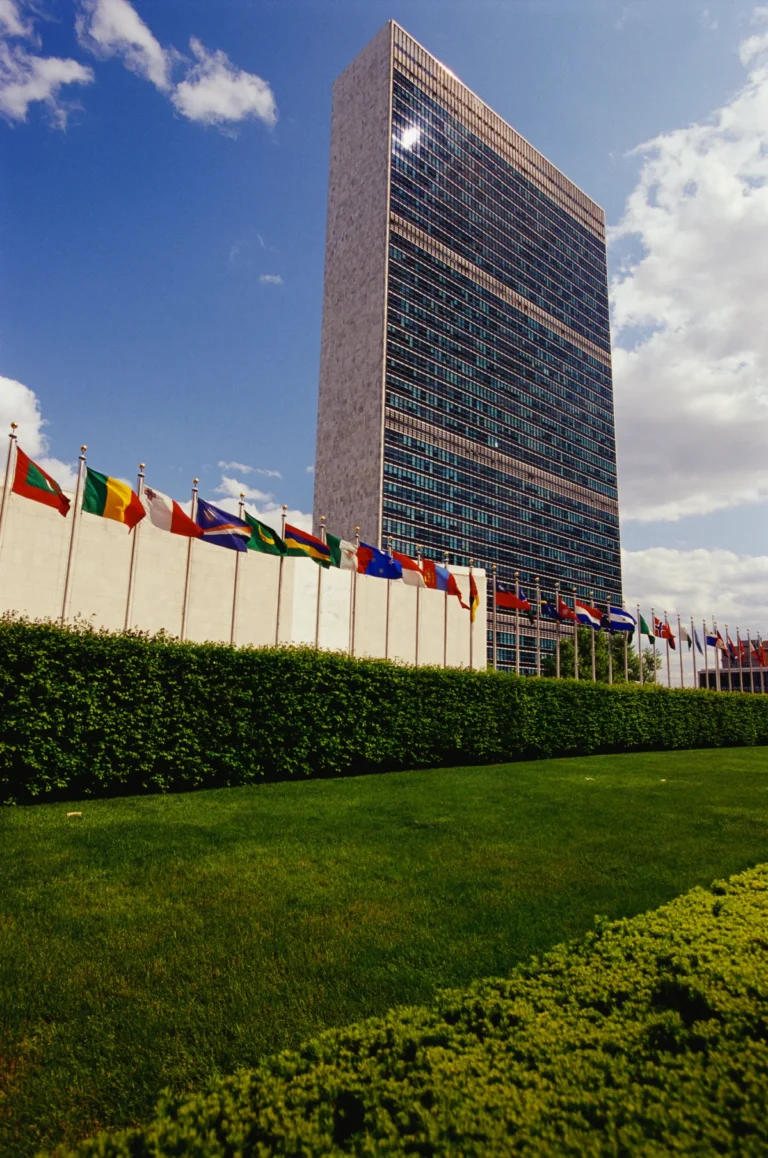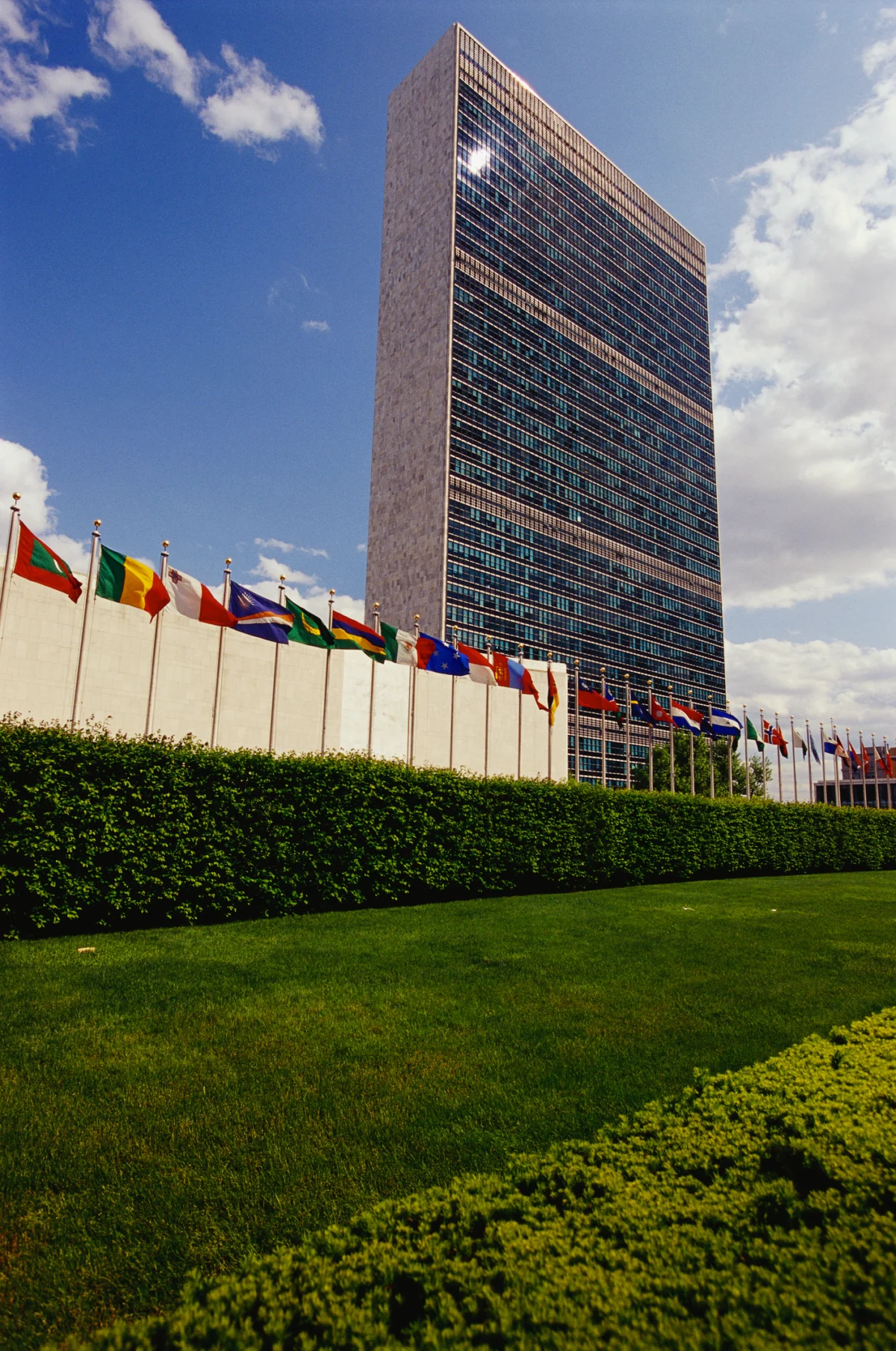
The International Chamber of Commerce (ICC) has concluded its high-level engagement at the 79th session of the United Nations General Assembly (UNGA), reinforcing the critical necessity of private sector integration into global governance frameworks. Under the official UNGA theme, “Restoring trust, managing transformation: a United Nations that delivers for all,” the ICC delegation, led by Secretary General John W.H. Denton AO and Chair Harsh Pati Singhania, presented a comprehensive roadmap for evolving international cooperation. The organization’s presence in New York centered on a singular, urgent message: for multilateralism to survive and deliver tangible results in an era of polycrisis, it must transition from a model of mere consultation to one of shared responsibility and operational partnership with the global business community.
Throughout a week of intensive negotiations, bilateral meetings, and high-level roundtables, the ICC positioned itself as the bridge between the "real economy" and the diplomatic halls of the United Nations. By leveraging its unique status as the only private sector organization with Permanent Observer status at the UN General Assembly, the ICC addressed six strategic priorities ranging from the stabilization of global food supply chains to the ethical deployment of Artificial Intelligence and the acceleration of climate finance.
A Chronology of Strategic Engagement at UNGA 79
The ICC’s activities at UNGA 79 followed a structured sequence designed to maximize influence across the UN’s various developmental and security pillars. The week began with a focus on immediate crisis management, specifically the fragility of global trade routes. This was followed by a shift toward systemic reform, involving discussions on the future of humanitarian aid and the modernization of multilateral institutions. Mid-week sessions focused on the digital and green transitions, culminating in a celebration of the ICC’s decade-long formal partnership with the UN.
On the sidelines of the General Debate, Secretary General Denton participated in a high-level event on global food security, addressing nearly 20 foreign ministers and senior government representatives. This was followed by the "Humanitarian Reset" panel, a collaborative effort with the UN Foundation and the UN Office for the Coordination of Humanitarian Affairs (OCHA). As the week progressed, the focus shifted to the "COP31 Business Forum New York Dialogue" and the "Digital Ambassadors Forum," where the ICC advocated for interoperable standards in tech and climate policy.
Restoring Grain Flows and Securing Global Trade Routes
A primary concern for the ICC during UNGA 79 was the escalating threat to global food security caused by maritime disruptions. Speaking at a high-level side event, John W.H. Denton AO issued a stark warning regarding the Black Sea and the Strait of Hormuz. Drawing on the ICC’s instrumental role in the 2022 Black Sea Grain Initiative—which facilitated the export of nearly 33 million tonnes of grain and food products—Denton emphasized that trade is not merely an economic activity but a vital humanitarian tool.
The ICC called for immediate, coordinated political action to restore grain flows before regional storage capacities are reached. According to ICC analysis, delays in these corridors do not only affect the immediate region but have a cascading effect on global food affordability, particularly in the Global South. The ICC’s proposal for a mechanism in the Strait of Hormuz further underscored the practical role of business in crisis response, specifically in maintaining access to insurance, financing, and trade mechanisms in highly volatile environments.
Harsh Pati Singhania, ICC Chair, echoed these sentiments during a roundtable on Business Leadership for Resilience. He argued that the global economy requires systems that are "resilient by design" rather than ad hoc responses to shocks. Singhania noted that while governments often struggle to manage the granular complexities of the global economy, the private sector possesses the real-time data and logistical expertise to maintain stability during geopolitical shifts.
The Humanitarian Reset: Improving Efficiency Through Partnership
In collaboration with the UN Foundation, ServiceNow, and OCHA, the ICC hosted "The Humanitarian Reset," a forum aimed at debunking the misconception that the public and private sectors operate with conflicting objectives. With the UN’s humanitarian appeals frequently facing significant funding gaps—often exceeding 50% of required capital—the ICC argued that private sector involvement is no longer optional but a structural necessity.
ICC First Vice-Chair Rebecca Enonchong highlighted that the humanitarian community’s goal of delivering impact at scale is perfectly aligned with the private sector’s focus on resource mobilization and operational efficiency. The discussion focused on creating a common language between NGOs and corporations to streamline aid delivery. By integrating private sector logistics and data analytics into the UN’s disaster response frameworks, the ICC aims to transform the aid system into a more proactive and efficient engine for development.
Redefining Multilateralism for the 21st Century
A central theme of the ICC’s engagement was the release and promotion of the report "Rethinking Multilateralism: A New Role for the Private Sector," produced in partnership with IE University. The report argues that the current multilateral system, designed in the post-WWII era, is ill-equipped to handle modern challenges like cyber warfare, global pandemics, and systemic climate risk without deeper private sector integration.
At a high-level roundtable, Denton stressed that the scale of today’s challenges requires a shift from "consultation" to "shared accountability." The ICC’s vision for a modernized multilateralism involves new mechanisms for mobilizing private capital and innovation at a scale that public funding alone cannot achieve. This involves moving beyond "dialogue" to "delivery," ensuring that business expertise is embedded in the policy-making process from the outset rather than being sought as an afterthought.
AI and the Digital Economy: Bridging the SME Opportunity Gap
As the UN discusses the Global Digital Compact, the ICC used the UNGA platform to advocate for the inclusion of Small and Medium-sized Enterprises (SMEs) in the burgeoning AI economy. In discussions hosted by The Economist Group and TikTok, the ICC emphasized that the economic potential of AI is contingent upon creating the right conditions for businesses to turn technological access into tangible opportunity.
The ICC identified four pillars for AI adoption: skills development, infrastructure investment, supportive policy environments, and interoperable standards. Denton warned against "regulatory fragmentation," which often creates insurmountable barriers for smaller companies. By advocating for practical safeguards in privacy, data protection, and cybersecurity that are consistent across borders, the ICC seeks to ensure that the digital transition does not exacerbate the existing divide between large multinationals and SMEs.
Turning Climate Ambition into Implementation
With the road to COP31 in Antalya and the upcoming COP29 in Baku, the ICC focused on the "how" of the green transition. At the COP31 Business Forum New York Dialogue, co-hosted by Bloomberg and the Union of Chambers and Commodity Exchanges of Türkiye (TOBB), the ICC reiterated its role as the official focal point for business in international climate negotiations.
The message was clear: the world has enough declarations; what it lacks is implementation. The ICC called for stable and predictable policy frameworks that allow businesses to price and share risk effectively. Rifat Hisarcıklıoğlu, President of TOBB and Chair of the ICC World Chambers Federation, emphasized that if governments provide policy certainty and the financial sector provides risk-mitigation tools, the private sector can provide the technology and capital necessary to scale climate solutions. The ICC’s focus remains on removing the regulatory and financial obstacles that prevent climate commitments from becoming viable projects.
A Decade of Influence: The ICC as the Voice of Business at the UN
The 79th UNGA marks a significant milestone as the ICC approaches the 10th anniversary of its UN General Assembly Observer Status. Since formally taking up this status on January 1, 2017, the ICC has transformed from a consultative body into a proactive participant in UN deliberations. This unique position has allowed the ICC to inject "real-world" economic perspectives into debates on everything from international taxation and plastic pollution to pandemic preparedness.
Chair Harsh Pati Singhania noted that the ICC’s engagement across the UN, WTO, G20, and BRICS serves as a template for how private sector voices can shape global resilience. The organization’s history with the UN, dating back to 1946 with the Economic and Social Council, has evolved into a sophisticated partnership that recognizes business as a primary stakeholder in the achievement of the Sustainable Development Goals (SDGs).
Analysis: The Implications of ICC’s Strategy
The ICC’s robust presence at UNGA 79 signals a shift in global diplomacy. As traditional state-to-state multilateralism faces headwinds from rising nationalism and geopolitical rivalry, "minilateral" and multi-stakeholder approaches are gaining traction. The ICC’s emphasis on "delivery over dialogue" reflects a growing impatience within the global business community regarding the slow pace of UN-led reforms.
By focusing on tangible mechanisms—such as grain corridor insurance and SME-friendly AI standards—the ICC is positioning itself as an essential operational partner to the UN. This strategy not only enhances the ICC’s influence but also provides the UN with the technical capacity it often lacks. The success of this model will likely determine the effectiveness of global responses to the next generation of crises, making the ICC’s role as a "Merchant of Peace" more relevant today than at any point in its century-long history.
As the 79th UNGA concludes, the ICC’s contributions have set a clear agenda for the coming year. The focus now shifts to ensuring that the commitments made in New York are translated into action at the upcoming G20 summit in Brazil and the climate negotiations in Azerbaijan. For the ICC, the goal remains unchanged: to ensure that the global transition is managed in a way that is inclusive, sustainable, and driven by the innovative power of the private sector.
About the Author