Bengaluru-based startup Pronto, a pioneering force in bringing India’s predominantly informal domestic help market into the digital realm, has announced a significant milestone, securing a $25 million Series B funding round. This latest investment, led by Epiq Capital, propels the nine-month-old company’s valuation to an impressive $100 million. The rapid ascent in valuation, more than doubling from $45 million in August 2025 and an eightfold increase from its $12.5 million valuation upon emerging from stealth in May, underscores strong investor confidence in Pronto’s disruptive model and rapid execution. Existing investors, including Glade Brook Capital, General Catalyst, and Bain Capital Ventures, also participated in the round, bringing Pronto’s total funding to approximately $40 million.
This substantial capital infusion is set to accelerate Pronto’s ambitious plans for expansion, workforce development, and diversification of services. The company’s trajectory reflects a broader trend of digitalization and formalization sweeping across various sectors in India, particularly those traditionally characterized by fragmented, unorganized labor.
A Meteoric Rise: Funding and Valuation Trajectory
Pronto’s journey from stealth mode to a centi-million-dollar valuation in less than a year is indicative of both the vast untapped potential within India’s domestic services market and the effectiveness of its operational strategy. The company first garnered attention in May 2025 with its initial funding and $12.5 million valuation. By August of the same year, its valuation had already jumped to $45 million, fueled by early indicators of rapid adoption and operational efficiency. The current Series B round, closing at a $100 million valuation, not only validates its business model but also positions Pronto as a significant player in the competitive on-demand services landscape.
Lead investor Epiq Capital’s decision to back Pronto at this stage highlights a strategic bet on the company’s ability to capture a substantial share of the market. The continued participation of prominent venture capital firms like Glade Brook Capital, General Catalyst, and Bain Capital Ventures signals sustained belief in Pronto’s long-term vision and its potential to scale operations across India’s diverse urban centers. This financial backing provides Pronto with a robust runway, estimated at two years, to navigate its expansion and solidify its market position.
Disrupting the Informal Economy: The Need for Formalization
India’s domestic services sector has historically been characterized by its informal nature. Millions of households rely on domestic workers for daily chores, but the hiring process largely occurs through word-of-mouth referrals, local agencies, or informal networks. This traditional model presents numerous challenges for both service providers and consumers. For workers, it often means unpredictable income, lack of standardized wages, absence of formal contracts, limited social security, and vulnerability to exploitation. For consumers, the informal market can lead to issues of trust, reliability, quality control, and safety concerns, given the lack of background verification or professional training.
This deep-seated informality is precisely the gap Pronto aims to bridge. Founder Anjali Sardana emphasizes the scale of the challenge and opportunity, stating, "I still believe that 99.99% of this market is completely offline. In aggregate, less than 100,000 people are using a service like this per day, while tens of millions of households rely on offline arrangements." This vast disparity underscores the immense scope for digital platforms to revolutionize the sector by bringing structure, transparency, and efficiency.
Pronto’s Innovative Model: Structured Services, On-Demand Delivery
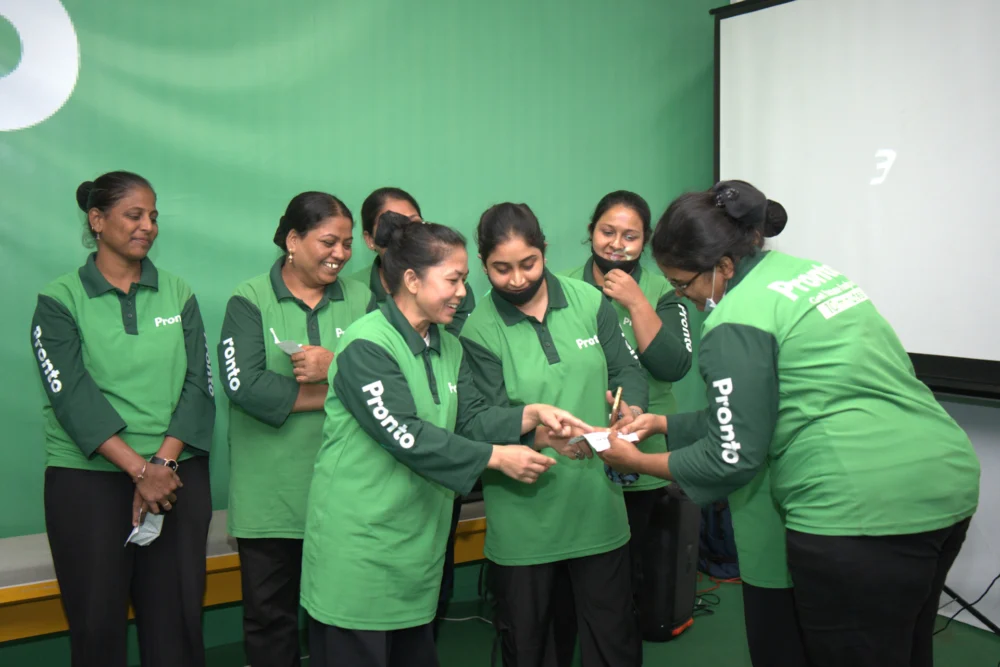
Pronto’s operational model is designed to overcome the inherent inefficiencies and trust deficits of the informal market. It offers quick, structured services for everyday household chores, including mopping, sweeping, and utensil cleaning. The core differentiator lies in its commitment to providing trained, background-verified professionals, whom the company refers to as "Pros," available on demand.
The startup’s unique selling proposition is its speed of service, often dispatching workers within approximately 10 minutes in its designated micromarkets. This rapid response positions Pronto closer to the "quick commerce" model, typically associated with grocery or food delivery, rather than traditional home services that often require prior scheduling. Each "Pro" undergoes rigorous in-person training to standardize service quality and comprehensive background verification to ensure safety and reliability. Furthermore, Pronto assigns its workers structured shifts, aiming to provide them with more predictable income and a stable work environment, a stark contrast to the often precarious and irregular earnings in the informal sector. This focus on worker welfare is crucial for building a sustainable and high-quality service ecosystem.
Scaling Operations: Explosive Growth in Bookings and Geographic Footprint
Pronto’s growth metrics paint a picture of exponential expansion. The company is now handling an impressive 18,000 bookings a day, a sharp increase from roughly 1,000 daily bookings just last year. This more than 17-fold jump in daily bookings within a year highlights the strong market demand for formalized domestic help services. The platform also boasts high user engagement, with the median time between a customer’s first and second booking being just two days, and the top 10% of users placing nine or more orders a month. Founder Anjali Sardana has set an ambitious target of reaching 70,000 daily bookings by June, signaling continued aggressive expansion plans.
Geographic expansion has been equally rapid. In just seven months, Pronto has widened its presence from a single city to 10 major urban centers across India, including key metropolitan areas like Delhi NCR, Bengaluru, and Mumbai. The number of serviceable micromarkets within these cities has also grown exponentially, from five to over 150. While this expansion is broad, a significant portion of the activity remains concentrated in established markets, with the National Capital Region (NCR) alone accounting for approximately half of total bookings. This strategic concentration allows Pronto to deepen its market penetration and optimize operational efficiencies in high-demand areas before fully scaling new regions.
The Untapped Potential: India’s Booming Home Services Market
The substantial growth witnessed by Pronto is reflective of the immense, largely untapped potential within India’s home services sector. According to a report by Redseer Strategy Consultants, the overall home services market was valued at an estimated ₹5,100 to ₹5,210 billion (approximately $56 billion to $57 billion) in FY 2025. Despite this colossal size, online penetration remained strikingly low, at less than 1% of net transaction value. This statistic vividly illustrates how deeply entrenched traditional, word-of-mouth channels remain in the sector.
However, the tide is turning. The online segment, though currently nascent, is projected for robust growth, with a compound annual rate of 18% to 22% through FY 2030. Several macroeconomic and societal factors are driving this digital shift:

- Rising Incomes: Increasing disposable incomes among urban households enable greater expenditure on convenience services.
- Urbanization: The rapid growth of urban centers leads to busier lifestyles, smaller family units, and a greater demand for external household support.
- Demand for Reliability and Convenience: Modern consumers, accustomed to the ease of digital platforms in other sectors, are increasingly seeking similar reliability, transparency, and convenience in domestic services.
- Trust and Safety: Formal platforms offer background-verified professionals, addressing long-standing concerns about safety and trust associated with informal hiring.
Pronto is strategically positioned to capitalize on these converging trends, offering a solution that not only provides convenience but also addresses critical issues of trust and quality in a largely unorganized market.
Empowering the Workforce: Building a Sustainable Ecosystem for "Pros"
At the heart of Pronto’s model is its workforce of "Pros." The company currently works with 4,500 active professionals on its platform, with approximately 99% being women. This demographic focus has significant socio-economic implications, offering formal employment opportunities and economic empowerment to a segment of the population that often faces barriers to formal sector employment.
Pronto’s commitment to its workers extends beyond mere employment. By providing structured shifts and a transparent booking system, the company aims to offer predictable income. Workers who complete roughly 20 days of shifts a month earn a median of ₹23,000 to ₹25,000 (around $251 to $273). While these figures may seem modest by Western standards, they represent a significant improvement over the often sporadic and lower earnings prevalent in the informal domestic help market in India. The monthly worker retention rate, exceeding 70%, indicates a relatively satisfied and stable workforce, which is crucial for maintaining service quality and building long-term trust. Despite these efforts, demand continues to outpace the onboarding of new workers, with bookings growing about 20% week over week, highlighting the urgent need for continuous recruitment and training.
Strategic Deployment of Capital and Future Offerings
With the fresh capital from its Series B round, Pronto plans a multi-pronged strategy for growth. The primary focus will be on onboarding more professionals to meet the surging demand, deepening its presence in existing markets to achieve greater density and operational efficiency, and expanding into new cities to capture a broader market share.
Beyond its core offerings of sweeping, mopping, and utensil cleaning, which remain the most-used services, Pronto is actively piloting new categories. These include cooking, car washing, and dog walking, reflecting a strategic move to become a comprehensive home services platform. The company is also exploring additional service categories, such as salon services, indicating a broader vision to address diverse household needs through its on-demand model.
Operationally, Pronto maintains a lean core team of about 60 employees, with a significant portion (15-16 individuals) dedicated to engineering, product, and design. Its marketing efforts are also streamlined with a small brand and performance team. This lean structure allows the company to efficiently manage its resources while prioritizing technological development and service delivery. While unit economics are still evolving, particularly as Pronto enters newer markets, the company reports "very positive green shoots" in its oldest micromarkets in Gurugram, where contribution margins have turned positive, signaling a path towards profitability as operations mature.
Navigating a Competitive Landscape
Pronto operates within an increasingly competitive segment of India’s home services market. Key rivals include Snabbit and the publicly listed Urban Company, both of whom are also vying for dominance in the rapidly growing on-demand services space.
Snabbit, another fast-growing player, raised $30 million in late October at a $180 million valuation, effectively doubling its valuation in just five months. It reported approximately 830,000 orders in February, a significant increase from around 500,000 in December. Urban Company, a more established player in the broader home services sector, also announced crossing 50,000 daily bookings in February, showcasing its continued growth.
Data from Sensor Tower, reviewed by TechCrunch, provides further insight into the competitive dynamics. Pronto’s daily active users (DAU) grew approximately 37% to roughly 101,000 between late January and late February. In comparison, Snabbit saw about 30% growth in DAU, reaching around 93,000 daily users during the same period. These figures suggest a neck-and-neck race for user acquisition and engagement in this burgeoning market.
Amidst this intense competition, Anjali Sardana asserts that Pronto’s primary focus remains on service quality. "At the end of the day, customers will come to the platform that provides the highest quality service," she states, underscoring the company’s belief that superior service delivery will be the ultimate differentiator and key to sustained customer loyalty.
Broader Implications and Outlook
Pronto’s rapid growth and substantial funding round are more than just a corporate success story; they represent a significant step in the formalization of India’s vast informal economy. By professionalizing domestic work, Pronto is not only offering convenience and reliability to urban households but also empowering a largely female workforce with better wages, predictable employment, and enhanced dignity.
The success of platforms like Pronto has broader implications for India’s gig economy, demonstrating the potential for technology to create structured employment opportunities in sectors traditionally characterized by precarity. As incomes rise and urban lifestyles evolve, the demand for reliable, on-demand home services is set to explode. Pronto, with its robust funding, rapid operational expansion, and unwavering focus on quality, is well-positioned to be a frontrunner in shaping the future of domestic work in India, driving both economic growth and social impact. The coming years will be crucial as the company navigates scaling challenges, competitive pressures, and the continued evolution of India’s dynamic digital landscape.
About the Author