The landscape of business technology is being reshaped by Artificial Intelligence (AI), yet many organizations find themselves grappling with how to effectively integrate these powerful tools. Business leaders are not lacking in ambition or the availability of AI solutions, but rather in clear direction on where to begin and how to translate technological adoption into tangible business outcomes. This pervasive challenge, characterized by experiments that fail to gain traction, underutilized software, and growing team skepticism, stems from a fundamental disconnect: AI output often doesn’t lead to demonstrable results.
A successful approach to AI integration, observed across numerous high-performing teams, hinges on a problem-first methodology. Instead of starting with the technology itself, these teams identify specific, pressing issues within their workflows – pain points that are time-consuming, inefficient, or hindering progress. Only then do they seek out the most appropriate AI use cases to address these identified challenges. As initial successes are realized, confidence builds, paving the way for exploring additional AI capabilities, always with a clear, goal-oriented perspective.
This practical guide aims to demystify AI adoption for marketing, sales, and customer service departments, moving beyond an exhaustive inventory of AI capabilities to focus on actionable strategies for achieving real value. The use cases are categorized by technological readiness, reflecting the current state of AI development and implementation. As a leading provider of CRM and marketing automation solutions, HubSpot is continuously developing and refining these capabilities, offering a glimpse into the evolving potential of AI in business operations.
Marketing: Driving Efficiency and Personalization with AI
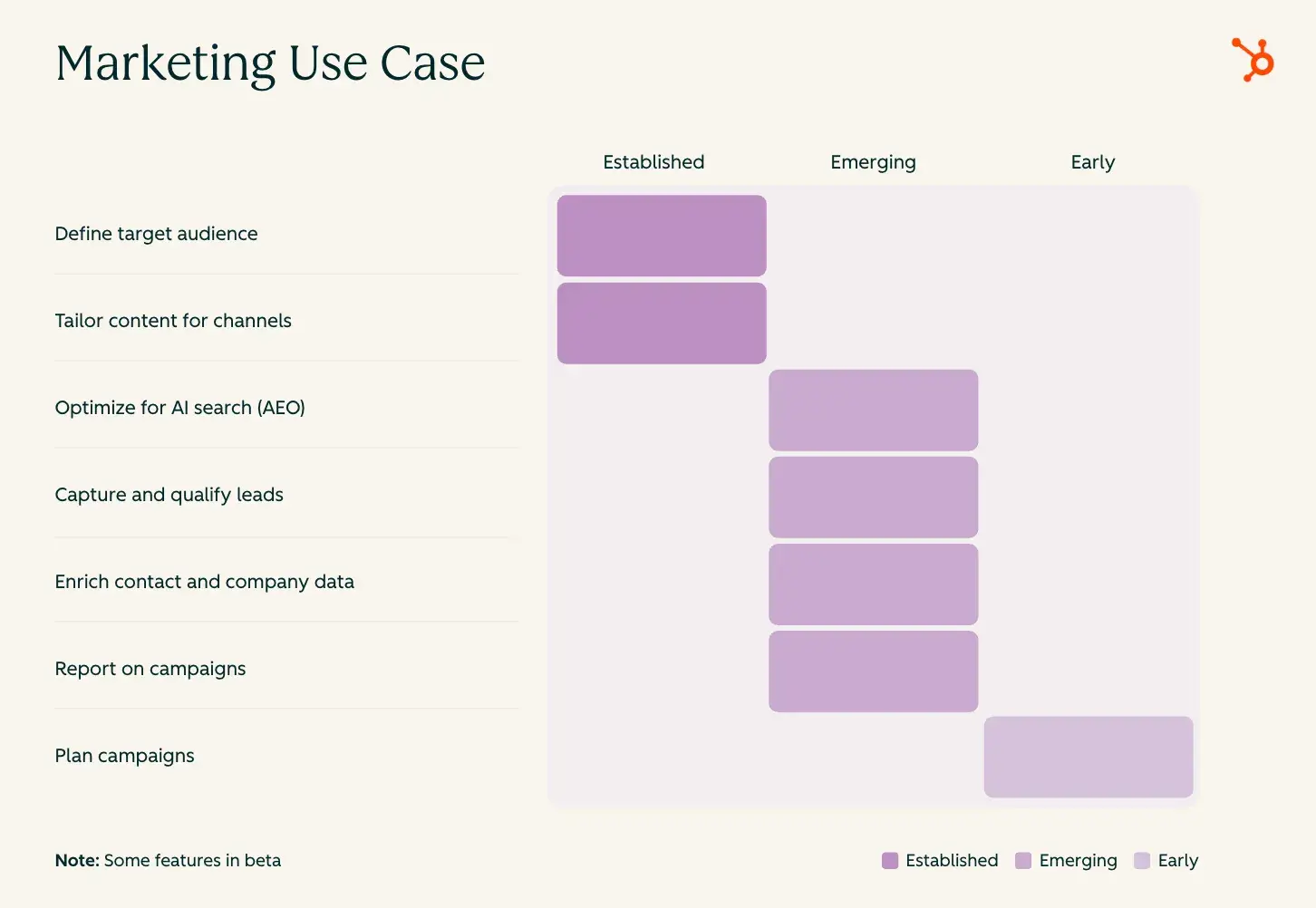
Marketing teams are consistently challenged to expand their reach and impact across an ever-increasing number of channels, content formats, and personalization demands, often without corresponding increases in headcount. AI is emerging as a transformative force, enabling marketers to reimagine their workflows and achieve ambitious goals. The following use cases represent opportunities for immediate and near-term implementation.
Established AI Applications in Marketing
Defining Target Audiences with Precision: Traditional segmentation, often based on broad metrics like job titles and company size, frequently fails to capture the nuanced factors that drive purchasing decisions. AI offers a powerful solution by analyzing vast datasets to identify high-fit prospects with a significantly higher propensity to convert. For HubSpot customers, tools like Breeze Assistant provide deeper insights into customer behavior, enabling optimization of customer journeys and a marked improvement in lead quality. This data-driven approach moves beyond assumptions, allowing for more efficient resource allocation and targeted campaign development.
Tailoring Content Across Multiple Channels: The process of adapting a single piece of core content, such as a blog post, into various formats for emails, social media, and advertisements can be time-consuming and resource-intensive. AI streamlines this process by enabling rapid repurposing and adaptation of content for different platforms, all while maintaining brand consistency and voice. HubSpot’s Content Remix and Breeze Assistant empower marketing teams to drastically reduce the time spent on content adaptation, freeing up valuable hours for strategic initiatives and creative development. This efficiency gain is critical in today’s fast-paced digital environment.
Emerging AI Capabilities for Marketers
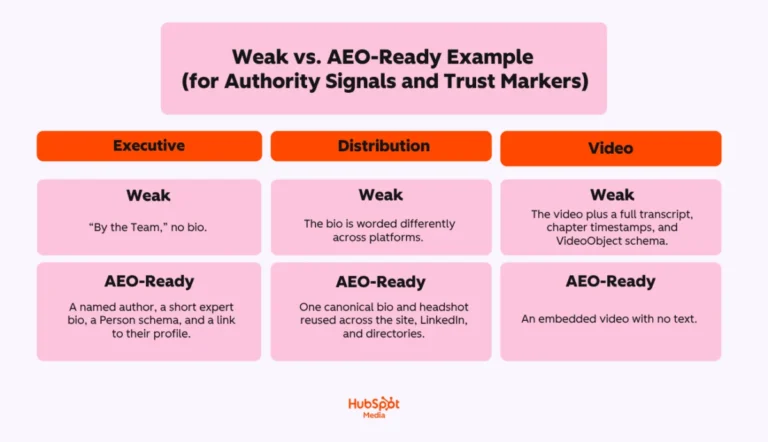
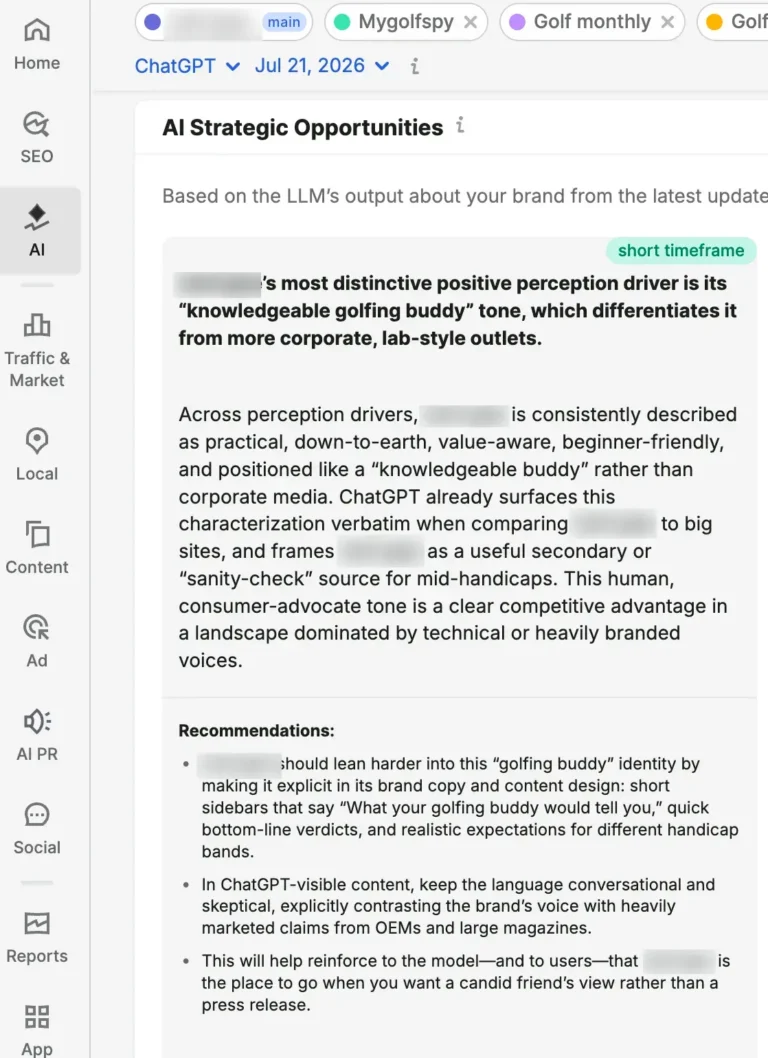
Optimizing for AI-Powered Search: The paradigm of online information discovery is shifting dramatically. Consumers are increasingly engaging with AI-powered conversational search engines like ChatGPT, Claude, and Perplexity, moving away from traditional keyword-based blue links. This necessitates a strategic pivot towards Answer Engine Optimization (AEO). HubSpot is actively investing in this domain, with new features designed to help marketers understand their brand’s visibility within AI-generated answers and provide actionable recommendations for improvement. This proactive approach to AEO will be crucial for maintaining discoverability and relevance as AI search technologies continue to evolve rapidly.
Capturing and Qualifying Leads 24/7: Websites experience visitor traffic around the clock, often outside of standard business hours. AI-powered chatbots can now engage with visitors in real-time, answer their inquiries, assess their fit as potential leads, and even schedule meetings with the appropriate sales representatives. This capability allows organizations to capture a higher volume of qualified leads without increasing staffing levels. HubSpot’s Breeze Customer Agent is designed to automate lead capture and qualification, ensuring that no potential opportunity is missed, regardless of the time of day.
Early-Stage AI Innovations in Marketing
AI-Assisted Campaign Planning: The ability to provide an AI with a comprehensive campaign brief and receive a fully fleshed-out strategy, including content recommendations and channel allocation, represents a significant leap forward in marketing efficiency. This functionality allows marketing teams to shift their focus from the often-tedious planning phase to the execution and optimization of campaigns, accelerating time-to-market and enabling more agile marketing operations. HubSpot is actively developing these capabilities to empower businesses of all sizes to move with greater speed and agility.
Sales: Enhancing Productivity and Closing More Deals with AI
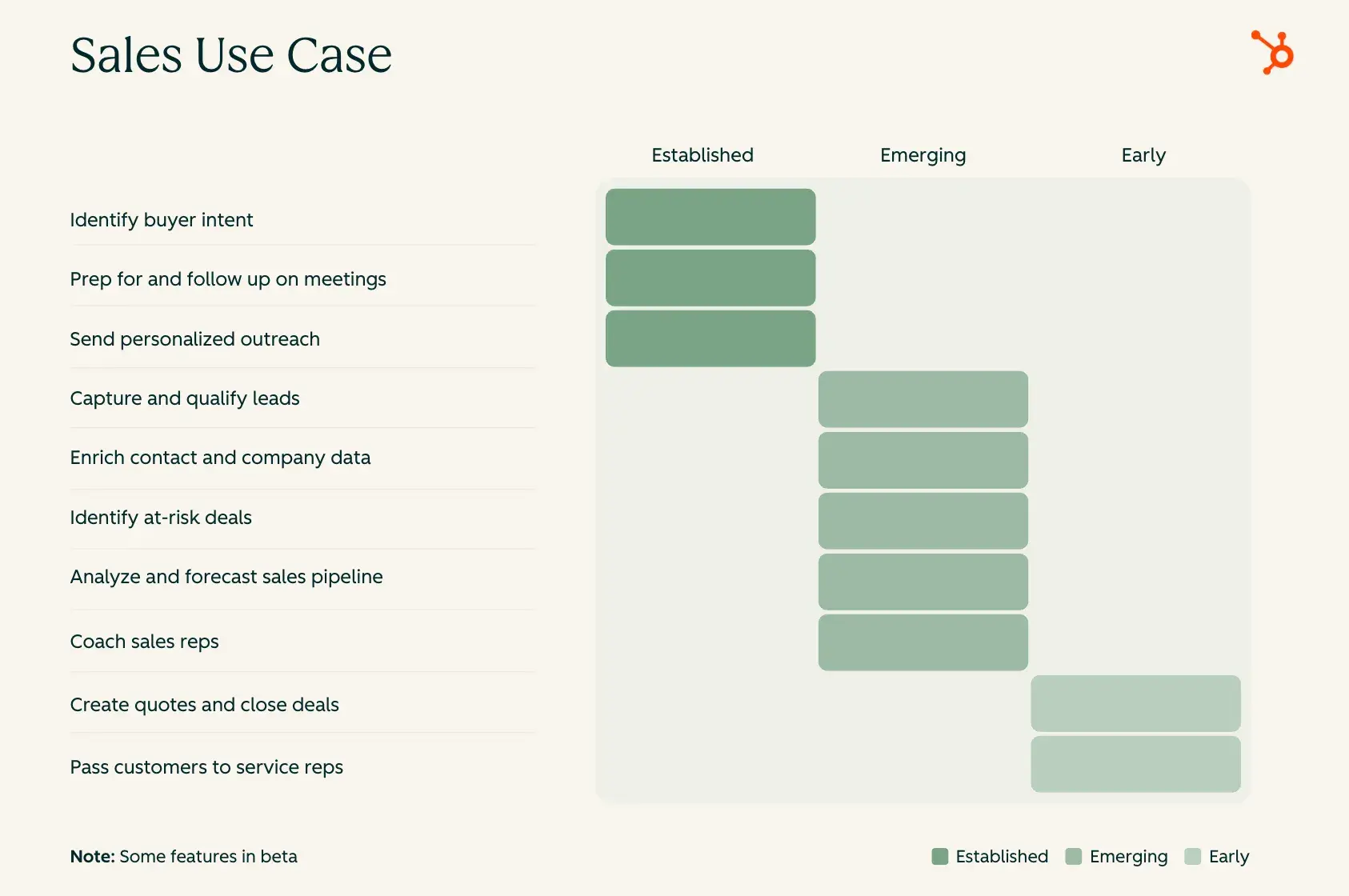
A significant portion of a sales representative’s day is consumed by non-selling activities such as research, data entry, follow-ups, and preparation. AI is poised to fundamentally alter this dynamic by automating these repetitive tasks, allowing sales professionals to dedicate more time and energy to customer engagement and deal progression. The following applications are already demonstrating substantial value.
Established AI Solutions for Sales Teams
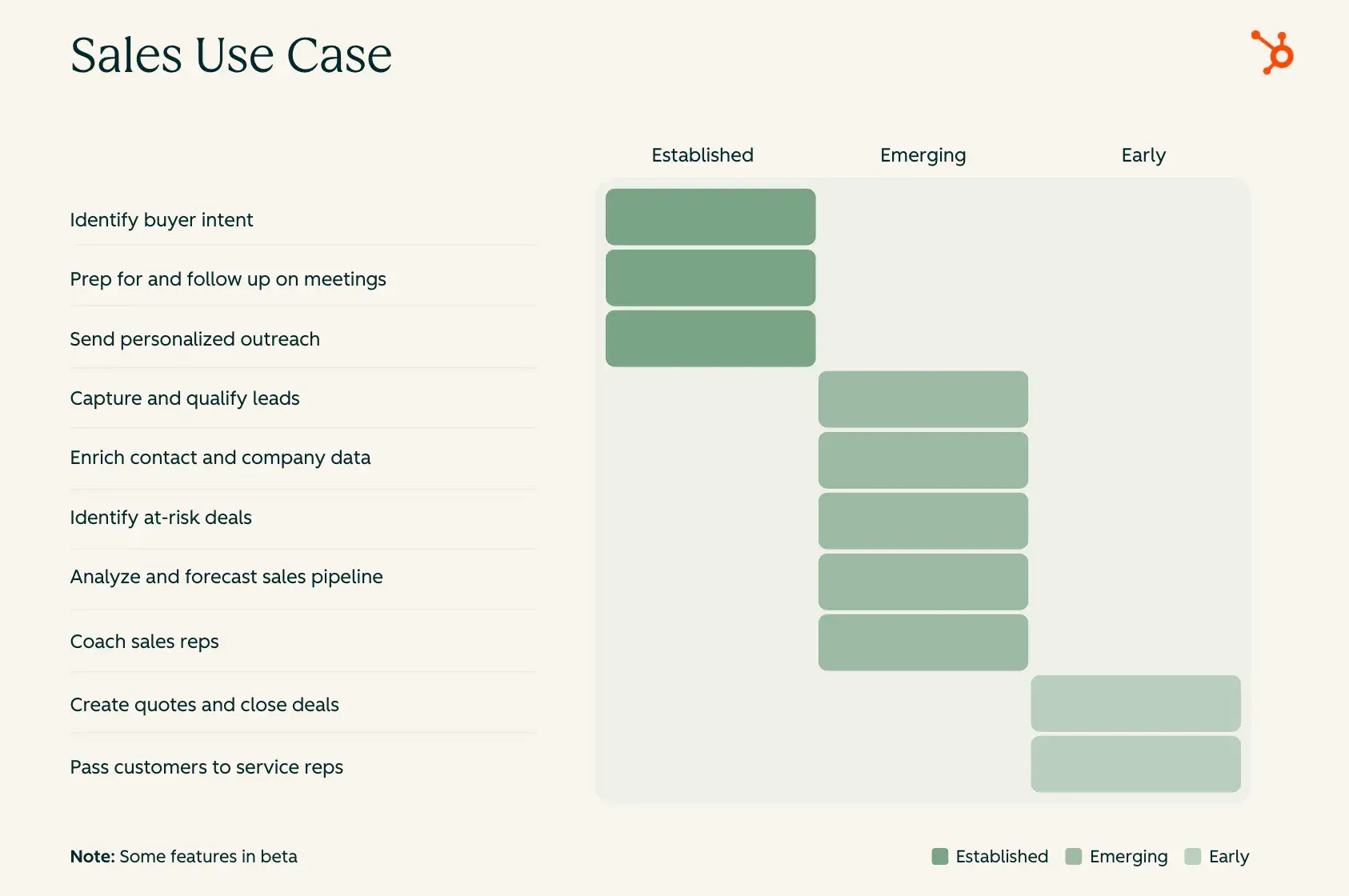
Identifying Buyer Intent Signals: Sales representatives often dedicate considerable effort to accounts that are not yet primed for engagement, not due to a lack of skill, but a lack of timely information. AI addresses this by continuously monitoring target accounts for key signals, such as funding announcements, new executive hires, or significant website activity, and alerting sales teams to opportune moments for engagement. This proactive approach minimizes time spent on less promising leads and maximizes conversations with genuinely interested buyers. HubSpot’s Buyer Intent tools empower sales teams to focus their efforts more effectively, leading to increased efficiency and higher conversion rates.
Streamlining Meeting Preparation and Follow-Up: The administrative burden associated with sales meetings can be substantial. AI tackles this by providing immediate pre-meeting context, including contact history, deal status, and recent interactions, ensuring representatives are well-prepared. Post-meeting, AI can automatically transcribe discussions, extract key action items, and draft follow-up emails, significantly reducing the time spent on administrative tasks. This allows sales reps to dedicate more of their valuable time to nurturing relationships and advancing deals. HubSpot’s Breeze Assistant and Call Recap Agent are instrumental in automating these critical post-meeting processes.
Delivering Personalized Sales Outreach at Scale: The effectiveness of sales outreach is often dictated by its timeliness and relevance. AI systems can monitor account activities and alert sales representatives to significant developments, enabling them to craft and send personalized outreach messages that resonate with prospects. HubSpot’s Breeze Prospecting Agent has demonstrated a doubling of response rates compared to traditional outreach methods, highlighting the power of AI-driven personalization and timing in sales communication.
Emerging AI Technologies for Sales Enhancement
Enriching Contact and Company Data: Incomplete CRM records, lacking crucial details like job titles or comprehensive company information, can impede effective segmentation, lead scoring, and personalization efforts. AI can now automatically populate these missing fields by leveraging extensive, continuously updated datasets. For HubSpot customers, access to a dataset encompassing over 200 million company and buyer profiles ensures that sales teams operate with accurate and current information, leading to more tailored and impactful communications. This data enrichment reduces manual data entry and improves the quality of customer interactions.
Providing Real-Time Sales Coaching: The learning curve for sales representatives can be steep, with lost deals often serving as the primary learning experience. AI offers a proactive coaching solution by analyzing call recordings and deal activities to identify the behaviors and strategies that distinguish top performers. This insight can then be disseminated across the team, accelerating ramp-up times and fostering more consistent winning performance. HubSpot’s Conversation Intelligence and Sales Coach Assistant are enabling managers to replicate successful sales methodologies more efficiently.
Early-Stage AI Applications in Sales
Automating Quote Generation and Deal Closure: The process of generating quotes and proposals can often be a bottleneck in the sales cycle, leading to delays in deal progression. The potential for AI to answer buyer pricing inquiries, construct proposals based on historical data, and draft quote-related emails promises to significantly accelerate deal closures. By automating these administrative aspects, sales representatives can focus on their core strengths: building relationships and closing business. HubSpot is actively developing these capabilities to support even the most complex sales environments.
Customer Service: Elevating Support Efficiency and Customer Satisfaction with AI
Customer service teams frequently face the challenge of meeting escalating customer expectations for speed and quality of support, often with limited resources. Innovative teams are leveraging AI to automate routine inquiries and tasks, freeing up human agents to address more complex and critical customer needs. This strategic allocation of resources is transforming customer support operations.
Established AI Solutions in Customer Service
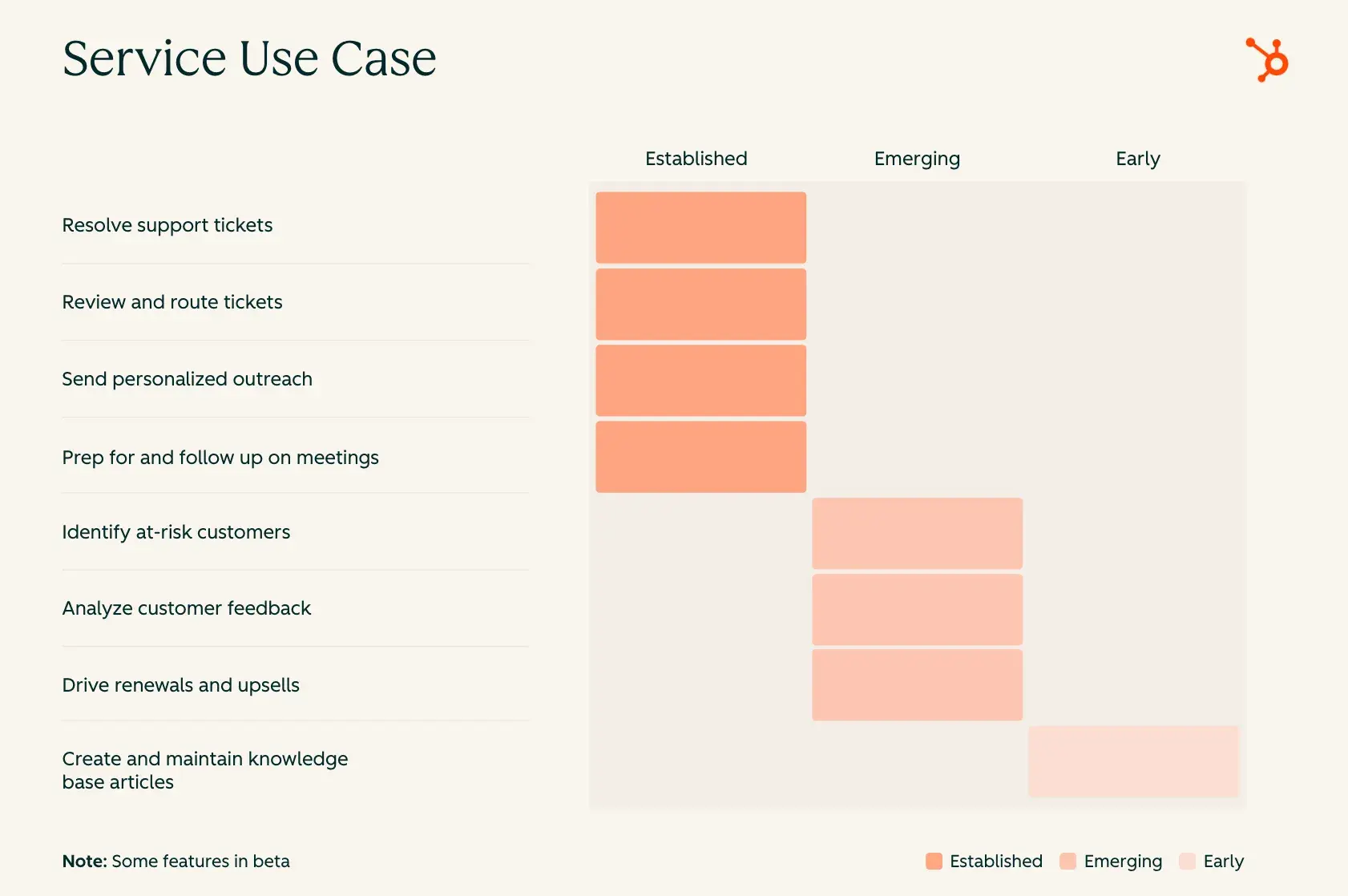
Automated Support Ticket Resolution: Customers expect immediate responses to their queries, particularly for common issues. AI can provide instant resolutions to routine support tickets by drawing upon an organization’s knowledge base and help documentation. This allows human agents to focus their expertise on more complex or nuanced problems. HubSpot’s Breeze Customer Agent has demonstrated the ability to resolve up to 65% of incoming tickets automatically, significantly improving customer satisfaction and agent efficiency.
Intelligent Ticket Review and Routing: In high-volume support environments, urgent issues can be inadvertently overlooked amidst a sea of similar tickets. AI can analyze incoming tickets to understand their nature, prioritize them based on urgency and complexity, and accurately route them to the most appropriate agent. This intelligent triage system enhances the overall efficiency of the support team. HubSpot’s Customer Agent, when integrated with Help Desk functionalities, has shown a notable increase in ticket resolution rates, demonstrating the value of AI in streamlining support workflows.
Furthermore, the AI capabilities that enhance personalized outreach and meeting preparation in sales are equally applicable to customer service. Whether it’s crafting follow-up communications to at-risk customers or preparing for renewal discussions, these AI tools ensure service teams can provide informed and timely support. HubSpot’s Breeze Assistant is a versatile tool for these customer-facing applications.
Emerging AI Capabilities for Customer Service
Proactive Identification of At-Risk Customers: The point at which a customer expresses an intent to cancel often marks a stage where the opportunity to retain them has diminished. AI can proactively identify warning signs, such as declining engagement levels, an increase in support ticket volume, or shifts in communication tone. By flagging these indicators early, AI enables service teams to intervene and address potential issues before they escalate, leading to improved customer retention and satisfaction. HubSpot’s Customer Health Agent and Conversation Intelligence are key tools for this proactive customer management.
Automated Analysis of Customer Feedback: Valuable insights into customer needs and preferences are often embedded within vast amounts of unstructured data, including survey responses and call transcripts. AI can efficiently scan and analyze this feedback to surface recurring themes and sentiment trends automatically. This allows businesses to act on concrete customer feedback rather than relying on assumptions, leading to more effective product development and service improvements. HubSpot’s Feedback Survey Summaries and Conversation Intelligence facilitate this data-driven approach to customer understanding.
Early-Stage AI Innovations in Customer Service
AI-Powered Knowledge Base Creation and Maintenance: The dynamic nature of customer inquiries often renders static FAQ sections and knowledge base articles quickly outdated. This can lead to customers receiving incorrect information and support agents spending valuable time correcting it. AI offers a solution by drafting knowledge base articles based on how support tickets have been resolved in practice. Moreover, AI can automatically update these articles as issues and solutions evolve. This creates a self-maintaining knowledge base, providing customers with accurate and timely answers while reducing the documentation burden on support teams. While still in its nascent stages, the potential for improved customer self-service and reduced agent workload is substantial.
Lessons Learned: The Problem-First Imperative for AI Success
Extensive experience working with businesses on AI integration for go-to-market strategies has revealed a fundamental truth: momentum in AI adoption is not generated by the technology itself, but by the successful resolution of real-world problems. Organizations achieving significant results did not begin with grand, overarching transformation plans. Instead, they identified a single, clear bottleneck – a process where time was being wasted, or a workflow that needed acceleration. They then strategically applied AI to address that specific challenge.
The outcomes of this problem-centric approach have been demonstrably validating. Marketing teams are achieving greater precision in reaching target audiences and converting more prospects into qualified leads. Sales teams are reporting doubled response rates on their outreach efforts. Customer service teams are successfully resolving over half of their support tickets without direct human intervention. These seemingly small, targeted implementations are evolving into substantial, measurable business outcomes.
In this context, AI is no longer a speculative future investment; it is a present-day tool capable of driving everyday business objectives. It is making work faster, smarter, and more effective across the organization. The critical question for businesses today is not whether AI can assist their teams, but rather where they will choose to initiate their AI journey.
About the Author