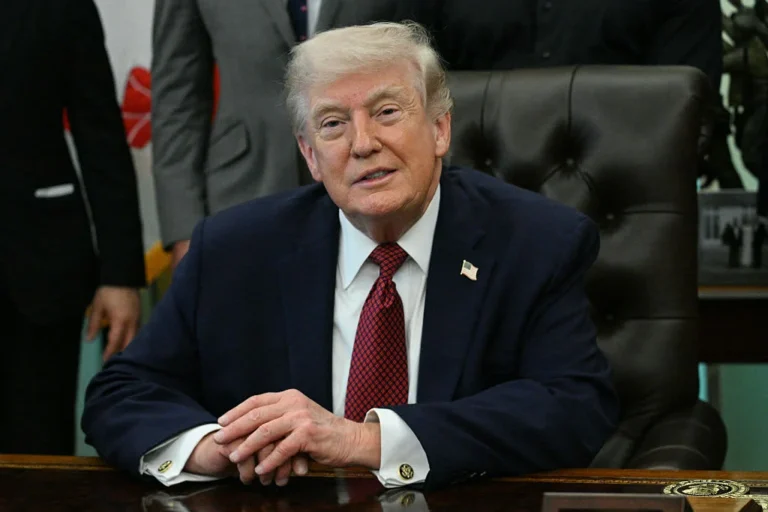
Following a significant U.S. military operation in Iran initiated by President Donald Trump in March 2025, a potent and familiar debate has reignited within the Democratic Party: the prospect of a third impeachment. Congressional Democrats and staunch opponents of the president swiftly condemned the action as unconstitutional, citing a perceived circumvention of congressional war powers. While immediate calls for impeachment were somewhat muted by the current Republican control of both chambers, the looming midterm elections and the possibility of Democrats reclaiming the House of Representatives have placed a potential third impeachment firmly back on the political agenda, a scenario President Trump himself reportedly fears.
The March 4, 2025, operation in Iran, undertaken without explicit congressional authorization, immediately drew parallels to previous instances where President Trump’s use of executive power, particularly in foreign policy, sparked constitutional disputes. Democrats, still smarting from the perceived lack of accountability following two previous impeachments, are now navigating a complex political landscape where the desire for robust oversight clashes with strategic concerns about voter fatigue and the efficacy of impeachment as a political tool.
Immediate Reactions and Congressional Scrutiny
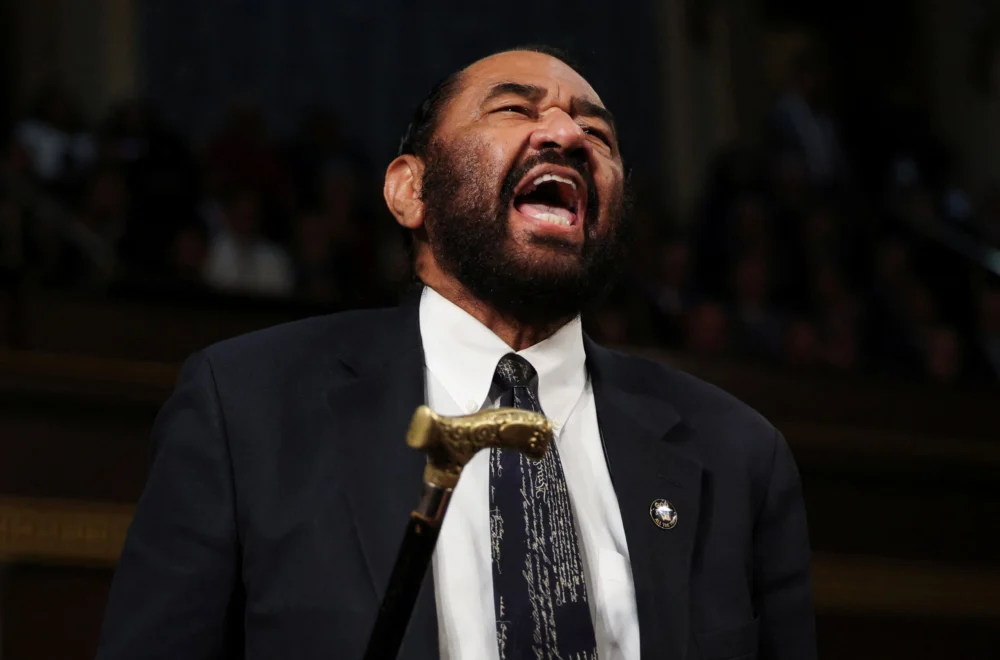
In the immediate aftermath of the Iran operation, a wave of condemnation emanated from Democratic lawmakers. Representative Al Green, D-Texas, a long-standing advocate for impeaching President Trump, was notably vocal during a joint session of Congress where the president addressed the nation on March 4, 2025, as captured in a striking image by Win Mcnamee via Reuters. While Green’s calls for impeachment have been consistent, the party’s broader leadership adopted a more cautious, albeit resolute, stance.
"Since the U.S. attack on Iran, congressional Democrats and opponents of President Donald Trump called the operation unconstitutional and vowed to rein in the president," a sentiment widely echoed across the party’s progressive and moderate wings. The primary constitutional concern revolved around the War Powers Resolution of 1973, a federal law intended to check the president’s power to commit the United States to an armed conflict without congressional consent. This resolution mandates that the president notify Congress within 48 hours of committing armed forces to military action and limits the deployment to 60 days without a congressional declaration of war or specific authorization. Critics argued that President Trump’s unilateral action directly violated the spirit, if not the letter, of this critical piece of legislation.
House Democrats convened the week prior to the Iran operation to strategize for the upcoming year, but the sudden escalation in the Middle East provided an unforeseen and potentially potent new ground for seeking presidential accountability. While impeachment was not the initial focus of their retreat, the Iran situation quickly became an inescapable topic of discussion, forcing party leaders to weigh the constitutional imperative against the political ramifications.
The War Powers Resolution and Constitutional Authority
The constitutional authority for declaring war rests squarely with Congress, as stipulated in Article I, Section 8 of the U.S. Constitution. However, the President, as Commander-in-Chief under Article II, holds the power to direct military operations once war is declared or in cases of self-defense. The tension between these two powers has been a recurring theme in American history, leading to the enactment of the War Powers Resolution in the wake of the Vietnam War.
The resolution aimed to reassert congressional authority in war-making, requiring presidents to consult with Congress "in every possible instance" before introducing U.S. armed forces into hostilities or into situations where imminent involvement in hostilities is clearly indicated. For many Democrats, President Trump’s decision to launch strikes against Iran without seeking prior congressional approval or a formal declaration of war represented a blatant disregard for this foundational principle of checks and balances. This perceived overreach by the executive branch immediately raised questions about "high crimes and misdemeanors," the constitutional standard for impeachment.
Historical Precedent: Trump’s Previous Impeachments
The discussion of a third impeachment against President Trump is unprecedented in U.S. history. No president has ever been impeached twice, let alone faced the prospect of a third such proceeding. This historical context heavily influences the strategic thinking within the Democratic Party.
President Trump was first impeached by the U.S. House of Representatives in December 2019. The articles of impeachment centered on allegations that he abused his power by withholding military aid to Ukraine to pressure its government to investigate his political rival, Joe Biden, and then obstructed Congress’s investigation into these actions. The House voted largely along party lines to impeach him, but the Senate, with a Republican majority, voted to acquit him in February 2020. The vote to convict on abuse of power was 48-52, and on obstruction of Congress, it was 47-53, falling well short of the two-thirds majority required for removal.
His second impeachment occurred in January 2021, just days before the end of his term. This time, the charge was "incitement of insurrection" related to his role in encouraging supporters who stormed the U.S. Capitol on January 6, 2021. The House again voted to impeach him, with a bipartisan vote of 232-197, including 10 Republicans. The Senate trial took place after he had left office, and while a bipartisan majority of 57-43 voted to convict (including 7 Republican senators), this still fell short of the 67 votes needed for conviction.
These two failed attempts loom large over any new impeachment considerations. As Democratic strategist Jared Leopold noted, "If you swing at him, you want to make sure that you don’t miss." The perceived political costs of impeachment without conviction, including the potential for alienating swing voters and energizing the president’s base, are significant. The concern in some Democratic corners is that past attempts to rein in Trump have not resonated widely with the electorate, leading to strategic caution.
The Political Calculus and Democratic Divisions
While the constitutional grounds for impeaching President Trump over the Iran operation appear compelling to many Democrats, the political calculus is far more intricate. Impeachment tends to be unpopular with voters if it is perceived as purely political or if it distracts from pressing domestic issues.
Representative Jamie Raskin, D-Md., the top Democrat on the House Judiciary Committee and a key figure in both previous impeachment efforts, articulated this nuanced position before the Iran operation: "We’re not afraid of impeachment or any other constitutional tool in our arsenal, but we have learned that impeachment is no panacea. It’s not a fetish with us, but it’s also not a taboo with us. If we think that this will be the most effective way to address some of the crises of the republic that have been unleashed by President Trump or particular members of his Cabinet, then it will have to be considered." Raskin’s statement reflects the internal debate: a recognition of impeachment’s constitutional legitimacy balanced against its strategic effectiveness.

Jared Leopold further elaborated on this strategic dilemma, suggesting that some calls for impeachment can be seen as "attention-seeking device[s]" when Republicans control Congress. "People mostly want to see Democrats fight back in a way that has real-world impact," Leopold stated. He used a football analogy: "Sometimes if you’re a football team, you want to hand the ball off and get first downs instead of trying to go for a Hail Mary every play." This implies a preference for legislative achievements, robust oversight, and policy victories over high-stakes, potentially unsuccessful impeachment attempts.
Indeed, Democratic leaders have been weighing how to effectively keep President Trump in check without drowning out other critical issues. A dominant theme discussed at party retreats has been prioritizing an "affordability message," focusing on economic issues that resonate directly with everyday Americans – a strategy also favored by Republicans for President Trump’s re-election campaign.
Campaign Trail Echoes and Progressive Pressure
Despite the caution from party leadership, the Iran operation swiftly brought calls for impeachment to the campaign trail, particularly in contested Democratic primaries. This trend previews a potentially contentious issue for Democrats in the 2027 election cycle.
In Illinois’ open 9th Congressional District, for example, a crowded Democratic primary saw multiple candidates advocating for immediate impeachment. Candidate Kat Abughazaleh, a progressive voice, posted on BlueSky: "The morally bankrupt Trump administration has partnered with another morally bankrupt authoritarian to declare an unprovoked war on Iran, already killing scores of civilians. We need an immediate vote from Congress on a War Powers Resolution. Then articles of impeachment." Her sentiment was echoed by Evanston, Illinois, Mayor Daniel K. Biss and State Senator Laura Fine, who similarly called for President Trump’s impeachment. These grassroots calls highlight the significant pressure from the progressive base of the party for aggressive action against the president.
Beyond the Iran attack, Democrats have consistently threatened impeachment over a "grab bag of other alleged offenses" since Trump retook office last year. These include his 2025 strikes on Iran (even before the major March operation), his ousting of Venezuelan President Nicolás Maduro without congressional approval, and various other perceived abuses of power. Representative Maxine Waters, D-Calif., a long-time vocal critic of Trump, had recently indicated she was "reconsidering" her view that pursuing impeachment was unrealistic following the Maduro ouster in January. However, in the immediate aftermath of the latest Iran operation, she displayed strategic patience, stating, "I don’t want to go there. I think that we’re focused on what is happening in Iran. I think when we take control of the House we will consider that." This statement from a prominent progressive leader underscores the party’s strategic pivot point: the midterm elections.
Leadership’s Stance and the Post-Midterms Scenario
The current Republican control of both the House and Senate renders any impeachment effort purely symbolic, as conviction and removal require a two-thirds Senate vote, an impossibility without significant bipartisan support. This reality shapes the approach of Democratic leadership.
House Minority Leader Hakeem Jeffries, D-N.Y., and his leadership team have generally opted for a more measured approach, prioritizing a broad-based agenda that includes oversight and accountability alongside legislative initiatives. When Representative Al Green brought a resolution to impeach Trump in December (prior to the major Iran operation), only 140 Democrats voted against a motion to table the measure. Jeffries himself was among 47 Democrats who voted "present," signaling neither support nor opposition, a move that allows individual members to express their position without committing the party’s leadership to a potentially divisive and fruitless endeavor.
House Democratic Caucus Chairman Pete Aguilar, D-Calif., articulated the party’s multi-pronged strategy: "What we tell our members and what we tell candidates who are running is we have to do all of the things. We have to do oversight and accountability and we have to talk about the affordability agenda and how we’re going to make life better for people if we’re given the opportunity to lead and if we’re given the opportunity to govern." This statement reflects the delicate balancing act between satisfying the base’s desire for accountability and appealing to a broader electorate concerned with everyday economic issues.
The critical juncture, as multiple Democrats acknowledge, is the upcoming midterm elections. If Democrats manage to win back the House, the landscape for impeachment would shift dramatically. "If Democrats win back the House, there will likely be serious pressure to impeach Trump a third time," a sentiment widely shared within the party. Representative Deborah Ross, D-N.C., a member of the House Judiciary Committee, acknowledged at the Democratic policy retreat that some Democratic attempt to impeach is "all but certain" if they regain the majority. The challenge, she noted, would be "narrowing down the high crimes and misdemeanors. Because I think there are high crimes and felonies." This highlights the difficulty of selecting the most compelling and politically viable grounds for a third impeachment, given the multitude of accusations against the president. Jeffries, she added, is "not going to just have a free-for-all," suggesting a disciplined approach to any potential impeachment proceedings.
Broader Impact and Implications
A third impeachment of President Donald Trump, regardless of its outcome in the Senate, would have profound implications for American politics, constitutional norms, and the historical legacy of the presidency.
Constitutionally, it would further test the boundaries of executive power and congressional oversight, particularly concerning war-making authority. The War Powers Resolution, often debated and occasionally circumvented, would face renewed scrutiny. It would also solidify a precedent for repeated impeachment attempts against a single president, potentially altering the nature of political opposition and the use of this ultimate constitutional check.
Politically, the impact would be multifaceted. For Democrats, it represents a high-stakes gamble. While it could energize their base and fulfill a promise of accountability, it also carries the risk of being perceived as overly partisan or distracting from policy goals, potentially alienating swing voters in crucial future elections. For Republicans, it would likely serve as a rallying cry, unifying their base around a narrative of political persecution.
Historically, a third impeachment would cement President Trump’s unique place in presidential history, distinguishing him as the only president to face such proceedings multiple times. It would underscore the deep polarization within American society and the ongoing struggle over the nature and limits of presidential power.
As the nation approaches the midterm elections, the shadow of a potential third impeachment looms large. The outcome of those elections will not only determine control of Congress but also the immediate future of the Democratic Party’s strategy regarding President Trump, balancing the constitutional imperative of accountability with the complex realities of political strategy and public opinion. The path forward remains fraught with both constitutional duty and political peril.
About the Author