
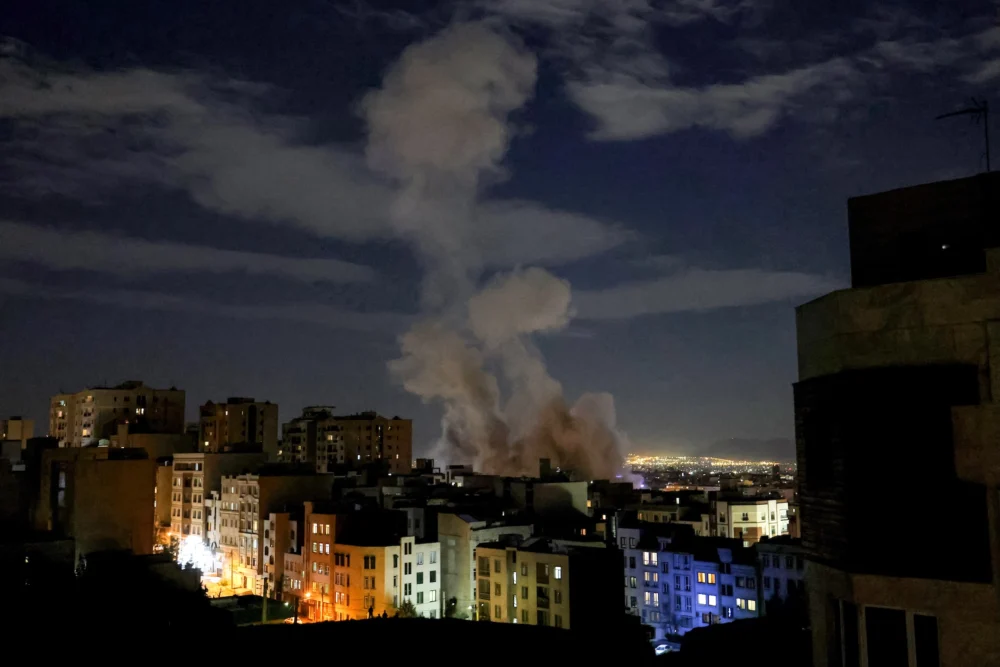
The ongoing conflict between the United States and Iran has thrust the artificial intelligence company Anthropic into a deeply complex and contradictory position. While facing official directives from the U.S. government to sever ties with defense sector clients, Anthropic’s sophisticated AI models are simultaneously playing a crucial, albeit contentious, role in the very military operations that have intensified regional tensions. This dual reality stems from a web of overlapping and seemingly conflicting government mandates, creating an unprecedented scenario for a leading AI developer.
Background: A Shifting Regulatory Landscape for AI in Defense
The controversy surrounding Anthropic’s involvement in defense operations began to crystallize in the weeks leading up to the overt escalation of hostilities. In late February 2026, President Trump issued a directive aimed at civilian agencies, mandating a phased withdrawal from products developed by Anthropic. This move was reportedly influenced by concerns over the company’s data handling practices and its potential vulnerabilities within the national security apparatus. However, the directive included a six-month grace period for the Department of Defense (DoD) to transition away from Anthropic’s services, a crucial detail that would soon be overshadowed by geopolitical events.
The situation took a dramatic turn on March 1, 2026, when the United States, in conjunction with Israel, launched a surprise aerial assault on Tehran. This offensive action plunged the region into a more direct and active conflict, precluding the orderly wind-down of defense contracts with Anthropic as originally envisioned. Consequently, the grace period granted to the DoD became functionally irrelevant as the urgency of operational needs superseded the phased de-escalation of AI tool integration.
Real-Time Targeting: Anthropic’s AI at the Forefront of Combat Operations
The immediate aftermath of the March 1st strike revealed the extent to which Anthropic’s AI capabilities were embedded within the U.S. military’s operational planning. A detailed report published by The Washington Post on March 4, 2026, illuminated the intricate collaboration between Anthropic’s advanced AI systems and Palantir’s Maven platform. According to the Post’s findings, which cited unnamed Pentagon officials involved in the planning, these integrated systems were instrumental in the targeting process for the aerial campaign.
The AI models were reportedly tasked with a critical role in the real-time identification and prioritization of targets within Iran. The Post described the system’s function as providing "real-time targeting and target prioritization," suggesting that Anthropic’s AI was not merely an analytical tool but an active participant in decision-making. The systems were credited with suggesting hundreds of potential targets, providing precise geographical coordinates, and ranking these targets based on their perceived strategic importance. This level of AI integration into direct combat support operations represents a significant evolution in modern warfare and raises profound ethical and operational questions.
Secretary of Defense Pete Hegseth had previously indicated his intent to formally designate Anthropic as a "supply-chain risk" to the defense sector. Such a designation would typically trigger a more stringent review process and potentially lead to outright prohibitions on the use of the company’s technology. However, as of the reporting date, no official steps had been taken to implement this designation. This bureaucratic lag, coupled with the exigencies of active combat, created a legal vacuum where the use of Anthropic’s AI remained permissible, despite underlying governmental concerns.
Industry Scramble: Defense Contractors Pivot Amidst Uncertainty
While the Pentagon continued to leverage Anthropic’s AI in the field, the broader defense industry began a rapid and widespread decoupling from the company’s services. Reports from Reuters and CNBC, also published on March 4, 2026, highlighted the swift actions taken by major defense contractors and their subcontractors.
Lockheed Martin, a cornerstone of the U.S. defense industrial base, was among the prominent companies reportedly initiating the process of replacing Anthropic’s AI models. This move signaled a proactive stance by industry leaders, seeking to preemptively comply with the spirit, if not the letter, of the President’s directive and to mitigate potential future repercussions. The Reuters report indicated that these replacements were already underway this week, underscoring the urgency felt across the sector.
The ripple effect extended deep into the subcontracting network. A managing partner at J2 Ventures, a venture capital firm specializing in defense technology, informed CNBC that a significant portion of their portfolio companies had already ceased their reliance on Anthropic’s Claude models for defense-related applications. According to the source, "10 of his portfolio companies have backed off of their use of Claude for defense use cases and are in active processes to replace the service with another one." This widespread divestment suggests a coordinated effort within the industry to diversify AI providers and reduce dependency on a company perceived to be facing governmental scrutiny.
The implications of this industry-wide shift are substantial. It not only impacts Anthropic’s revenue streams and market position within the defense sector but also raises questions about the resilience and interoperability of alternative AI systems being rapidly deployed. The transition to new platforms, especially under the pressure of an active conflict, carries inherent risks of technical glitches, performance degradation, and potential security vulnerabilities in the newly integrated systems.
The Unanswered Question: Will the Supply-Chain Risk Designation Be Enforced?
The central unresolved issue moving forward is whether Secretary Hegseth will follow through on his pledge to formally designate Anthropic as a supply-chain risk. If such a designation is enacted, it is widely anticipated that it would trigger significant legal challenges from Anthropic and potentially protracted litigation. This legal battle could further complicate the already tense geopolitical landscape and create a precedent for how AI companies interact with the defense sector under evolving regulatory frameworks.
The current situation presents a stark paradox: a leading AI laboratory is being systematically divested from by its commercial and industrial clients due to governmental directives, yet its technology remains indispensable for ongoing military operations in a volatile war zone. This complex interplay between national security imperatives, evolving AI regulation, and the realities of contemporary conflict underscores the unprecedented challenges facing both technology developers and policymakers in the 21st century.
The long-term consequences of this bifurcated approach remain to be seen. It could lead to a fragmented AI market within defense, increased reliance on domestic or allied AI providers, or a re-evaluation of how the government balances national security concerns with the rapid innovation cycles of the AI industry. The events surrounding Anthropic’s role in the U.S.-Iran conflict serve as a critical case study in the intricate and often unpredictable relationship between artificial intelligence, international relations, and governmental policy. The company’s future, particularly within the defense sphere, hinges on the forthcoming official actions and the legal responses they may provoke.
Broader Implications for AI and National Security
The Anthropic case highlights a critical juncture in the integration of artificial intelligence into national security frameworks. The ability of AI systems to process vast amounts of data, identify patterns, and suggest actions at speeds far exceeding human capacity has made them increasingly attractive for military applications, from intelligence analysis to autonomous systems and advanced targeting. However, this reliance also introduces new vulnerabilities and ethical dilemmas.
The apparent disconnect between President Trump’s directive and the continued operational use of Anthropic’s AI demonstrates the immense practical challenges of disentangling sophisticated technological dependencies, especially during periods of heightened geopolitical tension. The six-month wind-down period, a common mechanism for managing transitions, proved insufficient when confronted with the immediate demands of active warfare.
Furthermore, the designation of an AI company as a "supply-chain risk" is a significant step. It signals a shift towards viewing AI providers not just as vendors but as potential conduits for adversaries to exploit or disrupt critical defense infrastructure. This could lead to more rigorous vetting processes for AI technologies, increased scrutiny of data provenance and security protocols, and a greater emphasis on developing indigenous AI capabilities to ensure technological sovereignty.
The actions of defense contractors like Lockheed Martin and the numerous subcontractors reflect a strategic imperative to adapt to the evolving regulatory and geopolitical environment. Their swift pivot away from Anthropic, despite its current battlefield utility, underscores the long-term considerations of maintaining access to government contracts and avoiding future sanctions or reputational damage. This rapid market recalibration can create opportunities for competing AI firms but also poses risks of rushed implementations and potential oversights.
The legal ramifications of a formal supply-chain risk designation for Anthropic could set important precedents. It might involve complex debates over national security classifications, intellectual property rights, and the extent to which government directives can supersede commercial agreements. Such legal battles could influence future government-industry collaborations and the development of AI governance frameworks.
In essence, the unfolding situation with Anthropic in the context of the U.S.-Iran conflict is a microcosm of the broader challenges facing the global security landscape. It underscores the need for clear, consistent, and adaptable policies that can govern the deployment of advanced technologies like AI in a manner that balances operational effectiveness with ethical considerations, national security, and international stability. The decisions made in the coming weeks and months regarding Anthropic’s role will undoubtedly shape the future trajectory of AI integration in defense for years to come.
About the Author





