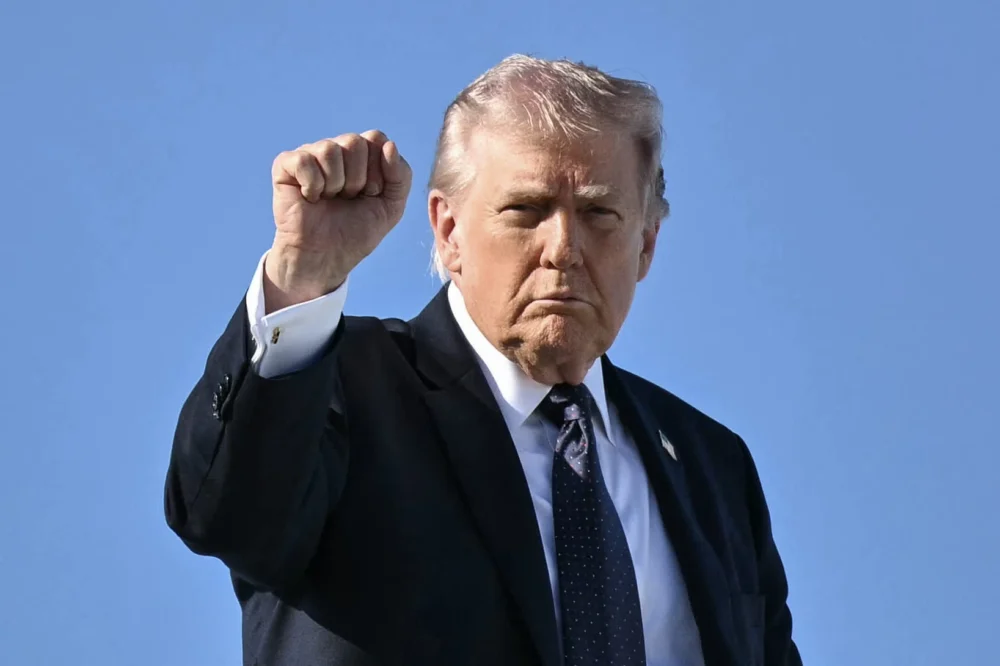
Former U.S. President Donald Trump has decisively thrown his considerable political weight behind crypto firms, escalating their high-stakes battle with traditional U.S. banks over the contentious issue of offering interest-like returns on stablecoins. In a late Tuesday social media post, Trump applied intense pressure on the banking industry to concede ground on the stablecoin yield matter, a critical point of contention that has stalled key cryptocurrency legislation in Congress. This intervention marks a significant pivot for a figure who has previously expressed skepticism about digital assets, now positioning himself as a champion of the burgeoning crypto economy.
The former president’s statement directly targeted the banking sector’s opposition to proposed regulations. "The Genius Act is being threatened and undermined by the Banks, and that is unacceptable," Trump declared in his post. "They need to make a good deal with the Crypto Industry because that’s what’s in best interest of the American People." His remarks sent immediate ripples through financial markets; shares of Coinbase, the largest U.S. crypto exchange, surged by as much as 15% in midday trading Wednesday. Conversely, major banking institutions like JPMorgan Chase and Bank of America saw their shares dip by less than 1%, reflecting the market’s initial assessment of Trump’s intervention.
The Legislative Crossroads: Clarity and Genius Acts
At the heart of this dispute lies the stalled passage of the "Clarity Act," a pivotal piece of legislation intended to complement the "Genius Act," which was approved last year. The Genius Act established an initial framework for regulated stablecoins, aiming to bring a degree of certainty to an asset class valued for its stability relative to volatile cryptocurrencies. However, the Clarity Act seeks to address more nuanced aspects, particularly the ability of crypto firms to offer "yields" or interest-like returns on these stablecoins. This is precisely where the financial titans clash, with banks vehemently opposing such provisions, citing concerns over systemic risk and deposit flight.
Stablecoins, by design, are digital assets pegged to a stable reserve asset, most commonly the U.S. dollar, aiming to minimize price volatility inherent in other cryptocurrencies. Their market capitalization has swelled to hundreds of billions of dollars globally, making them a significant component of the digital economy. The concept of earning a yield on stablecoins typically involves lending them out to other users or protocols, or through participation in decentralized finance (DeFi) mechanisms. Crypto firms argue that this offers consumers an attractive way to earn returns on their otherwise idle digital funds, mirroring traditional banking products like savings accounts or money market funds.
The Banking Industry’s Defensive Stance: A $6.6 Trillion Threat
The traditional banking sector views the proliferation of stablecoin yield offerings as an existential threat. Executives from America’s largest lenders, including JPMorgan Chase and Bank of America, have repeatedly voiced grave concerns that such products could siphon trillions of dollars from their deposit bases. They often reference a U.S. Treasury study that indicated banks could face a staggering loss of up to $6.6 trillion in deposits if stablecoins were widely allowed to offer competitive yields.
This potential exodus of funds is not merely a competitive inconvenience for banks; it poses fundamental risks to their operational model and the broader financial system. Bank deposits are the bedrock of lending activities, enabling financial institutions to extend credit to businesses, consumers, and mortgage holders across the country. A significant reduction in deposits could severely curtail banks’ ability to lend, thereby slowing economic growth and potentially destabilizing smaller, regional banks that rely heavily on deposits for their funding.
Moreover, banks argue that allowing less-regulated crypto firms to effectively function as "quasi-banks" by offering interest-bearing accounts without adhering to the stringent regulatory oversight applied to traditional institutions creates an uneven playing field and heightens systemic risk. Jamie Dimon, CEO of JPMorgan Chase, has been one of the most vocal critics. In a recent interview, he underscored the need for regulatory parity: "It can’t be, you have these people doing one thing without any regulation, and these people doing another. If you do that, the public will pay. It will get bad." His comments reflect a deep-seated apprehension within the banking community that unregulated innovation could lead to financial instability, drawing parallels to past financial crises.
Crypto’s Vision: Innovation and Consumer Empowerment
The cryptocurrency industry, spearheaded by platforms like Coinbase, frames the ability to offer stablecoin yields as a crucial step towards financial innovation and consumer empowerment. Brian Armstrong, CEO of Coinbase, has been a leading voice in this advocacy, arguing that Americans should have the right to earn money on their digital assets, just as they do with traditional currency. He contends that stablecoins, particularly those fully backed by U.S. Treasuries, are inherently less risky than some banking products and can even boost demand for U.S. sovereign debt, benefiting the national economy.
Armstrong’s rhetoric, which emphasizes that "Americans should earn money on their money" and that the industry "cannot be taken from the People of America when it is so close to becoming truly successful," resonates with the libertarian and anti-establishment sentiments often found within the crypto community. This phrasing notably mirrored Trump’s own social media post, suggesting a deliberate alignment of messaging. Indeed, it was revealed that Armstrong met with Trump at the White House shortly before the president’s Tuesday post, a detail first reported by Politico. This meeting underscores the intense lobbying efforts by both sides of the financial divide and highlights the direct engagement of top industry leaders with political power brokers.
The tension between Armstrong and banking CEOs has been palpable. The infamous exchange at the World Economic Forum in Davos, Switzerland, earlier this year, where Dimon reportedly told Armstrong he was "full of s–t" during a chance interaction, epitomizes the raw animosity and fundamental disagreement between these two powerful sectors.
Trump’s Shifting Stance and Political Calculus
Donald Trump’s explicit endorsement of the crypto industry represents a notable evolution in his stance on digital assets. Historically, Trump has expressed skepticism, even hostility, towards cryptocurrencies, once stating in 2021 that he was "not a fan" and calling them "a scam against the dollar." However, in recent months, his rhetoric has softened considerably, aligning more with the pro-crypto sentiment of a growing segment of the Republican base and younger voters. This shift is likely a calculated political move, aiming to harness the enthusiasm of a politically active and increasingly affluent crypto demographic as the nation approaches a pivotal election cycle.
The former president’s involvement has not been merely rhetorical. In recent months, he has hosted a series of White House meetings between representatives from both the crypto and banking industries, attempting to broker a compromise on the stablecoin yield issue. However, these efforts proved unsuccessful, with banks reportedly unwilling to budge on their core objections. Trump’s latest social media post thus signifies an abandonment of the mediator role in favor of an outright endorsement, explicitly putting his weight behind crypto.
This move, while potentially swaying members of his Republican Party in the GOP-led Congress, raises fresh questions about potential conflicts of interest. Reports indicate that Trump and his family have generated significant wealth—hundreds of millions of dollars—from interests in various firms, including the crypto platform World Liberty Financial. While specific details of his direct financial ties to stablecoin yield offerings are not publicly detailed, the perception of personal gain influencing policy decisions is a recurring theme that critics are quick to highlight.
Broader Implications and The Road Ahead
The clash over stablecoin yields has far-reaching implications, touching upon financial innovation, regulatory oversight, consumer protection, and the future competitiveness of the U.S. financial system on a global stage.
From a regulatory perspective, the debate highlights the urgent need for comprehensive legislation that can keep pace with rapidly evolving financial technologies. The current regulatory patchwork, where various agencies (SEC, CFTC, Treasury, banking regulators) have overlapping or sometimes conflicting jurisdictions, creates uncertainty and stifles innovation while potentially exposing consumers to risks. The Clarity Act, if passed, would be a significant step towards providing much-needed clarity, but its success hinges on bridging the divide between powerful financial lobbies.
Economically, the outcome will dictate the trajectory of digital finance in the U.S. If crypto firms are allowed to offer competitive yields, it could accelerate the mainstream adoption of stablecoins and digital payments, potentially fostering greater financial inclusion and efficiency. However, if banks’ concerns about systemic risk and deposit flight materialize, it could necessitate a recalibration of monetary policy tools and banking regulations to maintain financial stability.
Politically, Trump’s intervention underscores the growing influence of the crypto lobby and the increasing politicization of digital asset regulation. His support could galvanize Republican lawmakers, but it remains uncertain whether it will be enough to overcome bipartisan resistance from those who prioritize the stability of the traditional banking system. A similar attempt by Trump earlier this year to pressure banks into capping credit card interest rates was ultimately fended off by the industry, which garnered enough support from both Republicans and Democrats. This historical precedent suggests that even presidential pressure has its limits when facing a unified financial industry.
Looking ahead, the fate of the Clarity Act remains precarious. While both the banking and crypto industries ostensibly desire regulatory clarity, their fundamental disagreement over stablecoin yields creates a legislative impasse. Compromise will be essential, but the current rhetoric suggests little appetite for it from either side. The battle lines are drawn, and with a former president now directly engaged, the resolution of this financial sector showdown will have profound consequences for the American economy and its position in the global digital landscape. The outcome will shape not only how digital assets are integrated into the financial system but also the very definition of banking in the 21st century.
About the Author