The digital marketing arena is undergoing a seismic shift, driven by the rapid integration of generative AI into search engines. This evolution has spawned a critical new discipline: Answer Engine Optimization (AEO), often referred to as Generative Engine Optimization (GEO). While some view AEO as a mere extension of traditional Search Engine Optimization (SEO), a closer examination reveals a more nuanced reality. AEO leverages foundational SEO principles but demands strategic pivots and enhanced focus to ensure brand visibility within the burgeoning landscape of AI-powered search. Ignoring this transformative trend carries significant consequences, as AI Overviews (AIO) are demonstrably impacting website traffic – with reports indicating potential click-through rate drops of up to 61% when AIO is present. More critically, potential customers are increasingly turning to AI tools for initial brand discovery, meaning brands failing to appear in these early interactions risk being excluded from consideration before their websites are even found.
This article delves into the intricacies of AEO, exploring how AI engines select their sources, the enduring relevance of SEO, and the additional efforts required to achieve prominence in AI-generated answers.
AEO Strategy Foundations: How AI Engines and LLMs Select Sources
At the core of AI-driven search are Large Language Models (LLMs), such as those powering ChatGPT. These models are trained on vast datasets that encompass a combination of:
- Web Crawling: Comprehensive indexing of publicly accessible web pages.
- Books: Digitized collections of literary works.
- Code: Repositories of software code.
- Specialized Datasets: Curated information from academic papers, datasets, and other structured sources.
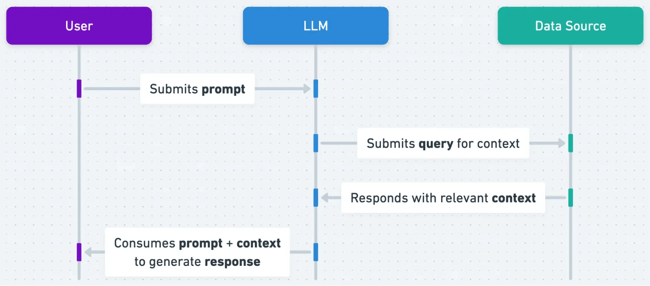
This extensive training equips LLMs with a sophisticated understanding of entities, topics, and the intricate relationships between them across the digital universe. A common misconception is that once trained, LLM responses are static. However, this is far from the truth. The advent of Retrieval Augmented Generation (RAG) has revolutionized AI responses. RAG enhances AI’s ability to provide accurate and grounded answers by incorporating external, real-time context at the moment a query is made. Instead of solely relying on its initial training data, RAG enables LLMs to access and process relevant, up-to-date information, thereby improving the precision and relevance of their outputs.
A typical RAG workflow involves:
- User Query: A user poses a question or request.
- Information Retrieval: The AI system searches for relevant documents or data snippets from a knowledge base or the live web.
- Context Augmentation: The retrieved information is synthesized and used to augment the LLM’s existing knowledge.
- Answer Generation: The LLM generates a response based on both its training data and the augmented context.
This dynamic process underscores the need for content to be not just discoverable but also retrievable. Clarity and consistency in defining who your brand is, what it offers, and how its various components connect are paramount. This "entity clarity" enables AI systems to confidently identify, extract, and cite your content accurately, mitigating confusion and increasing the likelihood of favorable mention. Technical considerations, such as ensuring key content is readily accessible in HTML, also play a crucial role.

Answer Engine Optimization Strategy: Beyond the Basics
While many AEO tactics will resonate with seasoned SEO professionals, a distinct set of adjustments and a heightened focus are required for success in AI-driven search. The following table outlines key areas of difference between SEO and AEO strategies:
| Area | SEO | AEO |
|---|---|---|
| Audience Targeting | Keyword-driven intent and SERP analysis; often limited by what broader pages can rank for. | Answer-driven intent allowing for highly specific targeting based on roles, use cases, and challenges; AI matches answers precisely. |
| Landing Pages | Pages designed for broad ranking; fewer pages created to avoid keyword cannibalization. | Granular, audience-specific pages created to address a single audience and their challenges in detail. |
| Content Formatting | Optimized for readability, user experience, and ranking signals. | Structured for extraction: question-led subheads, direct answer blocks. |
| HTML & JavaScript | Search engine bots crawl HTML and render JavaScript for dynamically loaded content. | Content must exist plainly in HTML for reliable retrieval and parsing by AI systems without script execution. |
| Keywords & Prompts | Keywords as directional signals; success measured by content meeting needs and driving on-site outcomes. | Prompts as directional signals; success measured by content meeting needs and driving on-site outcomes. |
| Measuring Success | Organic traffic, rankings, CTR, conversions, revenue, pipeline influence. | Visibility, citations, conversions, revenue, pipeline influence. |
1. Know Your Audience on a Granular Level
A robust AEO strategy begins with a profound understanding of your audience. While traditional SEO necessitates audience insight, AEO demands a deeper dive into the ideal client profile (ICP). It’s no longer sufficient to identify broad market keywords; clarity is needed on who is asking a question, why they are asking it, and what kind of answer will genuinely help them progress. AI search facilitates highly personalized and nuanced queries, and to serve audiences effectively through AI, marketers must embrace this level of detail.
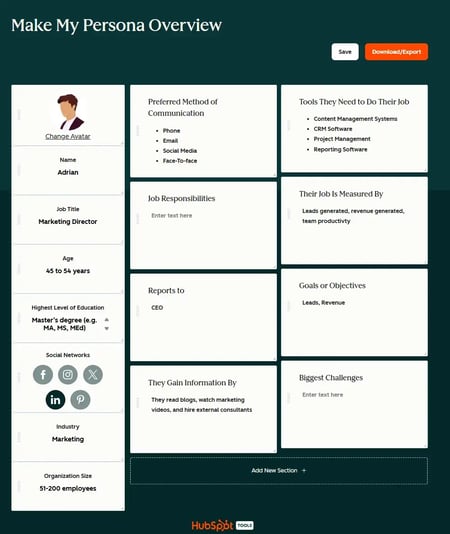
This granularity also offers strategic flexibility. You can craft content for specific industries, roles, or use cases without diluting the relevance of broader service pages. HubSpot’s "Make My Persona" tool can be instrumental here, helping marketing teams define clear buyer personas by mapping roles, goals, challenges, and decision drivers. Well-defined personas foster stronger entity-intent alignment, leading to more audience-specific answers that AI systems can accurately extract and cite.
2. Create Targeted Pages for Specific Audiences and Their Challenges
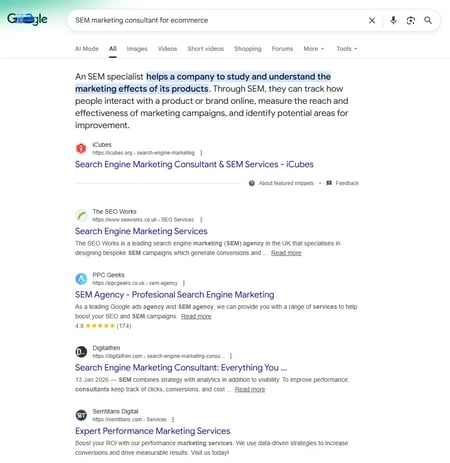
Traditional SEO often leads to the creation of broad landing pages that aim to capture a wide range of keywords. For instance, a search for "SEM marketing consultant for e-commerce" might yield generic SEM service pages. While this approach can achieve rankings, it limits the ability to address nuance or fully articulate specific offerings. Broad pages risk diluting relevance for niche audiences or underselling comprehensive services.
AEO addresses this by enabling the creation of highly targeted content. AI-driven search summarizes information from various sources, providing a solid starting point for discovery. This creates opportunities to serve narrow, well-defined audiences with precisely tailored content. A single paragraph addressing a specific audience’s challenge can be surfaced in an AI response, even if the entire page wouldn’t rank on the first page of traditional search. This allows smaller brands to gain top-of-funnel visibility in AI answers, irrespective of their broader SEO performance. The key is to create granular pages that speak directly to a specific role, problem, or use case, making it easier for AI systems to identify and cite a clean, relevant answer.
3. Format Content for AI Extraction
Even highly targeted pages can be overlooked by AI crawlers if their structure hinders clear answer extraction. Content formatting should prioritize question-led subheads, direct answer blocks, and semantic triples. This approach builds upon established SEO best practices but applies them with a deliberate focus on making individual passages stand on their own within AI-generated answers.
4. Keep Content Accessible in HTML
Technical considerations are vital for AEO. While Google’s search crawlers can render JavaScript to discover dynamically loaded content, AI crawlers rely solely on HTML. If crucial information is only accessible after scripts execute, there’s a significant risk it won’t be retrieved, extracted, or cited. Therefore, content critical for AI understanding and citation must be plainly present in the HTML, not dependent on JavaScript for its appearance.
5. Balance Keywords and Prompts with Broader Goals
While keywords and prompts can indicate demand and visibility, an over-reliance on them can be misleading. AI tools frequently update their sources, and individual searcher personalization, alongside prompt nuance, makes precise tracking challenging. The ultimate success of AEO lies not solely in prompt mentions but in whether the content genuinely meets a specific need, answers the right question, and supports decision-making. Tangible impacts on your website, such as engagement, conversions, and bottom-of-funnel outcomes like revenue, remain the most reliable indicators of a successful AEO strategy.
Formatting AEO Content for Extraction and Citation
To ensure LLMs can effectively extract and cite your content, a clear and structured approach is necessary. This involves:
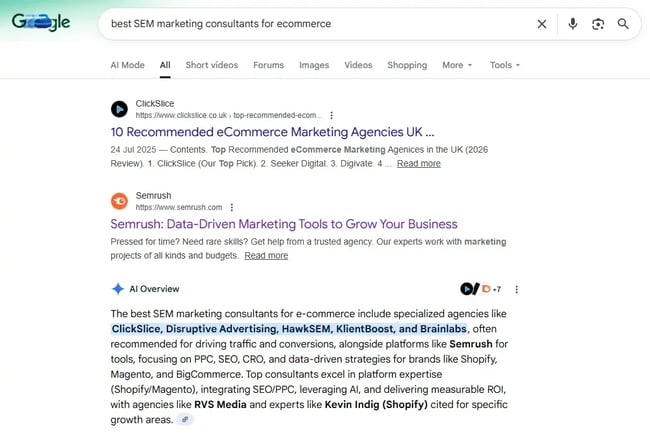
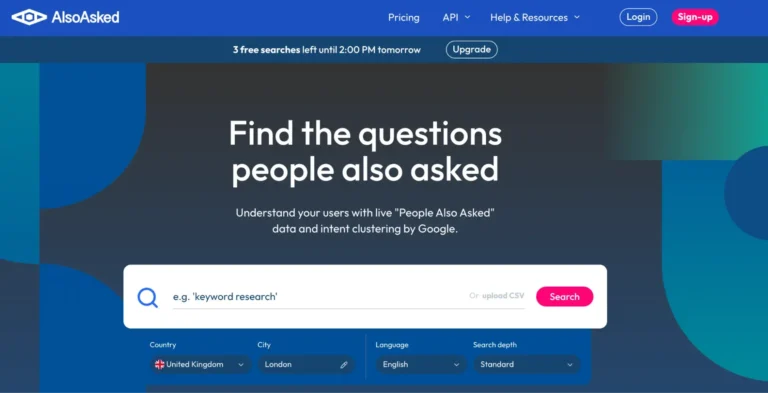
- Question-Led Subheads with Direct Answers: Mirror LLM query optimization by structuring content around questions. A simple format includes a question as a subhead followed by a concise, direct answer. This mirrors effective practices for SEO blogs and should be given extra consideration for AEO. Tools like HubSpot’s Breeze AI Suite can assist in researching buyer questions and planning extraction-friendly answers.
- Utilize Semantic Triples: This technique expresses meaning through explicit subject-predicate-object relationships, helping AI systems understand how concepts connect. For example, instead of a vague statement, use a clear entity-driven description like "HubSpot is a CRM platform that provides marketing automation, sales enablement, and customer service tools for B2B companies." This structure helps AI understand who the expert is, their authority, and how concepts interrelate.
- Chunk Content for AI and Humans: Break down content into small, self-contained sections that convey a single idea clearly. This enhances human readability and makes it easier for AI to identify and reuse information. Use question-led subheads, direct answer blocks, and ensure each key section can stand alone as a complete answer. This avoids overwhelming readers with opinion or nuance before presenting the core fact.
Building Authority for Answer Engines
The emphasis on Experience, Expertise, Authority, and Trust (E-E-A-T) in SEO remains highly relevant for AEO. Building authority involves:
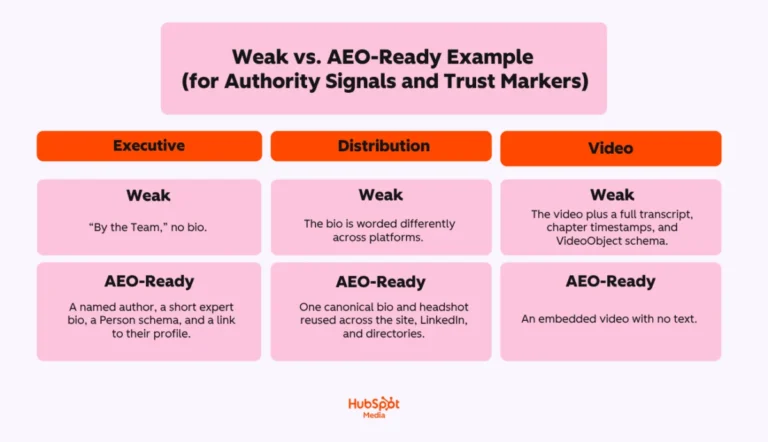
- Showcasing Expertise: Clear explanations, confident language, and evidence of real-world experience signal credibility. This includes providing detailed explanations, citing data, and demonstrating firsthand knowledge. Technical implementation, such as using JSON-LD schema to detail author bios, credentials, and publications, further reinforces expertise for AI crawlers.
- Diversifying Citations: AI engines draw from a variety of sources, including brand-owned content, trusted publications, expert commentary, documentation, and community platforms. Digital PR efforts focused on earning high-quality mentions in favored AI sources are crucial. This involves producing original research, securing expert commentary in industry publications, and contributing to reputable forums.
- Maintaining Fresh and Consistent Facts: Consistency across names, product descriptions, and locations is vital, akin to NAP consistency in local SEO. Discrepancies can lead to inaccurate AI responses. Regularly updating key information, especially pricing, is critical, as AI tools can significantly compress buying cycles by providing immediate, accessible data.
- Publishing First-Party Insights: Originality is a powerful authority signal. Proprietary data, unique frameworks, and firsthand observations provide AI systems with novel information, increasing the likelihood of citation and trust.
Measuring AEO Strategy Success
While SEO and AEO share common ground, measuring AEO success requires looking beyond traditional metrics. Clicks are less indicative than understanding how AI-driven discovery influences buying behavior.
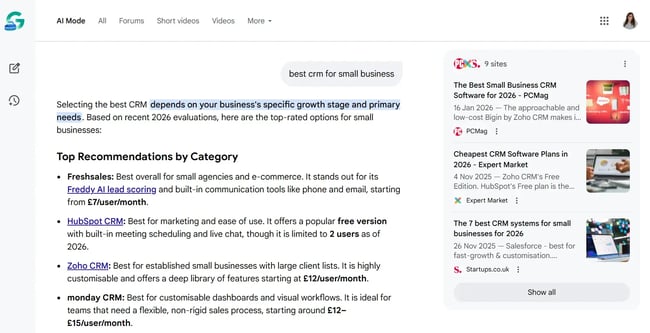
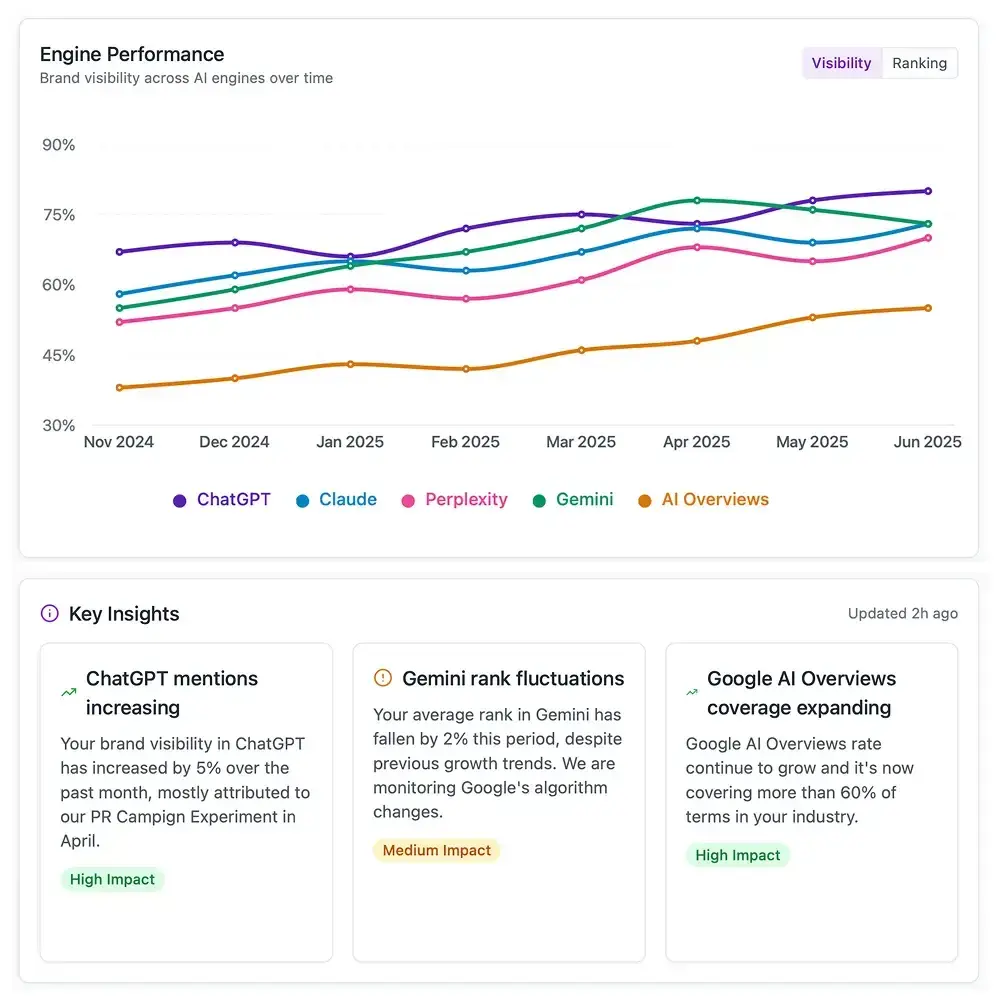
- Monitor Citations and Mentions: While volatile, citations are a key indicator. Periodic manual checks and dedicated tracking tools can assess accuracy, positioning, and context.
- Analyze Traffic: AI tools do generate referrals. Analyzing traffic from AI sources helps determine if content is being used as a starting point for deeper research. Identifying which pages receive AI referrals pinpoints which topics, formats, and questions are earning citations.
- Track Conversions: AEO’s impact on tangible actions like form submissions, demo requests, and content downloads is crucial. Assisted conversions are particularly important, as AEO often influences early-stage consideration.
- Measure Revenue: The ultimate measure of AEO’s strategic value is its contribution to revenue. Tracking the progression of AEO-influenced leads through the sales funnel and correlating it with closed deals provides a clear ROI.
Connecting Visibility to Pipeline in Your CRM
For AEO to be strategically valuable, AI-driven visibility must translate into tangible business outcomes. By integrating AI-driven discovery with on-site engagement, opportunity creation, and revenue within a CRM system, the pipeline impact of AEO can be clearly demonstrated. Tools like HubSpot CRM allow sales and marketing teams to track how AI-influenced traffic progresses through the funnel, ensuring AEO is measured not as a vanity metric but as a driver of demand and revenue.
Answer Engine Optimization Mistakes to Avoid
To ensure AEO strategies yield genuine business results, marketers should avoid:
- Treating AEO as merely an extension of SEO: It requires distinct strategies and focus.
- Overlooking the importance of HTML: AI crawlers depend on it.
- Neglecting granular audience targeting: Broad approaches fail to resonate with AI’s personalized capabilities.
- Focusing solely on keywords and prompts: Broader business outcomes are the ultimate measure.
- Failing to build and showcase authority: Trust is paramount for AI citation.
- Ignoring the need for diverse citations: AI draws from multiple sources.
- Inconsistent factual information: This undermines credibility.
- Failing to measure tangible business impact: AEO must connect to revenue.
Conclusion
A strong SEO foundation remains critical, but Answer Engine Optimization introduces a new layer of strategic imperatives. By embracing granular audience understanding, optimizing content for AI extraction, ensuring factual consistency, and diligently measuring business impact, brands can not only achieve visibility in AI-powered search but also cultivate trust at pivotal decision-making moments. AEO, when approached intentionally, measurably, and with a direct connection to revenue, emerges not as an experimental add-on but as a fundamental component of modern digital growth strategies.
About the Author