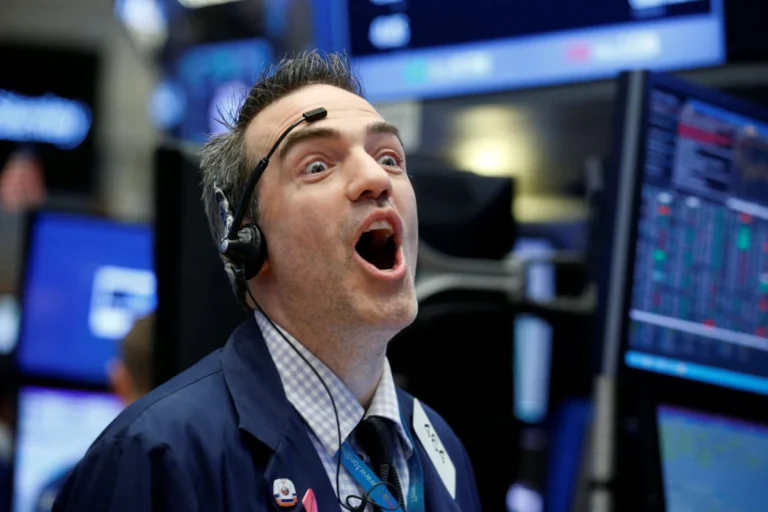
Lianyungang, China / Seoul, South Korea – Global financial markets experienced a significant downturn this week, with previously high-performing assets such as gold, silver, and South Korean equities facing sharp declines. The sudden reversal, which saw these 2026 market darlings shed considerable value, is largely attributed to escalating fears that the burgeoning conflict in Iran could prove more protracted and destabilizing than initially anticipated. The ripple effects have been immediate and far-reaching, transforming investor sentiment from cautious optimism to a pronounced "risk-off" stance, even impacting traditional safe-haven assets.
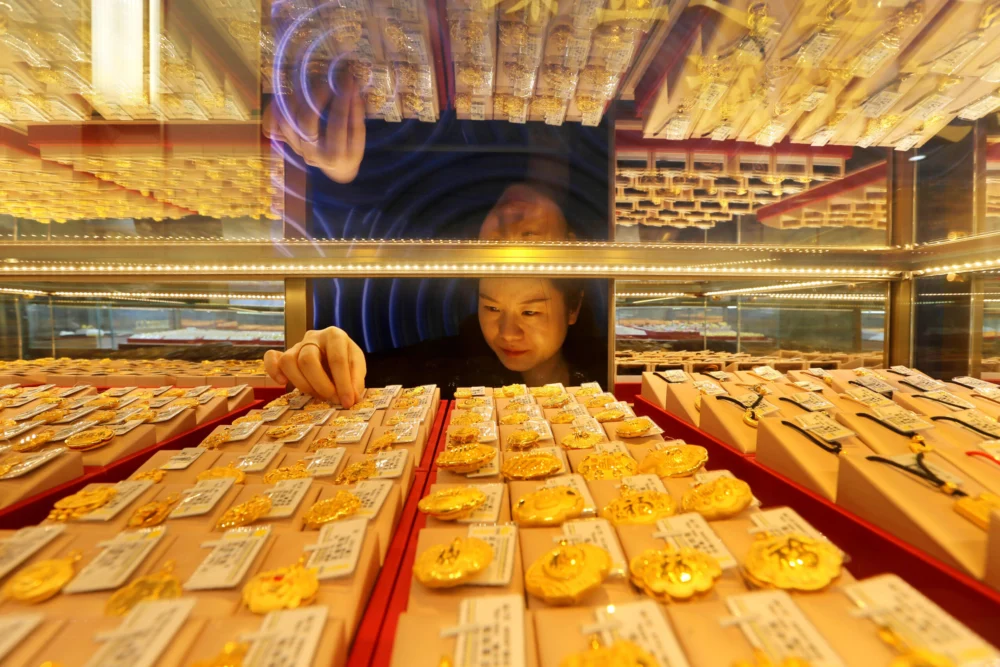
The downturn on Tuesday was particularly pronounced, with commodities and growth-oriented markets alike caught in a selling frenzy. Brent crude oil, the international benchmark, surged past $84 a barrel, while West Texas Intermediate (WTI) crude jumped above $77, reviving inflation concerns that had only recently begun to subside. This sharp movement in energy prices underscored the market’s anxiety over potential disruptions to global oil supply routes, particularly those traversing the Strait of Hormuz, a critical chokepoint for a significant portion of the world’s crude shipments. The photograph taken in Lianyungang, China, on December 24, 2025, depicting a saleswoman adjusting gold jewelry, serves as a stark reminder of a more optimistic market climate just prior to the current geopolitical storm, when precious metals were riding a strong wave of investor confidence.
The Initial Appeal: 2026’s Standout Performers
Entering 2026, gold, silver, and South Korean equities had emerged as some of the year’s most compelling investment narratives. These assets were seen as robust momentum plays, attracting substantial capital inflows from investors increasingly wary of their concentrated exposure to U.S. large-cap technology stocks. This diversification strategy was understandable, given the S&P 500’s impressive cumulative gain of 64% over the preceding three years, which many analysts considered unsustainable for continuous, unbridled growth. The index’s modest 1% decline year-to-date in 2026 prior to this week’s sell-off already hinted at a shifting market dynamic, prompting a search for alternative asset classes capable of outperforming a potentially decelerating market.
Gold: A Shifting Safe-Haven Narrative
Gold, traditionally viewed as the ultimate safe haven during times of economic and geopolitical uncertainty, had enjoyed a strong upward trajectory for much of 2026. Its appeal was bolstered by a global trend of central banks diversifying their reserves away from the U.S. dollar, a strategic move driven by evolving geopolitical alliances and a desire to mitigate currency risk. Major central banks, particularly those in emerging economies, have been consistent buyers of bullion, with some estimates suggesting a net accumulation of over 1,000 metric tons in the past year alone. This sustained institutional demand fueled widespread investor optimism, with many market prognosticators confidently predicting that bullion could soon breach the unprecedented $6,000 per ounce mark, a significant jump from its current levels. The narrative centered on gold’s intrinsic value and its historical role as an inflation hedge, making it an attractive proposition in a global economy grappling with persistent inflationary pressures and currency volatility.
However, Tuesday’s broad market sell-off saw gold caught in the crosscurrents, an unusual occurrence for an asset typically sought out during crises. Analysts suggest this paradoxical movement reflects an indiscriminate "dumping" of assets across the board, as investors panicked over the Iran situation and moved to cash, or perhaps unwound highly leveraged positions. "When fear reaches a certain crescendo, even the most uncorrelated assets can get swept up in the liquidity crunch," noted Dr. Evelyn Reed, a senior market strategist at Global Equities Group. "Investors aren’t making nuanced choices; they’re de-risking across the board, liquidating positions they perceive as having run too far, too fast, even if their underlying fundamentals remain strong."
Silver: Industrial Backbone Meets Market Volatility
Silver, often referred to as "poor man’s gold," also experienced significant gains in the earlier part of 2026. Its appeal stems from a compelling blend of precious metal characteristics and vital industrial applications. Beyond its use in jewelry and coinage, silver is a critical component in numerous high-growth sectors, including solar panels, electric vehicles, and increasingly, artificial intelligence (AI) infrastructure. The burgeoning demand for AI, in particular, has driven expectations of tight supply-demand dynamics for silver. Its superior electrical conductivity and thermal properties make it indispensable in advanced computing and data center components.
The enthusiasm for silver was also tied to the global push for renewable energy, with massive investments in solar power generation. However, like gold, silver succumbed to the broader market sell-off. While its industrial utility remains a powerful long-term driver, short-term market sentiment driven by geopolitical instability can override these fundamentals. The fear of a global economic slowdown stemming from the Iran conflict could dampen industrial demand, even for high-growth sectors, creating a dual pressure point on silver prices.
South Korea: A Bellwether of Global Tech Demand
South Korea’s stock market, particularly its Kospi index, had been a standout performer in 2026, largely propelled by the relentless worldwide demand for memory semiconductors. The nation’s two colossal memory powerhouses, Samsung Electronics and SK Hynix, account for a substantial portion of the Kospi’s valuation and exert significant influence over the broader economy. These two companies had seen their shares surge by more than 50% and 44% year-to-date, respectively, prior to this week’s market correction.
The stellar performance of these chip giants was underpinned by several factors: the insatiable demand for high-bandwidth memory (HBM) chips crucial for AI servers, the ongoing recovery in the broader semiconductor cycle, and robust sales of premium smartphones and data center equipment. South Korea’s highly export-dependent economy thrives on global technology cycles, and the strong performance of its semiconductor sector had been a key driver of national economic growth forecasts.
However, the escalating tensions in the Middle East introduced a new layer of uncertainty. A prolonged conflict carries the risk of disrupting global trade routes, increasing shipping costs, and potentially dampening overall global economic growth. For an export-heavy nation like South Korea, these factors can quickly translate into reduced demand for its high-tech products. While the long-term structural demand for memory chips, especially for AI, remains strong, the immediate market reaction reflects concerns about potential supply chain bottlenecks, increased input costs (due to higher energy prices), and a general decline in consumer and enterprise spending if the global economic outlook darkens.
The Geopolitical Quagmire: Iran and Global Instability
The "war in Iran" is not a sudden, isolated event but rather an escalation of long-simmering regional tensions that have gripped the Middle East for decades. While specific details of the current conflict remain fluid, market fears suggest a significant intensification of hostilities, potentially involving multiple regional actors and even major global powers. The precise trigger for the recent market panic appears to be intelligence reports or official statements indicating a higher probability of the conflict becoming "longer than expected," implying a protracted engagement rather than a swift resolution.
The strategic importance of Iran, situated at the mouth of the Persian Gulf and bordering key oil-producing nations, means any significant conflict there invariably sends shockwaves through global energy markets. The Strait of Hormuz, through which approximately 20% of the world’s total petroleum liquids pass, becomes particularly vulnerable. Even the threat of disruption can trigger speculative buying and drive up crude prices, as witnessed this week. Beyond oil, a wider conflict could disrupt global supply chains for various commodities and manufactured goods, fueling inflationary pressures and potentially stalling global economic recovery.
"The market is now pricing in a higher ‘geopolitical risk premium’ across all asset classes," commented Mr. Kenji Tanaka, a senior economist at Pacific Rim Analytics. "The fear isn’t just about oil; it’s about the potential for broader economic contagion, supply chain fragmentation, and a return to persistent inflation that central banks may struggle to control without triggering a significant recession."
Analyst Reactions and Forward Outlook
Market analysts are now scrambling to reassess their forecasts in light of the renewed geopolitical risks. Many had anticipated a relatively benign environment for 2026, with inflation cooling and central banks potentially easing monetary policy later in the year. The Iran conflict has complicated this outlook significantly.
"The ‘disinflation’ narrative has been seriously challenged by this oil spike," stated Ms. Priya Sharma, a fixed income strategist at Zenith Capital. "Central banks, particularly the U.S. Federal Reserve, now face an agonizing dilemma: continue fighting inflation with higher rates and risk stifling growth further, or ease policy and risk a resurgence of price pressures. It’s a no-win scenario in the short term."
For gold, while the immediate sell-off was counter-intuitive, some analysts believe its long-term appeal as a hedge against geopolitical risk and currency devaluation remains intact. "This might just be a temporary correction as investors de-leverage," offered Dr. Reed. "Once the initial shock subsides, if the conflict indeed proves protracted and global instability deepens, we could see gold reassert its safe-haven status and resume its upward climb."
South Korean officials, while acknowledging the market volatility, have sought to reassure investors about the underlying strength of their technology sector. A spokesperson for the Ministry of Economy and Finance, speaking on background, emphasized the nation’s robust export diversification and the fundamental demand drivers for its advanced chips. "While global headwinds are a concern, the structural demand for AI and cutting-edge memory solutions will continue to underpin our key industries," the official stated, highlighting ongoing investments in R&D and strategic partnerships.
The coming weeks will be critical in determining the trajectory of the Iran conflict and its subsequent impact on global markets. Investors will be closely monitoring geopolitical developments, oil price movements, and central bank communications for any signs of a clearer path forward. The current market environment underscores the fragility of global economic recovery in the face of persistent geopolitical instability, forcing a reassessment of risk and opportunity across all asset classes.
About the Author