In a critical market moment marked by escalating geopolitical tensions in the Middle East, CNBC’s "Mad Money" host Jim Cramer issued a stark warning to investors on Thursday, cautioning against impulsive portfolio liquidations driven by fear surrounding the unfolding "Iran war." Cramer’s advice, delivered as global markets reacted sharply to news of Iran’s new supreme leader threatening the closure of the strategic Strait of Hormuz, emphasized the historical resilience of markets post-conflict and the inherent futility of attempting to time market bottoms. His counsel comes as major U.S. indices recorded significant drops and global oil prices surged, reflecting deep investor anxiety over the potential for a protracted regional conflict.
Cramer’s Stance: A Call for Steadfastness Amidst Turmoil
"Even if the current situation is terrifying, remember that under almost all circumstances, it makes sense to stick with the market, if only because you’ll have a better chance to make back your losses once peace breaks out," Cramer asserted during his broadcast. He underscored the common pitfall of emotional decision-making in volatile periods, highlighting that those who sell everything in a panic often find themselves on the sidelines as the market eventually rebounds. "Believe me, you’ll be kicking yourself if you sell everything and then you have to watch this market rebound without you," he added, reinforcing the long-term benefits of maintaining investment positions through periods of short-term uncertainty. This philosophy is rooted in the understanding that geopolitical shocks, while impactful in the immediate term, rarely derail the fundamental long-term growth trajectory of diversified economies.
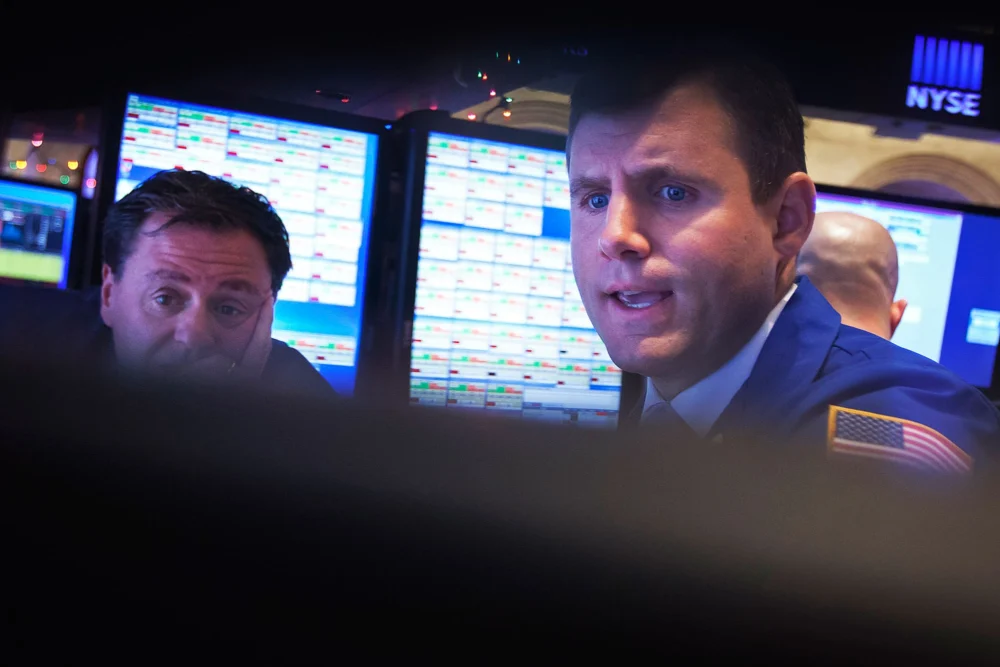
The challenge for investors, as Cramer pointed out, lies in managing the psychological pressure that accompanies significant market downturns. Thursday’s trading session provided a stark illustration of this, with the S&P 500 declining approximately 1.5% and the Nasdaq Composite falling roughly 1.8%. Concurrently, U.S. crude oil prices soared more than 9.5%, settling back above $95 per barrel, while international benchmark Brent crude surpassed $100 for the first time since 2022. This inverse relationship between soaring oil prices and declining equity markets is a classic symptom of heightened geopolitical risk, as energy costs ripple through the global economy, impacting corporate profits and consumer spending.
The Geopolitical Catalyst: Iran and the Strait of Hormuz
The immediate trigger for this market upheaval was a pronouncement from Iran’s newly ascended Supreme Leader, Mojtaba Khamenei, who declared that the Strait of Hormuz would remain closed as a "tool to pressure the enemy." This statement, reported on March 12, 2026, followed what appears to be a significant escalation in regional tensions, though the specifics of the broader "Iran war" remain undefined in the immediate context. Khamenei’s elevation to the supreme leadership, a pivotal transition in Iranian political power, marks a potentially more aggressive stance from Tehran on regional issues.
The Strait of Hormuz is one of the world’s most critical maritime chokepoints, connecting the Persian Gulf with the Arabian Sea and beyond. Approximately 20-30% of the world’s total petroleum liquids trade, and a substantial portion of global liquefied natural gas (LNG) transits through this narrow waterway daily. Any threat to its closure or disruption immediately sends shockwaves through global energy markets and supply chains. Historically, Iran has intermittently threatened to close the Strait during periods of heightened international pressure or conflict, using it as a potent leverage point given its undeniable impact on global energy security and prices. Such actions are perceived as direct challenges to international shipping and trade, drawing swift condemnation and raising the specter of military intervention to ensure the freedom of navigation.
Market Reaction and Broader Economic Implications

The dramatic surge in oil prices on Thursday underscored the market’s sensitivity to the Strait of Hormuz threat. West Texas Intermediate (WTI) crude, the U.S. benchmark, saw its largest single-day percentage gain in years, reflecting fears of supply disruptions. Brent crude, the international benchmark, crossed the psychologically significant $100 per barrel mark for the first time in over four years, a level not seen since the peak of the 2022 energy crisis. This rapid escalation in energy costs has immediate and far-reaching economic implications.
For consumers, higher oil prices translate directly into increased costs at the pump, impacting discretionary spending and potentially dampening consumer confidence. Businesses face elevated transportation and manufacturing costs, which can squeeze profit margins and contribute to inflationary pressures across various sectors. Central banks, already navigating complex monetary policy decisions, would face renewed challenges in balancing inflation control with economic growth, potentially leading to a more hawkish stance if energy price spikes persist. The specter of stagflation – a period of high inflation combined with stagnant economic growth – looms larger when critical commodity prices surge due to geopolitical instability. For equity markets, this translates into reduced corporate earnings expectations, particularly for energy-intensive industries, and a general aversion to risk, leading to broad-based selling.
Historical Precedents of Geopolitical Shocks and Market Resilience
Cramer’s advice to "stick with the market" is not without historical precedent. While every geopolitical crisis possesses unique characteristics, financial markets have often demonstrated a remarkable capacity for recovery following even severe shocks.
- Gulf War (1990-1991): The initial invasion of Kuwait caused a sharp market downturn and oil price spike, but markets began to recover even before the conflict concluded, anticipating a resolution.
- September 11th Attacks (2001): U.S. markets closed for several days, reopening to significant losses. However, within weeks, a substantial portion of these losses was recouped, and within months, markets were on a path to recovery.
- Invasion of Iraq (2003): Markets had largely priced in the conflict leading up to it, and after an initial dip, rallied as the "fog of war" began to clear.
These examples illustrate a recurring pattern: markets tend to overreact to uncertainty but eventually stabilize and recover as clarity emerges or as the underlying economic fundamentals reassert themselves. The challenge for individual investors is enduring the initial volatility without making rash decisions that lock in losses.
The Trump Factor: A Presidential Watch on Market Performance
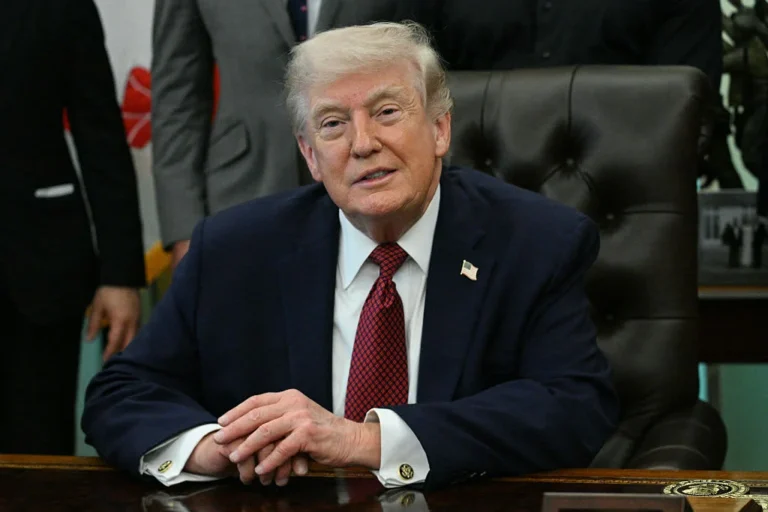
A significant element of Cramer’s argument for market resilience hinges on the political calculus of President Donald Trump. Historically, President Trump has viewed the stock market as a crucial barometer of his administration’s success, frequently referencing index performance as an indicator of economic health. Cramer posits that this deep-seated conviction means the Trump administration would be highly disinclined to tolerate a prolonged bear market, which is defined as a 20% drop from recent highs. Even a correction, a 10% decline, is often viewed unfavorably. Currently, the S&P 500, despite three consecutive down sessions, is only 4.7% off its most recent record highs, far from correction territory.
This presidential sensitivity to market performance, Cramer suggests, could translate into a faster and more aggressive pursuit of conflict resolution. He cited a past instance in April 2025 when President Trump announced significant tariffs on major U.S. trading partners, leading to an immediate market sell-off. Just a week later, the White House paused many of those levies, and stocks rebounded swiftly. "Trump’s pattern has been pretty clear in this presidency. He’s willing to make hard choices that could send the market down, but if it gets hit too hard, he’s also willing to change plans," Cramer observed. "That means there could be a deal." This historical precedent implies a potential "Trump put" – an unofficial assurance that the administration will act to prevent severe market downturns, possibly through diplomatic or policy shifts.
Navigating the Path to Resolution: Diplomatic Channels and Regional Dynamics

While the specifics of a resolution to the "Iran war" remain unclear, Cramer speculated on potential diplomatic avenues. He suggested that a back channel through Qatar could provide President Trump with an opportunity to claim a diplomatic victory. Qatar has a well-established history of mediating in complex regional and international conflicts, owing to its unique diplomatic position and relationships with various global powers and regional actors. Its capital, Doha, has frequently hosted sensitive negotiations, including those related to Afghanistan and, more recently, efforts to de-escalate tensions in the broader Middle East.
Such a diplomatic pathway would be critical in preventing the current conflict from spiraling into a wider regional conflagration. The implications of a full-scale "Iran war" extend far beyond oil prices and stock market fluctuations. It would destabilize the entire Middle East, potentially drawing in other regional powers and global actors, disrupting trade routes, creating massive refugee flows, and posing severe threats to global security. Therefore, the incentive for a swift, negotiated settlement is immense for all parties involved, including those with economic and strategic interests in the region.
Broader Market Sentiment and Investor Psychology
Beyond Cramer’s specific advice, many financial strategists and behavioral economists echo the sentiment that emotional decisions during market panics often prove detrimental to long-term wealth accumulation. The concept of "loss aversion" – the tendency to prefer avoiding losses over acquiring equivalent gains – frequently drives investors to sell at the bottom, thereby locking in losses and missing out on subsequent recoveries. Diversification and a long-term investment horizon are frequently cited as the most effective tools for navigating such periods of heightened uncertainty.
Investment firms often advise clients to review their risk tolerance, ensure their portfolios are well-diversified, and, if necessary, rebalance rather than liquidate. The current market environment, characterized by geopolitical shocks, serves as a powerful reminder of the importance of having a robust investment strategy that accounts for periods of volatility. While the headlines may be alarming, the underlying message from seasoned market observers like Jim Cramer remains consistent: markets are dynamic, and patience often yields superior results to panic.
Conclusion: The Enduring Imperative of Long-Term Vision
"I’m not a military strategist. I’m a stock strategist. And, what I know is that, sooner or later, this war will end," Cramer concluded, reiterating his core message. "You’ll most likely lose money if you don’t own any stock ahead of the ceasefire." This perspective underscores the fundamental principle of long-term investing: market downturns, even those triggered by significant geopolitical events, are often temporary. The challenge lies in maintaining conviction and discipline when emotions run high.
As the world watches the unfolding situation in the Middle East and its immediate impact on global markets, Cramer’s counsel serves as a crucial reminder for investors to resist the impulse to follow the crowd off the ledge. While the immediate future may be fraught with uncertainty, historical patterns, combined with potential political interventions aimed at market stabilization, suggest that those who remain steadfast are often best positioned to benefit when peace inevitably breaks out and markets rebound. The ultimate lesson from this critical moment may well be that true investment success is often measured not by avoiding volatility, but by enduring it.
About the Author