Artificial intelligence (AI) is fundamentally altering numerous facets of daily life, from interpersonal communication and educational methods to routine tasks and even culinary choices. Consequently, the realm of Search Engine Optimization (SEO) is not immune to this transformative influence. The advent and widespread adoption of advanced AI technologies, most notably exemplified by the rapid ascent of ChatGPT over the past three years, have ushered in an unprecedented era of accessible AI capabilities for the general public and, by extension, for marketers.
According to a recent report by McKinsey, AI-powered results already constitute approximately half of Google’s search engine results pages (SERPs). Projections indicate this figure could escalate to 75% by the year 2028, underscoring a significant and accelerating shift in how users interact with search engines and consume information online. This pervasive integration of AI into search necessitates a comprehensive re-evaluation of SEO strategies, impacting how marketers optimize for visibility, how consumer search behaviors are evolving, and what the future trajectory of SEO will entail.
The AI-Driven Transformation of Search Engine Optimization
The intricate relationship between AI and SEO is characterized by a cascading effect. AI has profoundly reshaped consumer search behaviors, prompting search engines to integrate AI-powered features, and consequently, compelling marketers to develop novel strategies to align with these evolving platforms while simultaneously leveraging AI to enhance their own optimization efforts. This paradigm shift can be understood by examining the distinct ways AI is influencing each component of this symbiotic relationship.
Shifting Consumer Search Behavior in the Age of AI
The traditional reliance on singular search engines like Google for information retrieval is diminishing. Consumers are increasingly turning to a diverse array of AI-driven interfaces, including voice assistants such as Alexa and Siri, and advanced chatbots like ChatGPT, Perplexity, and Gemini, to pose their queries. This diversification is particularly pronounced among younger demographics. Research conducted by GWI reveals that 31% of Generation Z individuals now express a preference for utilizing AI platforms or chatbots to discover information online.
![AI and SEO: What AI means for the future of SEO [Expert Tips & Interview]](https://53.fs1.hubspotusercontent-na1.net/hubfs/53/ai%20and%20the%20future%20of%20seo.png)
Further substantiating this trend, a study by Semrush forecasts that traffic generated by Large Language Models (LLMs) is poised to surpass traditional Google search traffic by the close of 2027. This projection highlights a significant migration of search activity away from conventional search engine interfaces. Moreover, data from HubSpot indicates that 79% of individuals already employing AI for search believe it offers a superior user experience compared to traditional search engines. These findings collectively underscore a tangible evolution in consumer search preferences and behaviors, with artificial intelligence playing a pivotal role in this transformation.
The Evolution of Search Engines Under AI’s Influence
In response to the escalating popularity of AI-driven information retrieval tools, major technology companies, including Google, have initiated the rollout of numerous generative AI-powered features. Google’s introduction of "AI Overviews" and an "AI Mode" aims to provide more conversational and interactive search experiences, diverging from the traditional list-based SERP format.
Google has reported that over 27% of searches now conclude without a user clicking through to a website, as the integrated AI features directly provide the sought-after information. This phenomenon has significant implications for website traffic. According to SimilarWeb’s Annual Digital 100 Report, zero-click searches have seen a substantial increase, rising from 56% to nearly 69% of queries between May 2024 and May 2025. Concurrently, search referral traffic to a sample of 1,000 tracked web domains experienced a decline from 12 billion visits in June 2024 to 11.2 billion in June 2025.
The visual real estate occupied by AI Overviews on search result pages—averaging approximately 42% on desktop and 48% on mobile—further exacerbates this trend. Consequently, even highly ranked, high-quality content may be positioned below the fold, potentially being overlooked by users who receive immediate answers from AI summaries. This development understandably generates considerable anxiety among marketers, necessitating swift adaptation of their strategies.
![AI and SEO: What AI means for the future of SEO [Expert Tips & Interview]](https://no-cache.hubspot.com/cta/default/53/b5296305-8ec6-4375-8245-aadbacbd4058.png)
The Reconfiguration of Search Engine Optimization Strategies
A comprehensive analysis of over 200,000 keywords by Semrush revealed that nearly 95% of keywords triggering AI Overviews were associated with no paid ads or had minimal commercial value. This suggests that Google is primarily deploying AI summaries for informational queries, while retaining transactional content within the traditional SERP format. This strategic allocation carries significant implications for marketers, as top-of-funnel educational content, which historically drove substantial traffic and brand awareness, is now most at risk of being deprioritized. This approach allows Google to safeguard its advertising revenue, a move that, while strategically sound for the platform, presents a considerable challenge for content creators and marketers.
To navigate this evolving landscape, marketers are increasingly incorporating "Answer Engine Optimization" (AEO) and "Generative Engine Optimization" (GEO) into their strategies. These approaches aim to align content with the specific requirements of AI features in search engines and generative AI models.
Keyword Research and Topic Discovery for the AI Era
Traditional keyword research, focused on exact phrase matching and metrics like search volume and keyword difficulty, is being augmented by AI-centric methodologies. Modern keyword research for AI search now encompasses intent mapping, topic clustering, and, crucially, conversational query analysis. Users are increasingly interacting with AI systems in a manner akin to human conversation, employing longer, more natural language queries. Instead of searching for "ice cream shop NYC," a user might ask, "What’s the best ice cream shop near me?"
Pew Research Center data corroborates this observation, indicating that longer, question-format queries are more likely to elicit AI Overview responses. Consequently, marketers must structure their keyword strategies around queries beginning with "what," "how," "why," and "best."
![AI and SEO: What AI means for the future of SEO [Expert Tips & Interview]](https://53.fs1.hubspotusercontent-na1.net/hubfs/53/ai-and-the-future-of-seo-1-20260222-2454293.webp)
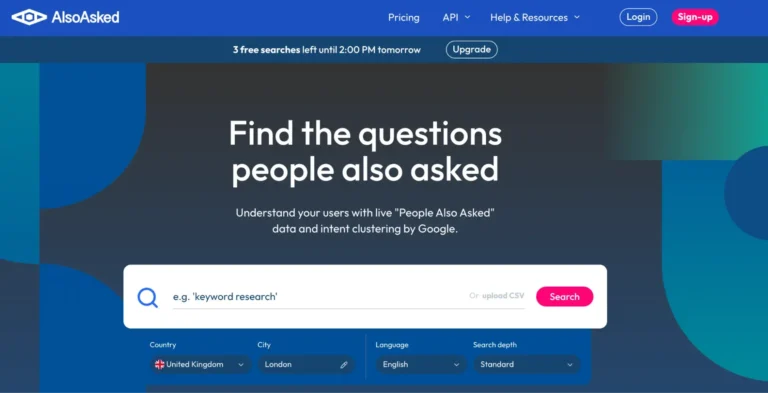
To effectively implement this, marketers are advised to build an inventory of questions their target audience frequently asks throughout the buyer’s journey. Direct engagement with sales and customer service teams can provide invaluable insights into recurring queries at each stage. Furthermore, leveraging tools like AnswerThePublic and Google’s "People Also Ask" (PAA) boxes can reveal user information needs and identify topics that Google’s algorithm deems relevant.
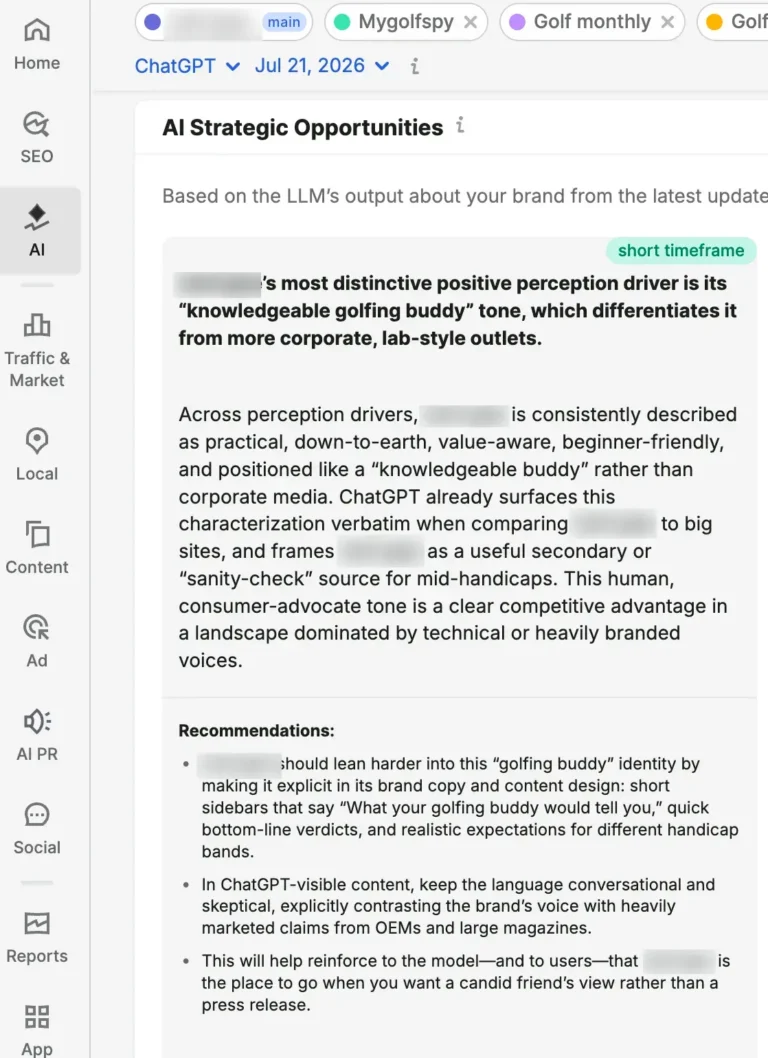
In a meta-evolutionary development, AI tools themselves are emerging to assist marketers in optimizing for AI. Platforms such as HubSpot’s Breeze, Semrush’s Copilot, and Ahrefs’ AI Content Helper offer features for analyzing search intent at scale, identifying content gaps, and generating topic clusters that map to the entire buyer journey, including the conversational, long-tail queries that AI Overviews frequently address. HubSpot’s Content Hub, in particular, facilitates the creation of topic clusters that align keywords with buyer intent, enabling content that earns citations across both traditional and AI search formats.
Content Optimization for Machine Learning Algorithms
Content quality remains a paramount factor in achieving success in AI and SEO. Google’s E-E-A-T (Experience, Expertise, Authoritativeness, and Trustworthiness) quality framework, which AI systems often consult, emphasizes the importance of credible, well-researched content. AI models strive to generate the most helpful and factual answers possible. Referencing trusted sources, incorporating original research and data, and showcasing thought leadership are crucial for appealing to these AI systems.
Research from the Digital Marketing Institute suggests that content enriched with credible citations and statistics can improve AI visibility by 30-40% compared to baseline approaches. AI tools can significantly aid in both content structure and quality enhancement. For instance, AI chatbots can provide feedback on article drafts to better reach specific audiences, brainstorm topics, identify knowledge gaps, generate metadata, source data, create visual aids, and even perform proofreading. For existing content, AI systems can identify outdated information, suggest updated statistics, and recommend structural changes to bolster E-E-A-T signals.
![AI and SEO: What AI means for the future of SEO [Expert Tips & Interview]](https://53.fs1.hubspotusercontent-na1.net/hubfs/53/ai-and-the-future-of-seo-2-20260222-9403893.webp)
Tools like HubSpot’s Content Remix enable content repurposing and optimization for various media formats. While human review and editing of AI-generated content remain essential, nearly 70% of companies report improved returns after integrating AI into their SEO and content workflows, according to Semrush.
Technical SEO Automation and its Role in AI Accessibility
Technical SEO plays a critical role in ensuring content is accessible and understandable to AI. Machine learning systems, including those powering AI search answers, favor content with specific structural characteristics. This includes proper schema markup, clear headings, concise paragraphs that directly address user queries, and FAQ sections. These elements enhance a page’s "extractability" for AI. Consequently, marketers should prioritize structured data implementation, header optimization, and overall page formatting.
SEO platforms such as Screaming Frog, Semrush, and Ahrefs now leverage machine learning to automate site crawling, identify technical issues (e.g., broken links, duplicate content, slow page speed, missing schema), and prioritize fixes based on estimated impact. What once required extensive manual audits can now be flagged, triaged, and assigned within minutes, significantly improving efficiency.
A crucial consideration for Generative Engine Optimization (GEO) is ensuring that AI crawlers can access content. Websites that inadvertently block AI bots through robots.txt rules or JavaScript rendering issues may hinder their visibility in AI-generated answers. Content must be technically accessible and machine-readable to be considered by AI systems.
![AI and SEO: What AI means for the future of SEO [Expert Tips & Interview]](https://53.fs1.hubspotusercontent-na1.net/hubfs/53/ai-and-the-future-of-seo-3-20260222-64943.webp)
Adapting SEO Strategies for the AI-Dominated Landscape
To effectively navigate the evolving digital landscape, marketers must embrace a proactive approach to adapting their SEO strategies. Amanda Sellers, Manager of EN Blog Growth at HubSpot, offers key insights for marketers seeking to align with AI and the future of SEO:
1. Emphasize Original, Comprehensive Data
Sellers stresses that producing evergreen, factual content is no longer sufficient, as AI models are adept at generating such information. Instead, the focus must shift towards creating "citation-worthy" content. This involves a deep dive into topics, providing comprehensive answers that AI perceives as indicative of deeper knowledge and credibility. Original data and thought leadership are paramount, as they make content more likely to be cited by AI models drawing from multiple sources. When other websites cite your information and provide backlinks, it validates your authority and credibility.
2. Prioritize Structure and Context
Content design must prioritize a clear and semantically rich structure. AI systems retrieve information in discrete chunks and do not possess human-like comprehension. By writing content in semantically associated sections and strengthening these associations, the likelihood of good retrieval and subsequent visibility increases. This involves crafting clear, direct statements that explicitly define correlations and relationships, facilitating AI’s ability to extract and synthesize information effectively. HubSpot’s Content Hub can assist in creating structured templates at scale, enabling teams to produce AEO-optimized content more efficiently.
3. Expand Brand Presence Across Multiple Channels
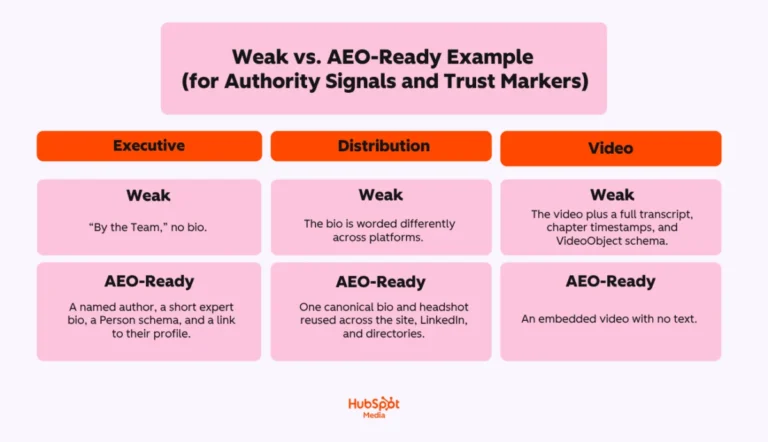
Consistent exposure across authoritative contexts enhances brand recognition and trust for AI models. When a brand is frequently mentioned in reputable industry publications, discussed in high-quality forums, and referenced in academic or government sources, AI systems are more inclined to view its content as credible and worthy of citation. This extends beyond backlinks and footnotes to establishing proof of subject-matter expertise across diverse online territories, including other publications, forums, review sites, and social media platforms. Multi-channel diversification is an essential component of a robust marketing strategy.
![AI and SEO: What AI means for the future of SEO [Expert Tips & Interview]](https://53.fs1.hubspotusercontent-na1.net/hubfs/53/ai-and-the-future-of-seo-4-20260222-2868163.webp)
4. Establish and Showcase Credibility
Beyond expanding presence, actively showcasing awards, accolades, and social proof on a website reinforces brand credibility. This includes displaying industry awards, client testimonials, user-generated content, and positive reviews. These elements collectively contribute to establishing a brand as a valuable resource for target audiences, search engines, and AI systems.
5. Maintain Core SEO Principles
Sellers emphasizes a dual strategy: "Feed two birds with one scone." Given that LLMs currently rely on Google’s index, strong Answer Engine Optimization (AEO) is intrinsically linked to effective traditional SEO. Investing in strategies that improve content ranking in traditional search results will simultaneously enhance AI visibility. Differentiating content by offering unique value, such as expert input, proprietary data, or a distinct tone, is crucial. While AI systems may not explicitly emphasize differentiation, SEO practices do, ensuring that unique and valuable content is recognized in both arenas.
Frequently Asked Questions About AI and SEO
What is SEO for AI?
SEO for AI, often referred to as Generative Engine Optimization (GEO) or Answer Engine Optimization (AEO), is the practice of optimizing content to be featured in AI-generated answers from platforms like Google AI Overviews, ChatGPT, Perplexity, and Gemini. While traditional SEO focuses on ranking in search results, AI SEO prioritizes appearing in or being cited as a trusted source within AI-generated summaries. Both approaches value accurate, up-to-date, and comprehensive content, clear structure, and technical accessibility, but with differing emphasis on specific implementation details like structured data and modular content architecture.
Is SEO still worth it with AI? Is SEO still relevant with AI?
Absolutely. Traditional SEO remains highly relevant alongside AI-driven strategies. As of September 2025, Google continues to be the dominant source of traffic, outperforming ChatGPT, Gemini, and Perplexity combined by a significant margin. While organic traffic may become more challenging to acquire due to the rise of AI, brand visibility, authority, and citations within AI answers will become increasingly critical throughout the buyer’s journey. Furthermore, traditional SEO serves as the foundational element for AI search visibility. AI systems primarily draw from content that has already established authority and trust through established SEO signals. Over 99% of AI Overview sources are derived from pages ranking within the top 10 organic results. Therefore, optimizing for both traditional search results and AI-generated answers simultaneously is now imperative.
![AI and SEO: What AI means for the future of SEO [Expert Tips & Interview]](https://53.fs1.hubspotusercontent-na1.net/hubfs/53/ai-and-the-future-of-seo-5-20260222-3641064.webp)
Can SEO be done with AI?
Yes, AI can significantly enhance SEO efforts. AI tools can assist with various aspects, including keyword research and analysis, content generation and optimization, technical SEO audits, competitive analysis, and data interpretation. However, AI should be viewed as a tool to augment human expertise, not replace it. The most effective approach combines AI for scalability and efficiency with human expertise for strategic insight and differentiation.
What is the relationship between AI and SEO?
AI and SEO are intrinsically linked. AI is altering consumer search behavior, reshaping how search engines function (with machine learning and generative AI influencing rankings and summaries), and has become a critical tool within SEO practices for automation and analysis. Essentially, AI represents both the environment in which SEO practitioners operate and a powerful tool they utilize.
Are recent SEO shifts due to AI?
The emphasis on Google’s "Helpful Content" update and the broader focus on E-E-A-T (Experience, Expertise, Authoritativeness, and Trustworthiness) are widely considered direct responses to the proliferation of AI-generated content. These updates, implemented in late 2022 and continuing through 2025, aim to promote high-quality content that prioritizes human value over search engine manipulation. The goal is to ensure that content offering genuine insight, unique perspectives, and real-world experience—qualities AI struggles to replicate—ranks highest.
Is AI-powered search changing SEO?
The impact is considerable. Google’s search market share, while still dominant, has seen a slight decline, potentially influenced by the rise of AI search. Furthermore, AI Overviews contribute to an increase in zero-click searches, where users obtain answers directly from the SERP without visiting a website. While this affects raw traffic numbers, optimizing for AI search results can still enhance brand visibility and awareness, and early data suggests AI-referred visitors may convert at higher rates.
![AI and SEO: What AI means for the future of SEO [Expert Tips & Interview]](https://53.fs1.hubspotusercontent-na1.net/hubfs/53/ai-and-the-future-of-seo-6-20260222-3676724.webp)
Has AI changed search behavior?
Quantifying macro-level behavioral shifts is challenging, as they occur gradually. However, there is anecdotal evidence of demand loss on certain queries where AI might offer a more direct solution. The most significant observable change is the rise in zero-click searches, largely driven by AI Overviews, which can reduce organic click-through rates. Despite this, optimizing for AI search can still boost brand visibility and awareness, with potentially higher conversion rates for AI-referred visitors.
Does AI shift the balance of organic vs. non-organic marketing strategies?
Diversification remains crucial. While Google has historically been a powerful channel for organic search due to its scalability, its effectiveness has been gradually diminishing due to factors like featured snippets, increased ad real estate, and zero-click searches. AI represents another evolution in this trend. However, as history shows with previous algorithm updates and SERP changes, marketers adapt. The same adaptability will be required to navigate the AI era, ensuring a balanced marketing strategy that leverages multiple channels.
The Future of SEO in an AI-Dominated World
Artificial intelligence is undoubtedly rewriting the rules of SEO, but it has not rendered fundamental principles obsolete. The core tenets of great content—accuracy, clarity, and genuine reader value—remain paramount. The shift lies in the competitive landscape; the objective is no longer solely to conquer a search engine results page but to navigate AI systems that synthesize, summarize, and cite information.
The transformative power of AI extends to everyday decisions, from meal planning to finding local businesses. Its influence on SEO is profound, yet practitioners who embrace this evolution, rather than resist it, will be best positioned to shape the future of search. The history of SEO is one of continuous adaptation, having weathered featured snippets, algorithm updates, and the rise of zero-click searches. The AI era represents the next evolutionary step, and those who proactively integrate AI into their strategies will lead the way.
About the Author