Community marketing has emerged as a pivotal growth strategy, centering on the active participation of customers, partners, and advocates. By fostering an environment where individuals can share knowledge, collaboratively solve problems, and build genuine trust, brands can unlock significant benefits. This approach directly fuels customer advocacy, enhances retention rates, and crucially, drives down customer acquisition costs. When community programs are thoughtfully designed and integrated with customer relationship management (CRM) systems and lifecycle data, they possess the power to shorten sales cycles, reduce support expenditures, and transform satisfied customers into credible brand evangelists. This comprehensive guide delves into the essence of community marketing, its strategic role in modern lifecycle marketing, and actionable steps for marketing teams to build and scale impactful community programs that deliver tangible business results.
The Core of Community Marketing: Participation and Belonging
At its heart, community marketing is a deliberate strategy to unite customers, partners, and advocates around shared interests, challenges, or aspirations. The objective is to cultivate ongoing engagement, foster deep loyalty, and nurture long-term advocacy. In practical terms, this translates to improved customer retention, a consistent stream of valuable referrals, and a notable reduction in support costs, largely due to the power of peer-to-peer problem-solving and authentic endorsements.
Distinguishing itself from social media management, which primarily focuses on content distribution, community marketing emphasizes active participation and deep engagement. Statistics underscore this shift in consumer preference: a significant 40.1% of consumers report increased loyalty to a brand after engaging with it in an online brand community. This sentiment is further amplified by findings that 67% of consumers feel more connected to brands through community channels than through social media. This trend signifies a fundamental shift away from brands broadcasting one-way messages towards facilitating dynamic conversations and fostering genuine collaboration.
Moreover, community marketing differs from generic "community building." While community building often centers on fostering a sense of belonging, community marketing explicitly links this sense of belonging to measurable business outcomes. These outcomes include enhanced retention, increased referrals, greater product adoption, and improved support efficiency. Within the framework of lifecycle marketing, community marketing plays a crucial role in the "Amplify" stage, extending value beyond the initial conversion and empowering customers to share, contribute, and, most importantly, advocate for the brand. When community activities are seamlessly integrated with CRM data, marketing teams gain invaluable visibility into how engagement directly influences revenue, customer renewals, and overall business growth.
Driving Advocacy and Reducing Acquisition Costs Through Community
The efficacy of community marketing stems from the inherent speed at which trust is established between peers compared to the often more guarded relationship between brands and buyers. Research indicates that 55% of social media users are more inclined to trust brands that feature human-generated content. Witnessing real individuals posing questions and candidly sharing their experiences builds trust far more effectively through organic word-of-mouth marketing than meticulously crafted brand messaging ever could. This heightened trust accelerates decision-making processes and alleviates the pressure on expensive paid advertising campaigns.
Nicole van Zanten, Co-President & Chief Growth Officer at ICUC.social, emphasizes this point, stating, "When done with meaning, engagement, and purpose, we see that customers convert faster, stay longer with a brand or business, and refer more often." From a cost-optimization perspective, community marketing effectively reduces reliance on paid channels and extensive support teams through several key mechanisms:
- Empowered Peer Support: Customers can find answers and solutions from fellow users, reducing the burden on internal support staff.
- Accelerated Onboarding and Education: New users can quickly learn best practices and troubleshoot issues with guidance from experienced community members, leading to faster product adoption.
- Organic Lead Generation: Engaged community members often become natural advocates, generating qualified leads through word-of-mouth and referrals.
- Reduced Churn: A strong sense of belonging and ongoing value derived from the community fosters loyalty and reduces customer attrition.
Instead of acquiring every new customer through costly advertisements or outbound sales efforts, brands can leverage the compounding value generated by their existing customer base. Key metrics that vividly demonstrate this impact include:
- Customer Lifetime Value (CLTV): Communities contribute to higher CLTV by fostering loyalty and encouraging repeat purchases.
- Net Promoter Score (NPS): Engaged community members are often more likely to become promoters, driving positive word-of-mouth.
- Customer Referral Rate: Active participation and satisfaction within a community directly correlate with increased referral activity.
- Support Ticket Deflection: Peer-to-peer problem-solving within the community significantly reduces the volume of inbound support requests.
When community members feel recognized and heard, their likelihood of continued engagement and spending with a brand increases substantially. This trust is directly reflected in purchasing behavior, with trusted relationships making repeat purchases an impressive 2.3 times more likely.
Crafting a Winning Community Marketing Strategy
A substantial 66% of companies report that their community has a positive impact on customer retention. The most robust community marketing programs are built with a clear objective, informed by deep audience understanding, and supported by the right technological platforms and efficient workflows. Here’s a strategic approach for brands aiming to build community marketing programs that deliver measurable results:
1. Define a Specific Problem the Community Will Solve
Effective community marketing initiatives begin by addressing a precise customer pain point. This could range from streamlining the onboarding process, enhancing product education, or enabling effective peer-to-peer support. Community efforts often falter when they attempt to cater to every audience and every use case simultaneously. High-performing communities are anchored to a distinct, actionable outcome, such as:
- Improving product adoption rates for a specific feature.
- Reducing support ticket volume for common issues.
- Facilitating knowledge sharing among power users.
- Gathering feedback for product development.
Starting with a defined problem imbues the community with a purpose beyond mere engagement. It also establishes a clear decision-making framework for all subsequent steps, from platform selection to programming and measurement. As van Zanten advises, "Community efforts fail when they try to be everything for everyone. The most successful teams identify a problem area or opportunity and let everything cascade back to that outcome."
2. Understand Customer Behavior Before Platform Selection
Platform decisions should be guided by audience behavior, not fleeting trends. Communities are more likely to thrive when established in spaces where members already spend their time and feel comfortable engaging. Before selecting a platform, marketers should meticulously analyze patterns in:
- Existing Social Media Interactions: Where do customers already congregate and discuss related topics?
- Content Consumption Habits: What types of content do they engage with most?
- Communication Preferences: Do they favor real-time chat, asynchronous forums, or visual platforms?
This contextual understanding enables teams to avoid forcing engagement into unfamiliar environments and instead design communities that feel intuitive and natural from inception. Van Zanten underscores the importance of social listening: "Understand what customers are talking about, what tensions exist, and what parallel interests show up. That context tells brands what they are actually building for."
HubSpot Pro Tip: Consider exploring offline community marketing initiatives. These can yield the same impactful results in retention and advocacy as online communities, provided that engagement is diligently tracked and integrated into broader marketing systems.
3. Select a Platform Aligned with Audience Needs and Operational Realities
There isn’t a universally "best" platform for every community. The paramount factor is how an audience already interacts online and what the community requires for day-to-day functioning and future growth. Practically, platform decisions often hinge on a few key questions:
- Audience Familiarity: Where does the target audience already have a strong presence?
- Feature Requirements: Does the platform support necessary features like discussion threads, direct messaging, content sharing, or event hosting?
- Integration Capabilities: How easily can the platform integrate with existing CRM and marketing automation tools?
- Moderation and Governance: What tools are available for managing content, ensuring safety, and enforcing community guidelines?
- Scalability: Can the platform accommodate growth in membership and activity?
Van Zanten notes, "Some brands will thrive on Discord or Reddit, while others perform better in close Facebook Groups or LinkedIn communities. The best platform is the one aligned with the audience and operational needs."
HubSpot Pro Tip: Platform selection also significantly impacts the ease with which community data can be integrated into a CRM. Opting for tools that offer native integrations with platforms like HubSpot simplifies the process of linking engagement to lifecycle metrics and tangible business outcomes.
4. Design Engagement Programs to Foster Participation, Not Just Broadcasting
Communities flourish when members are actively invited to participate. Programs centered around interaction consistently outperform passive content streams. Meaningful interaction often manifests as:
- Q&A Sessions: Encouraging members to ask and answer questions.
- Polls and Surveys: Soliciting opinions and feedback.
- User-Generated Content Contests: Motivating members to create and share.
- Live Discussions and AMAs: Facilitating real-time interaction with experts or brand representatives.
- Challenges and Collaborative Projects: Fostering teamwork and shared goals.
Intentional engagement design increases the likelihood that members will ask questions and assist one another. This participation strengthens trust and keeps the community vibrant long after its initial launch. Van Zanten shares, "We’ve seen strong success with dedicated Discord communities where brands host live AMAs, exclusive content, and behind-the-scenes access. When community members feel invited into the process, engagement increases significantly."
HubSpot Pro Tip: HubSpot’s Marketing Software can be instrumental in promoting community discussions and events through scheduled social posts and a unified social inbox. This streamlines driving participation across channels and maintaining conversational momentum without adding manual overhead.
5. Enable Peer-to-Peer Support and Contribution
One of the most scalable and impactful benefits of community marketing is the emergence of peer-to-peer support. When members actively help each other solve problems, answer questions, and share their experiences, communities generate value that doesn’t solely rely on internal teams. Over time, this dynamic reduces support volume, expedites issue resolution, and deepens trust among members. When guidance comes from peers who have navigated similar challenges, customers are far more receptive to engaging, learning, and contributing. The result is a self-sustaining community that becomes increasingly useful and credible as participation grows. Van Zanten highlights a compelling example: "In one healthcare community, peer-generated answers reduced support tickets by nearly 30%. That insight justified expanding the program and investing in more structured workflows."
6. Align Community Data with CRM and Lifecycle Metrics
Community marketing efforts tend to secure ongoing investment once teams can clearly demonstrate the connection between participation and measurable business outcomes that resonate with leadership. This crucial linkage is typically achieved by tying community activity back to CRM data, allowing engagement to be viewed within the context of the entire customer lifecycle. This level of visibility makes it easier to discern:
- How community participation correlates with customer retention rates.
- Which engagement activities lead to product adoption or upsell opportunities.
- The impact of community support on reducing customer service costs.
- The role of community in influencing customer renewals and expansions.
Without these insights, the impact of community initiatives remains anecdotal, and anecdotes rarely survive stringent budget reviews.
HubSpot Pro Tip: Utilizing Customer Service Software can transform community initiatives from standalone efforts into measurable growth channels. Marketing, sales, and customer service teams can then leverage this unified data to evaluate performance through a shared, objective lens.
7. Build for Long-Term Advocacy, Not Short-Term Campaigns
Community marketing yields its most significant value when treated as an ongoing relationship-building endeavor. Programs primarily designed to promote product launches, discounts, or announcements often experience a temporary spike in activity, only to fall silent once the promotional push concludes. The landscape looks dramatically different when members feel noticed, supported, and genuinely heard. In such communities, individuals naturally begin sharing their experiences and championing the brand on their own accord. Identifying consistently helpful members or those who actively participate in discussions makes it easier to establish ambassador programs or referral initiatives. With these programs in place, advocacy transitions from a vague success story to a tangible, scalable outcome that teams can actively nurture. Van Zanten emphasizes, "The strongest communities build belonging first, product second. People resonate more with real, authentic customer voices than polished brand messaging – and that’s what drives long-term advocacy."
8. Integrate Community Data with CRM
When community engagement is directly linked to CRM data, previously invisible patterns emerge. Brands can then precisely ascertain how participation aligns with retention, referrals, and even the reduction of support demand. This data integration empowers a deeper understanding of who is actively participating, how community activities fit into the broader customer lifecycle, and whether the community is genuinely contributing to business value.
HubSpot Pro Tip: HubSpot’s CRM facilitates the crucial task of tying community participation to the overarching customer journey, thereby clarifying attribution and enhancing cross-team alignment.

9. Support Community Managers with Automation
As communities scale, operational bottlenecks inevitably emerge in areas such as comment moderation, content creation, and approval processes. AI-powered tools can significantly bolster community moderators by automating tasks such as:
- Content Moderation: Identifying and flagging inappropriate content.
- Repetitive Response Generation: Providing quick answers to frequently asked questions.
- Content Curation and Summarization: Helping to surface relevant discussions and key takeaways.
- Performance Reporting: Automating the generation of engagement metrics.
Automation tools empower community managers to dedicate less time to repetitive chores and more time to strategic relationship-building and program development.
HubSpot Pro Tip: Content Hub’s AI tools, including its image generator, can assist teams in rapidly producing guides, discussion prompts, event graphics, and educational resources, thereby keeping communities active and engaging without overwhelming the marketing team.
Community Engagement Programs to Launch Now
Not all community programs need to be complex to be effective. The most successful engagement initiatives are often those that address a clear customer need and provide consistent reasons for participation. Here are several proven community engagement programs and why they tend to excel:
1. Customer Forums
Customer forums generate lasting value by providing a dedicated space for individuals to ask questions, exchange solutions, and learn from one another within a relevant context. Over time, these conversations evolve into a searchable repository that customers actively utilize. When forums are integrated with product education and support workflows, they transcend the role of a mere help center and become a shared workspace.
- Best for: Product adoption and support deflection.
- Why it works: Forums are particularly effective because their value compounds. A single well-crafted answer can assist numerous subsequent users searching for the same issue. As this knowledge base expands, peer-generated responses often become the most trusted reference point, sometimes even surpassing official documentation.
2. Virtual Events and Office Hours
Virtual events and office hours establish real-time connections between brands and community members. These sessions can encompass:
-
Ask-Me-Anything (AMA) Sessions: Direct interaction with product experts or leadership.
-
Product Demos and Workshops: Hands-on learning experiences.
-
Customer Success Stories: Showcasing how others leverage the product.
-
Networking Opportunities: Facilitating connections among members.
-
Best for: Trust-building, education, and early-stage engagement.
-
Why it works: In practice, smaller, recurring sessions often outperform large, infrequent webinars. Consistency lowers the barrier to participation and fosters familiarity. Members are more likely to engage when events feel conversational rather than overtly promotional.
3. Ambassador Programs
Ambassador programs formalize advocacy by providing engaged customers with a clear pathway to promote the brand through referrals, content creation, testimonials, or speaking engagements. These programs typically include incentives, recognition, and clearly defined expectations.
- Best for: Advocacy, referrals, and social proof.
- Why it works: Ambassador programs offer significant scalability. When incentives and recognition are clearly outlined, advocacy becomes repeatable rather than ad hoc. Ambassadors often serve as community leaders, helping to establish norms and encourage broader participation within the group.
4. Partner Communities
Partner-led communities bring together customers, experts, and complementary brands around shared objectives. These communities often feature joint programming, co-created content, or shared learning initiatives.
- Best for: Reach expansion, credibility-building, and shared growth.
- Why it works: Partner communities are most effective when collaborators already serve overlapping audiences. This approach expands reach while distributing operational effort, enabling communities to grow more rapidly without sacrificing relevance or trust.
5. Content-Led Communities
Content-led communities are built around educational content and thought leadership. Members engage through discussions linked to articles, guides, events, research, or ongoing learning series.
- Best for: Early-lifecycle engagement and long-term brand affinity.
- Why it works: Educational communities attract members even before they are ready to purchase, providing a consistent reason for them to return. When content fuels conversation rather than simply existing passively, it becomes a powerful catalyst for engagement and relationship-building.
Community Platforms and Partners to Consider
Selecting the appropriate community platform is both a strategic and operational decision, influencing member engagement and the ability to connect engagement data to business outcomes.
Owned vs. Third-Party Community Platforms Comparison
| Consideration | Owned Platforms | Third-Party Platforms (Slack, Discord, LinkedIn) |
|---|---|---|
| Best for | Long-term programs, attribution, lifecycle integration | Early-stage communities, rapid experimentation |
| Data Control | Full control over data, governance, and integrations | Limited control over data and customization |
| CRM Integration | Easier integration; engagement ties directly to contact records and lifecycle stages | Difficult integration; limited data access |
| Setup Time | Longer initial setup; requires hosting or platform management | Lower barrier to entry; reduced setup time; members often familiar |
| Measurement & Attribution | Easier to track influence on retention, expansion, advocacy | Limited visibility into business outcomes; data harder to extract |
| Scalability | Built for long-term growth and operational scalability | Limitations emerge as communities grow |
| Member Familiarity | May require onboarding to new platform | Members often already familiar, accelerating early participation |
| Cost Consideration | Typically requires investment in platform and hosting | Often free or low-cost to start |
| Governance & Moderation | Full control over safety, moderation policies, and governance features | Limited control; dependent on platform’s built-in features |
| Ideal Use Case | Programs where measurement matters and community ties to business outcomes | Testing engagement formats and building momentum |
Key Takeaway: Third-party platforms are best utilized as stepping stones rather than permanent solutions. They are excellent for testing engagement formats and building momentum, but owned platforms become essential when measurement, CRM integration, and long-term scalability are priorities.
1. Owned Community Platforms
Owned community platforms provide brands with complete data control, simplifying governance and integrations. These platforms, typically hosted or managed directly by the organization, can be closely aligned with CRM and lifecycle data.
- Best for: Long-term community programs, attribution, and lifecycle integration.
- Why it works: Owned platforms are preferable for programs where measurement is critical. When community engagement can be directly linked to contact records and lifecycle stages, it becomes much easier to understand how participation influences retention, expansion, and advocacy, especially when integrated with a CRM like HubSpot.
2. Slack or Discord
Third-party platforms like Slack or Discord lower the barrier to entry and reduce setup time. Members are often already familiar with these tools, which can accelerate early participation.
- Best for: Early-stage communities and rapid experimentation.
- Why it works: These platforms serve best as initial launchpads rather than permanent homes. They are ideal for testing engagement formats and building momentum, but limitations in data access, governance, and long-term scalability often become apparent as communities expand.
3. LinkedIn Groups
LinkedIn Groups offer built-in discovery and access to professional audiences, making them useful for sparking discussion without requiring members to join a new platform.
- Best for: Early engagement and professional networking.
- Word of caution: While effective for gathering like-minded professionals, LinkedIn Groups offer limited control over data and customization, making them challenging to scale operationally or integrate with broader marketing and CRM systems over time.
4. Partner Ecosystems
Partner-led communities bring together customers, experts, and brands around shared objectives. These ecosystems often include:
-
Joint programming and co-marketing initiatives.
-
Shared learning resources and best practices.
-
Opportunities for cross-promotion and collaboration.
-
Best for: Reach expansion, credibility, and shared growth.
-
Why it works: Partner ecosystems consolidate multiple incentives into a single community experience. The HubSpot ecosystem, for instance, unites agencies, consultants, and technology partners to foster education and advocacy across diverse audiences.
Measuring Community Marketing and Proving ROI
Measuring community marketing success requires looking beyond superficial engagement metrics and focusing on indicators that reflect genuine business impact. The most effective programs integrate behavioral metrics with lifecycle and revenue data to present a clear narrative of value. Here are the key metrics that consistently drive this impact:
1. Engagement Rate
- What it measures: Participation, not merely growth.
- Engagement rates indicate whether members are actively participating, contributing, and returning, or if they are passively disengaging. Tracking engagement trends over time helps identify momentum early or allows for timely intervention before participation stalls.
- What I’ve learned: Prioritize active members over total member counts when reporting success. A smaller, consistently engaged community typically delivers more value than a large group of passive participants.
2. Retention and Expansion Influence
- What it measures: Long-term customer value and account growth.
- Retention and expansion metrics reveal whether community participation contributes to customers staying longer and deepening their relationship with the brand. Communities that support onboarding, education, and peer problem-solving often influence these outcomes. Tracking community participation alongside lifecycle stages helps identify these patterns. When engagement data is viewed alongside renewal and expansion metrics, the connection between community involvement and customer longevity becomes evident.
- What the expert says: Van Zanten explains, "The most reliable ROI signals are centered around retention and renewal rate of community members, contribution and engagement levels, sentiment, and how conversations evolve over time."
- What I’ve learned: The impact on retention rarely appears overnight. Community members who engage early and frequently tend to remain customers longer and expand their relationship more naturally, particularly when the community helps them derive value more quickly.
3. Referral and Advocacy Activity
- What it measures: Willingness to recommend, share, and speak on behalf of the brand.
- Referral traffic, reviews, testimonials, and user-generated content are strong indicators of advocacy. These behaviors demonstrate that members trust the brand enough to lend their own credibility to it. Communities that encourage contribution consistently outperform passive groups. When members are provided with a platform to share experiences and assist others, advocacy becomes a natural extension of participation.
- What I’ve learned: Advocacy is initially reflected in behavior. The earliest signals are often subtle – thoughtful answers, shared screenshots, unsolicited recommendations – but these moments typically form the foundation for referrals and sustained word-of-mouth growth.
4. Pipeline and Revenue Influence
- What it measures: Community impact on revenue and deal progression.
- Pipeline influence examines whether community participation translates into tangible sales activity. This includes:
- New leads generated directly from community interactions.
- Faster deal cycles for prospects who engage with the community.
- Increased upsell or cross-sell opportunities within engaged customer segments.
- Quantifiable cost savings from support deflection or self-service education.
- What I’ve learned: Once participation can be linked to pipeline generation or cost savings, community initiatives are recognized not just as brand activities but as genuine growth levers.
Community Building Examples Across B2B and D2C
Examining successful community programs across various industries provides practical insights into effective community marketing.
1. HubSpot Community
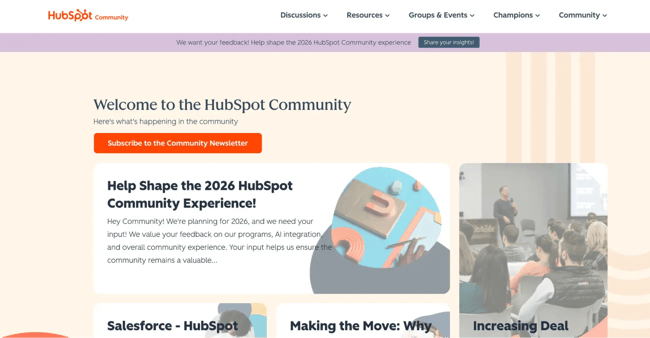
The HubSpot Community brings together customers, partners, and experts to facilitate product education, peer-to-peer problem-solving, and continuous learning. Members can pose questions, share insights, and access guidance across HubSpot’s diverse suite of tools and use cases.
- What stands out: Community activity complements, rather than competes with, support, content, and product education. This integration makes the community feel like a natural extension of the overall customer experience.
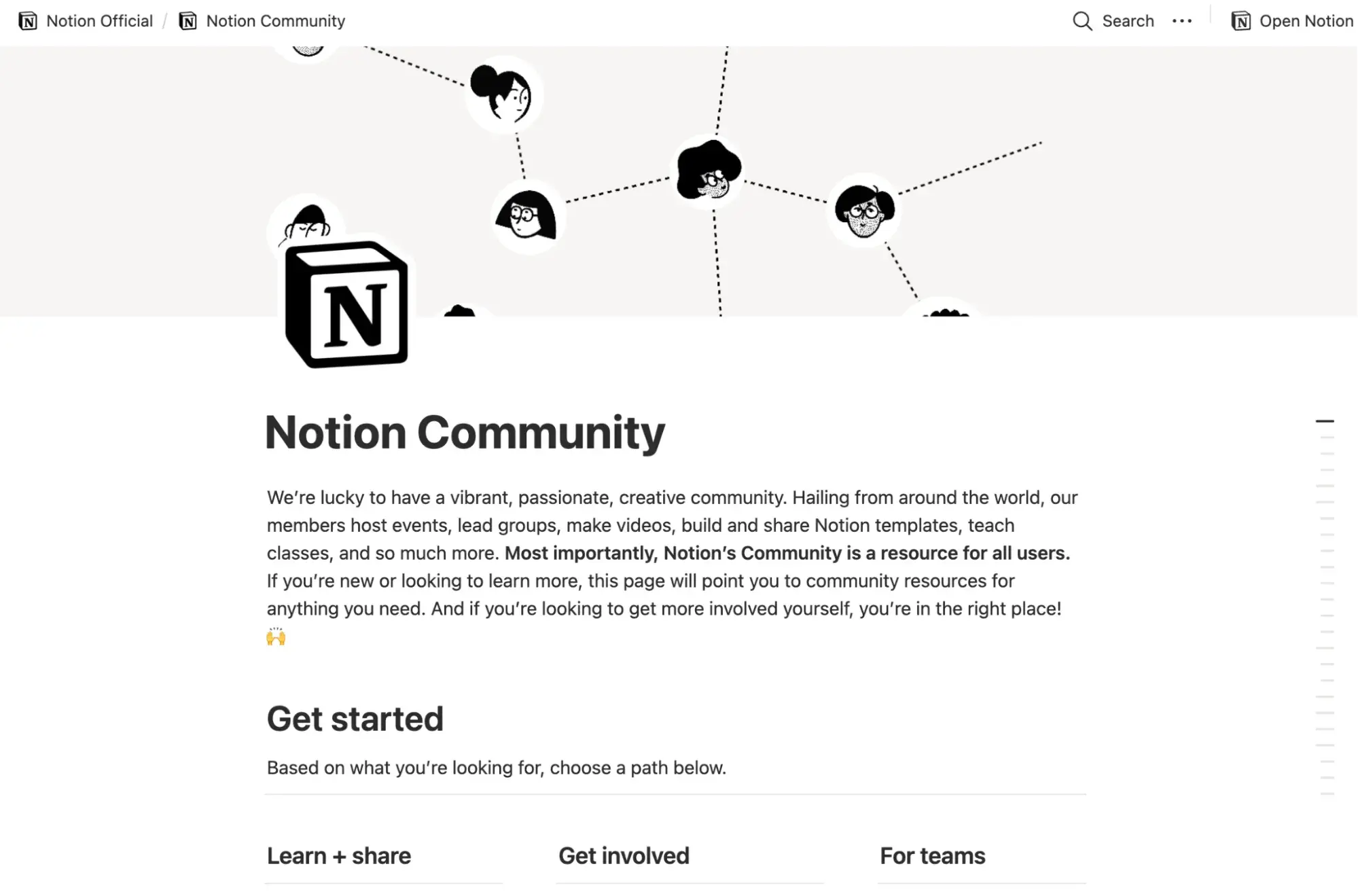
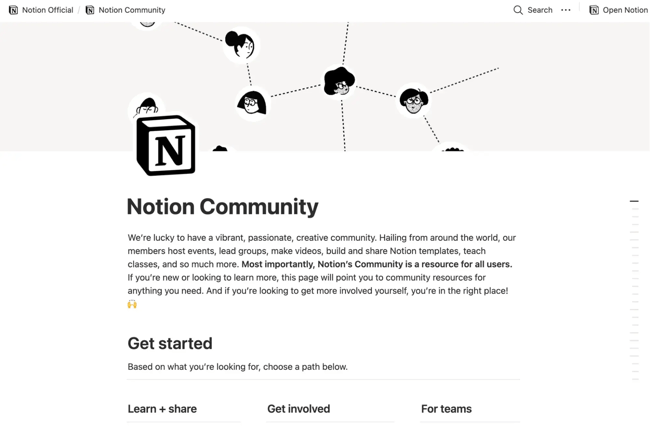
2. Notion Community
Notion’s community is built around the principle of co-creation. Members share templates, workflows, and use cases that not only help others derive greater value from the product but also showcase the platform’s inherent flexibility.
- What stands out: The emphasis on contribution transforms customers into active collaborators. By simplifying the process for users to build and share, Notion’s community effectively scales product education while reinforcing a strong sense of ownership and pride among its members.
3. Peloton Community
Peloton’s community spans multiple platforms, including Facebook, integrating content, challenges, and shared progress to foster a sense of momentum and accountability. Members engage not only with the brand but also with each other through shared milestones and collective experiences.
- What stands out: As a Peloton user, the emotional investment driving retention is palpable. By combining progress tracking with shared achievement, Peloton’s community transforms individual usage into a collective journey, making participation feel motivating rather than transactional.
Frequently Asked Questions About Community Marketing
Is community marketing the same as social media marketing?
No. Social media marketing primarily serves as a distribution channel for reaching broad audiences, whereas community marketing focuses on cultivating relationships within a defined group. Social platforms prioritize visibility and reach; communities prioritize participation, trust, and long-term value creation. While social media can support community growth, it does not replicate the depth or durability of a true community.
How long does it take to see results from community marketing?
Early engagement signals, such as increased participation and discussion activity, typically emerge within the first few months of a community marketing initiative. Measurable business outcomes – such as improved retention, increased referrals, or significant support deflection – usually become apparent over a six-to-twelve-month period. The exact timeline is influenced by the community’s purpose, audience readiness, and the effectiveness of linking engagement to lifecycle metrics.
Which platform is best for a brand community?
There is no single "best" platform for every community. The optimal choice hinges on audience behavior, available internal resources, data requirements, and long-term objectives. Owned platforms offer greater control and seamless integration with CRM systems, while third-party platforms reduce initial setup friction and can accelerate early engagement. The most successful communities select platforms based on strategic fit, not simply popularity.
How do I resource a community program if I have a small team?
Small teams can effectively manage community programs by prioritizing focus and leveraging available tools. Clear programming, repeatable engagement formats, and content reuse minimize manual effort. Automation and AI-powered tools can support onboarding, moderation, and content creation, enabling teams to scale participation without proportionally increasing headcount.
How do I start if I don’t have an existing audience?
Most communities do not begin from absolute zero. Early members often emerge from existing customer segments already engaged in onboarding, support, educational programs, or partner initiatives. Starting with a small, relevant group helps establish community norms, generate initial value, and build momentum before expanding to a broader audience.
Building Customer-Led Growth Through Community Marketing
Community marketing delivers its greatest value when approached as a long-term growth strategy, not a peripheral project. When communities are intentionally designed and measured against tangible business outcomes, they become powerful engines for fostering advocacy, enhancing retention, and significantly reducing acquisition costs.
Connecting community activity with content, CRM, and lifecycle marketing provides teams with the critical visibility needed to identify effective strategies and allocate resources optimally. HubSpot’s integrated platform supports this approach by consolidating engagement, automation, and customer data into a unified system. For marketing teams focused on transforming participation into measurable impact, community marketing serves as a foundational element in building enduring, customer-led growth.
About the Author