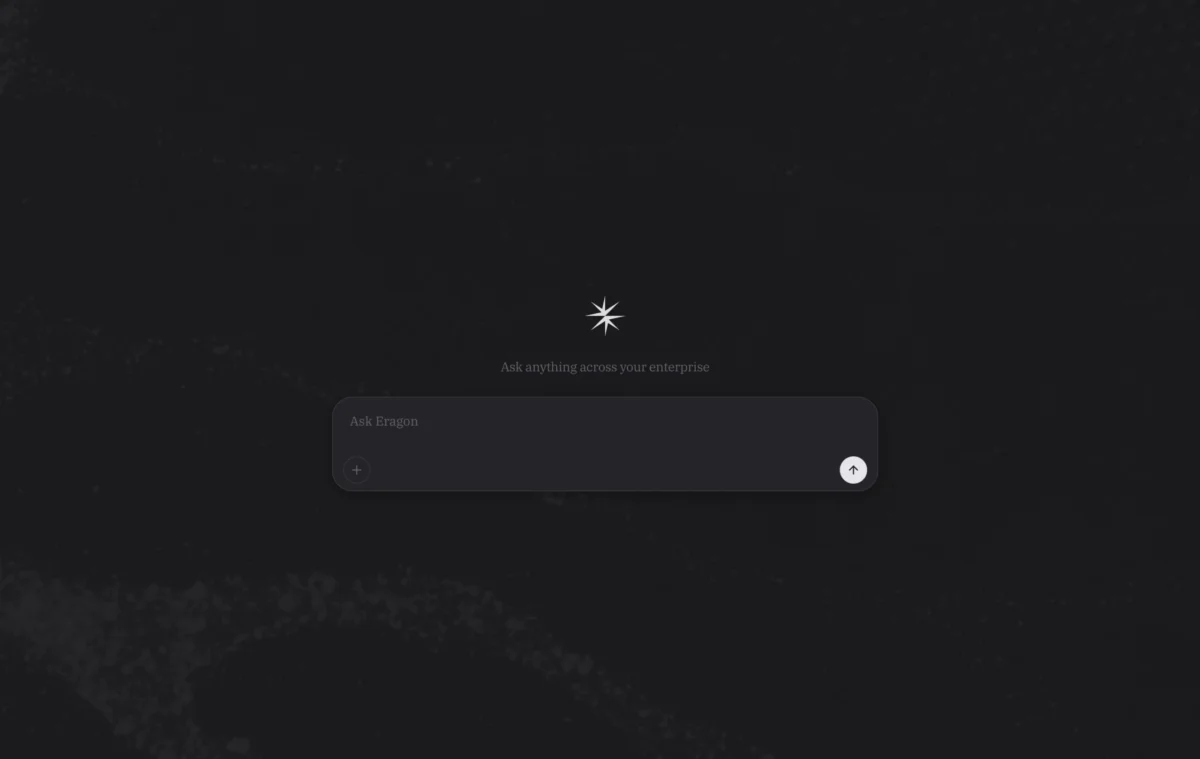
The landscape of enterprise technology is on the cusp of a profound transformation, driven by the emergence of sophisticated artificial intelligence. Spearheading this shift is Eragon, a nascent but ambitious startup that has just announced a significant $12 million seed funding round, valuing the company at $100 million post-money. Founded in August by Josh Sirota, Eragon is charting a course toward an entirely new paradigm of enterprise interaction: an agentic AI operating system designed to render traditional software interfaces obsolete. This funding influx underscores a growing investor belief in a future where human-computer interaction in business is no longer mediated by buttons, menus, and dialog boxes, but by natural language prompts, ushering in an era where the interface itself seemingly disappears.
The Visionary Behind the Interface Disappearance
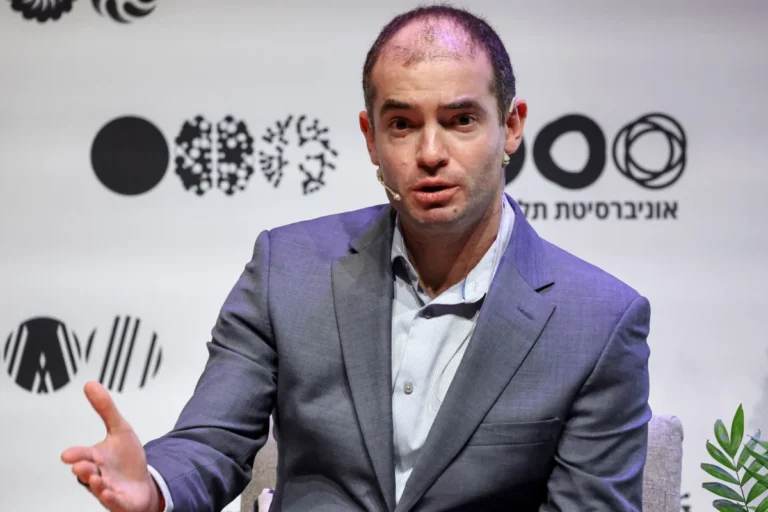
At the heart of Eragon’s audacious vision is Josh Sirota, a veteran of go-to-market teams at industry giants like Oracle and Salesforce. Sirota’s journey to founding Eragon was catalyzed by what he candidly describes as a "quarter-life crisis," propelling him from his corporate roles to San Francisco. There, he assembled a small, agile team, launching Eragon from a live-work loft overlooking the Giants’ baseball park. His thesis is stark and provocative: "Software is dead." This declaration isn’t merely hyperbole; it represents a fundamental rethinking of how businesses operate. Instead of navigating a fragmented ecosystem of specialized applications—the Salesforces, Snowflakes, Tableaus, and Jiras that define modern enterprise—Sirota envisions a unified, intelligent agent capable of understanding and executing complex business tasks through simple, natural language prompts.
Sirota’s extensive background in implementing and scaling premier corporate software solutions at Oracle and Salesforce proved instrumental in convincing investors of his "founder-market fit." This deep understanding of the intricacies and inefficiencies of the existing enterprise software stack positioned him uniquely to identify and address a critical pain point. The company’s name, Eragon, a nod to Christopher Paolini’s fantasy novel, places it in a lineage of tech companies like Palantir and Anduril that draw inspiration from fictional worlds to denote grand ambitions and transformative power. On a recent sunny Wednesday, the nascent company’s dining room table offered a glimpse into its blend of ambition and grit: a celebratory bottle of Moët Champagne alongside several Mac minis and a copy of the eponymous fantasy novel.
Unpacking Eragon’s Agentic AI Operating System
Eragon’s technological foundation is built on the principle of agentic AI, which moves beyond mere conversational interfaces to create intelligent agents capable of understanding context, planning actions, and executing multi-step tasks autonomously. The company achieves this by post-training open-source large language models (LLMs) such as Qwen and Kimi on vast customer datasets. These models are then linked to a company’s internal resources, including email accounts, CRM systems, and other proprietary data repositories, creating a bespoke, context-aware AI environment.
A demonstration of Eragon’s capabilities provided a compelling illustration of its potential. Sirota showcased how the system "eats its own dog food" by using it to onboard a new client, Dedalus Labs. With a natural language prompt, the Eragon system automatically assigned credentials to new users, spun up a dedicated Eragon instance in the cloud, and initiated a comprehensive onboarding workflow. This hands-off, automated process stands in stark contrast to the manual, multi-step procedures typically associated with enterprise software adoption. Looking ahead, Sirota anticipates Eragon will become the primary interface for executives seeking complex analyses—such as identifying deals at risk of slipping or devising strategies to improve supply chain lead times—and then assigning these tasks to the AI agents for execution. The ability to simply ask Eragon to "spin up a dashboard" further illustrates the seamless, prompt-driven interaction the company aims to deliver.
The technical prowess underpinning Eragon’s platform is formidable, with a team that includes Rishabh Tiwari, a Berkeley computer science PhD student, and Vin Agarwal, an MIT PhD. Their combined expertise is crucial in building out the complex tech stack required to support an agentic AI operating system capable of handling the diverse and demanding needs of enterprise clients.
A Market Ripe for Disruption: The Enterprise Software Landscape
The enterprise software market is a colossal industry, estimated to be worth over $500 billion globally, characterized by its fragmentation and the pervasive challenge of integrating disparate systems. Despite the proliferation of specialized tools, many businesses still grapple with inefficiencies stemming from data silos, complex user interfaces, and the sheer volume of applications employees must navigate daily. The promise of AI in the enterprise has been significant, yet its adoption has been fraught with challenges. Indeed, a widely cited MIT figure suggests that approximately 95% of corporate AI trials fail to achieve widespread adoption or deliver tangible value. Sirota attributes this high failure rate partly to senior executives often being disconnected from the daily operational realities of their employees, leading to AI solutions that don’t genuinely address core workflow needs. Eragon aims to bridge this gap by offering a tool that directly integrates into and enhances daily work processes.
A central tenet of Eragon’s pitch, and a significant differentiator in the crowded AI landscape, revolves around data ownership and security. For enterprise clients, the security of proprietary data is paramount. Eragon addresses this by ensuring that a company’s data remains within its own servers and security environment. Crucially, clients also retain ownership of their model weights—the underlying parameters that define how an AI behaves. This approach contrasts sharply with many frontier AI labs that offer powerful models via API, often requiring data to be processed on their servers without giving clients full control over the model’s configuration or the intellectual property derived from its training. Sirota firmly believes that models trained on years, even decades, of corporate data will become invaluable assets in themselves, offering a competitive edge that generic, externally controlled models cannot replicate.
Industry Endorsement and Customer Validation
The $12 million seed round attracted a robust syndicate of investors, signaling strong confidence in Eragon’s potential. Backers include Arielle Zuckerberg at Long Journey Ventures, Soma Capital, Axiom Partners, and strategic angels Mike Knoop and Elias Torres. Sandhya Venkatachalam of Axiom Partners articulated this sentiment, stating, "We see enormous potential for Eragon to become the connective tissue for how modern teams operate and make decisions." This highlights the perceived ability of Eragon to unify disparate functions and streamline decision-making processes across an organization.
Beyond investor confidence, Eragon is already seeing real-world adoption. The company is currently deployed in a handful of large businesses and dozens of startups, validating its utility in diverse operational contexts. Nico Laqua, CEO of Corgi, an insurance startup that raised $180 million after emerging from Y Combinator, offered a ringing endorsement, calling Eragon "the best applied AI for enterprise in the market." Laqua specifically praised Eragon’s approach to data security: "Most of the data we have needs to remain secure and behind our own cloud. Eragon trains state-of-the-art models for us on our data and deploys it in our own environment." This customer testimonial directly reinforces Eragon’s core value proposition regarding data privacy and control.
Further validating Eragon’s strategic direction, Nvidia CEO Jensen Huang recently offered a strikingly similar perspective at GTC, Nvidia’s annual developer conference. Huang argued that agentic AI tools for enterprise are poised to replace existing approaches to white-collar work. He drew a powerful historical parallel: "It is no different than how Windows made it possible for us to create personal computers…every single SaaS company will become Agentic-as-a-Service." Huang’s comments directly pertain to Nvidia’s new initiative, NemoClaw, designed to facilitate the secure operation of OpenClaw agents within enterprise systems. This high-level industry validation from a titan like Nvidia underscores that Sirota is tapping into a significant, emerging trend, even as it signals the intensifying competition in this rapidly evolving space.
Navigating the Complexities: Security, Scalability, and Competition
While Eragon’s demo is compelling and its vision ambitious, the widespread adoption of agentic AI in enterprise environments presents considerable challenges. Foremost among these are security concerns and the imperative for auditable processes. The prospect of AI agents autonomously approving invoices or initiating complex workflows raises questions about accountability, error detection, and the potential for "hard-to-audit failures." The reporter, witnessing Eragon demonstrate automatic invoice approval, humorously considered testing the system himself, illustrating the inherent human skepticism and the need for robust safeguards. Sirota acknowledges these challenges, emphasizing that the company is actively working to iron out the "kinks" in real-world workplace scenarios.
Another critical consideration is the handling of "edge queries"—unforeseen or unusually complex prompts that could baffle the software or lead to unintended outcomes. As AI systems become more autonomous, ensuring their reliability and predictability across an infinite array of business scenarios will be a continuous development challenge.
The competitive landscape for agentic AI solutions is also rapidly intensifying. From established frontier labs like OpenAI and Google to a burgeoning ecosystem of model wrappers and specialized AI solution providers, the market is becoming increasingly crowded. Nvidia’s NemoClaw initiative, while validating Eragon’s thesis, also highlights the entry of major players with vast resources into this arena. Sirota, however, remains undaunted. He draws an analogy between the current state of AI software and the transition from mainframes to personal computers. While frontier labs offer powerful, centralized services, he believes that mass corporate adoption will hinge on local, bespoke tools that companies can control for their specific purposes, much like the rise of personal computing brought computing power directly to users.
The Future Outlook: A Billion-Dollar Ambition
Despite the inherent complexities and fierce competition, Josh Sirota harbors bold ambitions for Eragon. He confidently predicts that the company will achieve a billion-dollar valuation by the end of the year. This aggressive projection is rooted in his belief that Eragon directly addresses the fundamental challenges that have historically hampered AI adoption in corporations. By offering a solution that provides clear utility, integrates seamlessly into workflows, and respects enterprise data security needs, Eragon aims to bypass the common pitfalls that lead to the high failure rate of corporate AI trials. Sirota’s humorous take on the MIT statistic—that executives often don’t truly understand their employees’ daily tasks—underscores Eragon’s commitment to delivering practical, impactful tools that empower the workforce.
Conclusion: Redefining Enterprise Interaction
Eragon’s $12 million funding round is more than just a financial milestone; it represents a significant vote of confidence in a transformative vision for enterprise technology. By championing an agentic AI operating system that promises to dissolve traditional software interfaces, Eragon is positioning itself at the forefront of a movement that could fundamentally redefine how businesses interact with information and execute tasks. While significant challenges related to security, scalability, and competition lie ahead, the company’s focus on data ownership, bespoke models, and direct integration into workflows offers a compelling value proposition. As the enterprise world increasingly seeks more intuitive, efficient, and intelligent ways to operate, Eragon’s "software is dead" mantra may well herald the dawn of a new, post-interface era in business.
About the Author