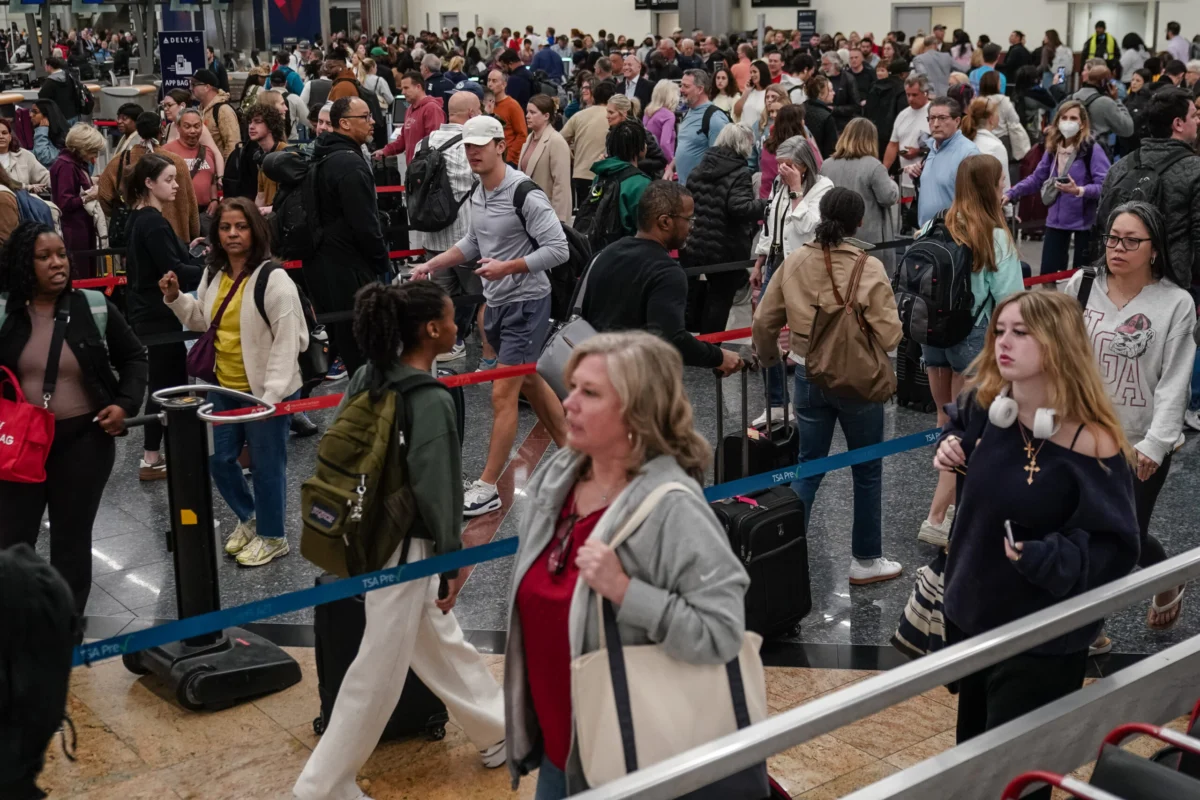
Immigration and Customs Enforcement (ICE) agents are slated for deployment to airports across the United States beginning Monday, March 24, 2026, a move confirmed by White House border czar Tom Homan on Sunday. The controversial decision comes as the Department of Homeland Security (DHS) shutdown extends into its second month, severely straining airport security operations and creating hours-long queues at Transportation Security Administration (TSA) checkpoints nationwide. President Donald Trump had threatened this deployment on Saturday, March 22, 2026, as a measure to alleviate the growing travel chaos, but the plan has immediately drawn fierce criticism from aviation security experts, labor unions, and Democratic lawmakers who warn of potential security breaches and escalated risks to the traveling public.
The Deepening Crisis of the DHS Shutdown
The current DHS shutdown, which commenced on February 14, 2026, has its roots in an intractable political deadlock over immigration policy and border security funding. Democrats in Congress are demanding statutory changes to immigration enforcement practices, particularly concerning the conduct of ICE agents, following a highly publicized incident in Minneapolis where two U.S. citizens were reportedly shot and killed by ICE personnel. This demand for reform has stalled negotiations for a comprehensive DHS funding bill, leaving vital agencies like TSA, the Coast Guard, the Federal Emergency Management Agency (FEMA), and the Cybersecurity and Infrastructure Security Agency (CISA) operating without full appropriations.
The most visible impact of this funding lapse has been on the nation’s airports. Thousands of TSA officers, deemed essential personnel, have been working without pay for over a month. The financial strain, coupled with uncertainty, has led to a significant exodus of personnel. According to an NBC News report, more than 400 TSA officers have resigned since the shutdown began, with countless others calling out sick or simply not reporting for shifts. This attrition, representing a substantial portion of the frontline screening workforce at many airports, has crippled the agency’s ability to maintain adequate staffing levels, resulting in unprecedented security line wait times that have stretched to several hours at major hubs like Hartsfield-Jackson Atlanta International Airport (ATL), Chicago O’Hare (ORD), and Los Angeles International Airport (LAX).
Traveler frustration has reached a fever pitch, with numerous reports of missed flights, disrupted travel plans, and a palpable sense of anxiety regarding airport security. The ripple effects extend beyond individual passengers, impacting airlines facing delays and cancellations, and potentially dampening tourism and business travel, thereby incurring broader economic costs. The American Automobile Association (AAA) had estimated that the shutdown could cost the U.S. economy billions if prolonged, largely due to travel disruptions and decreased consumer confidence.
A Chronology of Escalation and Political Impasse
The path to this unprecedented deployment has been marked by escalating tensions and a failure of legislative compromise:
- Late 2025/Early 2026: Intense debates over the federal budget, particularly funding for border security measures and the operational scope of ICE. Democrats push for reforms following a series of controversial enforcement actions.
- February 14, 2026: DHS shutdown officially begins after Congress fails to pass a funding bill, primarily due to disagreements over ICE’s budget and operational oversight.
- Late February – Early March 2026: Reports of increasing TSA staffing shortages and escalating wait times at airports begin to surface. Unions representing federal employees warn of a looming crisis.
- Mid-March 2026: The impact on air travel becomes critical, with major airports experiencing significant operational disruptions. Airlines and travel industry groups publicly voice concerns.
- March 21, 2026 (Saturday): President Trump issues a public threat to deploy ICE agents to airports to alleviate the security line congestion, framing it as a necessary measure to protect travelers from Democratic intransigence.
- March 22, 2026 (Sunday): Tom Homan, the White House border czar, confirms the plan during an appearance on CNN’s "State of the Union," stating that ICE agents "will be at the airports tomorrow, helping TSA move those lines along."
- March 23, 2026 (Monday): Planned date for ICE agent deployment, though specific airports and deployment details remain under discussion as of Sunday evening.
The Minneapolis incident, occurring prior to the shutdown’s commencement, serves as a critical backdrop to the Democratic demands. While specific details of the shootings remain under investigation, the event galvanized calls for stricter accountability and reforms within ICE, directly linking the agency’s funding to its operational practices in the eyes of many Democratic lawmakers. This has hardened their stance, making any "clean" funding bill for ICE unacceptable without significant concessions.
The Proposed Solution: ICE at Airport Checkpoints
Homan articulated that ICE agents would assist TSA in areas that do not require specialized aviation security expertise, such as guarding exit doors to prevent unauthorized entry or monitoring non-secure areas. "We’re simply there to help TSA do their jobs in areas that don’t need their specialized expertise," Homan stated, downplaying the need for the extensive training TSA officers undergo. He acknowledged that the precise details of the plan – which airports would receive assistance, the number of agents deployed, and their exact roles – were still "a work in progress" and would be finalized by Monday morning.
This deployment, while presented as a stop-gap measure to restore order to airport operations, fundamentally shifts personnel from their primary mission of immigration enforcement to an auxiliary role in aviation security. The argument put forth by the administration suggests that by offloading peripheral duties, TSA agents can focus exclusively on critical tasks like passenger and baggage screening. However, critics argue this perspective overlooks the interconnected and specialized nature of airport security protocols.
Widespread Criticism and Grave Security Concerns
The announcement has been met with a torrent of criticism from various stakeholders, primarily focusing on the critical issue of aviation security and the training deficit of ICE agents for such a role.
Everett Kelley, President of the American Federation of Government Employees (AFGE), which represents the majority of TSA officers, vehemently condemned the move. In a sharply worded statement, Kelley asserted, "ICE agents are not trained or certified in aviation security. TSA officers spend months learning to detect explosives, weapons, and threats specifically designed to evade detection at checkpoints – skills that require specialized instruction, hands-on practice, and ongoing recertification. You cannot improvise that." He concluded, "Putting untrained personnel at security checkpoints does not fill a gap. It creates one." Kelley’s remarks underscore the complexity of aviation security, which involves not only physical screening but also behavioral analysis, intelligence assessment, and a deep understanding of evolving threat landscapes—areas where ICE agents, whose training focuses on law enforcement, arrest, and detention, possess no inherent expertise.
Democratic leaders echoed these concerns with alarm. House Democratic Leader Hakeem Jeffries of New York slammed the plan, stating on CNN, "The last thing that the American people need are for untrained ICE agents to be deployed at airports all across the country, potentially to brutalize or, in some instances, kill them." Jeffries’ incendiary language directly referenced the Minneapolis shootings, highlighting the deep mistrust Democrats hold regarding ICE’s conduct and operational accountability. He argued that the deployment would not resolve the underlying issues but instead "create chaos at airports throughout the land."
Aviation security experts, speaking anonymously due to the sensitive nature of the situation, expressed similar reservations. They pointed out that even seemingly minor roles like guarding exit doors are critical components of a layered security system. Any lapse, whether due to unfamiliarity with protocols or a lack of specific training, could be exploited. Furthermore, the presence of visibly armed ICE agents in areas traditionally managed by TSA could cause confusion, anxiety, and potentially unintended confrontations with the traveling public. The airline industry, while not issuing direct condemnations, expressed a generalized plea for an end to the shutdown, emphasizing the need for stable and expert security operations to ensure passenger confidence and smooth travel.
The Political Stalemate: Funding and Control
The debate over airport security has become inextricably linked to the broader political battle over DHS funding and the future of immigration enforcement. Democrats, led by Jeffries, have made it clear they will not back down from their demands for statutory changes to ICE’s operational guidelines. Jeffries suggested a strategy of funding TSA and all other DHS subagencies, with the explicit exception of ICE and Customs and Border Protection (CBP), until reforms are enacted. This approach, designed to isolate and pressure the immigration enforcement agencies, has been repeatedly stymied by Republicans.
Republicans, however, fear that ceding ground on ICE and CBP funding would strip them of their leverage in future immigration debates. Some Republicans, recognizing the severe public impact of the TSA crisis, have shown a willingness to consider partial funding solutions. Sen. Ted Cruz, R-Texas, chair of the Senate Commerce Committee, suggested splitting off funding for TSA and other non-ICE/CBP agencies. Sen. John Kennedy, R-La., echoed this sentiment on C-SPAN’s "Ceasefire," stating, "Let’s open up everything but ICE." Both senators indicated that Republicans would then attempt to fund ICE and CBP through the reconciliation process, a legislative maneuver that requires only a simple majority of 50 votes in the Senate, thereby circumventing a potential Democratic filibuster. This proposed strategy highlights the deep partisan chasm and the complex procedural battles defining the shutdown.
Broader Implications and Uncertain Future
The deployment of ICE agents to airports carries significant implications across multiple domains:
- National Security: The primary concern remains the potential for compromised aviation security. Even if ICE agents are assigned to "non-specialized" roles, any diversion of resources or dilution of expertise within the security perimeter introduces vulnerabilities that could be exploited by malicious actors. The intricate nature of airport security relies on a highly trained, cohesive force.
- Traveler Experience and Economic Impact: While intended to ease lines, the deployment could paradoxically heighten anxiety among travelers due to the presence of federal agents primarily associated with immigration enforcement, potentially leading to increased scrutiny or perceived profiling. The ongoing disruptions continue to exact an economic toll on the travel industry and the broader economy.
- Agency Morale and Inter-Agency Dynamics: The situation places immense pressure on both TSA and ICE agents. TSA officers, already working without pay, face the added stress of potential security compromises and questions about their agency’s capabilities. ICE agents, in turn, are being thrust into unfamiliar roles amidst intense public scrutiny and political controversy, potentially straining inter-agency relationships within DHS.
- Precedent for Future Shutdowns: This move could set a troubling precedent for future government shutdowns, suggesting that agencies can be haphazardly repurposed to fill gaps in essential services, rather than focusing on a swift resolution to funding impasses.
- Public Trust: The entire episode erodes public trust in the government’s ability to ensure both national security and basic public services. The spectacle of federal agents from different departments being redeployed in an ad hoc manner due to political gridlock undermines confidence in governance.
As Monday dawns, the nation’s airports brace for the arrival of ICE agents, a move that is less a solution to the DHS shutdown and more a stark illustration of the deep political divisions paralyzing Washington. With no clear path to resolving the fundamental disagreements over immigration policy and agency funding, the crisis at the nation’s transportation hubs is poised to intensify, leaving millions of travelers, federal employees, and the broader economy in a precarious state of uncertainty. The call for Congress to "stop playing politics and do their jobs," as voiced by AFGE’s Kelley, resonates louder than ever as the standoff continues with potentially far-reaching consequences for national security and public welfare.
About the Author