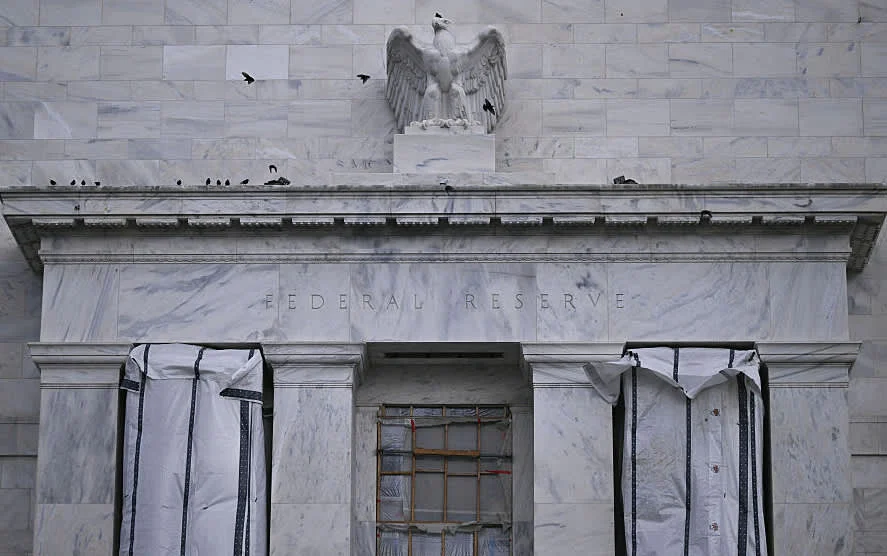
The Marriner S. Eccles Federal Reserve building in Washington, D.C., a sentinel of the nation’s economic policy, continued its work on December 30, 2025, a symbolic backdrop to the brewing storm in financial markets. Fast forward to March 2026, and the economic landscape has been profoundly reshaped. A hotter-than-expected wholesale inflation reading for February has sent ripples of concern through financial markets, prompting traders to significantly recalibrate their expectations regarding the Federal Reserve’s interest rate trajectory for the remainder of the year. The latest data has introduced a stark possibility: the central bank might not implement any interest rate reductions in 2026, a significant departure from earlier, more optimistic forecasts.
The February PPI Shockwave
The catalyst for this dramatic shift in market sentiment was the Bureau of Labor Statistics report detailing the Producer Price Index (PPI) for February 2026. This crucial indicator, which measures the average change over time in the selling prices received by domestic producers for their output, posted its biggest gain in a year. Such a robust increase at the wholesale level immediately fueled fears that inflationary pressures remain entrenched within the economy, threatening to spill over into consumer prices and undermine the Federal Reserve’s strenuous efforts to restore price stability.
Immediately following the PPI release, futures markets, particularly those tracking the fed funds rate, reacted decisively. Any realistic probability of an interest rate cut in the near-to-medium term was swiftly taken off the table, with market participants pushing the earliest credible possibility of a reduction to at least December. Even for the final Federal Open Market Committee (FOMC) meeting of the year, the odds of a rate cut plummeted to approximately 60%, a level that, while still favoring a cut, reflects a considerably diminished conviction among traders compared to previous periods.
Persistent Inflationary Headwinds
The core issue underpinning this revised outlook is the stubborn persistence of higher inflation. Economists and policymakers have identified a confluence of factors contributing to this enduring challenge. Geopolitical tensions, notably the Iran war which commenced on February 28, have significantly exacerbated supply chain disruptions and driven up energy prices. This conflict, coupled with existing tariffs that increase import costs, and persistently elevated services costs, creates a complex inflationary environment that the central bank finds increasingly challenging to navigate. The PPI report’s timing was particularly impactful, arriving just hours before the FOMC was scheduled to release its latest interest rate decision, adding an urgent layer of context to the committee’s deliberations.
Eugenio Aleman, chief economist at Raymond James, encapsulated the market’s immediate interpretation. "The wholesale inflation reading ‘likely reinforces a hold decision by the Federal Reserve later today but tilts the risk toward a more hawkish tone in today’s FOMC’ statement," Aleman stated. He further warned, "Even if rates are left unchanged and we see multiple dissents, the messaging may lean toward ‘higher for longer,’ especially with energy inflation set to re-enter the picture in coming months." This assessment underscores the concern that even a steady rate decision might be accompanied by rhetoric signaling a more cautious and less accommodative stance for the foreseeable future.
The Eroding Rate Cut Narrative: A Timeline of Shifting Expectations
The current pessimistic outlook on rate cuts represents a dramatic reversal from the beginning of 2026. Prior to the geopolitical escalation and the surprisingly robust inflation data, market participants had largely anticipated a series of interest rate cuts. Many analysts and traders had penciled in reductions in both June and September, with an outside possibility of a third cut in December. This earlier optimism was predicated on the belief that inflation was steadily decelerating towards the Fed’s 2% target, allowing the central bank to pivot towards supporting economic growth and employment, aligning with its dual mandate of stable prices and maximum sustainable employment.
However, the events of late February and early March have decisively altered this narrative. The CME’s FedWatch tool, a widely referenced barometer that calculates probabilities using 30-day fed funds futures contracts, illustrates this dramatic shift:
- June Cut: Odds have plummeted to a mere 18.4%, signaling near certainty that no cut will occur in early summer.
- July Cut: Prospects have fallen to 31.5%, indicating a significant unlikelihood.
- September Cut: The probability now stands at 43.6%, still below a 50% chance, suggesting a cut remains less likely than a hold.
- December Cut: While chances for a December reduction are at 60.5%, this figure, though above the 50% threshold, reflects a relatively low level of conviction. Historically, a 60% probability or above has often been associated with actual Fed policy moves, but the current context suggests a more tentative market.
These figures imply a fed funds rate of approximately 3.43% by the end of 2026, a modest decrease from the current level of 3.64%. This projected slight reduction, if it materializes, would be significantly less aggressive than the multiple cuts envisioned just weeks prior, highlighting the profound impact of recent economic data and global events.
Understanding the Producer Price Index (PPI) and its Significance
The PPI is a critical forward-looking indicator for inflation. Unlike the Consumer Price Index (CPI), which measures what consumers pay for goods and services, the PPI measures what producers receive. A sustained increase in producer prices often signals that businesses will eventually pass these higher costs onto consumers, leading to higher CPI and broader inflation. The February PPI report revealed broad-based increases, with particular strength in services, which have proven to be a more persistent source of inflationary pressure than goods inflation. Energy prices also showed signs of re-acceleration, a worrying trend given the geopolitical landscape.
For example, the report detailed a significant month-over-month increase in the final demand services index, driven by gains in areas like healthcare, transportation, and warehousing. Goods prices also rose, influenced by sectors such as food and energy. This comprehensive rise suggests that inflationary forces are not confined to isolated pockets of the economy but are instead becoming more deeply embedded, complicating the Fed’s task.
The Federal Reserve’s Dual Mandate and Policy Tools
The Federal Reserve operates under a "dual mandate" from Congress: to foster maximum employment and price stability. These two objectives are often in tension. When inflation is high, the Fed typically raises interest rates to cool the economy, which can sometimes lead to higher unemployment. Conversely, when unemployment is high, the Fed might lower rates to stimulate economic activity, potentially risking inflation.
The primary tool the Fed uses to influence the economy is the federal funds rate – the target rate for overnight borrowing between banks. By raising this rate, the Fed makes borrowing more expensive throughout the economy, slowing down spending and investment, and theoretically curbing inflation. Conversely, lowering the rate makes borrowing cheaper, stimulating economic activity. The current "higher for longer" stance indicates the Fed’s continued prioritization of price stability, even if it means maintaining restrictive financial conditions for an extended period.
Internal Divisions within the FOMC
While the market’s consensus has shifted dramatically, the Federal Open Market Committee itself is not entirely monolithic in its views. The original article highlights that Fed Governors Stephen Miran and Christopher Waller have been advocating for immediate interest rate cuts, citing concerns about a potentially weakening labor market. Miran, for instance, had previously pointed to job losses in February as evidence supporting the case for more accommodative policy.
However, the prevailing sentiment among the broader committee appears to be one of caution. The majority seems inclined to hold rates at their current restrictive levels until there is clearer, more definitive evidence that inflation is sustainably moving towards the 2% target. This cautious approach reflects a lesson learned from past inflationary episodes, where premature easing led to a resurgence of price pressures. The February PPI report undoubtedly strengthened the hand of the more hawkish members, making the case for immediate cuts more difficult to justify.
Broader Economic and Geopolitical Context
The current economic climate is heavily influenced by events beyond domestic economic indicators. The "Iran war," which began on February 28, 2026, has introduced a significant layer of uncertainty and risk to global markets. Such conflicts in critical oil-producing regions invariably lead to spikes in energy prices, impacting everything from transportation costs to manufacturing expenses. This directly feeds into producer prices, as seen in the PPI report, and ultimately affects consumer inflation. The war also risks disrupting global supply chains, which had only recently begun to normalize after the pandemic, potentially reintroducing bottlenecks and further inflationary pressures.
Furthermore, existing tariffs, imposed on various imported goods, continue to contribute to higher input costs for domestic producers. While tariffs are often implemented for strategic or protective reasons, their economic consequence is typically higher prices for consumers and businesses, acting as a persistent inflationary force in the economy. The combination of geopolitical conflict, supply chain fragilities, and trade barriers creates a challenging environment for central bankers aiming to bring inflation under control without stifling economic growth.
Implications for Consumers, Businesses, and Markets
The prospect of "higher for longer" interest rates carries significant implications across the economy:
- For Consumers: Higher rates mean increased costs for borrowing, including mortgages, auto loans, and credit card debt. This can dampen consumer spending, particularly for big-ticket items, and reduce discretionary income. Savers, however, might benefit from higher returns on deposits.
- For Businesses: Companies face higher borrowing costs, which can deter investment in expansion, equipment, and hiring. Small businesses, often more reliant on variable-rate loans, can be particularly vulnerable. This can slow economic growth and potentially impact corporate profitability.
- For Financial Markets: Equity markets often react negatively to higher rates, as they increase the cost of capital for companies and make fixed-income investments more attractive. Bond yields tend to rise, reflecting expectations of higher interest rates. Currency markets can also be affected, with higher domestic rates potentially strengthening the local currency. The volatility observed in fed funds futures is indicative of the broader uncertainty permeating investment decisions.
- Global Impact: As the world’s largest economy, the U.S. Federal Reserve’s policy decisions have global ramifications. Higher U.S. interest rates can attract capital from other countries, potentially weakening other currencies and putting pressure on their central banks to raise rates to stem capital outflows. This can create challenges for emerging markets with dollar-denominated debt.
The Road Ahead: An Outlook Fraught with Uncertainty
The immediate future for Federal Reserve policy remains shrouded in uncertainty. While the FedWatch tool currently signals a low conviction for rate cuts, the volatility inherent in fed funds futures trading means the situation could evolve rapidly. A significant weakening of the labor market, for instance, could provide the Fed with compelling reasons to reconsider its stance. If unemployment were to spike unexpectedly, or if job creation were to turn consistently negative, the pressure to cut rates to support employment would intensify, potentially overriding inflation concerns, at least in the short term.
However, the prevailing view, bolstered by the February PPI report, is that the Fed is unlikely to deviate from its restrictive path until inflation shows sustained and convincing signs of returning to its 2% target. This implies that economic data, particularly future inflation reports (both PPI and CPI), labor market statistics, and the evolving geopolitical landscape, will be under intense scrutiny. The central bank is walking a tightrope, balancing the imperative of price stability with the need to avoid an undue contraction in economic activity. The "higher for longer" mantra is not merely a forecast; it is a declaration of intent, signaling the Fed’s unwavering commitment to its primary goal of vanquishing persistent inflationary pressures, even if it means deferring the eagerly anticipated relief of lower borrowing costs.
About the Author