SEOUL, SOUTH KOREA – The culinary landscape, both on-screen and off, is experiencing a transformative surge, largely driven by the phenomenal success of Netflix’s South Korean series, "Culinary Class Wars: Black and White Chef." Concluding its second season on January 13, the show has not only captivated audiences worldwide but has also translated directly into an unprecedented boom for the restaurants of its featured chefs, triggering a significant uptick in culinary tourism and prompting a reevaluation of tourism strategies across Asia.
The immediate impact of the series on the participating restaurants has been nothing short of remarkable. A report from the prominent South Korean restaurant booking platform, CatchTable, released through local media, revealed a staggering average increase of 303% in reservations and waitlists for contestant-affiliated establishments. This surge was recorded in the five weeks following the second season’s premiere, compared to the five weeks preceding it, underscoring the show’s powerful influence on consumer dining choices.
The Show’s Unique Premise and Cultural Resonance
"Culinary Class Wars" distinguishes itself by categorizing chefs into two compelling groups: "Black Spoons," representing hidden masters often rooted in traditional or street food culture, and "White Spoons," epitomizing elite, often Michelin-starred, culinary artists. This intriguing dichotomy directly mirrors the public’s growing fascination with both ends of the gastronomic spectrum – from humble, authentic street food experiences to refined, high-end dining. The show’s format, which pits these contrasting culinary philosophies against each other in a series of intense cooking challenges, creates a narrative rich in cultural exploration and competitive drama.
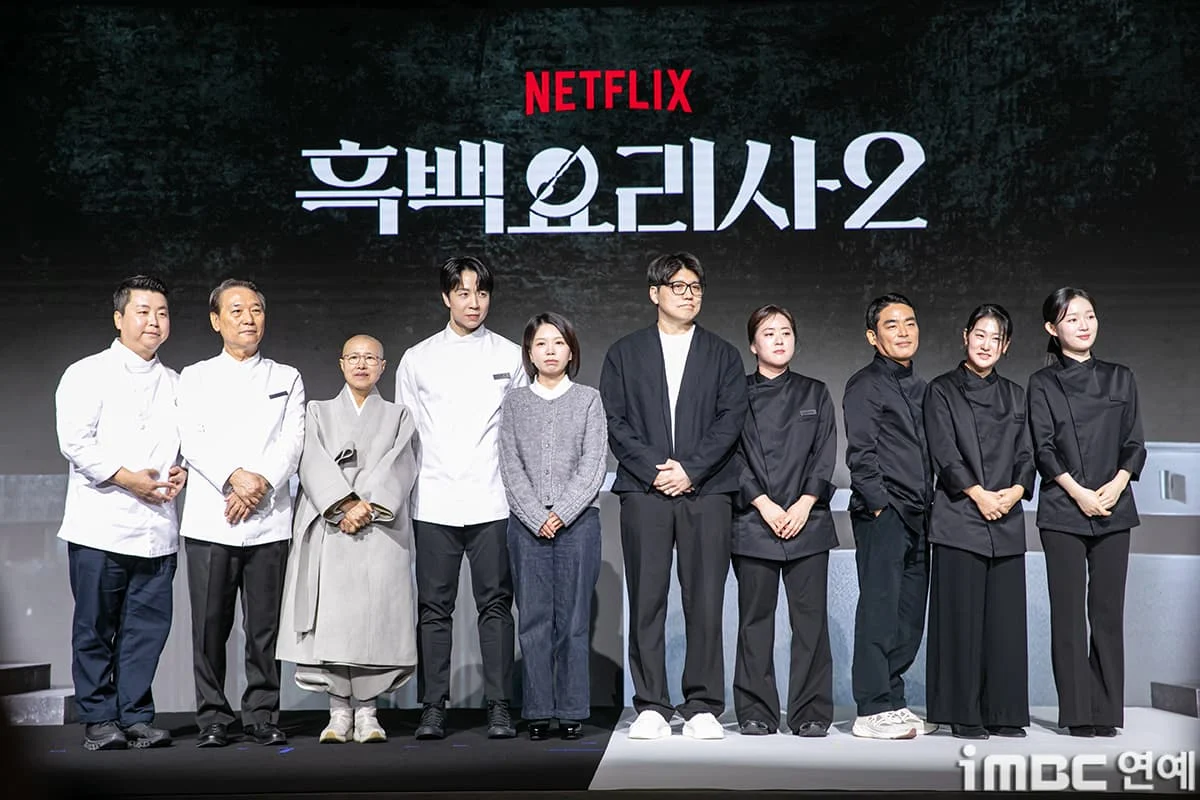
The series, filmed against the vibrant backdrop of South Korea’s dynamic food scene, with a press conference for Season 2 participants and producers held at JW Marriott Dongdaemun Square in Jongno-gu, Seoul, on December 17, 2025, has tapped into a burgeoning desire among modern travelers. Participants like Jung Ho-young, Hudukjuk, Monk Sunjae, Son Jong-won, producers Kim Eun-ji and Kim Hak-min, Yoon Jumo Yoon Nara, French Papa, Chinese Cuisine Witch, and Baby Beast, whose diverse backgrounds reflect the show’s broad appeal, have become household names, driving fans to seek out their culinary creations in real life.
This heightened interest is particularly pronounced among millennials (born between 1981 and 1996) and Generation Z (born in 1996 or later). According to Euromonitor International’s Asia-Pacific 2025 lifestyle survey, these demographic groups exhibit a strong inclination to experience cultures other than their own, viewing food as a primary gateway to authentic cultural immersion. The show’s ability to showcase diverse culinary traditions, from deeply traditional Korean dishes prepared by a "Black Spoon" to innovative interpretations by a "White Spoon," perfectly aligns with this generational appetite for experiential travel.
Culinary Tourism: A Global Phenomenon
The ripple effect of "Culinary Class Wars" extends far beyond South Korea’s borders, highlighting a broader global trend in culinary tourism. Dawn Teo, Chief Operating Officer of Singapore-based hotel and restaurant developer Amara Holdings, recounted the difficulty of securing reservations for restaurants featured on the Netflix show during her trip to Seoul last October, describing them as "impossible." Teo emphasized that the show’s impact "makes people sit up and take notice," signaling a powerful shift in how travelers plan their itineraries.
Governments and tourism boards across Asia are rapidly acknowledging and responding to this trend. In December, South Korea’s Ministry of Culture, Sports and Tourism announced a strategic shift to explicitly include food tourism in its 2026 national tourism strategy, recognizing its potential to attract a wider, more engaged audience. This policy pivot underscores the growing understanding that food is no longer merely a secondary consideration for travelers but a primary motivator.
Singapore, a perennial leader in tourism, offers compelling data to support this trend. Between January and September 2025, the city-state recorded unprecedented tourism spending, with food being identified as one of the main drivers. Tourist receipts for food and beverage soared by 15% compared to the same period in 2024, despite an overall visitor increase of just 2.3%. This disproportionate growth indicates that visitors are not only spending more on food but are actively seeking out unique culinary experiences as a core part of their travel. The image of customers browsing vibrant street market stalls in Singapore on January 31, 2026, against the backdrop of record tourism receipts, visually reinforces this burgeoning interest in local gastronomy.
Japan, another culinary powerhouse, has witnessed a consistent rise in food-centric travel expectations. In 2024, approximately 82% of tourists reported that experiencing Japanese food was a primary travel expectation, a significant increase from about 70% in 2015. This upward trajectory over nearly a decade demonstrates a sustained and deepening interest in a destination’s cuisine as an intrinsic element of its cultural appeal.
Erik Wolf, Executive Director and Founder of the World Food Travel Association, eloquently articulated the essence of this global shift: "It’s less about the travel and more about the culture everywhere in the world. Especially after the pandemic, people are wanting to go to more rural locations, secondary and tertiary locations. They want to get to know people, and in a genuine way." Wolf’s insights highlight a post-pandemic yearning for authentic, immersive experiences that transcend typical tourist traps, with food serving as the ultimate bridge to local culture and community.
The Hospitality Sector’s Culinary Evolution
The hospitality industry, ever responsive to consumer demand, is proactively adapting to this escalating culinary interest. Hilton’s 2025 Trends Report reveals that nearly 1 in 5 travelers specifically sought out new restaurants or culinary experiences, with a substantial 60% of luxury travelers prioritizing hotels that offer exceptional food options. This data signals a fundamental change in how hotels must position their dining offerings.
Candice D’Cruz, Vice-President of Hilton Luxury Brands Asia Pacific, emphasized this paradigm shift, stating, "Restaurants today in hotels cannot [just] be hotel restaurants. They have to be restaurants as restaurants [in their own right], or venues as venues." D’Cruz highlighted that for today’s discerning consumers, the focus has broadened to encompass the "entire experience," from the seasonality and provenance of produce to the meticulous sourcing of glassware. She cited examples like the desire for "white peaches during peach season" and "strawberries and white strawberries during [the] season" when traveling in Japan, underscoring the demand for hyper-local, seasonal, and authentic gastronomic journeys.
Amara Holdings in Singapore is a prime example of a hotel group embracing this ethos. Recognizing the desire for authentic cultural engagement, Amara provides guided tours of hawker centers and local markets, strategically located close to its flagship hotel in downtown Singapore. This initiative reflects a forward-thinking approach to guest experience, understanding that true hospitality extends beyond the hotel’s physical boundaries.
Amara’s Teo articulated this philosophy, stating it "shouldn’t be considered a loss if a guest isn’t eating with us for breakfast, lunch or dinner, if they’re going to another nearby Zi Char place or hawker center for meals." Instead, Teo argued, it should be celebrated as a "win" when hotels can facilitate and provide proximity to such authentic cultural experiences, even if it means guests dine elsewhere. "Zi Char" refers to a popular style of inexpensive, customizable street food, further illustrating the appeal of local, unpretentious dining.
Navigating the Gourmet-Street Food Dichotomy
The success of "Culinary Class Wars," with its "Black Spoons" (street food masters) and "White Spoons" (elite chefs), perfectly encapsulates the modern traveler’s diverse culinary palate. Erik Wolf of the World Food Travel Association pointed out a crucial nuance: most people do not frequently dine at high-end or gourmet restaurants when they travel. He cautioned that an exclusive association of a destination with Michelin-starred experiences might inadvertently deter travelers who perceive it as prohibitively expensive.
However, the Michelin Guide itself has evolved, recognizing the cultural significance and culinary excellence found beyond traditional fine dining. While the guide features luxurious establishments, it increasingly highlights local hawkers and more affordable stalls. A notable example is Hawker Chan, a former Michelin-starred restaurant in Singapore, which famously offered a $3 chicken rice dish when it received its accolade in 2016, proving that culinary excellence and accessibility are not mutually exclusive.
For Eric Neo, Culinary Director at Capella Singapore, the distinction between fine dining and casual dining lies in their core intentions. "Fine dining is more about intention, storytelling, whereby we are given the opportunity to interact, curate an experience for the guests," Neo explained, highlighting the immersive, narrative-driven aspect. Casual dining, in contrast, is often characterized by "speed."
Capella Singapore, under Neo’s leadership, has innovatively bridged this gap by offering unique culinary programs. These include guided tours through local markets, where chefs act as knowledgeable guides, assisting guests in selecting fresh ingredients before returning to the kitchen to collaboratively create a dish. This hands-on experience not only educates guests about local produce but also fosters a deeper appreciation for the culinary process.
Capella also actively fosters a global "learning culture" by extending invitations to chefs from outside Singapore. This initiative aims to "bring up a learning culture between two different countries," benefiting not only hotel guests but also the chefs themselves, expanding their horizons and fostering cross-cultural culinary exchange. A significant event in this program was the invitation of Korean-American chef and "Culinary Class Wars" contestant Edward Lee to Singapore in August to create a special celebration dinner, directly linking the show’s influence to real-world gastronomic collaboration.
Wolf also underscored the vital importance of preserving the historical and cultural influences embedded in the food we consume. He specifically highlighted "the influence of women in protecting culinary culture" and "the seeds of cuisine in agriculture," reminding stakeholders that food is inextricably linked to heritage, community, and the very land it comes from.
Broader Implications and Future Outlook
The phenomenon spurred by "Culinary Class Wars" and the broader trend of culinary tourism carries significant economic and cultural implications. Beyond the direct boost to featured restaurants, it invigorates local food supply chains, supports artisanal producers, and stimulates economic activity in secondary and tertiary locations that might otherwise be overlooked. It also enhances a nation’s soft power, as media-driven culinary fascination translates into increased interest in a country’s culture, language, and overall tourism offerings. The global reach of platforms like Netflix ensures that these cultural exports resonate with an international audience.
The future of travel appears increasingly intertwined with the plate. As travelers continue to prioritize authentic, immersive, and experiential journeys, culinary exploration will remain a central pillar. This will likely drive further innovation in the hospitality sector, with more hotels integrating local culinary experiences, offering cooking classes, and collaborating with local chefs and producers. Governments, recognizing the substantial economic benefits, will likely continue to invest in promoting food tourism, developing culinary trails, and safeguarding traditional food practices.
The success of shows like "Culinary Class Wars" serves as a powerful testament to the universal language of food. It demonstrates how compelling storytelling, combined with the innate human desire for connection and discovery, can transform dining into a profound cultural journey, making every bite a step deeper into the heart of a destination. As the world continues to globalize, the quest for genuine, localized food experiences will only intensify, cementing culinary tourism as a cornerstone of the modern travel industry.
About the Author