An enterprise SEO audit is far more than a routine check-up for a large-scale website; it’s a deep, systematic evaluation designed to uncover hidden opportunities and critical vulnerabilities across potentially millions of web pages. This comprehensive process scrutinizes a website’s search engine performance, technical health, and content alignment, aiming to identify pathways for significant growth in highly competitive, high-volume search landscapes. The successful execution of such an audit is a testament to intricate coordination between marketing, engineering, and product development teams, ensuring that complex site architectures remain not only crawlable by search engines but also strategically positioned to outperform competitors.
However, the path to optimizing enterprise-level SEO is often fraught with challenges. A recent report highlighted that a substantial 57% of enterprises identify limited in-house SEO expertise as a significant obstacle. This deficiency is particularly concerning given that organic search continues to be a top-converting marketing channel, boasting conversion rates of 2.6% for B2B and 2.1% for B2C audiences, according to industry data. Consequently, enterprise marketing and technical teams are increasingly being compelled to re-evaluate their existing audit methodologies, overarching SEO strategies, and the efficacy of their implementation processes.
This article delves into the strategic frameworks and sophisticated technical workflows essential for conducting a truly effective enterprise SEO audit. Moving beyond superficial checklists, the focus here is on operationalizing SEO – embedding technical precision and strategic content engineering into the very DNA of an organization’s digital operations.
Understanding the Nuances of an Enterprise SEO Audit
At its core, an enterprise SEO audit is a rigorous analysis of a high-authority website’s capability to achieve and maintain top rankings in organic search results. This evaluation encompasses a detailed assessment of technical infrastructure, on-page optimization tactics, and the site’s backlink profile, all conducted at an immense scale. Unlike standard or localized SEO audits, the enterprise version is specifically designed to identify systemic patterns and to champion automated solutions that can influence thousands, or even millions, of URLs concurrently.
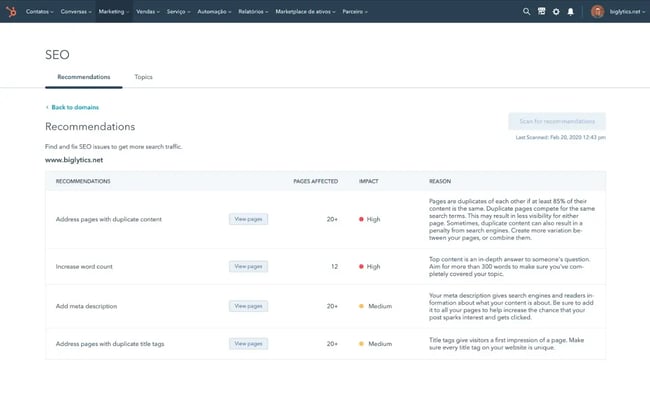
Tools like HubSpot’s SEO suite are instrumental in simplifying this complex process. By aggregating data across vast web properties, these platforms offer actionable insights and automate the scanning of enterprise sites to pinpoint critical technical errors. This centralized reporting mechanism allows teams to meticulously prioritize fixes based on their potential business impact, rather than solely on raw traffic volume projections.
Differentiating Enterprise SEO Audits from Standard Assessments
While foundational SEO audits remain crucial for any online presence, the sheer scale and complexity of corporate digital ecosystems demand a more robust and specialized methodology for enterprise-level evaluations. Understanding these distinctions is paramount for organizations to effectively allocate the appropriate technical resources and implement suitable automation tools.
A standard SEO audit might focus on a smaller website, identifying individual page errors or basic keyword optimization gaps. In contrast, an enterprise audit operates on a much grander scale, considering factors like:

- Scope: Analyzing tens of thousands to millions of URLs versus hundreds or thousands.
- Complexity: Navigating intricate site architectures, multiple content management systems (CMS), and diverse technical stacks.
- Team Integration: Requiring extensive collaboration across numerous departments (marketing, engineering, product, legal, etc.).
- Automation: Relying heavily on sophisticated tools and scripts to manage data and identify patterns at scale.
- Strategic Impact: Focusing on systemic improvements that drive significant, measurable business outcomes across entire product lines or global markets.
This difference in scale and complexity necessitates a more comprehensive and strategic approach to auditing and implementation.
The Enterprise SEO Audit Process: A Structured Methodology
Executing an enterprise SEO audit involves a methodical workflow designed to evaluate performance across disparate departments and complex technical infrastructures. This process ensures that data collection leads directly to cross-functional alignment and tangible organic growth.
Establishing Cross-Functional Governance and Ownership
The initial and perhaps most critical step is defining project roles and establishing a clear governance structure. This involves identifying the specific individuals and departments accountable for implementing and approving SEO recommendations. In an enterprise setting, a well-defined ownership hierarchy is essential to ensure that technical SEO requirements are prioritized within product and engineering backlogs, rather than being relegated to optional tasks.
Daniel Horowitz, Enterprise SEO Lead at Informatica, cautions against a common enterprise pitfall: "A common enterprise mistake is letting product pages, web architecture, and campaign content evolve independently, then expecting an audit to magically align them." To rectify this, he advocates for the creation of a unified operating system characterized by:
- Shared SEO Goals: Aligning departmental objectives with overall SEO strategy.
- Defined Processes: Establishing clear workflows for content creation, technical updates, and new feature rollouts that incorporate SEO best practices from the outset.
- Cross-Functional Training: Ensuring that all relevant teams understand basic SEO principles and their role in maintaining site health.
These foundational guardrails, as Horowitz notes, "make cross-functional execution easier because everyone is building toward the same topical map rather than shipping disconnected pages."
Auditing Crawl, Indexation, and URL Governance
This crucial stage involves a deep-dive crawl of the entire domain to meticulously identify issues that hinder search engine accessibility and indexing. Key objectives include:
- Crawl Errors: Detecting broken links (404s), server errors (5xx), and other issues that prevent bots from accessing pages.
- Indexability: Ensuring that important pages are indexable and that non-critical pages (like staging environments or internal search results) are properly blocked from indexing via robots.txt or meta robots tags.
- Duplicate Content: Identifying instances where identical or near-identical content exists on multiple URLs, which can dilute search signals and confuse search engines.
- Redirect Chains and Loops: Uncovering inefficient redirect paths that waste crawl budget and negatively impact user experience and link equity.
Simultaneously, effective URL governance ensures that only the highest-quality, most relevant pages are presented to search engine bots for indexing. This is particularly important in light of Google’s Helpful Content Update (HCU), released in 2022, which significantly impacted the visibility of thin or unhelpful content.
Jess Scholz, a growth marketing consultant specializing in technical SEO and content distribution, emphasizes the detrimental effect of over-indexing: "Over-indexing is often quietly destroying domain reputation. Stuffing the index with low-quality, thin, commodity content may feel productive, but it undermines long-term performance. Google does not judge pages in isolation. It judges domains."

To future-proof brand visibility, Scholz advises managing the index like a portfolio:
- Curate High-Quality Assets: Focus on creating and promoting content that genuinely serves user needs.
- Prune Low-Value Pages: Systematically identify and remove or consolidate underperforming content that offers little to no user value.
- Monitor Indexation Status: Regularly review which pages are being indexed and ensure it aligns with business priorities.
HubSpot’s SEO Tools can automate the initiation of site crawls within the Marketing Hub, providing immediate technical SEO recommendations for discovered URLs. These tools highlight issues such as duplicate content signals, crawl errors, and indexability concerns across scanned domains, empowering teams to enhance site health without relying solely on external audit platforms.
Validating Log Files and Crawl Budget
Server log files provide an unfiltered, definitive view of how search engine crawlers interact with a website. Analyzing these logs reveals which directories and pages are being prioritized by bots and which are being overlooked, offering critical insights into crawl budget allocation. Validating the crawl budget ensures that search bots are directing their limited time and resources towards high-value, revenue-driving pages, rather than low-value archive or tag pages that do not contribute to core business objectives.
For large enterprises, managing crawl budget is a strategic imperative. Peter Rota, an SEO consultant with over 15 years of experience, highlights the importance of crawl depth when determining crawl budget. "Anything that is going to take more resources for Google to crawl your site will affect your crawl budget. My favorite way to improve this is using an HTML sitemap, which helps move your pages closer to the root domain," he explains.
Managing International Targeting
For global organizations, effective international targeting is paramount. This phase involves validating the implementation of regional signals, such as hreflang tags, to ensure search engines correctly serve localized content to users in specific geographic areas. Furthermore, it’s crucial to assign "keyword ownership" to different business units or regional teams to prevent internal competition for the same search terms. This strategic mapping enables a unified global search strategy that maximizes market share and avoids diluting brand authority across diverse linguistic and cultural markets.
Beyond technical implementation, effective localization is key. Studies indicate that well-executed localization efforts can yield up to a threefold return on investment (ROI). The goal is to precisely match each local keyword group to a specific local page, providing search engines with clear signals about the intended audience.
However, relying solely on automated AI translation tools can be a misstep. Maja Walczak, founder of Langbay, an agency specializing in Polish SEO localization for SaaS, advises a more nuanced approach: "Global to local keyword mapping means taking big, broad keywords and turning them into location-specific ones that match how real people search locally. You have to do this manually; translation won’t work because local search language, intent, and phrasing are different in every area."
Reviewing Content Quality, Semantic Depth, and Cannibalization
Content audits are essential for assessing the performance of existing assets. This review process identifies underperforming content, outdated information, and instances of keyword cannibalization, where multiple pages inadvertently target the same user intent. Enterprise teams leverage this data to strategically refresh underperforming content with enhanced semantic depth or to consolidate redundant pages to strengthen topical authority across the domain.
The rise of Generative Engine Optimization (GEO) and AI-powered content further underscores the importance of semantic depth. Generic answers are increasingly being superseded by AI-generated responses, which often favor content that is demonstrably fresher and more comprehensive. Polly Clover, an SEO writer and consultant, warns about the consequences of neglecting content quality: "During enterprise SEO audits, you may find that some pages have grown in word count over time without becoming more helpful. When content is expanded for SEO reasons without adding new insights, real examples, or clarity for the reader, it can actually weaken the page’s performance rather than improving it."
Clover recommends evaluating content based on its ability to genuinely assist the reader in understanding a topic or making a decision. If content doesn’t directly support a page’s primary goal, it’s often more beneficial to refine or remove it.
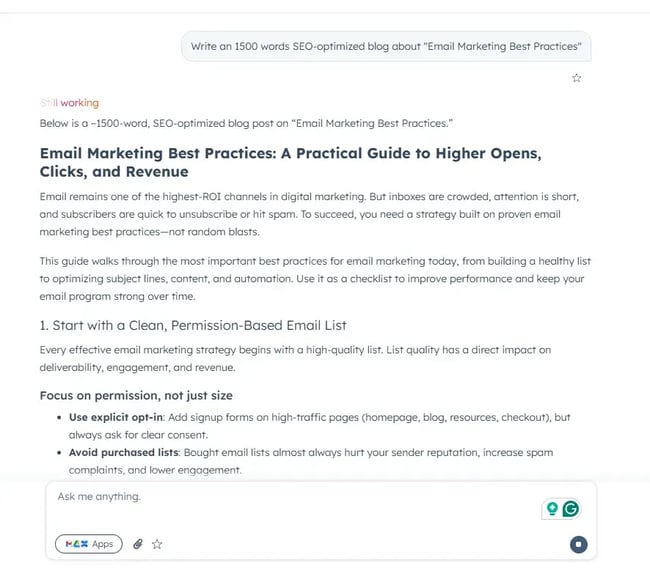
HubSpot’s Content Hub editor provides real-time SEO recommendations, including keyword suggestions, heading optimizations, and meta description enhancements, assisting content teams in improving search visibility and quality as they update pages.
Analyzing Internal and External Authority
Links are the conduits of domain authority. This analysis scrutinizes how link equity flows through the internal site architecture and assesses the health and relevance of the external backlink profile. A strong internal linking strategy ensures that valuable pages receive appropriate authority, while a robust external backlink profile signals credibility and trustworthiness to search engines.
Ivan Palii, Founder of Ivanhoe Digital Looker Studio Agency, points out a critical error in internal linking: "The biggest mistake big websites make in internal linking is sending too much link weight to the wrong pages." Enterprises should identify their most valuable pages and implement internal linking strategies to direct more authority towards them. Regarding external links, Palii suggests that pages receiving strong backlinks but failing to generate engagement shouldn’t be deleted. Instead, he advises keeping them active and adding internal links from these pages to higher-converting landing pages.
Optimizing Page Experience and Performance by Template
Technical performance directly influences user retention and search engine rankings. For enterprise sites, auditing millions of pages individually is impractical. Instead, teams focus on analyzing Core Web Vitals (LCP, INP, CLS) at the template level. This approach allows for global fixes to be applied across categories of pages, such as product listings or blog posts, significantly improving performance and user experience across the entire domain.
Translating system-level changes to development teams can be challenging. SEO teams prioritize search performance improvements, while developers weigh the technical risks and resource allocation. Presenting audit findings as actionable system upgrades that technical teams understand is key.
Aligning Revenue, Reporting, and Deployment Readiness
The ultimate goal of any enterprise SEO audit is to drive measurable business outcomes. The final phase involves mapping organic traffic to conversion and revenue data within the CRM, ensuring that the search strategy is driven by business value rather than vanity metrics. A "deployment readiness" check assesses potential implementation risks, preparing the organization for the safe execution of recommended changes.
Andrew Holland, Director of SEO at JBH, emphasizes the importance of connecting SEO efforts to revenue: "When it comes to understanding revenue and reporting, you should be absolutely obsessed with where purchases take place on your website. The amount of traffic that is going to those pages matters greatly. Where that traffic comes from is key." He recommends actionable steps such as:
- Tracking Conversion Paths: Understanding the user journey from initial search to final purchase.
- Attributing Revenue: Directly linking organic traffic sources to sales and pipeline generation.
- Prioritizing High-Value Content: Focusing optimization efforts on pages that demonstrably contribute to revenue.
Enterprise SEO Audit Checklist: A Comprehensive Framework
An enterprise-wide audit necessitates a standardized checklist to ensure consistency and thoroughness across all business units and digital assets.
Technical Infrastructure:
- Crawlability and Indexability (Robots.txt, Meta Robots, XML Sitemaps)
- Site Speed and Core Web Vitals (LCP, INP, CLS)
- Mobile-Friendliness and Responsiveness
- HTTPS Implementation and Security
- Structured Data (Schema Markup) Implementation
- Duplicate Content and Canonicalization Issues
- Redirect Management (Chains, Loops, 404s)
- Log File Analysis for Crawl Budget Optimization
International SEO:
- Hreflang Tag Implementation and Accuracy
- GCLID and Geo-Targeting Settings
- URL Structure for International Markets (Subfolders vs. Subdomains)
- Localized Content Quality and Relevance
- Keyword Mapping for Regional Markets
Content and On-Page SEO:
- Content Quality and Usefulness Assessment
- Semantic Depth and Topical Authority
- Keyword Cannibalization Identification and Resolution
- On-Page Element Optimization (Title Tags, Meta Descriptions, Headings)
- Internal Linking Strategy and Authority Flow
- Image Optimization (Alt Text, File Size)
- Content Freshness and Update Cadence
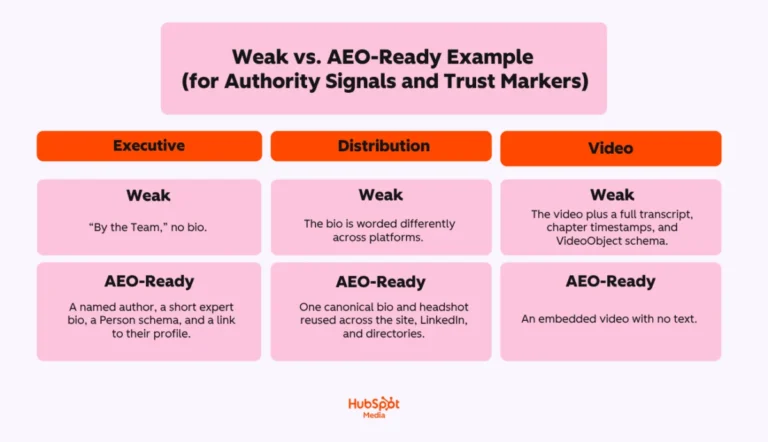
AI and AEO Readiness:
- Representation in AI Search Snippets (Featured Snippets, Generative Answers)
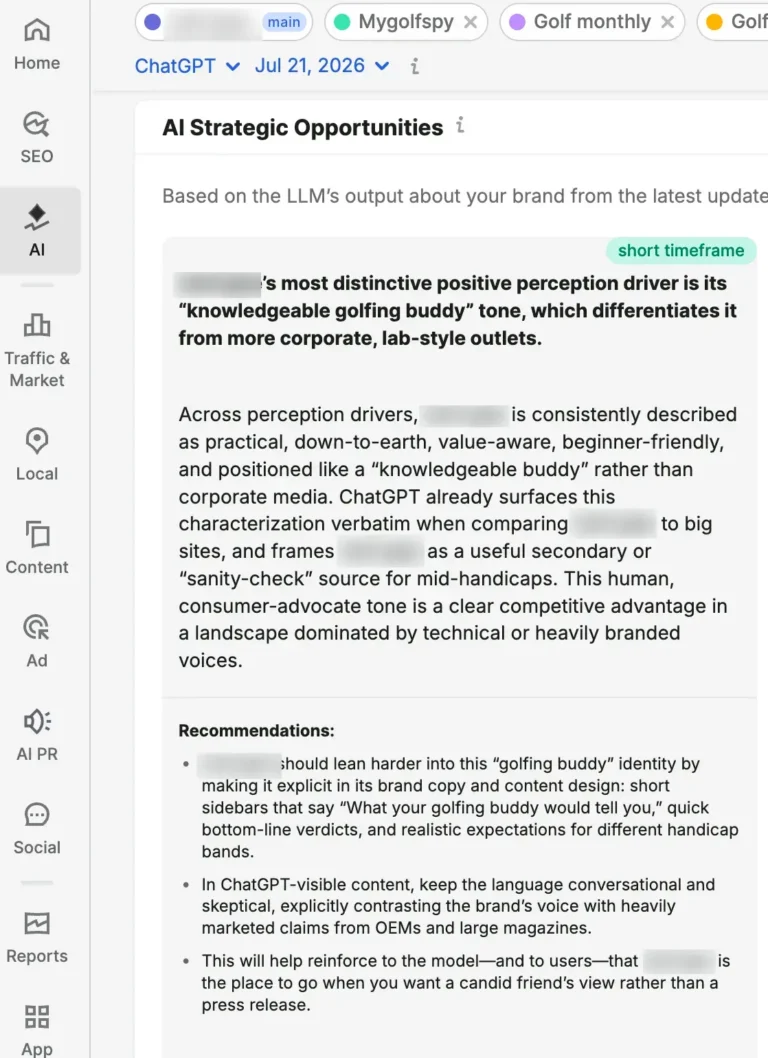
- Sentiment and Authority in AI Responses
- Structured Data for AI Interpretation
- Content Formats Optimized for AI Consumption
Tools and AI for an Enterprise SEO Audit
Leveraging the right tools is critical for managing the scale and complexity of enterprise SEO audits.
1. HubSpot’s SEO Tools (Marketing Hub & Content Hub)
HubSpot’s integrated SEO Tools streamline the audit process by embedding actionable insights directly into the marketing workflow. These tools automatically scan large websites, identifying SEO opportunities and prioritizing them by their potential impact on search rankings. Centralized data within the Marketing Hub ensures that all stakeholders, from developers to content creators, have access to the same performance metrics, fostering a unified approach to digital experience optimization.
- Key Features: Automated site crawls, technical SEO recommendations, keyword gap analysis, content performance tracking, rank tracking.
- Best for: Marketing teams seeking a centralized, user-friendly system for managing complex SEO initiatives.
- Pricing: Included in Marketing Hub Professional and Enterprise tiers.
2. Breeze (HubSpot’s AI Agent)
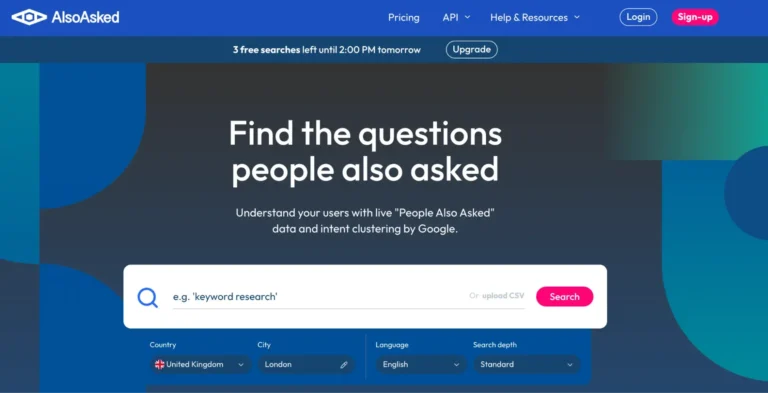
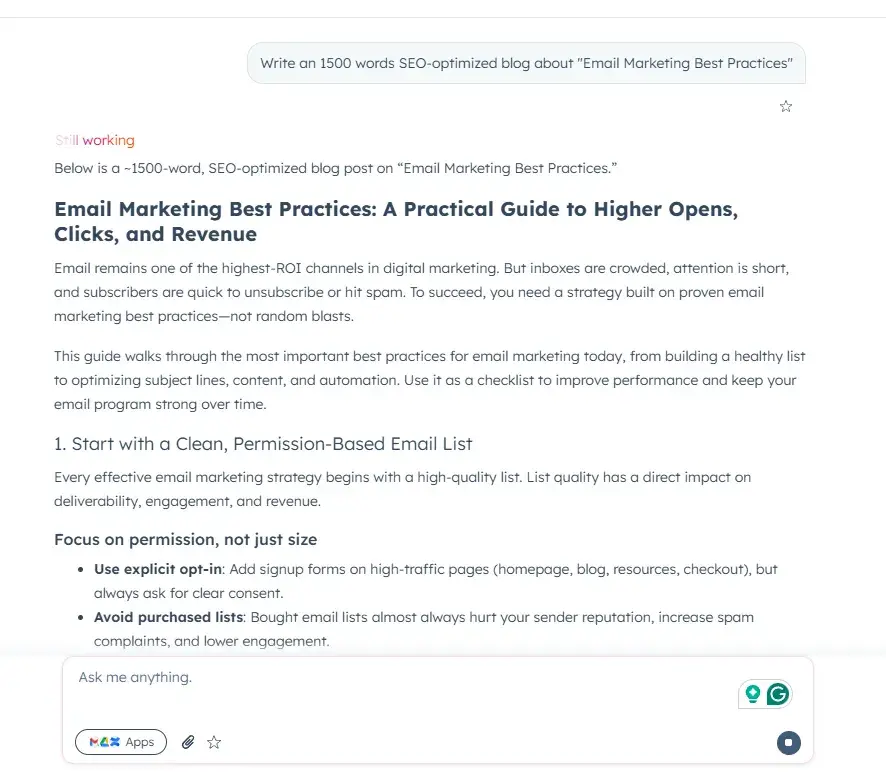
Breeze, HubSpot’s AI agent, significantly accelerates content creation and optimization. Within an enterprise audit, Breeze assists in generating SEO-compliant content based on audit findings, ensuring new pages align with identified semantic requirements. It automates the technical "polishing" phase, analyzing underperforming assets and suggesting real-time optimizations like generating high-CTR meta descriptions or expanding on subtopics to address "People Also Ask" queries.
- Key Features: AI-powered content generation, meta description and title tag optimization, topic expansion, content summarization.
- Best for: Large content teams aiming to scale production while maintaining SEO quality.
- Pricing: Included in HubSpot plans.
3. HubSpot Website Grader
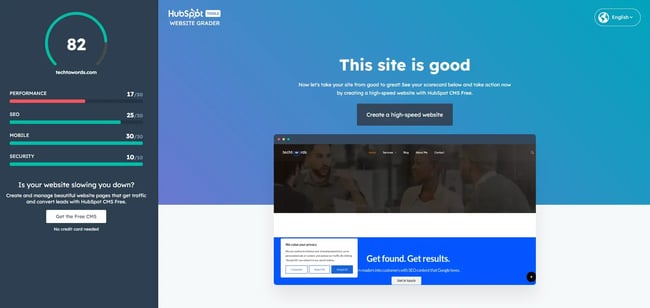
This free tool provides an immediate, objective snapshot of a website’s fundamental health, evaluating Performance, SEO, Mobile, and Security. It identifies high-level friction points hindering organic growth, such as bloated image files or poor mobile responsiveness. For enterprises, it offers a standardized "health score" that effectively communicates the urgency of technical debt to non-technical stakeholders, facilitating buy-in for deeper audits.
- Key Features: Performance analysis, SEO score, mobile responsiveness check, security assessment.
- Best For: Quick audits and benchmarking foundational site health.
- Pricing: Free.
4. HubSpot AEO Grader
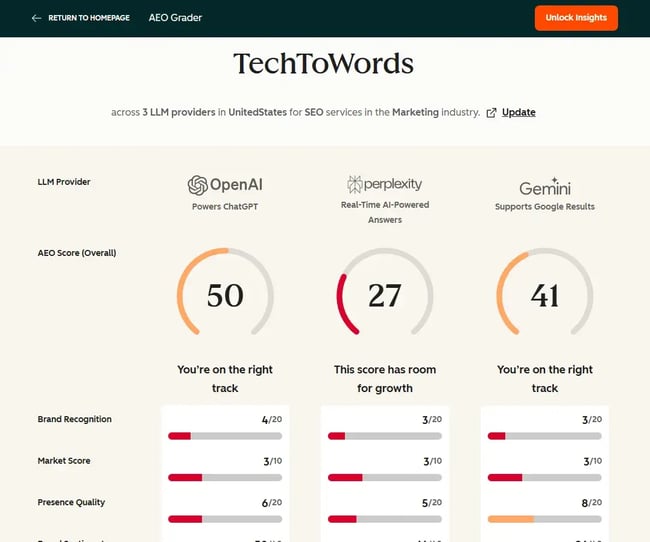
A free tool that assesses a brand’s visibility and positioning within AI-driven search results (e.g., ChatGPT, Perplexity, Gemini). It provides competitive analysis, sentiment scoring, and recommendations for improving AI presence, bridging the gap between traditional SEO and the evolving landscape of AI-powered discovery.
- Key Features: AI engine visibility, sentiment analysis, competitive AI citation tracking, AI content optimization recommendations.
- Best For: Future-proofing content for AI-driven search and voice search optimization.
- Pricing: Free.
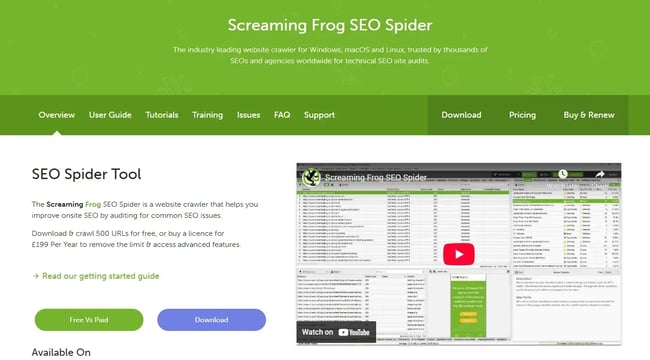
5. Screaming Frog SEO Spider
A desktop-based website crawler, Screaming Frog is a staple for enterprise audits due to its ability to handle extremely large datasets and provide granular control over the crawling process. It is indispensable for identifying specific technical SEO issues.
- Key Features: Comprehensive site crawling, URL extraction, status code analysis, redirect chain tracing, meta data extraction.
- Best for: Deep technical SEO dives and identifying specific crawl errors.
- Pricing: Free version available; $279 per year for unlimited crawling.
6. Ahrefs
Ahrefs is a comprehensive SEO toolset for backlink analysis, keyword research, and competitor benchmarking. In an enterprise audit, it’s vital for evaluating a site’s authority and identifying content strategy gaps relative to market leaders. Its "Content Gap" feature is particularly valuable for post-audit strategy development.
- Key Features: Backlink analysis, keyword explorer, site audit, content gap analysis, rank tracking.
- Best for: Off-page SEO and competitive intelligence.
- Pricing: Tiered monthly subscriptions starting from $29 per month.
Implementing Enterprise SEO Audit Recommendations: From Report to Reality
Successful implementation transforms an audit report into tangible organic growth. This requires a structured project management approach that integrates SEO tasks into existing departmental workflows.
Assigning Ownership and Accountability
Clear roles are fundamental to implementation success. Accountability ensures that every technical and content recommendation is assigned to a specific individual or team with the authority to execute. Without designated owners, critical SEO tasks often stall between departments, leading to fragmented results and unresolved technical debt.
Luke Thorn, Founder of WebRefresh, highlights communication as a key challenge. He advises appointing a clear internal implementation driver who acts as a central point of contact and ensures tasks are completed efficiently.
Prioritizing Issues by Impact and Effort
Strategic prioritization ensures that limited resources are allocated to the most significant opportunities. Recommendations should be categorized using a Prioritization Matrix based on expected ranking improvement versus technical effort. High-impact, low-effort tasks, such as optimizing meta titles or repairing broken internal links, should be tackled first to secure "quick wins."
Balancing immediate tactics with long-term growth is crucial. While critical technical issues might demand immediate attention for near-instant traffic gains, integrating "content engineering" into the SEO pipeline is vital for sustained success. Given that a significant percentage of top-ranking Google results are several years old, enterprise marketers can gain ground by systematically updating aging assets.
Integrating SEO Tasks into Development Sprints
Technical SEO implementation must align with the organization’s development workflow. Instead of delivering a large PDF report, SEO teams should translate recommendations into specific tickets (e.g., Jira or GitHub) that fit into current sprint cycles. Proactive SEO, backed by constant education and open communication across all stakeholders, is essential to overcome implementation friction and ensure that SEO is not an afterthought.
Utilizing AI for Content Remediation
Content decay is an inevitable byproduct of scale in enterprise ecosystems. Manually auditing and refreshing thousands of legacy pages is often cost-prohibitive. AI tools can expedite this process by comparing content with various sources and suggesting updates. For teams using the HubSpot ecosystem, Breeze can generate initial content refreshes or meta descriptions directly within the editor, while HubSpot’s Content Hub allows for real-time tracking of these updates’ impact.
Establishing Continuous Monitoring and Reporting
Ongoing measurement validates the success of the audit and identifies new issues. Key performance indicators such as organic traffic, keyword rankings, and crawl health must be continuously monitored. As AI search evolves, reporting should also include demand, AI visibility, and revenue impact to answer stakeholders’ core questions about market demand, competitive positioning, and business results. HubSpot’s SEO Tools offer automated reporting capabilities to support these discussions.
Frequently Asked Questions About Enterprise SEO Audits
How long should an enterprise SEO audit take?
Typically, an enterprise SEO audit takes between four and eight weeks, encompassing technical crawling, stakeholder interviews, content reviews, and the development of a strategic roadmap. The duration is influenced by the site’s size and the complexity of data collection across various teams.
How do we prevent content cannibalization after the audit?
Content cannibalization is mitigated by establishing a clear topical map and using canonical tags. During the audit, pages targeting similar keywords are identified, and decisions are made to merge, redirect, or differentiate content to target unique search intents. HubSpot’s SEO Tools can visualize these topic cluster relationships.
How should we handle crawl budget on very large sites?
Crawl budget is managed by ensuring search engines prioritize high-value, indexable pages. This involves using robots.txt to block low-value parameters, fixing redirect chains, and maintaining clean XML sitemaps. Removing duplicate content and improving site speed also enhances crawl efficiency.
What’s the best way to align SEO with sales and pipeline goals?
SEO aligns with sales by mapping keywords to the buyer’s journey stages. By tracking organic conversions within a CRM like HubSpot, teams can identify which content drives leads and revenue, allowing SEO efforts to be prioritized based on their direct impact on the company’s bottom line.
Turning SEO Audit into Enterprise Growth
Conducting an enterprise SEO audit is a complex but essential process for maintaining digital visibility at scale. Success hinges on a combination of robust technical tools and a coordinated, cross-team strategy. By leveraging platforms like HubSpot’s integrated SEO Tools, Breeze AI, and established industry standards like Screaming Frog and Ahrefs, enterprises can transform audit findings into a significant competitive advantage in the dynamic landscape of search. This strategic approach ensures that websites not only remain visible but also actively drive business growth in an increasingly sophisticated digital environment.
About the Author