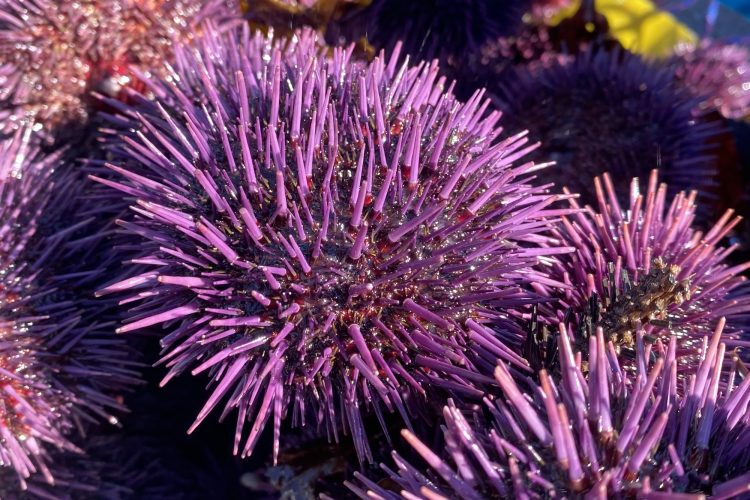
The collapse of the West Coast’s kelp forest ecosystems began not with a roar, but with a quiet, microscopic disintegration. In 2013, a mysterious bacterial pathogen known as Sea Star Wasting Syndrome swept through the Pacific waters from Alaska to Baja California. Among its primary victims was the sunflower sea star (Pycnopodia helianthoides), a multi-armed predator that served as the primary check on sea urchin populations. Within two years, the sunflower sea star had nearly vanished from its range, a loss that triggered one of the most significant trophic cascades in modern ecological history. Without their natural predator, populations of purple sea urchins (Strongylocentrotus purpuratus) exploded by as much as 10,000 percent in some regions. These ravenous invertebrates quickly moved from eating drift kelp to devouring the living foundations of the forest itself.
The result was the creation of "urchin barrens"—vast underwater deserts where the seafloor is carpeted in spiky purple orbs and almost nothing else remains. Today, a burgeoning industry known as urchin ranching is attempting to turn this ecological catastrophe into a culinary and conservationist triumph. By collecting these overpopulated, starving urchins and "fattening" them in land-based aquaculture facilities, companies like The Cultured Abalone Farm and OoNee Sea Urchin Ranch are attempting to restore the kelp forests while creating a new, sustainable source of high-value seafood.
A Chronology of Ecological Collapse
The devastation of the Pacific kelp forests was not caused by a single event, but by a "perfect storm" of biological and climatic stressors. Following the 2013 sea star die-off, the Pacific Ocean experienced a massive marine heatwave between 2014 and 2016, colloquially known as "The Blob." This period of sustained high temperatures prevented the upwelling of nutrient-rich cold water that kelp requires to grow.
By 2015, scientists at the California Department of Fish and Wildlife reported that bull kelp forests in Northern California had declined by more than 90 percent. In Mendocino and Sonoma counties, that loss eventually reached a staggering 96 percent. The loss of the kelp meant the loss of a primary carbon sink and a nursery for hundreds of species, including rockfish, abalone, and salmon.
As the kelp vanished, the purple urchins did not die off. Instead, they entered a physiological state of dormancy. When urchins run out of food, they stop growing and their reproductive organs—the edible portion known as "uni"—shrink to nearly nothing. These "zombie urchins" can survive for years in a state of starvation, waiting for the slightest hint of kelp to reappear. Because they have no commercial value in this emaciated state, traditional fishers ignore them, allowing the barrens to persist indefinitely.

The Science and Mechanics of Urchin Ranching
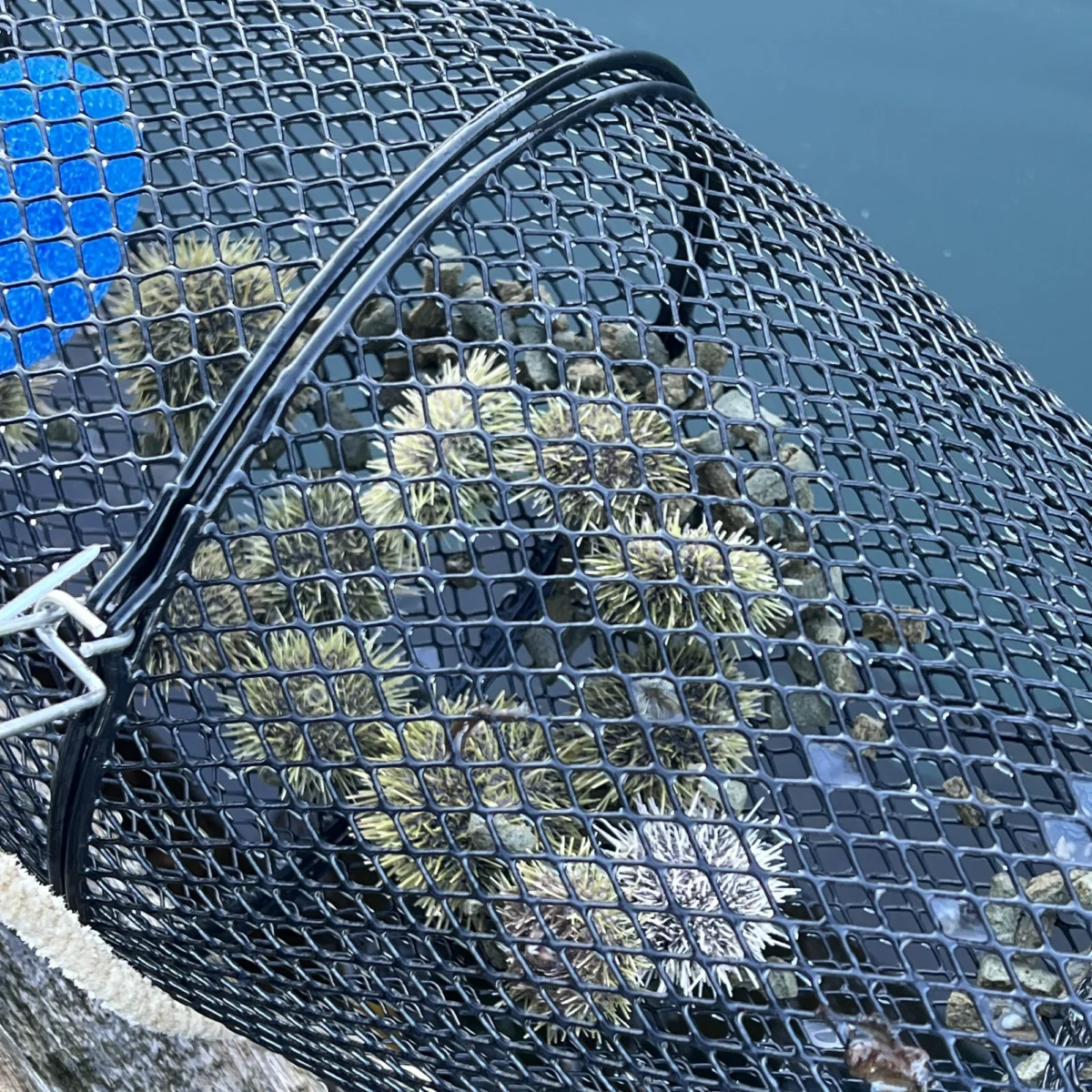
Urchin ranching differs fundamentally from traditional aquaculture. Rather than breeding animals from birth, ranchers harvest wild, "empty" urchins from the barrens and relocate them to onshore tanks. This process effectively removes the pressure from the wild ecosystem while utilizing a pre-existing biomass that would otherwise be wasted.
Andie Van Horn, the farm-to-fork manager at The Cultured Abalone Farm in California, explains that the goal is to create a high-quality food product that simultaneously serves a restorative purpose. "Our farm decided to pursue ranching because we wanted to do something that created a food product still, while having this positive impact," Van Horn stated.
The ranching process typically follows a specific ten-week cycle:

- Collection: Divers manually remove purple or green urchins from barren sites.
- Relocation: The urchins are placed in land-based flow-through systems that utilize natural seawater to maintain consistent pH, salinity, and temperature.
- Feeding: The urchins are fed a high-quality diet, often consisting of sustainably harvested kelp or nutrient-dense pellets.
- Harvest: Once the gonads (uni) have reached optimal size and color—usually 15 to 20 percent of the total body weight—the urchins are processed for the seafood market.
The choice of feed is critical. Aaron Huang, CEO of OoNee Sea Urchin Ranch in Oregon, notes that flavor and color are dictated by diet. High-quality cold-water kelp produces the sweetest, most vibrantly colored uni. To ensure sustainability, some farms use "lawnmower" boats that only trim the canopy of healthy kelp forests, allowing the plants to regrow rapidly, similar to pruning a hedge.
Supporting Data: The Economic and Environmental Value of Kelp
The drive toward urchin ranching is supported by significant economic data regarding the value of kelp ecosystems. According to a study published in Nature Communications, global kelp forests provide an estimated $500 billion in ecosystem services annually. These services include carbon sequestration, nitrogen removal, and providing habitat for commercial fisheries.
Restoring even a fraction of these forests through urchin removal has profound implications for climate change mitigation. Kelp is one of the fastest-growing organisms on Earth, capable of growing up to two feet per day under ideal conditions. It sequesters carbon at a rate far higher than most terrestrial forests, making its restoration a key strategy for "blue carbon" initiatives.

From a market perspective, the demand for uni is at an all-time high. Traditionally, the market has been dominated by the larger Red Sea Urchin (Mesocentrotus franciscanus). However, as red urchin populations have also felt the strain of habitat loss, the smaller purple urchin—once considered a pest—is finding a niche. Taste tests conducted by industry professionals suggest that ranched purple urchins often possess a sweeter, creamier profile than their wild counterparts, positioning them as a premium "boutique" seafood item.
Innovative Solutions for a Closed-Loop System
As the industry matures, ranchers are looking for ways to minimize their environmental footprint and maximize efficiency. At OoNee Sea Urchin Ranch, Huang and his team are experimenting with polyculture systems to handle the "messy" eating habits of urchins. Because urchins leave behind crumbs of kelp and pellets, the ranch introduces sea cucumbers into the tanks.
The sea cucumbers act as biological vacuum cleaners, consuming the waste produced by the urchins. The waste from the sea cucumbers, in turn, provides nutrients for seaweed, which can then be harvested as feed or sold as a separate product. This "closed-loop" approach mimics the natural codependencies of a reef ecosystem, reducing the need for manual tank cleaning and artificial filtration.

Measuring Ecological Success: Is Ranching Enough?
The primary question facing marine biologists is whether commercial ranching can operate at a scale large enough to trigger kelp recovery. Brenda Konar, a marine biologist at the University of Alaska Fairbanks, suggests that the success of these programs depends entirely on the volume of removal.
"If you had a big enough production and you could just go in and collect hundreds of these things, eventually you’re going to run out of urchins," Konar said. She notes that in the absence of sunflower sea stars and sea otters, humans must step in as the "top predator."
Evidence of success is already appearing in localized areas. Divers for OoNee and volunteer citizen scientists from organizations like Reef Check have observed kelp regrowth in specific barrens where intensive collection has occurred. However, the density of urchins remains a challenge; while a healthy ecosystem might support one urchin per square meter, many barrens currently host dozens or even hundreds in that same space.

Broader Impact and the Future of the Blue Economy
Urchin ranching represents a shift in how society views environmental restoration. It moves away from the "non-intervention" model of conservation toward an active, market-driven approach known as the "Blue Economy." By creating a financial incentive to remove an overpopulated species, the industry ensures that restoration efforts are self-sustaining rather than dependent on fluctuating government grants or non-profit donations.
Furthermore, the industry provides a pathway for traditional fishing communities to adapt to a changing climate. As traditional stocks fluctuate, the ability to "ranch" a consistent, high-quality product offers economic stability. Aaron Huang emphasizes the human connection to this work, noting that ranching allows people to remain part of the natural world through traditional, hands-on skills like diving and animal husbandry.
As consumer awareness grows, the "story" behind the food—the restoration of a forest and the rescue of an ecosystem—becomes a powerful selling point. Much like the rise of sustainable oysters, ranched urchins are being marketed not just as a delicacy, but as a choice that benefits the planet.

While it may take decades for the Pacific coast to fully return to its pre-2013 state, the emergence of urchin ranching offers a pragmatic and delicious solution to a complex ecological crisis. As Brenda Konar aptly summarized: "It might take a while to revert the barrens back to kelp. But in the meantime, you’re going to be feeding a lot of people."
About the Author