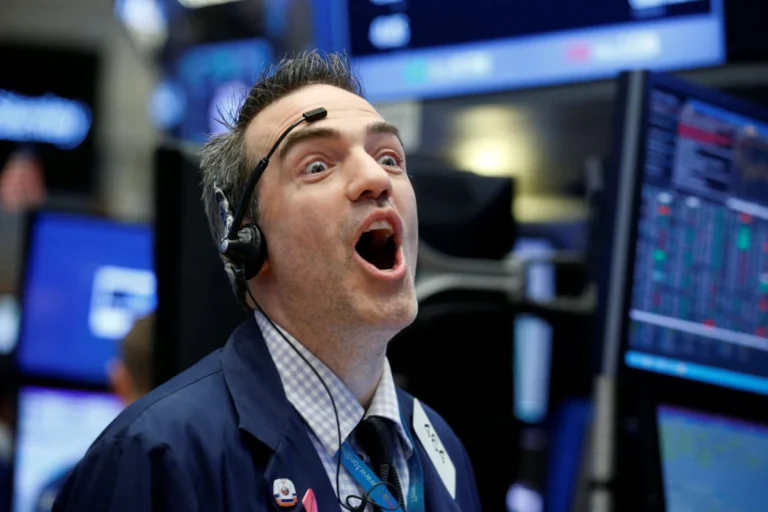
Former Securities and Exchange Commission (SEC) Chairman Jay Clayton has publicly affirmed that financial regulators are almost certain to initiate a comprehensive investigation into an unusual surge in trading activity observed on a recent Monday morning. This spike in futures trading volume notably preceded a significant social media post from President Donald Trump, which subsequently triggered distinct shifts across global financial markets. Clayton, speaking on CNBC’s "Squawk Box," highlighted the critical nature of scrutinizing such anomalies, particularly when they occur minutes before publicly disseminated, market-moving information.
The Incident Under Scrutiny: A Market Anomaly
The focal point of concern revolves around a sharp and unexplained increase in trading volume in both S&P 500 and oil futures contracts. This activity was concentrated around 6:50 a.m. New York time on the aforementioned Monday, a mere 15 minutes before President Trump’s Twitter account published a message that profoundly influenced investor sentiment and asset valuations. The President’s post disclosed that the United States and Iran had engaged in diplomatic talks and, critically, that previously planned strikes on Iranian infrastructure would be halted.
The market’s immediate reaction was palpable and swift. Equity markets, as represented by the S&P 500 futures, saw an upward trajectory, reflecting a sudden de-escalation of geopolitical tensions that had been a significant source of investor anxiety. Conversely, oil prices experienced a notable decline, a direct consequence of reduced fears of supply disruptions in the Middle East, which typically buoy crude benchmarks. This inverse correlation in market response, coupled with the temporal proximity of the trading spike to the presidential announcement, raised immediate red flags for market observers and regulators alike.
The geopolitical backdrop against which this event unfolded is crucial for context. For an extended period leading up to this incident, relations between the United States and Iran had been exceptionally fraught. Tensions had escalated significantly following a series of incidents, including attacks on oil tankers, drone shoot-downs, and retaliatory measures, bringing the two nations to the brink of military confrontation. The prospect of military strikes against Iran had been a dominant concern for global markets, contributing to volatility and uncertainty. President Trump’s announcement, therefore, represented a sudden and unexpected shift towards de-escalation, fundamentally altering market expectations regarding regional stability and oil supply.
Jay Clayton’s Call for Scrutiny and Regulatory Action
Jay Clayton, whose expertise spans both market regulation and federal prosecution, minced no words regarding the inevitability of a regulatory probe. "Any move like that in advance of any announcement, the regulators are going to look at," he stated emphatically on CNBC. His comments carry significant weight, given his distinguished career. As a former chair of the Securities and Exchange Commission, the primary federal agency responsible for regulating the securities markets, Clayton possesses an intimate understanding of market surveillance mechanisms and the legal frameworks governing trading conduct. His current role as the U.S. Attorney for the Southern District of New York further underscores his authority and experience in investigating financial crimes and market manipulation.
Clayton detailed the laborious but essential process regulators undertake in such situations. He explained that authorities would meticulously work to "reconstruct the activity and identify participants across markets." This involves an exhaustive data-mining exercise, tracing every transaction, every order, and every participant involved in the suspicious trading window. "They’ll go back and track every single thing, everyone," he affirmed, highlighting the thoroughness expected in such investigations. This commitment to detailed reconstruction is fundamental to determining whether any illicit activity, such as insider trading or market manipulation, occurred.
The Complex Landscape of Market Surveillance
The investigation into this incident underscores a critical distinction in the capabilities and complexities of market surveillance across different financial instruments. Clayton himself pointed out the varying degrees of visibility regulators possess.
Cash Equities vs. Futures and Commodities
"I always tell people our best surveillance is in the cash equities markets – like, we can track it," Clayton explained. In the cash equities markets, such as the New York Stock Exchange or Nasdaq, the regulatory framework is robust and highly integrated. Detailed audit trails capture every buy and sell order, identifying the parties involved, the precise time of execution, and the specific security traded. This comprehensive data allows regulators, including the SEC and FINRA (Financial Industry Regulatory Authority), to reconstruct trading activity with high fidelity, making it relatively straightforward to identify unusual patterns or suspicious individuals. The legal definitions of insider trading are also well-established and frequently litigated in the equities space, providing clear precedents.
However, the landscape becomes significantly more challenging in other financial sectors. "Commodities markets, and others, it’s a little more difficult," Clayton acknowledged. Futures and commodities markets, while integral to the global financial system, often operate under different regulatory regimes and possess distinct market structures. For instance, the Commodity Futures Trading Commission (CFTC) is the primary regulator for futures and options markets in the U.S., not the SEC. While the CFTC has sophisticated surveillance tools, the cross-market nature of some trading strategies, coupled with differing data reporting requirements and liquidity pools, can create complexities. The sheer volume and speed of algorithmic trading in these markets also present a formidable challenge to real-time human oversight. Reconstructing activity across multiple exchanges and asset classes requires seamless cooperation and data sharing between different regulatory bodies, which, while improving, can still present hurdles.
Reconstructing Trading Activity
The process of reconstructing trading activity following an alert of suspicious behavior is a multi-faceted endeavor. It typically involves:
- Data Collection: Gathering all available trading data from relevant exchanges, clearinghouses, and brokerage firms. This includes order book data, trade execution records, and sometimes even communication logs.
- Participant Identification: Pinpointing the specific entities and individuals involved in the suspicious trades. This often requires delving into beneficial ownership, account holders, and associated entities.
- Pattern Analysis: Using sophisticated analytical tools to identify patterns that deviate from normal market behavior. This could include unusually large block trades, rapid accumulation or liquidation of positions, or trades executed by specific groups of individuals.
- Information Flow Assessment: Investigating how the market-moving information (in this case, President Trump’s tweet) was generated, disseminated, and potentially accessed by individuals prior to its public release. This often involves examining communications, internal company records, and timelines of events.
- Inter-agency Collaboration: Given the cross-market nature of capital flows and potential illicit activities, the SEC, CFTC, Department of Justice (DOJ), and other agencies often collaborate, sharing information and coordinating investigative efforts to build a comprehensive picture.
The SEC’s standard response of declining to comment on ongoing or potential investigations is typical for such sensitive matters, preserving the integrity of any future legal proceedings.
Legal Ambiguities and the Definition of Insider Trading
One of the most profound takeaways from Clayton’s comments is his assertion regarding the legal framework itself.

The "Unclear" Law
"There’s a point here which Congress should act on – let’s make it clear across the board," he urged. "The law is not as clear as it should be. … There are a lot of people who say this is OK. I don’t feel like it’s OK." This statement from a former top regulator highlights a critical gap or ambiguity in current U.S. financial law concerning the boundaries of permissible trading behavior, especially when government actions or geopolitical events drive market movements.
Insider trading, broadly defined, involves buying or selling a security in breach of a fiduciary duty or other relationship of trust and confidence, while in possession of material, nonpublic information about the security. The Securities Exchange Act of 1934 and Rule 10b-5 are the primary statutory and regulatory provisions used to prosecute insider trading. However, the application of these laws, particularly concerning information derived from governmental sources and traded in markets beyond traditional equities, can be complex.
For instance, the legal concept of "material non-public information" can be interpreted differently when the information pertains to geopolitical developments rather than a company’s earnings or merger activity. Furthermore, the "fiduciary duty" element, crucial in many insider trading cases, might be harder to establish when the information originates from a head of state’s policy decision rather than an corporate executive. Some market participants might argue that trading on publicly available information, even if it’s about to become more widely disseminated via a tweet, does not constitute insider trading if no breach of duty occurred. Others might contend that the spirit of market fairness should apply more broadly, irrespective of the information’s source or the specific instrument traded.
The Role of Geopolitical Information
The nature of the information involved – diplomatic talks and halted military strikes – presents a unique challenge. Unlike corporate earnings reports, which are subject to strict disclosure rules, geopolitical developments often unfold through less formal channels, including social media. The "Presidential tweet" as a direct source of market-moving information is a relatively modern phenomenon that has tested existing regulatory frameworks. The speed with which such information can be disseminated, and its immediate global impact, means that even a few minutes’ advance knowledge could yield substantial profits.
The debate over whether trading on such information is "OK" often hinges on whether the trader owed a duty of confidentiality or trust to the source of the information, or if the information was "misappropriated." If individuals had foreknowledge of the tweet’s content through official channels and traded on it, that would clearly be problematic. However, if the information was gleaned through speculative analysis or even accidental early access without a clear breach of duty, the legal waters become murkier. This legal ambiguity is precisely what Clayton believes Congress needs to address, ensuring a consistent standard of fairness across all market participants and asset classes.
Broader Implications for Market Integrity and Investor Confidence
The investigation into this incident holds significant implications for the broader financial ecosystem. At stake is nothing less than the integrity of the U.S. capital markets and, by extension, global investor confidence.
If suspicious trading activity, especially surrounding critical government announcements, is perceived to go unaddressed or unpunished, it can severely erode public trust in the fairness and transparency of financial markets. Investors, both retail and institutional, rely on the principle of a level playing field, where all participants have access to information simultaneously (or at least, where no one profits from illegally obtained advance information). Any perception of a "rigged" system, where some gain unfair advantages due to privileged access to information, can deter investment, increase market volatility, and ultimately undermine the efficiency and legitimacy of capital allocation.
Maintaining market integrity is paramount for economic stability. It ensures that capital flows to its most productive uses, fostering innovation and growth. When this integrity is questioned, the very foundation of the financial system begins to crack.
The Intersection of Social Media, Geopolitics, and Financial Markets
This incident vividly illustrates the profound and often instantaneous impact of social media, particularly presidential communications, on global financial markets. In an era where a single tweet from a head of state can send shockwaves through economies, the traditional mechanisms of information disclosure and market regulation face unprecedented challenges.
The unfiltered, immediate, and widely accessible nature of platforms like Twitter means that information can spread globally in seconds, often bypassing traditional news outlets and official government channels. While this offers unprecedented transparency, it also creates new avenues for potential market manipulation or exploitation of early access. Regulators are constantly playing catch-up, adapting their surveillance techniques and legal interpretations to a rapidly evolving technological and communicative landscape. The challenge is not just to identify suspicious trading, but to understand the entire chain of information dissemination and access in this new digital reality.
Calls for Legislative Clarity: A Path Forward
Clayton’s explicit call for Congressional action is perhaps the most forward-looking aspect of his commentary. He is advocating for legislative reforms that would clarify and harmonize insider trading laws across all asset classes, including futures and commodities. Such reforms could:
- Standardize Definitions: Create a more uniform definition of "material non-public information" and "insider" that applies consistently across securities, futures, and other financial instruments, irrespective of the information’s origin (corporate vs. governmental).
- Harmonize Enforcement: Ensure that regulatory bodies like the SEC and CFTC have consistent powers and mandates to pursue cases involving information-based trading advantages, fostering better inter-agency cooperation.
- Address Modern Communication: Explicitly incorporate provisions that address the unique challenges posed by social media and other rapid, non-traditional forms of information dissemination.
- Enhance Surveillance Capabilities: Potentially mandate improved data sharing mechanisms and technological upgrades for regulatory bodies to conduct comprehensive cross-market surveillance effectively.
The ultimate goal of such legislative clarity would be to eliminate regulatory arbitrage – situations where illicit activities might be pursued in less regulated or legally ambiguous markets – and to ensure that the fundamental principles of fairness, transparency, and investor protection apply universally across the entire financial landscape.
In conclusion, the investigation into the suspicious futures trading activity preceding President Trump’s market-moving tweet serves as a crucial test case for the robustness of modern financial regulation. Jay Clayton’s strong comments underscore the necessity of a thorough probe, highlighting the complexities inherent in cross-market surveillance and the ambiguities embedded within existing insider trading laws. As financial markets continue to evolve in speed and complexity, driven by technological advancements and instant global communication, the need for clear, comprehensive, and adaptable regulatory frameworks has never been more urgent. The outcome of this potential investigation, and any subsequent legislative actions, will undoubtedly shape the future landscape of market integrity and investor trust.
About the Author