The integration of Artificial Intelligence (AI) into business operations has moved beyond the realm of futuristic speculation and into a pressing operational reality. However, a significant disconnect persists between the widespread availability of AI tools and the tangible value businesses are able to extract from them. Business leaders, while often equipped with ambitious goals and a plethora of AI solutions, frequently find themselves adrift, struggling to identify a clear starting point and a pathway to demonstrable returns. This challenge is compounded by the immense pressure to adopt AI, a pressure that, without a strategic framework, can lead to scattered experiments, underutilized technologies, and growing skepticism among teams. The core issue, as highlighted by numerous observations of successful AI implementations, lies not in the technology itself, but in the approach to its adoption.
The most effective AI strategies, it appears, do not commence with the technology. Instead, they originate from a deep understanding of specific, impactful business problems. These are the persistent pain points, the time-consuming tasks, and the workflow bottlenecks that hinder productivity and growth. Once a problem is clearly defined, the focus shifts to identifying the most suitable AI use case that can directly address and resolve it. This problem-centric methodology fosters confidence as early successes are realized, paving the way for exploration of broader AI capabilities, always in alignment with predefined objectives. This article aims to provide a practical guide for marketing, sales, and service teams, outlining actionable AI use cases and their current technological readiness, with a focus on delivering measurable value.
The Evolving Landscape of AI Adoption
The past year has witnessed an exponential surge in AI adoption discussions across industries. Companies are not lacking in innovative tools or ambitious visions for AI integration. Yet, the recurring sentiment from business leaders is one of strategic paralysis: "Where do we begin, and how do we ensure we’re deriving genuine value?" This sentiment underscores a critical gap between AI’s potential and its practical application. The pressure to implement AI is palpable, fueled by competitive landscapes and the promise of increased efficiency and innovation. However, without a clear strategic direction, this pressure can manifest as fragmented, short-lived experiments, underutilized software, and a workforce that grows increasingly disillusioned with AI’s perceived lack of tangible outcomes. The fundamental reason for this disconnect often lies in the failure to translate AI output into concrete, business-driving results.
The journey towards successful AI integration is not about mastering every AI capability; it’s about strategically applying AI to solve identified problems. Teams that excel in AI adoption don’t start with a broad AI mandate. They begin by pinpointing specific, often painful, aspects of their operations that are ripe for improvement. This could be a protracted lead qualification process, a time-consuming content creation workflow, or a customer service bottleneck. Once a problem is clearly articulated, the next step is to identify the precise AI use case that can effectively address it. As these targeted solutions yield demonstrable results, a cycle of growing confidence and further AI exploration is initiated, always tethered to clear, business-oriented goals.
This practical, problem-first approach is the foundation for understanding where marketing, sales, and service teams can begin to see real value from AI. The following breakdown categorizes AI use cases based on their current technological maturity, offering a roadmap for businesses seeking to harness AI’s power effectively.
AI in Marketing: Driving Engagement and Efficiency
Marketing teams are perpetually tasked with achieving more with fewer resources. The demand for expanded reach across diverse channels, richer content, and hyper-personalized customer experiences continues to grow, often without a corresponding increase in headcount. AI is emerging as a transformative force, empowering marketers to reimagine their workflows and amplify their impact. The following use cases represent opportunities for immediate and near-term implementation.
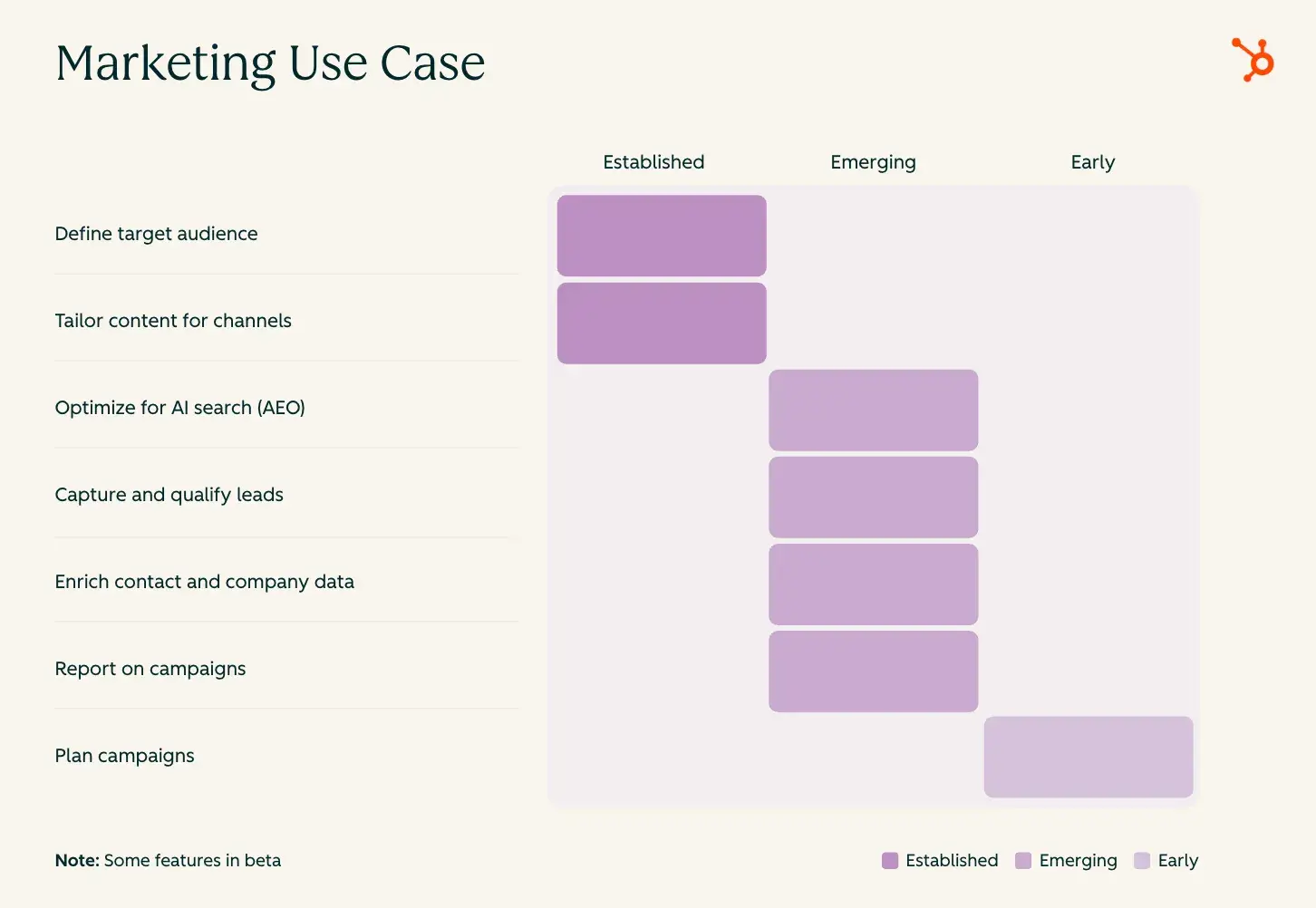
Established AI Use Cases for Marketing
Defining Target Audiences with Precision: Traditional audience segmentation, often based on broad demographics like job titles and company size, can fall short of identifying the true buyers. AI offers a powerful solution by analyzing vast datasets to pinpoint the right-fit prospects most likely to convert. For instance, HubSpot customers leverage tools like Breeze Assistant to gain deeper insights into customer behavior, optimize customer journeys, and ultimately enhance lead quality. This data-driven approach moves beyond assumptions to identify the individuals and organizations with the highest propensity to engage and purchase.
Tailoring Content for Diverse Channels: The modern marketing landscape necessitates adapting a single piece of content into a multitude of formats for various channels – from blog posts to email campaigns, social media updates, and advertisements. This process, traditionally time-consuming, can be significantly streamlined with AI. By taking a foundational piece of content and utilizing AI to adapt it for different platforms while maintaining brand voice consistency, marketing teams can achieve remarkable efficiency gains. Tools like HubSpot’s Content Remix and Breeze Assistant are designed to expedite this content repurposing, freeing up valuable creative time.
Emerging AI Use Cases for Marketing
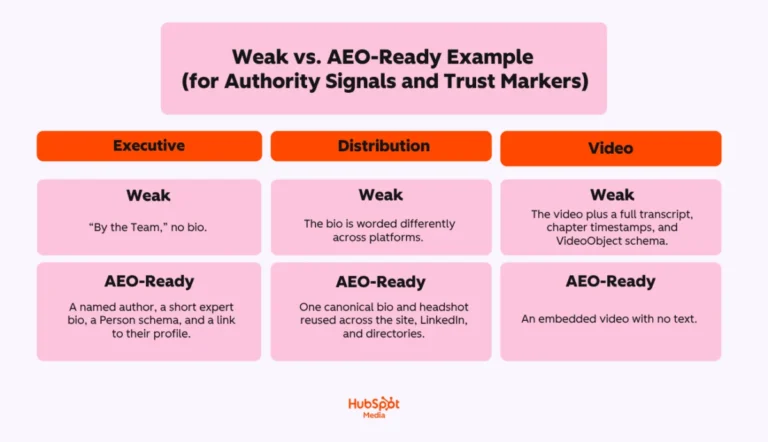
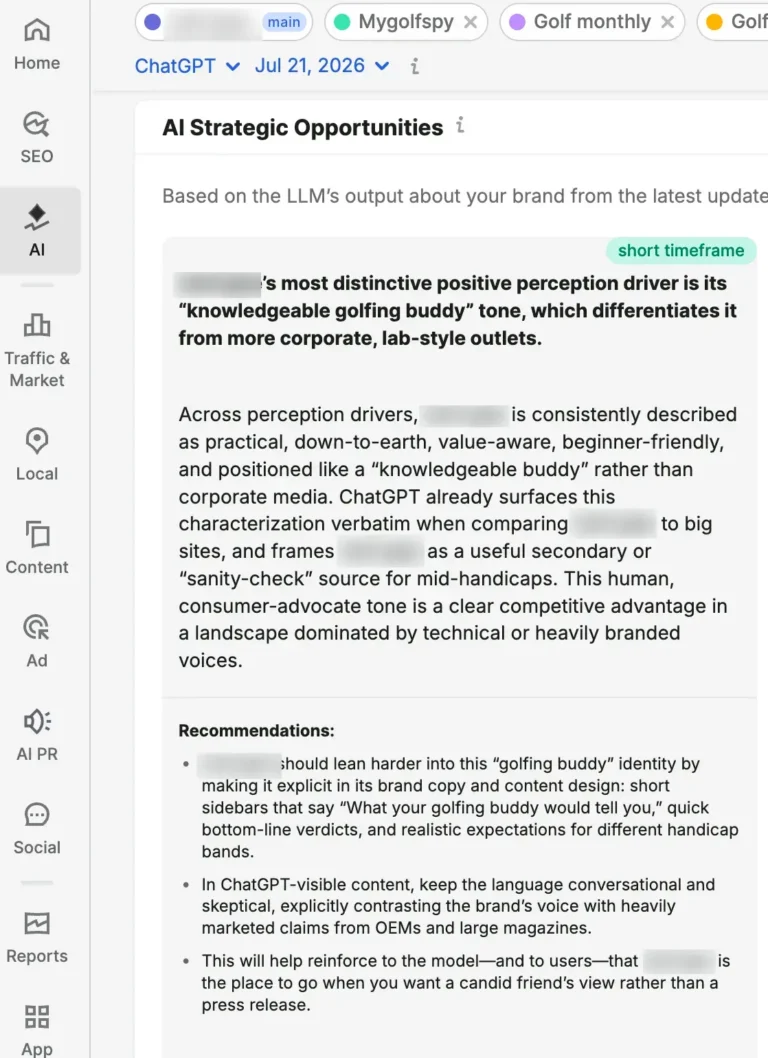
Optimizing for AI Search (Answer Engine Optimization – AEO): The paradigm of how consumers discover businesses is undergoing a seismic shift. The traditional reliance on scrolling through search engine results pages (SERPs) is increasingly being augmented, and in some cases replaced, by conversational AI interfaces. Users are now posing direct questions to platforms like ChatGPT, Claude, and Perplexity, seeking immediate answers. This evolution mandates a strategic shift in marketing to encompass Answer Engine Optimization (AEO). HubSpot is actively investing in this area, developing new features that will enable marketers to monitor their brand’s visibility within AI-generated responses and receive actionable recommendations for improvement. This nascent field is poised for rapid advancement, requiring marketers to adapt their strategies to meet the demands of AI-powered search.
Capturing and Qualifying Leads in Real-Time: Businesses operate around the clock, but human sales teams have limited availability. AI can bridge this gap by engaging website visitors in real-time, answering their queries, assessing their fit as potential customers, and even scheduling meetings with the appropriate sales representatives. This automated lead generation and qualification process allows companies to expand their lead funnel without necessitating an increase in personnel. HubSpot’s Breeze Customer Agent is designed to facilitate this continuous engagement, ensuring that no potential lead is missed.
Early-Stage AI Use Cases for Marketing
AI-Powered Campaign Planning: Imagine providing an AI with a campaign brief and receiving a comprehensive strategic plan in return, complete with recommended content topics and optimal channel allocations. This capability promises to significantly reduce the time marketing teams spend on strategic planning, allowing them to focus more on execution and iteration. HubSpot is actively developing these capabilities, aiming to empower businesses of all sizes to accelerate their campaign deployment cycles.
AI in Sales: Accelerating Revenue Growth and Efficiency
Sales representatives often find that a disproportionately small fraction of their day is dedicated to actual selling. The bulk of their time is consumed by essential but often tedious tasks such as research, data entry, follow-ups, and pre-call preparation. AI is fundamentally altering this dynamic, automating these administrative burdens and enabling sales professionals to dedicate more focus to cultivating customer relationships and closing deals. The following use cases represent areas where AI is already delivering significant value.
Established AI Use Cases for Sales
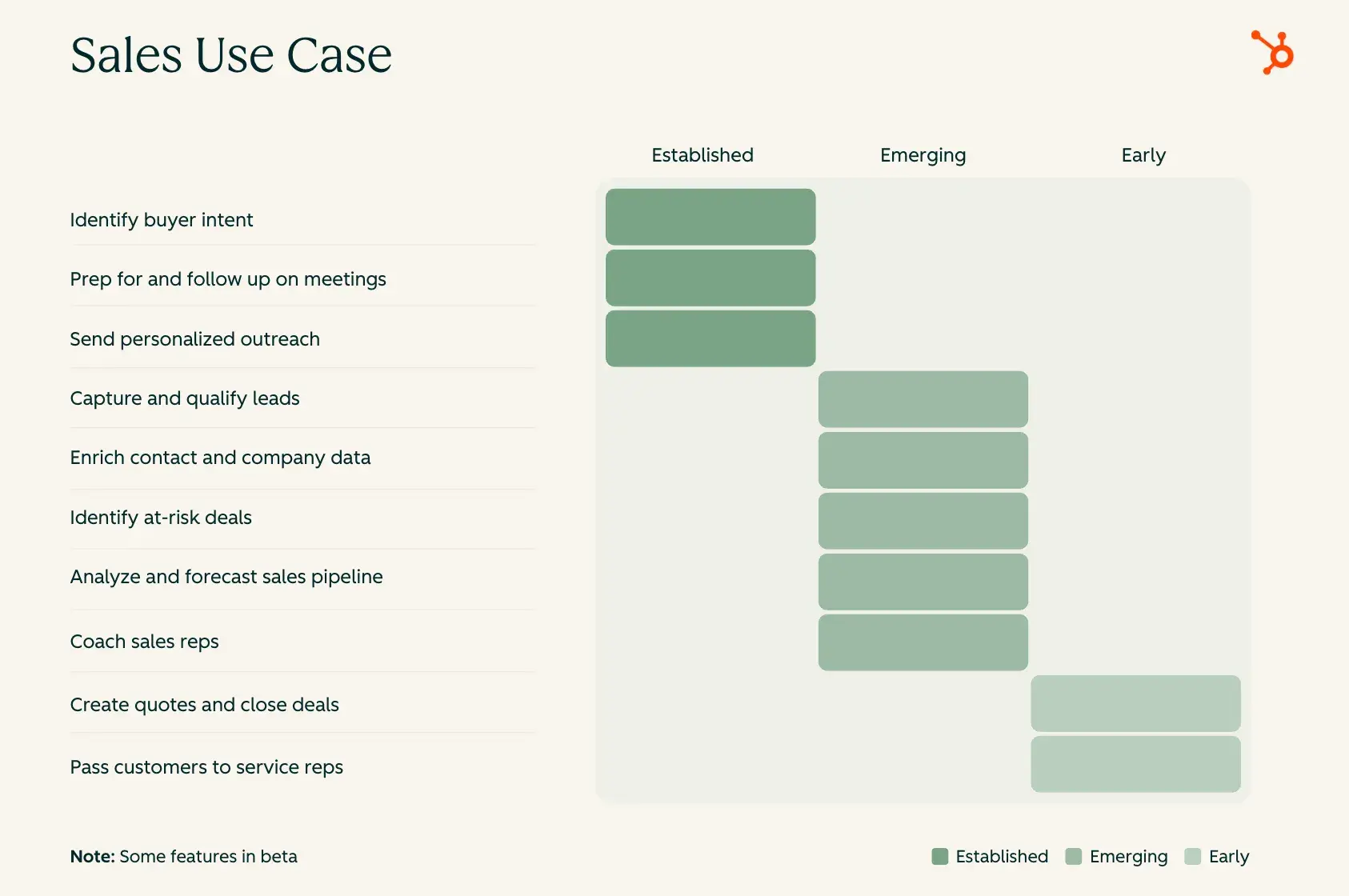
Identifying Buyer Intent with Unprecedented Accuracy: A common challenge in sales is the allocation of resources to accounts that are not yet ready to buy. This is not a reflection of sales acumen but rather a lack of real-time intelligence. AI systems can monitor target accounts for critical signals, such as funding announcements, executive team changes, and increased website activity, alerting sales teams to opportune moments for engagement. This proactive approach minimizes time spent on less promising leads and maximizes engagement with prospects who have demonstrated active interest. HubSpot’s Buyer Intent capabilities provide sales teams with this crucial, timely intelligence.
Streamlining Meeting Preparation and Follow-Up: The efficiency of sales interactions can be dramatically enhanced by AI’s ability to manage pre- and post-meeting tasks. Before a call, AI can consolidate crucial context, including contact history, deal progression, and recent interactions, ensuring the sales rep is thoroughly prepared. Post-call, AI can automatically transcribe discussions, identify key action items, and draft follow-up communications. This automation liberates sales reps from administrative overhead, allowing them to focus on moving deals forward. HubSpot’s Breeze Assistant and Call Recap Agent are instrumental in achieving these efficiencies.
Delivering Personalized Outreach at Scale: The challenge of timely and relevant outreach is a persistent one in sales. AI can continuously monitor account activities and provide alerts for significant developments, enabling sales reps to craft personalized outreach messages that feel timely and pertinent, rather than generic. Early adopters of AI-powered prospecting tools, such as HubSpot’s Breeze Prospecting Agent, are reporting significantly higher response rates compared to traditional outreach methods, demonstrating the impact of AI-driven personalization.
Emerging AI Use Cases for Sales
Enriching Contact and Company Data: Incomplete CRM records represent a significant impediment to effective sales operations, hindering segmentation, scoring, and personalization efforts. AI can now automate the process of enriching these records with crucial missing information, such as job titles and company details. By leveraging extensive, continuously updated datasets, platforms like HubSpot can ensure that sales teams have access to accurate and current data, leading to more targeted and relevant communications. This reduces the time spent on manual data updates and enhances the effectiveness of sales interactions.
AI-Powered Sales Coaching and Performance Improvement: Learning from lost deals is a critical component of sales development, but it can be a slow and inconsistent process. AI can analyze sales calls and deal activities to identify the behaviors and strategies employed by top performers, enabling managers to quickly disseminate these best practices across the entire team. This leads to faster ramp times for new hires and a more consistent win rate across the sales organization. HubSpot’s Conversation Intelligence and Sales Coach Assistant are designed to facilitate this data-driven approach to sales development.
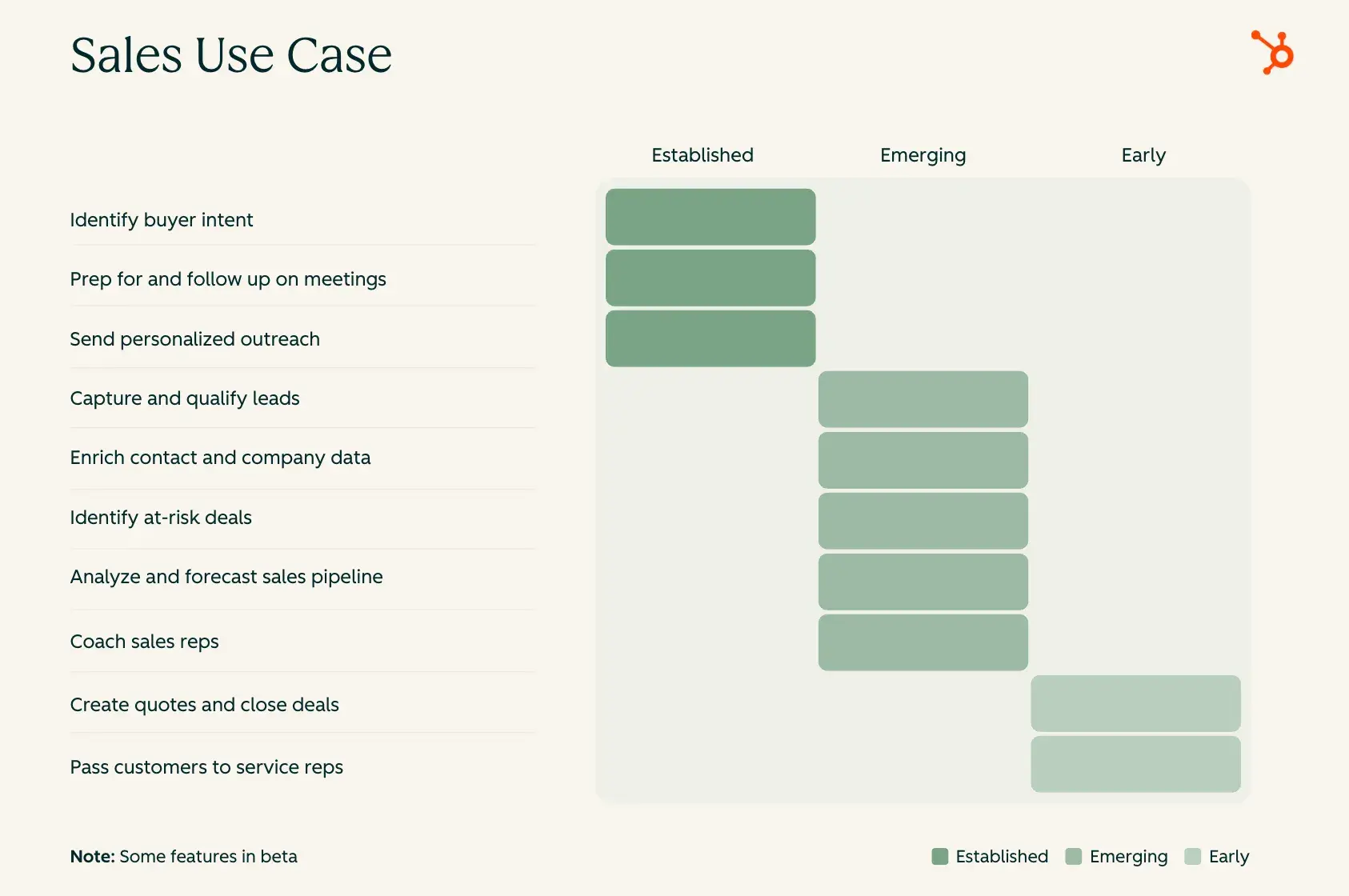
Early-Stage AI Use Cases for Sales
Automating Quote Generation and Deal Closing: The creation of quotes and proposals can be a significant bottleneck in the sales cycle, often leading to delays in deal progression. AI has the potential to streamline this process by addressing buyer pricing inquiries, constructing proposals based on historical deal data, and even drafting quote-related emails. By automating these administrative tasks, AI empowers sales representatives to dedicate more time to high-value activities that directly contribute to closing deals, particularly in complex sales environments.
AI in Service: Enhancing Customer Satisfaction and Retention
Customer service teams often face the dual challenge of increasing customer expectations for rapid and high-quality support, coupled with constraints on expanding headcount. The most effective teams are not necessarily working longer hours; they are strategically leveraging AI to automate routine tasks, thereby freeing up human agents to address more complex and impactful customer issues. The following outlines how AI is currently transforming customer service operations.
Established AI Use Cases for Service
Automated Support Ticket Resolution: Customers expect prompt responses to their inquiries, especially for common questions. AI can provide instant resolutions for routine support tickets by accessing and utilizing the company’s existing knowledge base. This allows human agents to focus their expertise on complex issues that require human empathy and problem-solving skills. HubSpot’s Breeze Customer Agent has demonstrated the capacity to resolve a significant percentage of support tickets automatically, improving overall efficiency and customer satisfaction.
Intelligent Ticket Review and Routing: In high-volume support environments, distinguishing urgent issues from routine ones can be challenging, leading to delays in critical problem resolution. AI can analyze incoming tickets, understand their content, prioritize them based on urgency, and automatically route them to the appropriate agent or department. This intelligent triage system enhances team efficiency and ensures that critical issues receive timely attention. For HubSpot customers, integrating the Customer Agent with Help Desk functionalities has resulted in substantial improvements in ticket resolution times.
Personalized Outreach and Meeting Preparation for Service Teams: Similar to sales, AI can enhance service interactions through personalized communication and efficient preparation. Whether it’s reaching out to an at-risk customer or preparing for a renewal discussion, AI-powered tools can equip service agents with the necessary context and communication templates to ensure informed and prompt follow-up, fostering stronger customer relationships.
Emerging AI Use Cases for Service
Proactive Identification of At-Risk Customers: The traditional approach to customer retention often involves reacting to a customer’s decision to cancel. AI can shift this paradigm by identifying subtle warning signs of potential churn, such as declining engagement, an increase in support ticket volume, or shifts in communication tone. By flagging these indicators early, service teams can intervene proactively, implement retention strategies, and ultimately improve customer satisfaction and loyalty.
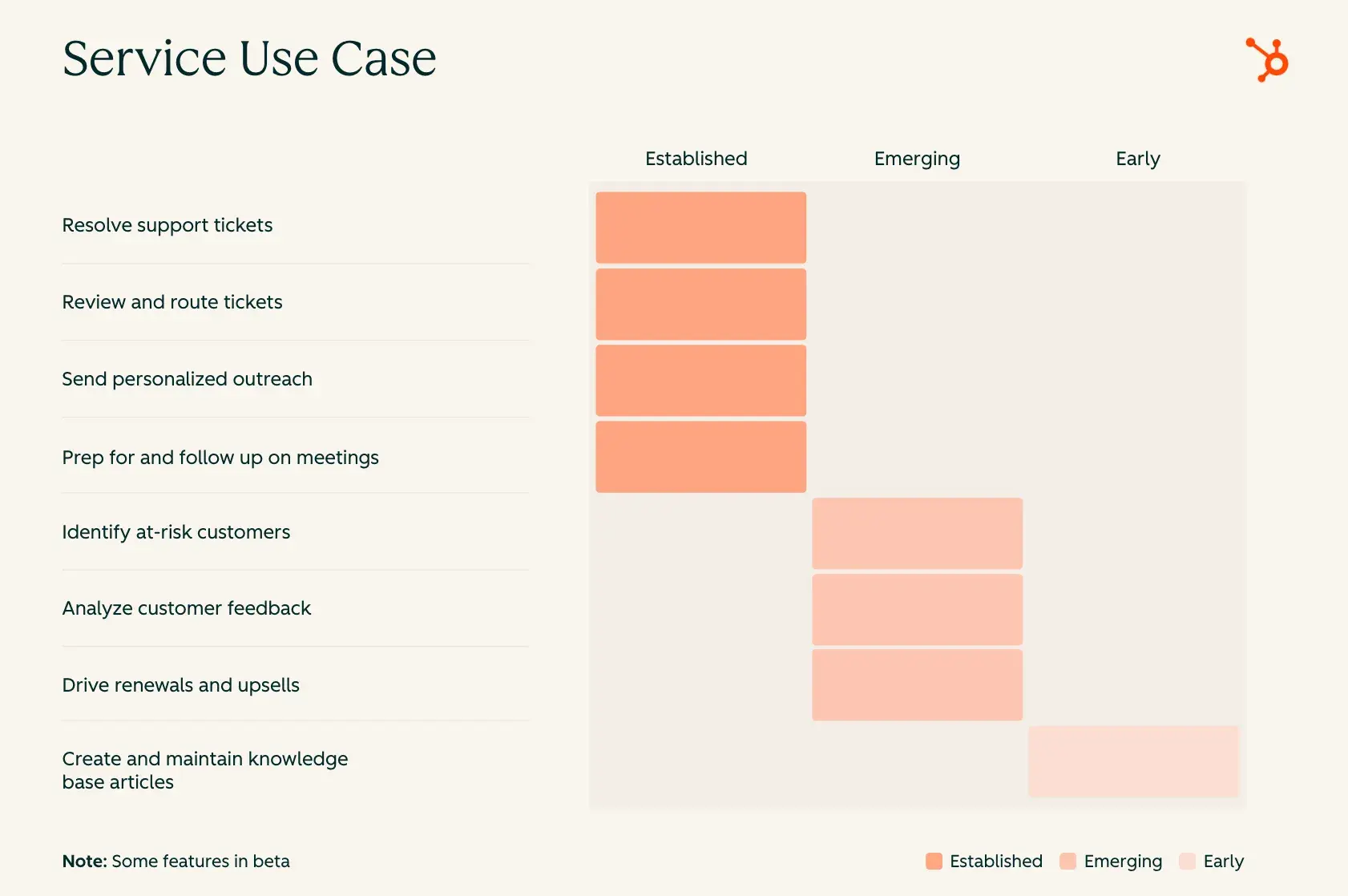
Automated Customer Feedback Analysis: Businesses collect valuable insights from customer feedback across various channels, including surveys and call transcripts. AI can efficiently process this vast amount of unstructured data, automatically identifying key themes, sentiment trends, and areas for improvement. This empowers service teams to act on genuine customer needs rather than relying on assumptions, leading to more effective service enhancements.
Early-Stage AI Use Cases for Service
AI-Assisted Knowledge Base Creation and Maintenance: A significant challenge in customer support is maintaining an up-to-date and comprehensive knowledge base. FAQs often become outdated quickly, leading to misinformation and wasted agent time. AI can draft help articles based on historical ticket resolutions and automatically update them as new information or solutions emerge. This creates a self-sustaining knowledge base, ensuring customers receive accurate and timely answers while reducing the documentation burden on service teams.
The Fundamental Insight: Problems Drive AI Momentum
The overarching lesson learned from extensive engagement with businesses on their AI adoption journeys is remarkably simple: AI itself does not generate momentum. It is the strategic resolution of real-world problems that creates the driving force for successful AI integration. Organizations that have achieved significant results with AI have not begun with grand, abstract transformation plans. Instead, they have identified a single, clear bottleneck – a process that consumes excessive time, a workflow that requires acceleration, or a recurring point of friction. By applying AI to address these specific challenges, they have unlocked tangible benefits.
The outcomes observed are compelling: marketing teams are experiencing heightened success in reaching their target audiences and converting more prospects into qualified leads; sales teams are reporting doubled response rates on their outreach efforts; and customer service teams are resolving a majority of their tickets without direct human intervention. These seemingly small, targeted implementations are translating into significant, measurable business outcomes.
In conclusion, AI is no longer a speculative investment in the future; it is a powerful tool delivering tangible results in the present for everyday business objectives. It is making work processes faster, smarter, and more effective. The critical question for businesses is not whether AI can assist their teams, but rather, where will they strategically choose to begin their AI journey to unlock its full potential?
About the Author