A marketing forecast serves as a crucial compass for growth-focused teams, projecting future results such as lead generation, pipeline development, and revenue realization by leveraging historical data and sophisticated conversion assumptions. This strategic tool bridges the gap between planned marketing activities and their anticipated outcomes, offering teams invaluable foresight before campaign execution. By enabling clearer planning, fostering predictable growth, and strengthening the alignment between marketing investments and revenue targets, marketing forecasting has become an indispensable element of modern business strategy. In an era defined by AI-driven discovery, fragmented data landscapes, and mounting pressure to demonstrate tangible impact across the entire customer journey, marketing forecasts provide a structured framework to navigate complexity and translate data into actionable, forward-looking decisions.
The intricacies of marketing forecasting, the methodologies employed in constructing accurate models, and the critical factors that enhance their reliability over time are paramount for achieving consistent and measurable business outcomes. This comprehensive exploration delves into these aspects, providing a roadmap for businesses seeking to harness the power of predictive marketing.
Understanding the Core of Marketing Forecasting
At its essence, a marketing forecast is a meticulously crafted estimate of future marketing performance. It is built upon a foundation of historical data, established conversion rates, and the strategic deployment of planned marketing activities. The output is a projection of expected results, encompassing metrics like lead volume, sales pipeline value, and ultimately, revenue, over a defined temporal horizon. Unlike simple reporting or budgeting exercises, marketing forecasting is intrinsically forward-looking, aiming to inform strategic decisions across both marketing and revenue-generating departments.
The process typically involves analyzing past performance to establish baseline metrics and identify performance ranges. Methodologies such as trend forecasting, which analyzes historical patterns to predict future movements, and qualitative forecasting, which incorporates expert judgment and market intuition, are often integrated to shape the underlying assumptions. The distinction between forecasting, reporting, and budgeting lies in their fundamental objectives and timing. Reporting offers a backward-looking view of past performance, budgeting allocates resources for future activities, and forecasting bridges these two by predicting the results of those allocated resources.
Forecast models function by translating key inputs – such as website traffic, marketing spend, and conversion rates at various funnel stages – into projected pipeline value and anticipated revenue. These projections are instrumental in guiding quarterly strategic planning, evaluating potential business scenarios, and setting ambitious yet achievable targets for growth teams.
The Indispensable Role of Marketing Forecasting for Growth Teams
For teams laser-focused on driving growth, a marketing forecast is not merely an analytical exercise; it is a strategic linchpin. It establishes a clear and quantifiable connection between planned marketing initiatives and their expected impact on revenue. This linkage provides the essential structure needed for sound planning decisions. The outputs of a marketing forecast directly influence how budgets are allocated, how teams are resourced, and which marketing campaigns are prioritized for execution. Ultimately, a robust marketing forecast ensures that marketing efforts are precisely aligned with pipeline goals and that the expected contribution to overall revenue is transparently understood.
The current economic climate underscores the growing importance of constrained yet strategic budget decisions. According to HubSpot’s State of Marketing 2026 Report, a significant 73% of marketers are experiencing increased budget scrutiny, while a parallel 93% anticipate their budgets will either remain stable or see growth. In this environment, forecast models are critical for clarifying the expected return on investment (ROI) for various marketing channels, enabling teams to strategically direct investment toward those that demonstrably generate valuable pipeline.
Growth teams leverage forecasts to guide several key areas:
- Budget Allocation: Understanding the projected ROI of different channels and campaigns allows for more informed decisions on where to invest marketing funds.
- Resource Management: Forecasts help in anticipating staffing needs and allocating personnel to maximize efficiency and effectiveness.
- Campaign Prioritization: By predicting the potential impact of various initiatives, teams can focus on those most likely to achieve strategic objectives.
- Performance Benchmarking: Forecasts establish clear benchmarks against which actual performance can be measured, facilitating a proactive approach to identifying and addressing shortfalls.
The direct correlation between forecast outputs and core performance metrics is undeniable. Marketers consistently prioritize lead quality, conversion rates, and ROI as key performance indicators (KPIs). These metrics are inherently linked to the projected pipeline and revenue outcomes derived from effective forecasting.
In this context, modern strategies like Loop Marketing are gaining significant traction. Loop Marketing emphasizes the continuous integration of performance data, customer insights, and campaign outcomes back into the planning and execution cycles. This approach moves away from viewing campaigns as isolated, linear inputs and instead fosters a closed-loop system where insights from one cycle directly inform and improve the next. This iterative process makes forecast models more responsive and accurately aligned with evolving buyer behavior.
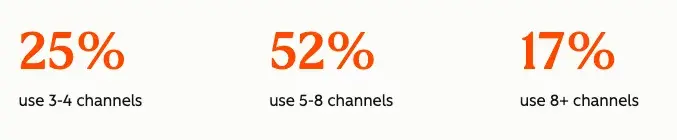
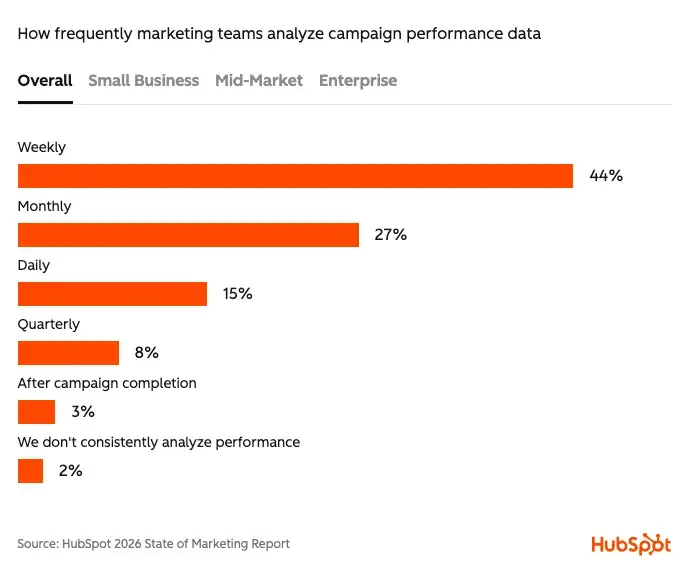
The complexity of the modern marketing landscape further necessitates sophisticated forecasting. As per HubSpot’s research, 75% of marketers now operate across five or more channels, and 73% review campaign performance at least weekly. Forecast models must therefore be adept at accounting for this channel complexity and capable of incorporating continuous performance updates to maintain their accuracy and relevance.
Differentiating Marketing and Sales Forecasts
While often discussed in tandem, marketing forecasts and sales forecasts serve distinct yet complementary roles within the revenue generation process. A marketing forecast’s primary objective is to predict the creation of sales pipeline, detailing the volume and value of opportunities that marketing efforts are expected to generate. It achieves this by analyzing inputs such as website traffic, lead generation volumes, and conversion rates through various marketing funnel stages.
In contrast, a sales forecast focuses on the conversion of these opportunities into closed deals and, consequently, into realized revenue. This prediction relies on metrics like the number of active opportunities, their progression through different deal stages, and the estimated probability of closure for each.
These models operate at different junctures of the customer journey. Marketing forecasting is anchored in demand generation and pipeline volume, while sales forecasting is centered on conversion efficiency and revenue realization.
A critical point of potential misalignment arises when these two forecasting models operate independently. A marketing forecast might project robust pipeline growth based on high lead volumes, but if the sales forecast indicates lower expected revenue due to factors like slow deal velocity or unfavorable close rates, this gap can lead to missed targets and inefficient resource allocation. Ensuring a cohesive and synchronized approach between marketing and sales forecasting is therefore paramount for unified revenue growth.
Essential Components for Accurate Marketing Forecasting
The reliability and accuracy of a marketing forecast hinge on the presence and effective integration of six core components: historical performance data, conversion rate assumptions, channel mix and spend, market and external inputs, clearly defined pipeline stages, and unified data systems. Each of these elements plays a pivotal role in shaping how projections are calculated and how closely forecasts mirror actual business performance.
Historical Performance Data
Historical performance data forms the bedrock of any robust forecasting model. It provides the essential baseline metrics, encompassing traffic volume, lead generation numbers, and conversion rates across various channels and time periods. This data allows for the establishment of expected performance ranges and the identification of recurring trend patterns, often drawing upon techniques like historical trend forecasting.
Pro Tip: To account for seasonal fluctuations and minimize volatility in projections, it is advisable to utilize a data set spanning 12 to 24 months. This longer timeframe provides a more comprehensive view of performance dynamics.
Conversion Rate Assumptions
Conversion rate assumptions are the critical drivers that define prospect progression through the sales funnel. They dictate how website traffic is transformed into qualified leads, and subsequently, how those leads evolve into sales pipeline and ultimately, revenue. The accuracy of a marketing forecast is directly proportional to how closely these modeled conversion rates align with actual buyer behavior.

These assumptions must be refined to reflect personalization efforts and specific audience targeting strategies. Research from HubSpot indicates that 93% of marketers report that personalization enhances lead or purchase conversion rates, a factor that directly influences stage-to-stage conversion rates within forecast models.
Maintaining stable conversion assumptions is key to reducing projection errors. Any shifts in targeting strategies, messaging approaches, or channel mix introduce variability that must be meticulously reflected in updated forecast models.
Channel Mix and Spend
The channel mix delineates the strategic distribution of marketing budgets across various acquisition sources, including paid media, organic search, email marketing, and social media. Digital marketing forecasting models analyze performance at the individual channel level to estimate each channel’s contribution to lead generation and pipeline development. Consequently, changes in the channel mix directly influence forecast outputs and the expected return on investment.
Market and External Inputs
Market inputs are crucial for incorporating external factors that can significantly impact marketing performance. These can include seasonal trends, shifts in market demand, competitive actions, and broader economic conditions. By adjusting projections based on these external inputs, marketing forecasts can more accurately reflect current market realities and reduce the variance between expected and actual results.
Pipeline Definitions
Standardized pipeline definitions are essential for ensuring consistency in how marketing efforts translate into revenue across different funnel stages. This includes clearly defining lead qualification criteria, the progression rates between stages, and the attribution models used to assign credit for conversions. Well-defined stages enhance forecast consistency and minimize discrepancies between marketing and sales reporting.
Unified Data Systems
The consolidation of marketing and sales activities into a single, consistent dataset is the hallmark of unified data systems. Fragmented systems introduce significant variance into forecasts, as disconnected tools often report conflicting metrics, distorting conversion rates and pipeline estimates. A unified system provides a stable foundation for modeling, ensuring that inputs remain consistent across teams and reporting cycles.
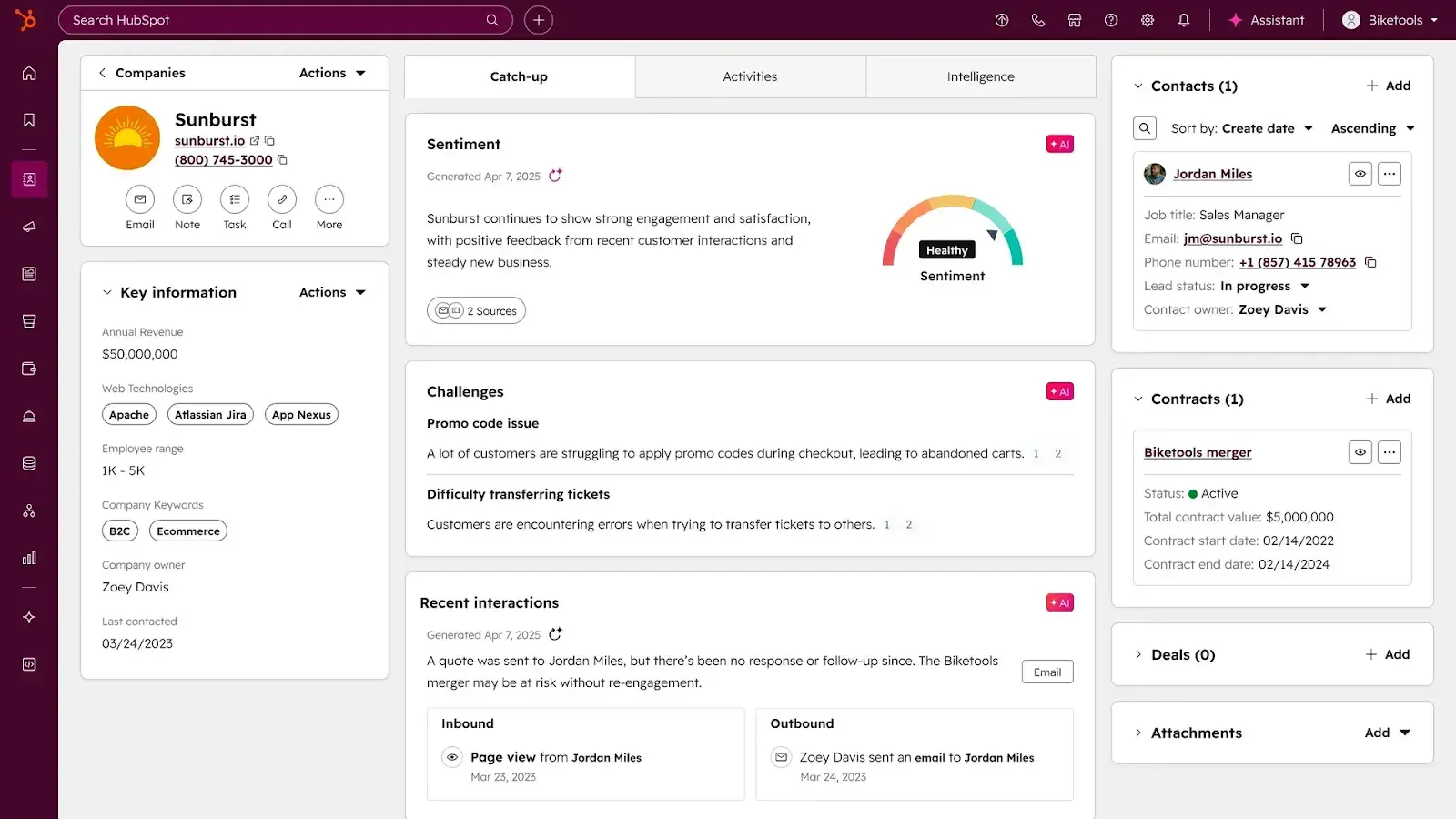
HubSpot’s Smart CRM, for instance, centralizes customer data across all touchpoints, simplifying the tracking of lead-to-pipeline-to-revenue conversion. By providing a unified, real-time dataset encompassing marketing, sales, and service activities, HubSpot Smart CRM strengthens forecasting capabilities and allows teams to build predictions on consistent inputs, thereby minimizing discrepancies caused by siloed tools. The reliability of forecasts is directly correlated with the alignment of data sources, leading to more stable projections and a reduced gap between expected and actual performance.
Example: A Simple Marketing Forecast Model
A fundamental model illustrates the translation of inputs into projected outcomes through straightforward funnel mathematics:
Inputs:
- Monthly Website Visitors: 10,000
- Visitor-to-Lead Conversion Rate: 2%
- Lead-to-Opportunity Conversion Rate: 10%
- Opportunity Value: $5,000
Projected Outputs:
- Monthly Leads: 10,000 visitors * 0.02 = 200 leads
- Monthly Opportunities: 200 leads * 0.10 = 20 opportunities
- Monthly Pipeline Value: 20 opportunities * $5,000 = $100,000
This example highlights the profound impact of even minor changes in conversion rates. For instance, increasing the visitor-to-lead rate from 2% to 2.5% would elevate lead volume to 250, subsequently boosting the downstream pipeline value without requiring any additional traffic.
Navigating the Spectrum of Marketing Forecasting Methods
The choice of marketing forecasting method often depends on an organization’s data maturity and business complexity. The most prevalent approaches include historical trend forecasting, funnel-based forecasting, regression-based forecasting, and scenario-based forecasting. Each method employs a distinct model to translate input variables into projected outcomes.
Historical Trend Forecasting
This method projects future results by analyzing past performance patterns, such as historical growth rates and established seasonality. It is most effective when performance exhibits consistent stability over time.
- Advantage: Offers straightforward modeling with minimal setup requirements.
- Best Suited For: Organizations with predictable demand patterns and stable historical performance.
Funnel-Based Forecasting
Funnel-based forecasting calculates outputs by sequentially applying conversion rates at each stage of the sales funnel. It meticulously maps the journey of traffic transforming into leads, leads into opportunities, and opportunities into pipeline value.
- Advantage: Provides clear visibility into how performance changes at any given stage impact the overall pipeline.
- Best Suited For: Teams primarily focused on optimizing conversion rates and enhancing pipeline generation.
Regression-Based Forecasting
Regression-based forecasting utilizes statistical models to identify and quantify the relationships between various input metrics (e.g., marketing spend) and output metrics (e.g., lead volume or pipeline value). This method can uncover patterns that are not readily apparent in simpler models and is often employed in conjunction with advanced statistical techniques for sales forecasting.
- Advantage: Enables more precise modeling when substantial historical data is available.
- Best Suited For: Organizations with large datasets and sophisticated analytical capabilities.
AI-powered tools, such as HubSpot’s Breeze AI, significantly enhance regression-based forecasting. These tools can analyze vast datasets, identify intricate relationships between variables, and generate predictive insights with unprecedented speed and accuracy. Breeze AI can surface patterns across CRM data, campaign performance metrics, and customer behavior, leading to improved forecast precision and greater adaptability.
Scenario-Based Forecasting
Scenario-based forecasting involves modeling multiple potential outcomes based on a range of different assumptions. This approach is invaluable for accounting for variability in performance, marketing spend, and prevailing market conditions.
- Advantage: Offers flexibility to plan for a variety of possible future outcomes.
- Best Suited For: Teams operating within uncertain or rapidly evolving market environments.
Comparative Overview of Forecasting Methods
| Method | Core Principle | Strengths | Weaknesses | Ideal For |
|---|---|---|---|---|
| Historical Trend | Projects future based on past patterns and growth rates. | Simple, requires minimal data. | Ineffective with significant market shifts. | Stable markets, predictable performance. |
| Funnel-Based | Uses stage-by-stage conversion rates to track prospect progression. | Clear visibility of funnel bottlenecks. | Relies heavily on accurate conversion data. | Conversion optimization, pipeline generation focus. |
| Regression-Based | Identifies statistical relationships between inputs and outputs. | High precision with sufficient data. | Requires significant data and analytical skill. | Data-rich environments, complex variable interactions. |
| Scenario-Based | Models multiple potential outcomes based on varying assumptions. | Adaptable to uncertainty, risk assessment. | Can be complex to set up and manage scenarios. | Volatile markets, strategic planning under uncertainty. |
Ultimately, many organizations find that combining multiple forecasting methods can lead to more robust and resilient predictions, leveraging the strengths of each approach to create a more comprehensive view of future possibilities.
A Step-by-Step Approach to Building a Marketing Forecast
The construction of a marketing forecast is a structured process that involves defining clear objectives, meticulously gathering data, mapping the customer journey, selecting appropriate methodologies, modeling projected outcomes, and continuously refining assumptions. A systematic approach ensures consistency across planning cycles and enhances the utility of projections in decision-making.
Step 1: Define Forecast Goals
The initial and most critical step is to clearly define the measurable outputs the forecast aims to predict. Whether the focus is on leads, pipeline value, or direct revenue, having a precise target outcome from the outset shapes the selection of inputs, methodologies, and the overall time horizon of the forecast. Well-defined goals are the bedrock of an effective forecast.
Step 2: Gather Historical Data
This involves collecting comprehensive data from CRM systems, web analytics platforms, and campaign management tools to establish a reliable historical baseline. The data should encompass performance across all relevant channels, campaigns, and funnel stages. Since marketing forecasting relies on past performance to inform future predictions, the completeness and consistency of this data are paramount.
Step 3: Map the Funnel
A clear mapping of the customer funnel is essential for a forecast that accurately reflects how demand progresses toward revenue. This mapping should include precise definitions of each funnel stage, the estimated progression rates between stages, and any qualification thresholds that may impact volume. This step establishes the logical framework that connects top-of-funnel activities to pipeline development and eventual revenue generation.
Step 4: Select Forecasting Method
The choice of forecasting method should be guided by the organization’s data maturity, the complexity of its business operations, and the desired level of precision. Historical trend, funnel-based, regression, and scenario-based methods each cater to different planning needs. The optimal method depends on the volume and quality of available data and the degree of stability in performance patterns.
Step 5: Model Outputs
This stage involves calculating projected lead volumes, pipeline values, and revenue figures using the selected forecasting method and current assumptions. The model should clearly illustrate how various inputs, such as traffic volume, marketing spend, and conversion rates, influence the expected outcomes. Marketing forecast models are designed to make these performance assumptions explicit and quantifiable.
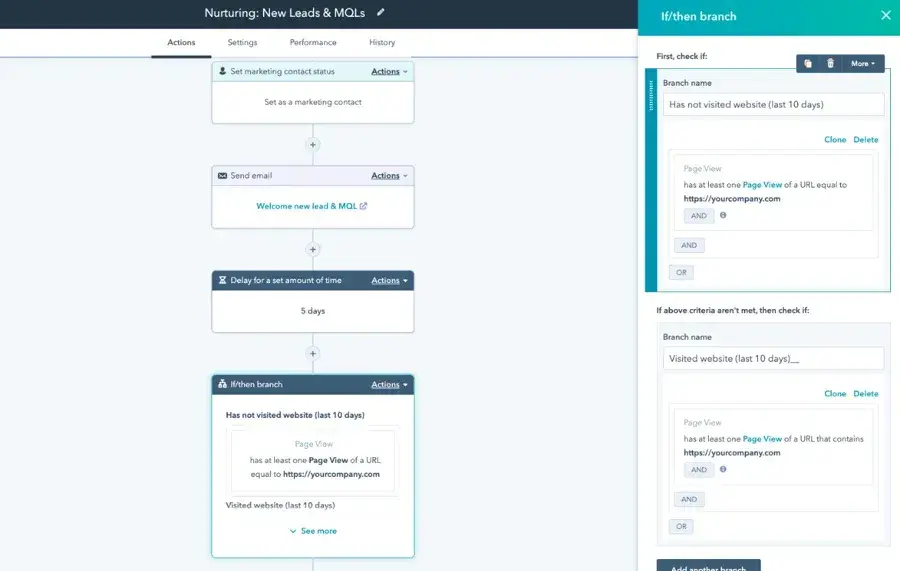
Tools like HubSpot Marketing Hub are instrumental in operationalizing these models by directly linking forecast assumptions to campaign execution. Marketing automation ensures that nurture flows, email sequences, and campaign triggers are synchronized with projected conversion paths, thereby minimizing the gap between planned activities and actual performance.
Step 6: Validate and Iterate
The final, and ongoing, step involves comparing forecast projections against actual performance results and adjusting assumptions based on observed outcomes. This iterative process focuses on identifying discrepancies between projections and reality and recalibrating the model accordingly.
Pro Tip: To maintain accuracy and responsiveness, it is recommended to update forecasts monthly. This frequency allows for the incorporation of changes in performance, channel mix, and evolving market conditions.
Enhancing the Accuracy of Marketing Forecasts
The precision of marketing forecasts is significantly improved when inputs remain consistent, definitions are standardized, and projections are regularly reviewed against actual performance. Reducing variance is achieved through stable inputs, clear underlying assumptions, and consistent validation processes.
Utilize Unified CRM Data
Unified CRM data provides a singular, consistent view of the entire sales funnel. Platforms like HubSpot Smart CRM integrate marketing and sales activities into a cohesive system, enabling teams to meticulously track lead progression from initial contact through to revenue realization.
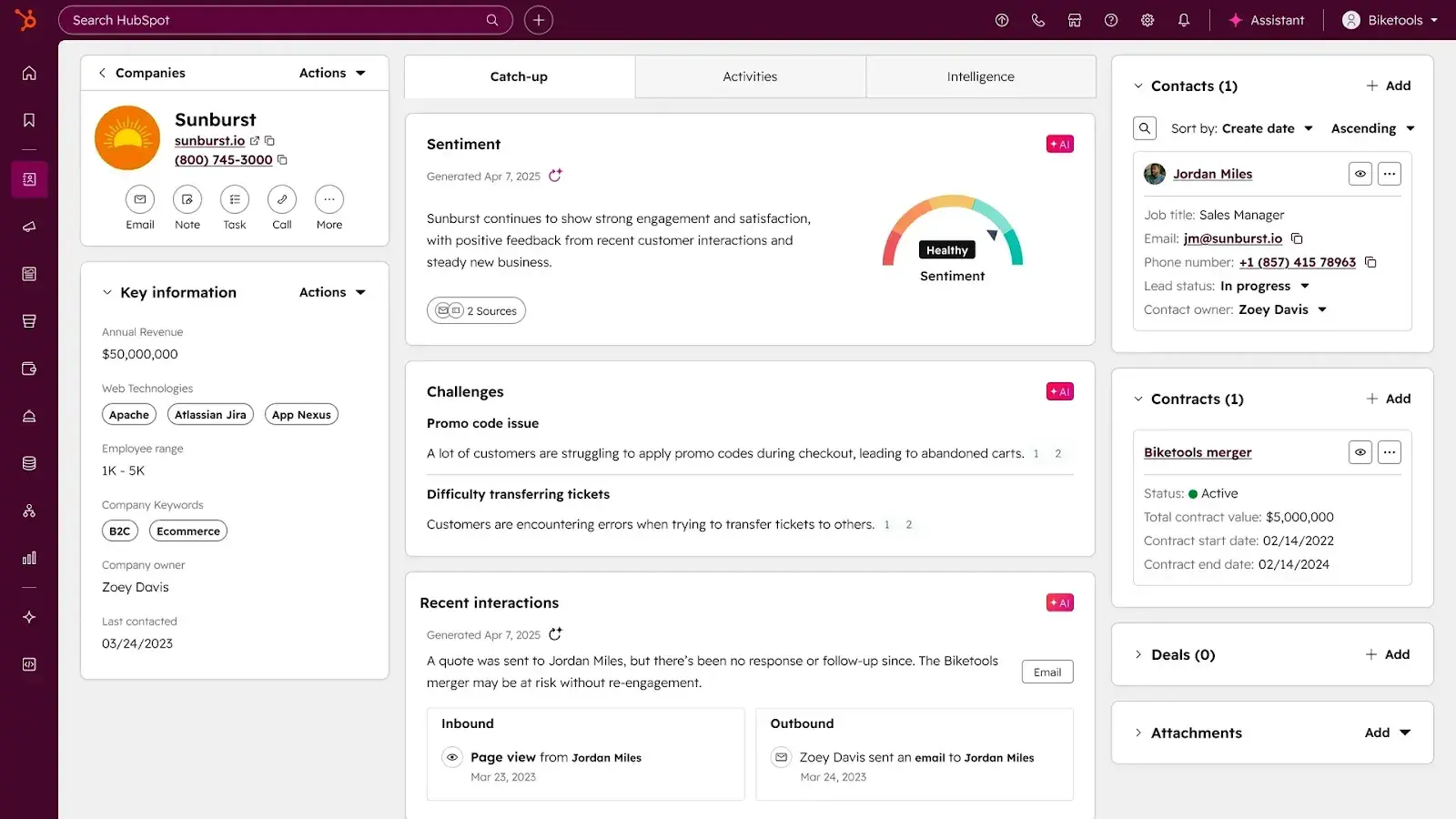
When data systems operate in isolation, projections can become unreliable. Consistent data inputs minimize projection errors and contribute to more stable forecast outputs over time.
Standardize Definitions
Establishing clear and universally understood definitions for key terms such as "lead," "opportunity stage," and "attribution model" is crucial for preventing inconsistencies across different teams and departments. Stable definitions foster a shared understanding of performance measurement, leading to more dependable projections.
Build Feedback Loops
Effective feedback loops are established by systematically comparing projected outcomes with actual results. This process allows for the identification of flawed assumptions and facilitates necessary adjustments to conversion rates, channel expectations, or pipeline assumptions.
According to HubSpot’s research, 73% of marketing teams analyze campaign performance at least weekly, and 59% review performance daily or weekly. This frequent evaluation enables teams to refine projections based on real-time results rather than relying on static, outdated assumptions.
This principle aligns closely with Loop Marketing, which formalizes feedback loops across the entire customer lifecycle. Loop Marketing integrates campaign performance, CRM data, and customer interactions into a continuous cycle of learning and optimization. By embedding these loops into forecasting processes, teams can update their assumptions in near real-time, significantly reducing the discrepancy between projected and actual outcomes.
Incorporate Real-Time Data
The integration of real-time data ensures that forecast inputs are updated dynamically as campaign performance evolves. This approach prioritizes adjusting models as conditions change, rather than waiting for periodic reviews. Shorter data cycles allow projections to accurately reflect current conversion rates, spend efficiency, and channel performance, leading to more stable outputs over time.
Automate Forecasting Workflows
Automation plays a vital role in aligning execution with forecast assumptions. Automating updates reduces manual effort and ensures that workflows remain consistent with current projections, thereby maintaining continuity between planning and execution. HubSpot’s marketing automation capabilities effectively bridge this gap by connecting forecasts directly to campaign delivery mechanisms, including email sequences, nurture programs, and drip campaigns.
The Pervasive Application of Digital Marketing Forecasting Across Channels
Digital marketing forecasting models are meticulously designed to assess performance at the channel level, thereby estimating each channel’s contribution to lead generation and pipeline development. Channel-level projections translate critical inputs like marketing spend, traffic volume, and engagement metrics into anticipated outcomes.
The complexity of the digital marketing landscape continues to expand. HubSpot’s research indicates that 75% of marketers utilize five or more channels, with only a small fraction relying on one or two. This proliferation of channels introduces greater variability, necessitating more granular and sophisticated forecasting models.
Furthermore, the quality of traffic is also undergoing a transformation. Over half (58%) of marketers report that AI-generated referral traffic exhibits higher intent compared to traditional search traffic. This elevated traffic intent directly influences conversion rates and, consequently, alters projected pipeline outcomes.
Different digital marketing channels tend to focus their forecasting efforts on specific aspects:
- Paid Media: Forecasts often concentrate on cost per lead (CPL), cost per acquisition (CPA), and return on ad spend (ROAS), aiming to optimize budget allocation for maximum efficiency.
- Organic Search (SEO): Forecasting in this area typically involves predicting organic traffic volume, keyword rankings, and the resultant lead generation from organic channels.
- Content Marketing: Focuses on predicting engagement metrics, website traffic driven by content, and the subsequent lead conversion rates attributed to content assets.
- Email Marketing: Forecasts in this channel often analyze open rates, click-through rates, and conversion rates from email campaigns, aiming to optimize nurturing sequences and promotional efforts.
- Social Media: Forecasting here may involve predicting engagement levels, follower growth, website traffic driven by social channels, and lead generation from social campaigns.
Channel-level forecasting is instrumental in identifying which sources generate the most efficient pipeline and where incremental investment is likely to yield measurable impact.
HubSpot’s Role in Enabling Scalable Marketing Forecasting
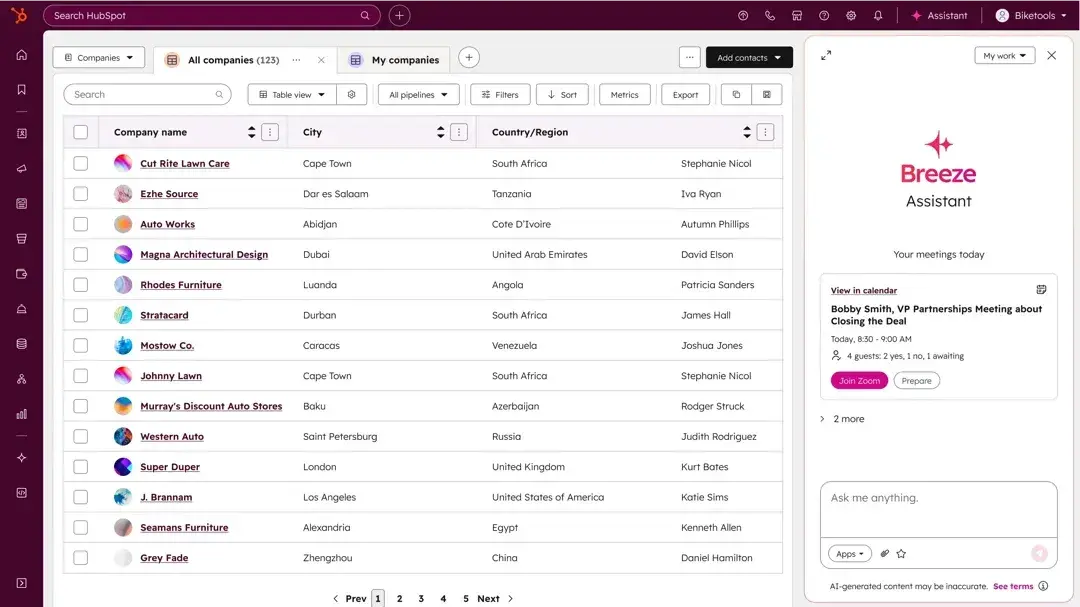
HubSpot empowers marketing forecasting by providing a unified data environment, automating workflows, and integrating AI-driven insights across the entire revenue funnel. Key components like HubSpot Smart CRM, HubSpot Marketing Automation, and HubSpot Breeze AI collectively support marketing forecasting, from initial data collection through to execution and ongoing optimization. This integrated system significantly enhances forecast accuracy and enables teams to act on projections with greater consistency and confidence.
HubSpot Smart CRM
HubSpot Smart CRM is pivotal in operationalizing and automating marketing forecasts. It centralizes customer data and pipeline visibility, thereby enhancing forecast accuracy. The platform seamlessly connects marketing and sales activities within a single system, allowing teams to meticulously track how inputs like traffic and lead generation translate into tangible pipeline and revenue. By centralizing customer data, HubSpot Smart CRM strengthens forecasting models and minimizes discrepancies across various teams. This unified visibility across the entire funnel improves the process of building and validating assumptions, and consistent data inputs support more reliable marketing forecasting over the long term.
HubSpot Marketing Automation
HubSpot Marketing Hub features robust marketing automation capabilities that execute campaigns and workflows precisely aligned with forecast assumptions. The platform connects forecasting inputs directly to real-world campaign activities, including email sequences, nurture programs, and drip campaigns. HubSpot marketing automation executes workflows based on predefined triggers, ensuring that teams maintain alignment between planned outcomes and their actual execution. Automation reduces manual effort and guarantees that campaigns accurately reflect current forecasting models, thereby enhancing consistency across marketing operations.
HubSpot Breeze AI
Breeze, HubSpot’s AI agent, is designed to generate content, analyze performance data, and support complex forecasting scenarios. Breeze and its specialized Breeze Agents extend these capabilities across the entire campaign planning and execution lifecycle. Forecasting models must be agile enough to adapt to increasingly rapid execution cycles. According to HubSpot’s research, 61% of marketers identify AI as the most significant disruption in the past two decades, with 80% now integrating AI into their marketing workflows. This acceleration in execution necessitates faster updates to forecast models.
Breeze contributes to improved forecasting in three key ways:
- Content Generation: Breeze can generate marketing copy and campaign materials that are aligned with forecast objectives, ensuring that messaging supports predicted conversion paths.
- Performance Analysis: It analyzes campaign performance data to identify trends, anomalies, and potential areas for improvement, providing real-time insights that can inform forecast adjustments.
- Scenario Modeling: Breeze can assist in modeling various forecast scenarios by quickly processing different variables and assumptions, helping teams understand the potential impact of different strategic choices.
By connecting content generation with performance insights, Breeze enables projections to evolve dynamically alongside real-time data.
Addressing Common Questions About Marketing Forecasts
How often should a marketing forecast be updated?
Marketing forecasts should ideally be updated monthly or quarterly, depending on the velocity of the business. Fast-paced environments benefit from more frequent updates, as performance inputs like conversion rates and channel efficiency can change rapidly. Regular updates ensure that projections remain aligned with current data and market conditions.
What is the best approach for forecasting with limited data?
In situations with limited data, a combination of scenario-based forecasting and the use of benchmark data from similar products or channels can provide a practical starting point. Early models will rely on these initial assumptions, which should be refined as performance data becomes available.
How can marketers predict the impact of changes?
Scenario modeling is an effective tool for this purpose. By allowing teams to adjust variables such as conversion rates, marketing spend, or channel mix, and then estimate potential outcomes, this approach helps evaluate trade-offs before implementing significant changes.
When is it appropriate to switch forecasting methods?
Teams should consider switching forecasting methods as their data maturity increases or when current models no longer accurately reflect performance trends. More advanced methods, such as regression-based forecasting, become increasingly valuable as datasets grow and the relationships between variables become clearer.
The Pillars of an Effective Marketing Forecast
An effective marketing forecast is one that seamlessly integrates data, strategy, and execution into a continuously adapting system. Forecast reliability is a direct consequence of consistent inputs, unified data systems, and regular validation against actual performance metrics. Clear assumptions and well-structured models serve to reduce uncertainty and bolster strategic planning decisions.
HubSpot Smart CRM centralizes essential data, HubSpot marketing automation translates projections into actionable execution, and Breeze AI infuses intelligence across all forecasting workflows. These integrated systems transform marketing forecasts from static projections into dynamic models that accurately reflect real-world performance. As forecast models are treated as active, evolving systems rather than fixed plans, and are supported by regular updates, consistent definitions, and aligned data, they yield more stable projections and foster more predictable business growth.
About the Author