The Republic of Panama stands at a critical geopolitical and economic crossroads as it navigates a $20 billion legal challenge that has effectively forced the national government back to the negotiating table with a foreign mining conglomerate. In 2025, the Panamanian administration found itself coerced into renewed discussions with First Quantum Minerals, a Canadian-based firm, following a massive lawsuit filed under the Investor-State Dispute Settlement (ISDS) framework. This legal confrontation comes despite two separate rulings by Panama’s Supreme Court—one in 2017 and another in 2023—declaring the mine’s operating contract unconstitutional. The situation serves as a stark case study in the growing tension between national sovereignty, environmental protection, and the binding nature of international investment agreements.
The Cobre Panama mine, located in the lush corridors of the Donoso district, represents one of the largest open-pit copper operations in the world. For years, it was a cornerstone of the Panamanian economy, contributing approximately 5 percent to the nation’s Gross Domestic Product (GDP). However, the project has been mired in controversy since its inception, facing accusations of environmental degradation and legal irregularities. The current crisis was catalyzed by mass civil unrest in late 2023, where tens of thousands of Panamanians took to the streets, paralyzing the country’s infrastructure to demand the closure of the mine. While the protests successfully prompted a Supreme Court ruling to shut down operations, the subsequent $20 billion ISDS claim has shifted the battle from the streets of Panama City to the closed-door chambers of international arbitration.
A Chronology of Conflict: From Contract to Crisis
The legal foundation of the Cobre Panama project dates back to Law 9 of 1997, which granted a mineral concession to Petaquilla Minerals, a company later acquired by First Quantum Minerals. The contract was designed to last for decades, providing the company with exclusive rights to extract copper and gold. However, by 2017, the Supreme Court of Panama ruled that the 1997 law was unconstitutional because it did not represent the public interest and lacked a competitive bidding process.
Despite this judicial void, operations continued and even expanded. In early 2023, the government of President Laurentino Cortizo attempted to resolve the legal limbo by signing a new contract with First Quantum. This agreement promised the state at least $375 million in annual revenue. Yet, the public perceived the deal as a surrender of national resources. The resulting protests in October and November 2023 were the largest the country had seen in decades, involving a broad coalition of environmentalists, labor unions, and indigenous groups.

In November 2023, the Supreme Court once again intervened, declaring the new contract unconstitutional. This led to a government-ordered cessation of operations. By early 2024, First Quantum Minerals initiated the ISDS process, seeking damages to recover its multi-billion dollar investment and lost future profits. By 2025, the sheer scale of the potential liability—roughly equivalent to one-third of Panama’s annual national budget—prompted the government to reconsider the total closure, leading to the current state of "coerced negotiation."
The Mechanics of Investor-State Dispute Settlements
To understand the leverage held by First Quantum, one must examine the structure of ISDS provisions. These clauses are standard features in thousands of International Investment Agreements (IIAs) and Bilateral Investment Treaties (BITs) worldwide. Designed originally in the mid-20th century to protect Western investors from arbitrary expropriation in post-colonial states, ISDS allows private corporations to sue sovereign governments in international tribunals, such as the World Bank’s International Centre for Settlement of Investment Disputes (ICSID).
The primary criticism of ISDS is that it creates a parallel legal system where cases are decided by panels of private trade lawyers rather than permanent judges. These panels are not bound by domestic laws or constitutional rulings. As seen in Panama, even when a national Supreme Court finds a contract illegal, an ISDS tribunal may still award damages to the company if it determines the government’s actions violated "fair and equitable treatment" or constituted "indirect expropriation."
"The Panama mine was allowed to start with an unconstitutional contract," noted Jamie Kneen, national program co-lead at MiningWatch Canada. "If that doesn’t tell you this is a risky project as an investor, I don’t know what does. But ISDS helps investors override that kind of concern. It essentially de-risks otherwise extremely risky investments."
Analyzing the Economic Justification: Does ISDS Attract Investment?
Proponents of the ISDS system, including trade groups and corporate law firms, argue that these protections are essential for attracting Foreign Direct Investment (FDI), particularly in developing nations with perceived "weak" legal systems. Attorney Davy Karkason, founder of Transnational Matters International Law Firm, argues that these provisions "boost investor confidence by offering legal protection against expropriation or discriminatory acts."
However, empirical data on this claim remains highly contested. A 2022 study by the United States International Trade Commission (USITC) suggested that binding ISDS provisions could increase foreign investment by up to 22 percent. Conversely, a comprehensive 2020 meta-study on investor protections found that the actual effect on FDI was "so small as to be considered zero."
Lisa Sachs, director of the Columbia Center on Sustainable Investment, argues that the financial and political costs of the system often outweigh any marginal economic gains. One of the most significant hidden costs is "regulatory chill," a phenomenon where governments refrain from passing necessary environmental or social legislation because they fear a multi-billion dollar lawsuit from affected foreign corporations.
Global Precedents: Lessons from Ecuador, South Africa, and India
Panama is not the first nation to grapple with the consequences of ISDS. Several countries have already taken steps to dismantle these protections in favor of national sovereignty, providing a roadmap for alternative investment frameworks.
Ecuador: Terminating Treaties without Deterring Growth
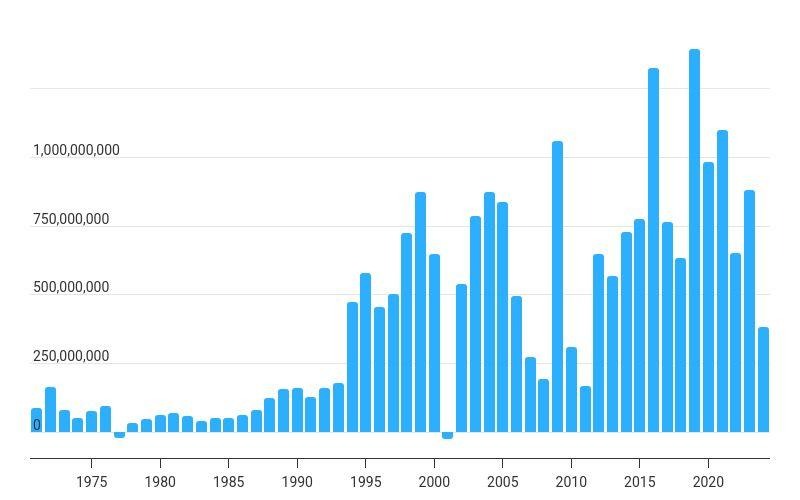
In 2017, Ecuador terminated 16 of its Bilateral Investment Treaties after a government commission concluded that ISDS provisions had failed to bring the promised influx of high-quality investment. Despite predictions of economic isolation, Ecuador’s FDI remained stable. Between 2017 and 2022, the country averaged $1 billion per year in FDI, an increase from the $830 million average seen in the five years prior to the terminations. This suggests that investors are more concerned with the quality of resources and overall market stability than the presence of international arbitration clauses.
South Africa: Moving Toward Domestic Oversight
South Africa began phasing out its ISDS-heavy treaties in the early 2010s, replacing them with the Protection of Investment Act in 2018. This legislation ensures that disputes involving foreign investors are heard within South Africa’s own judicial system. While FDI initially dipped during the transition period, it eventually stabilized, averaging $5.1 billion annually after the act was fully implemented. South Africa’s approach emphasizes that a robust domestic legal framework can serve as a viable alternative to international tribunals.
India: A Mass Exit from Investment Treaties
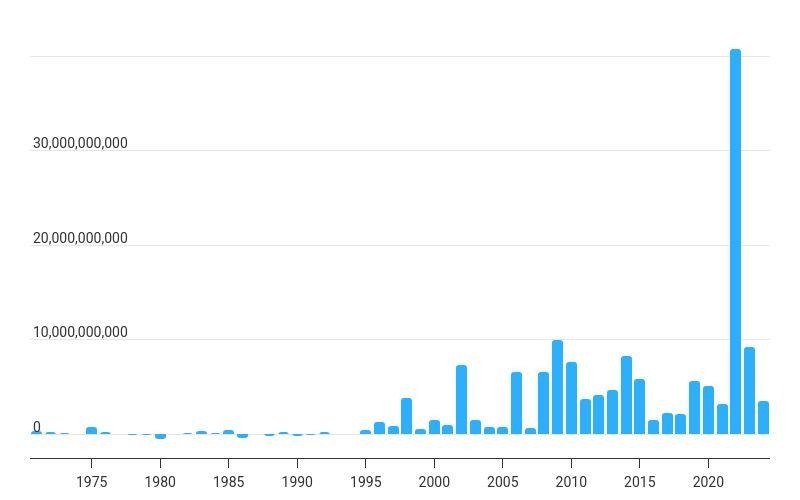
Following a series of high-profile ISDS losses in the 2000s, India terminated over 50 trade agreements in 2016 and 2017. Far from scaring away capital, India saw its annual FDI inflows jump from an average of $33.5 billion (2011-2016) to $48.3 billion in the five years following the policy shift. India’s experience reinforces the argument that large, resource-rich, or strategically important markets do not need to trade away their legal sovereignty to attract global capital.
The Path Forward: Reforming the Investment Landscape
As Panama decides whether to fully reopen the Cobre Panama mine this summer, the global community is increasingly calling for a total overhaul of how mineral extraction and foreign investment are managed. The International Institute of Sustainable Development (IISD) recently released a report outlining several recommendations for a more balanced approach.
One key proposal is the prioritization of domestic courts. Suzy Nikiéma, director of sustainable development at the IISD, acknowledges that while domestic courts in some developing nations are perceived as inefficient, the solution is to invest in those institutions rather than bypass them. "If you decide to prioritize domestic courts, you could put in the effort to improve them and make sure they can handle this type of dispute properly," Nikiéma stated.
Furthermore, there is a push for "mutually beneficial investment frameworks" that emphasize domestic value addition. Isabelle Ramdoo, director of the Intergovernmental Forum on Mining, Minerals, Metals and Sustainable Development, suggests that countries should focus on processing and refining minerals domestically. This not only creates more local jobs but also diversifies the global supply chain, making it more resilient to geopolitical shocks.
Finally, experts emphasize the need for greater inclusivity. The Panama crisis was fueled by a sense that the local population had no voice in a project that directly affected their environment and future. Implementing formal compliance mechanisms where local communities can raise concerns and have them addressed early in the project lifecycle could prevent the kind of mass social unrest that led to the $20 billion impasse in Panama.

The resolution of the Panama-First Quantum dispute will likely set a major precedent for the "green energy" transition. As the demand for copper, lithium, and cobalt surges, the world must decide if the path to a low-carbon future will be paved with the same exploitative legal structures of the past, or if a new era of responsible, sovereign-respecting mining is possible. For now, Panama remains a cautionary tale of what happens when the rights of international investors collide with the will of a sovereign people and the rulings of their highest court.
About the Author