The chasm between understanding Artificial Intelligence (AI) and effectively implementing it in daily professional life is a significant hurdle for many, despite widespread awareness and the proliferation of AI tools. This gap, characterized by knowing AI exists but struggling to translate that knowledge into tangible workflow improvements, is the central challenge facing professionals across industries. The urgency to bridge this divide is underscored by evolving workplace expectations and the clear career advantages for those who master AI integration.
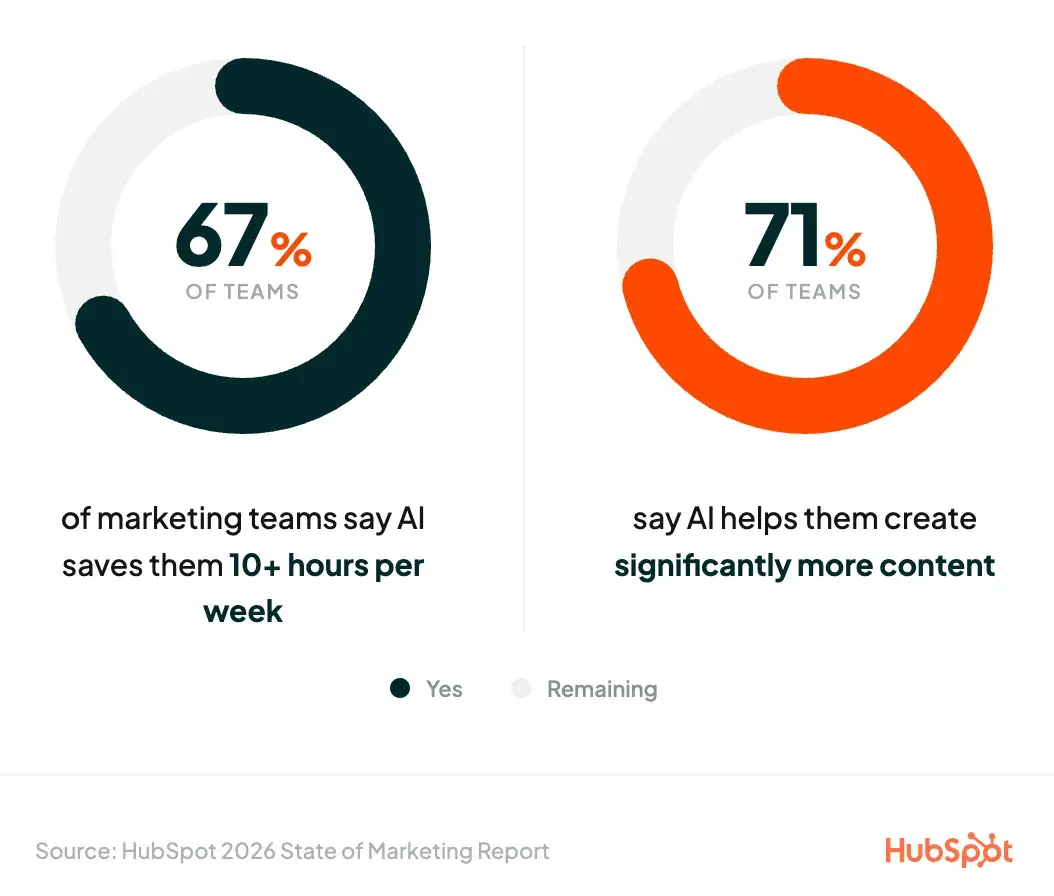
The "operational era" of AI, as described by industry analysts, has largely supplanted the experimental phase. This means that ad-hoc prompting and isolated tool usage are no longer sufficient. The expectation now is for sustained, integrated application of AI to enhance productivity and output. For instance, in content marketing, strategically deployed AI acts as a powerful force multiplier, automating routine tasks and freeing human professionals to focus on higher-value activities like narrative development, brand voice consistency, and factual accuracy. Data from HubSpot’s 2026 State of Marketing report indicates that 67% of marketing teams report saving 10 or more hours weekly due to AI, with 71% stating it enables them to produce significantly more content. This increased efficiency directly translates to a greater capacity for strategic thinking, creative problem-solving, and leadership, tasks that are becoming increasingly crucial for career advancement.
The shift in workplace dynamics means that AI proficiency is rapidly becoming the new baseline. Just as proficiency in spreadsheet software like Excel moved from being a distinguishing skill to a fundamental requirement, AI competency is on a similar trajectory. While current early adoption of AI can still garner recognition, this advantage is temporary. As AI integration becomes standard, the ability to leverage these tools effectively will differentiate professionals. HubSpot research reveals that 83% of marketers anticipate being expected to produce more due to AI, highlighting the growing pressure to integrate these technologies. The implication is stark: while AI may not replace individuals, those who master its application are poised to outperform their peers.
Managerial perception plays a critical role in this evolving landscape. Gallup data from 2026 indicates a significant disparity in AI usage between leadership and individual contributors, with 69% of leaders and 55% of managers reporting AI use at least a few times annually, compared to only 40% of individual contributors. This suggests that managers are not only more likely to be using AI themselves but also possess a keen understanding of its potential. When two employees deliver comparable work, the one who consistently achieves results faster and more thoroughly through AI integration is likely to be noticed, influencing opportunities for stretch assignments, strategic involvement, and promotions.

The Persistent Challenges of AI Adoption
Despite the clear benefits, several well-documented factors contribute to the difficulty many professionals face in transitioning from AI awareness to effective adoption.
The Knowing-Doing Gap
A fundamental obstacle is the "knowing-doing gap," a concept identified by researchers Jeffrey Pfeffer and Robert Sutton. This gap highlights the significant difference between understanding what needs to be done and actually implementing it. In the context of AI, this means that even with extensive knowledge of AI capabilities, translating that into daily work habits remains a challenge. Boston Consulting Group (BCG) reported that a substantial 74% of companies have struggled to achieve and scale tangible business value from their AI initiatives. Furthermore, BCG’s findings suggest that people- and process-related issues account for 70% of AI implementation challenges, far outweighing technological or algorithmic hurdles.
The practical constraints of existing workloads are a significant contributor to this gap. With overflowing calendars and demanding task lists, the abstract goal of "improving AI usage" competes with immediate, concrete responsibilities. Timothy Biondollo, HubSpot Media’s Prompt Engineer and AI Specialist, articulates this challenge: "Awareness is passive, and adoption requires you to change how you actually work, not just add a new tab to your browser. The gap is that most people are still moving through their day task by task, in order, doing the work themselves. Enabled people have made a completely different shift. They spend their time gathering context, writing instructions, and then running ten parallel workstreams in the background while they focus on strategy and quality. That’s not a small adjustment. That’s a different operating model entirely. Nobody tells you that’s what the transition actually looks like, so people try AI a few times, don’t feel the shift, and assume it’s not for them or that the AI isn’t smart enough to do it." Learning AI on top of existing duties places a considerable cognitive load, often leading to stalled adoption even with high motivation.
Overwhelmed by Choice, Lacking Clarity
The sheer volume of AI tools available presents another significant barrier. The AI landscape is rapidly evolving, with new models and features emerging monthly. This abundance, while offering immense potential, can lead to "paradox of choice," where the overwhelming number of options paralyzes decision-making. Professionals may hesitate to invest time in learning a specific tool, fearing it might not be the most effective or optimal choice. This indecision can lead to inaction, as the perceived risk of selecting the "wrong" tool outweighs the potential benefits.
The Productivity Trap
A subtle yet critical challenge is the "productivity trap." Without a deliberate and strategic approach, AI can inadvertently create more work rather than reduce it. For example, using AI to summarize a dataset into a memo might seem efficient. However, the subsequent steps of reviewing for accuracy, re-prompting for corrections, fact-checking generated claims, and reformatting the output to match the desired tone can consume more time than the original manual process. This experience can lead individuals to conclude that AI is not a viable solution, when in reality, the issue lies with the approach, not the tool itself. Distinguishing between tasks where AI genuinely saves time and those where it merely shifts the workload is crucial for true AI enablement.

Defining AI Enablement: Moving Beyond Awareness
The journey from simply being aware of AI to becoming truly AI-enabled requires a structured approach that prioritizes practical application and skill development.
Recognizing Your Position in the Adoption Curve
The pervasive narrative that one is "behind" in AI adoption is often amplified by marketing and influencer content. This messaging taps into a primal fear of being left out. However, empirical data suggests a more nuanced reality. According to Gallup, 49% of U.S. workers report never using AI in their roles, and only 26% use it a few times per week or more. This indicates that AI proficiency has not yet reached widespread mainstream adoption.
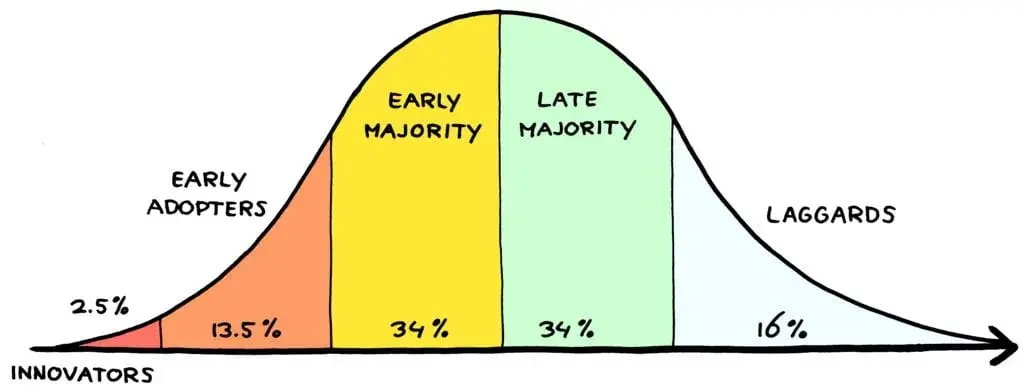
Applying E.M. Rodgers’ Diffusion of Innovation Theory provides valuable perspective. This theory categorizes technology adopters into five groups: innovators (2.5%), early adopters (13.5%), early majority (34%), late majority (34%), and laggards (16%). Current data suggests that generative AI adoption is likely in the early majority phase. This means that while early enthusiasts have embraced AI, the broader professional community is just beginning to integrate it. For individuals not yet comfortable with AI, this presents a critical window of opportunity to gain an advantage by actively engaging with the technology before it becomes ubiquitous. The discomfort of being a beginner is often exacerbated by the belief that everyone else is already ahead, a perception that current data suggests is largely inaccurate.
The Power of Incremental Steps
Developing AI proficiency, much like any skill, is best achieved through consistent practice. Instead of attempting to master complex AI applications immediately, focusing on small, achievable wins can build momentum. Starting with simple tasks, such as using AI to refine internal communications or generate draft content outlines, can provide immediate validation of AI’s utility. These early successes serve as powerful motivators, fostering curiosity and encouraging further exploration.
Integrating AI into existing workflows, rather than treating it as a separate activity, helps overcome the friction of initial adoption. When individuals witness firsthand how AI can streamline their daily tasks, they are more likely to persevere through the learning curve. As HubSpot Blog writer Amy Rigby notes, "The hardest part about weaving AI into workflows is also the hardest part of any attempt at efficiency gains: At first, it’s going to be wildly inefficient. You’ll be stumbling over how it works, experimenting, and failing because it’s all new to you… You have to stick it out past that learning curve to unlock that value. It’s a great feeling once you do." This consistent application builds the "AI muscle," leading to a broader range of applications and a deeper integration into daily work.
Mastering the Art of Prompting
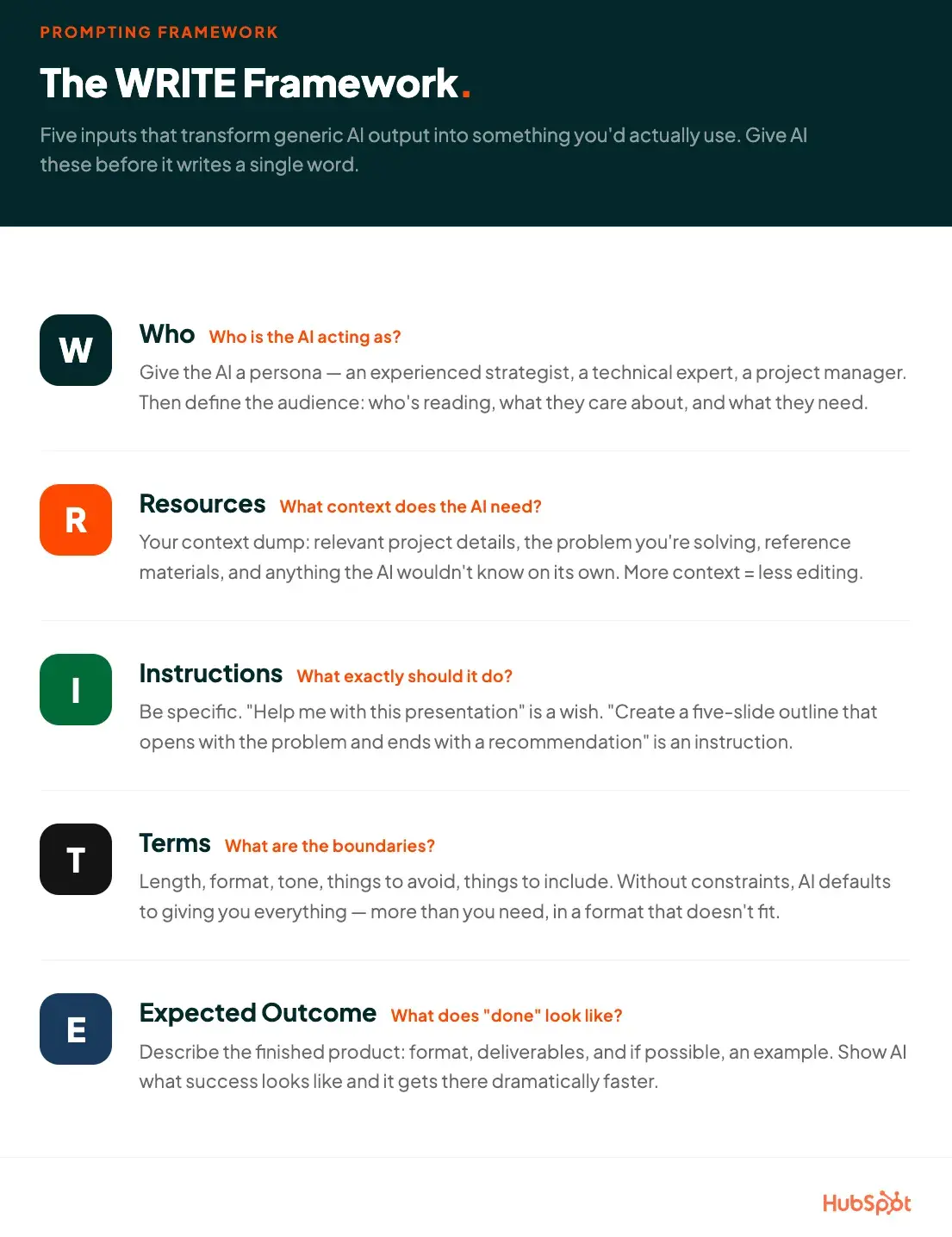
Effective prompting is arguably the most crucial skill for anyone beginning their AI journey. The quality of an AI’s output is directly proportional to the clarity and specificity of the input it receives. Meg Prater, Head of Content Strategy & Operations for HubSpot Media, emphasizes this point: "They’re not using the right prompts. Once you learn how to prompt better, your results make it impossible not to use AI to enhance your work and create more time to do the work that matters."
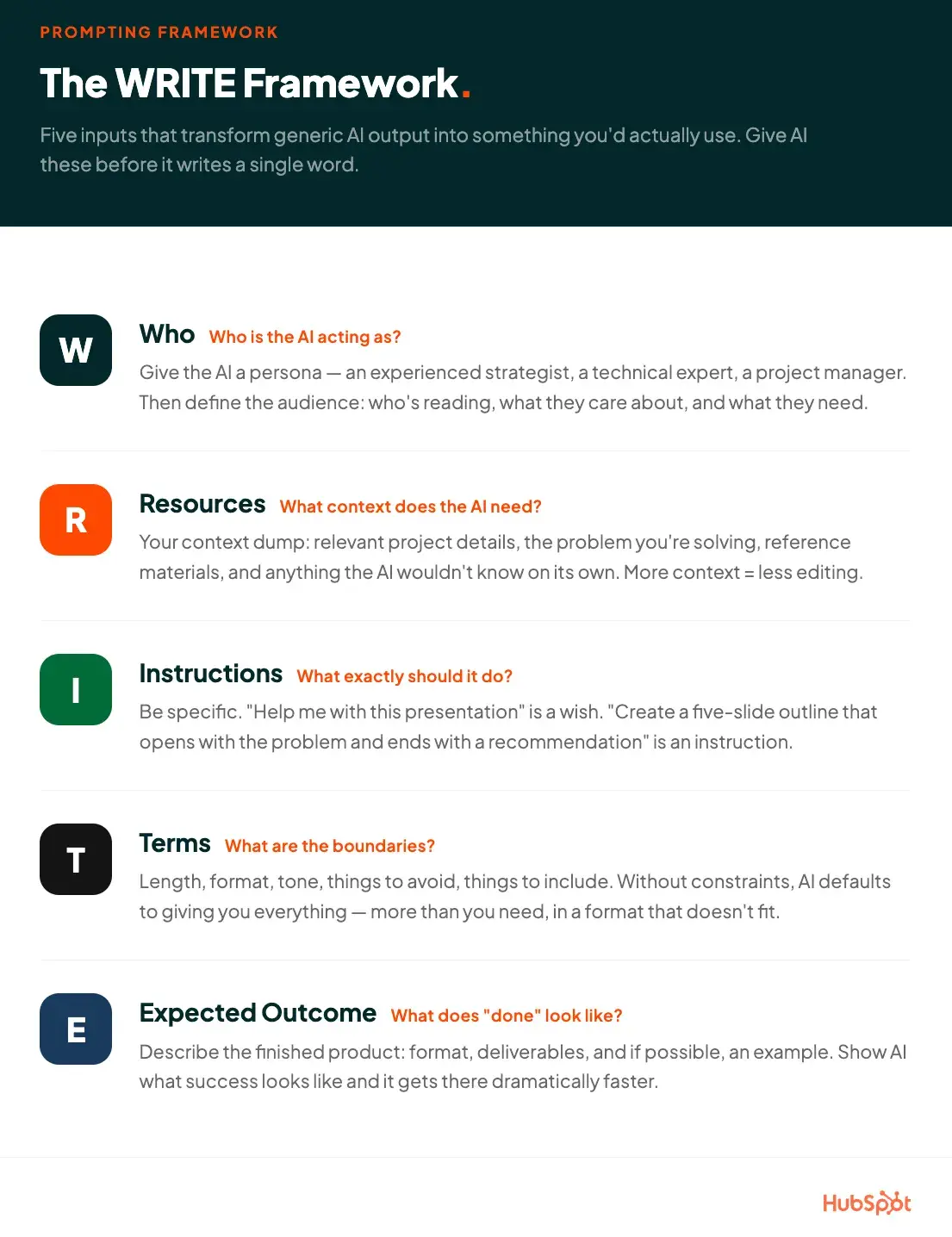
A structured approach to prompting, such as the WRITE framework (Who, Resources, Instructions, Terms, Expected Outcome), ensures that AI receives all necessary context to generate relevant and actionable responses. For example, a prompt designed to create a marketing launch plan would benefit from specifying the target audience, available resources, desired task, necessary constraints, and the expected deliverables. This detailed approach transforms generic AI outputs into tailored solutions that genuinely enhance productivity and strategic output.
Establishing a Structured AI Goals Schedule
To maintain momentum and prevent AI adoption from fading, establishing a structured goals schedule is essential. Research indicates that individuals who create explicit plans for achieving goals are more likely to succeed. Instead of a vague intention like "get better at using AI," a concrete plan such as "dedicate 20 minutes every Tuesday morning to applying AI to a specific task" transforms intention into actionable habit.
This structured approach involves setting realistic weekly AI goals, focusing on incremental progress. For instance, a monthly objective to reduce time spent on status updates and meeting preparation could be broken down into weekly sub-goals: Week 1 might involve using AI to draft meeting agendas, Week 2 to generate meeting summaries, Week 3 to create follow-up action items, and Week 4 to synthesize meeting outcomes into reports. This systematic process not only reinforces the habit of AI use but also combats the paralysis of choice by focusing on specific, achievable tasks relevant to one’s role. AI itself can even assist in developing these schedules by analyzing one’s responsibilities and suggesting potential AI applications.
Making Progress Visible
For professionals, demonstrating the impact of AI integration is vital for career advancement. Regularly communicating AI-driven efficiency gains and new use cases to managers signals proactive engagement and forward-thinking. This visibility can take various forms, from brief Slack messages to detailed updates in one-on-one meetings. Tracking AI progress through task management tools or shared documents can facilitate reporting and highlight achievements.
Furthermore, sharing insights and methods with colleagues can foster a culture of AI adoption within a team. Timothy Biondollo advises, "The trick is to share the how, not the wow. Not ‘look what I built’ but ‘here’s how I built it, maybe this helps you.’ The second it becomes useful to someone else in the room, it stops being a brag and becomes a capability unlock for the whole team." This collaborative approach not only enhances individual visibility but also contributes to the collective growth of the team’s AI capabilities.
Maintaining an Information Loop
The rapid evolution of AI necessitates continuous learning. Establishing a sustainable information loop, rather than attempting to consume every piece of new information, is key to staying current without becoming overwhelmed. Limiting oneself to a curated selection of four to five AI information channels – such as newsletters, podcasts, influential LinkedIn accounts, or internal communities – ensures a steady flow of relevant updates. The principle of "one in, one out" can help manage this information intake, ensuring it remains manageable and beneficial.
Enabling Teams: From Experimentation to Execution
For team leaders, driving AI adoption requires a different strategic approach. Fostering AI integration across a team is not a passive process; it demands active leadership and support. Managerial endorsement is a critical predictor of employee AI usage, with studies showing a significant drop in adoption rates when leaders do not actively support these initiatives.
Meeting team members where they are, understanding their individual challenges and comfort levels with new technology, is paramount. Engaging in open conversations about their AI usage, identifying barriers to adoption, and offering tailored guidance based on their specific needs are essential steps. The author’s experience highlights that direct conversations with team members often yield more valuable insights than general training materials. Encouraging exploration while providing space for individual learning journeys is the most effective managerial strategy.
Futurepedia: A Gateway to AI Enablement
The core challenge in AI adoption lies in bridging the gap between awareness and practical application. This is precisely where platforms like Futurepedia, now part of HubSpot, play a pivotal role. Futurepedia operates as a leading independent AI education and discovery platform, boasting the world’s largest AI tool directory and a comprehensive educational component with numerous courses and lessons focused on real-world AI skills.
By offering a curated repository of AI tools and accessible learning resources, Futurepedia empowers professionals to move beyond passive awareness and engage in active skill development. The integration with HubSpot signifies a commitment to providing broader resources and reach, aiming to make AI accessible and actionable for businesses and individuals alike. The professionals who will thrive in the coming years will not be those with the most theoretical knowledge of AI, but those who have actively learned to collaborate with it. Futurepedia provides the foundational resources for this crucial transition.
About the Author