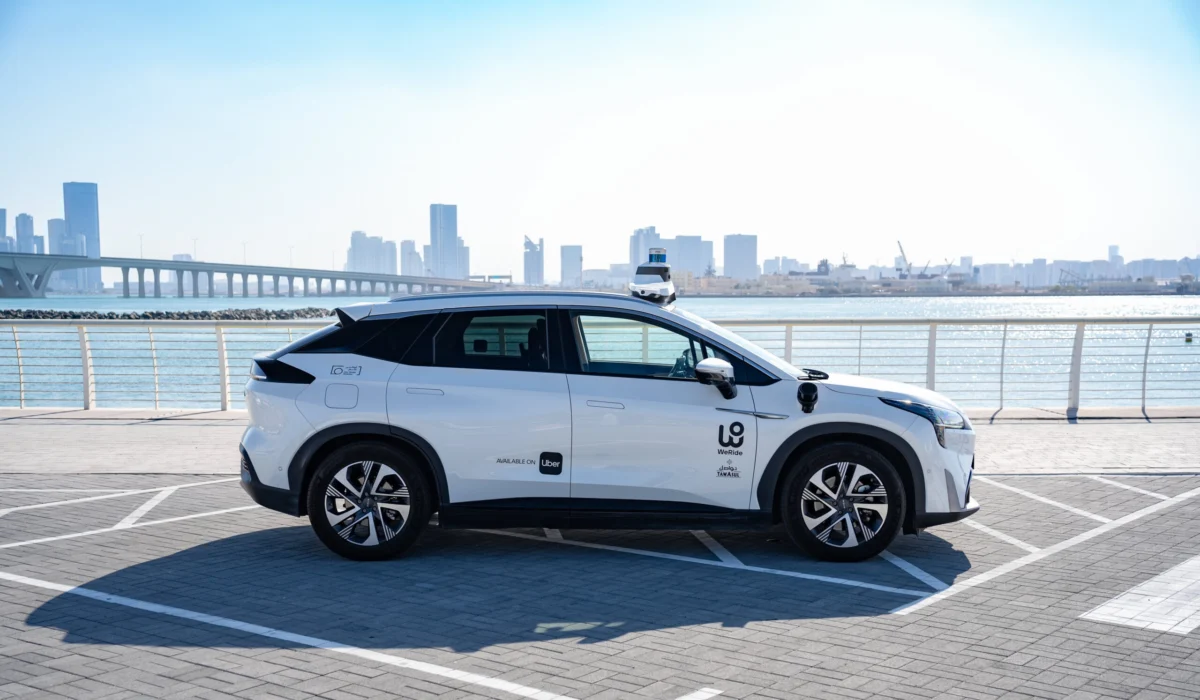
BEIJING – Despite the backdrop of ongoing geopolitical tensions in the wider Middle East, at least three prominent Chinese robotaxi companies are aggressively pushing forward with ambitious expansion plans into the United Arab Emirates, signaling a strategic bet on the region’s burgeoning autonomous mobility market. This concerted push highlights Dubai’s emergence as a pivotal testbed for future transportation technologies and underscores China’s growing ambition in exporting its advanced technological capabilities globally.
Chinese Tech Giants Converge on the Emirates
The latest wave of announcements confirms a significant commitment from China’s leading autonomous driving firms. Ride-hailing behemoth Didi Global, through its autonomous driving division, is poised to initiate its inaugural overseas robotaxi tests in the United Arab Emirates later this year. This move was officially disclosed during a UAE-China business cooperation forum held in Beijing, where Zhang Bo, co-founder of Didi and head of its autonomous driving business, unveiled the plans. The timing of this announcement was notably aligned with a high-profile state visit by Abu Dhabi Crown Prince Sheikh Khaled bin Mohamed bin Zayed Al Nahyan, who met with Chinese President Xi Jinping in Beijing, emphasizing the deepening strategic and economic ties between the two nations.
Didi’s entry follows in the wake of other Chinese pioneers already establishing a strong foothold. Guangzhou-based WeRide, a global leader in Level 4 autonomous driving technology, announced earlier this month the launch of its fully driverless, fare-charging robotaxi service in key Dubai districts, including Jumeirah and Umm Suqeim. This service allows riders the convenience of booking a robotaxi directly through Uber’s widely used platform, integrating seamlessly into existing ride-hailing ecosystems. WeRide’s deployment represents a significant step beyond mere testing, moving into active commercial operation, a testament to the company’s confidence in both its technology and the Dubai market.
Pony.ai, another formidable player in the autonomous driving sector, is also actively pursuing commercial operations in the emirate. In late March, Pony.ai CEO James Peng, addressing concerns about regional instability, affirmed that the prevailing geopolitical climate had not impacted the company’s application for a commercial license in Dubai. Peng expressed an optimistic outlook, viewing the regional conflict as a short-term challenge rather than a long-term deterrent to investment and expansion. This sentiment echoes the broader strategic calculation made by Chinese firms: the long-term potential of the UAE market outweighs the immediate, perceived risks. Pony.ai had previously secured permission from Dubai’s Roads and Transport Authority (RTA) in September to commence local autonomous driving tests, setting the stage for its current push towards commercialization.
Adding to the impressive roster, Baidu’s robotaxi unit, Apollo Go, initiated its fully driverless commercial ride-hailing services in Dubai on April 1st. Through its dedicated app, residents and visitors in Dubai can now hail autonomous vehicles, further diversifying the available options for smart mobility. While specific restricted areas of operation were not immediately clarified, Dubai’s media office heralded the rollout, announcing plans to commence with a fleet of 50 vehicles, with an ambitious target of scaling up to over 1,000 robotaxis within the next few years. This rapid scaling demonstrates Dubai’s commitment to embracing autonomous transport and the Chinese companies’ readiness to meet that demand.

Dubai’s Ambitious Smart Mobility Vision
Dubai has long articulated a clear and ambitious vision to become a global leader in smart and sustainable urban mobility. A cornerstone of this strategy is the Dubai Self-Driving Transport Strategy 2030, which aims for 25% of all transportation trips in the emirate to be smart and driverless by 2030. This translates into a projected economic benefit of AED 22 billion (approximately $6 billion) annually, by reducing transport costs, decreasing carbon emissions, and enhancing road safety and efficiency.
The regulatory environment in Dubai, spearheaded by the Roads and Transport Authority (RTA), has been exceptionally proactive and facilitative for autonomous vehicle development and deployment. The RTA has established a comprehensive framework for licensing, testing, and operating autonomous vehicles, making Dubai an attractive destination for companies seeking to commercialize their technologies. This forward-thinking approach provides a crucial advantage over many other global cities where regulatory hurdles often impede progress. The RTA’s collaboration with these Chinese firms is not merely transactional; it’s a strategic partnership aimed at achieving Dubai’s long-term urban development goals. The city offers diverse road conditions, a growing population, and a strong digital infrastructure, making it an ideal living laboratory for autonomous technology.
Navigating Geopolitical Crosscurrents
The expansion of Chinese robotaxi firms into the Middle East occurs amidst a complex geopolitical landscape, with the original article specifically referencing "the ongoing Iran war." While a direct, full-scale military conflict between Iran and a major power is not currently underway, the region is indeed characterized by heightened tensions, proxy conflicts, and security concerns that can influence investment decisions. These include maritime incidents, drone attacks, and cyber warfare, which collectively contribute to an environment of perceived instability.
However, the UAE, and particularly Dubai, has historically maintained its status as a stable and secure economic hub, largely insulated from direct military engagements. Its robust infrastructure, strategic location, and diversified economy, coupled with a proactive foreign policy aimed at de-escalation, allow it to continue attracting foreign direct investment even during periods of regional flux. The statements from executives like Pony.ai’s James Peng, who view the conflict as "short term," suggest a calculated risk assessment by these companies. They are likely banking on Dubai’s resilience, its commitment to innovation, and the long-term economic dividends of establishing an early market lead in autonomous mobility.
For the UAE, attracting these advanced tech companies serves multiple strategic objectives: accelerating its smart city initiatives, diversifying its economy beyond oil, fostering innovation, and strengthening its position as a global technology hub. The partnership with Chinese firms also aligns with its "Look East" policy, seeking to balance traditional Western alliances with growing ties to Asian economic powerhouses.

The Global Race for Autonomous Dominance
The concerted push by Chinese robotaxi companies into the Middle East marks a significant chapter in the global race for autonomous vehicle dominance. While Alphabet-backed Waymo and General Motors’ Cruise have made substantial strides in deploying fleets across various U.S. cities and conducting tests in select international locations like London and Japan, Chinese firms are increasingly asserting their global presence.
Chinese companies, backed by significant state and private investment, have rapidly advanced their autonomous driving capabilities within China, accumulating vast amounts of real-world data and refining their algorithms in complex urban environments. Companies like Baidu Apollo Go, which already operates in dozens of Chinese cities, have demonstrated the ability to scale operations quickly. Their expansion into Dubai signifies a strategic leap, allowing them to gain international experience, adapt their technology to different regulatory and environmental conditions, and compete directly with Western counterparts on a global stage.
The Middle East, with its relatively less congested regulatory landscape and strong government support for technological innovation, offers a fertile ground for these companies to prove their scalability and commercial viability outside their home market. This international deployment also serves as a critical validation of their technology and business models, potentially paving the way for further expansion into Europe and other markets.
Strategic Alignment: China’s Belt and Road and Tech Exports
The proliferation of Chinese robotaxi services in the UAE is not an isolated phenomenon but rather fits into China’s broader strategic initiatives, most notably the Belt and Road Initiative (BRI). While traditionally associated with infrastructure development, the BRI has increasingly evolved to encompass digital connectivity and technology exports. The deployment of advanced autonomous driving technology aligns perfectly with China’s ambition to position itself as a global leader in emerging technologies and to establish "digital silk roads."
By exporting cutting-edge AI and robotics technology, China aims to strengthen its economic influence, create new markets for its high-tech industries, and deepen its partnerships with BRI participant countries. The UAE, a key hub along the Belt and Road, represents a crucial partner in this endeavor. This technological exchange fosters economic interdependence and provides Chinese companies with valuable international experience and brand recognition. It also allows China to showcase its technological prowess and offer viable alternatives to Western tech solutions.

Challenges and the Road Ahead
Despite the rapid progress and ambitious plans, the journey for robotaxis in the Middle East is not without its challenges. Technical hurdles remain, including adapting autonomous systems to diverse driving behaviors, extreme weather conditions (e.g., sandstorms, intense heat), and varied infrastructure. Public acceptance and trust are also crucial; while Dubai’s tech-savvy population may be more amenable, sustained positive experiences will be necessary for widespread adoption.
Regulatory frameworks, while currently supportive, will need continuous evolution to address new scenarios and ensure safety standards as the technology matures and deployment scales. Furthermore, intense competition from both international and local players, coupled with the capital-intensive nature of autonomous vehicle development, will demand significant ongoing investment and strategic acumen from these Chinese firms.
The commitment of Didi, WeRide, Pony.ai, and Baidu Apollo Go to the UAE market, particularly Dubai, underscores a profound belief in the region’s potential as a future leader in smart mobility. By navigating geopolitical complexities and leveraging supportive local policies, these Chinese tech giants are not only reshaping Dubai’s urban landscape but also asserting their dominance in the global race for autonomous transportation, demonstrating a clear vision for the future of mobility, powered by Chinese innovation.
About the Author