Washington D.C. – U.S. derivatives regulators have initiated a comprehensive examination into a series of highly unusual oil futures trades that occurred mere minutes before a pivotal announcement by President Donald Trump signaling a significant pause in military actions against Iran on Sunday, April 12, 2026. The Commodity Futures Trading Commission (CFTC), the nation’s primary watchdog for derivatives markets, is spearheading this intensive probe, scrutinizing trading activity across major venues operated by CME Group and Intercontinental Exchange (ICE). This investigation comes amidst growing concerns over potential market manipulation and the misappropriation of material nonpublic government information, prompting calls from Capitol Hill for rigorous oversight.
The unfolding inquiry centers on at least two distinct instances over a roughly two-week period where trading volumes in key energy and equity futures contracts exhibited sudden and uncharacteristic spikes. These surges in activity consistently preceded critical, market-moving announcements, raising serious questions about whether privileged information regarding the U.S. government’s strategic decisions was exploited for illicit financial gain. The CFTC has reportedly demanded extensive records from both CME Group and ICE, with a particular focus on so-called "Tag 50 identifiers," crucial data points that can reveal the identities of the individuals or entities behind the suspicious transactions. The stakes are exceptionally high, not only for the integrity of global financial markets but also for national security, given the sensitive nature of the geopolitical information involved.
The Unraveling Investigation: CFTC’s Scrutiny Deepens
The Commodity Futures Trading Commission, an independent agency responsible for protecting market users and the public from fraud, manipulation, and abusive practices related to commodity and financial futures and options, has deployed significant resources to this investigation. Its mandate empowers it to police the vast and complex derivatives markets, ensuring fair and transparent pricing. In this particular case, the CFTC’s focus on "Tag 50 identifiers" underscores the sophistication of their approach. These identifiers are unique codes assigned to trading participants, allowing regulators to trace specific orders and trades back to their originators. The ability to link these trades to individuals or firms is paramount in building a case for insider trading or market manipulation, which carries severe penalties including hefty fines and imprisonment.
The investigation is examining trades executed on platforms operated by CME Group, which owns the New York Mercantile Exchange (NYMEX) where West Texas Intermediate (WTI) crude oil futures are traded, and Intercontinental Exchange (ICE), another global network of exchanges and clearing houses that offers a wide range of futures and options contracts. Both exchanges maintain sophisticated surveillance systems designed to detect abnormal trading patterns, but the sheer speed and timing of these particular spikes have prompted an unprecedented level of regulatory inquiry. While both the CFTC and ICE have declined to comment on the ongoing investigation, a standard practice for sensitive enforcement actions, CME Group has acknowledged the importance of market integrity and advocated for a broader scope of regulatory review.
Chronology of Suspicious Activity and Market Fallout
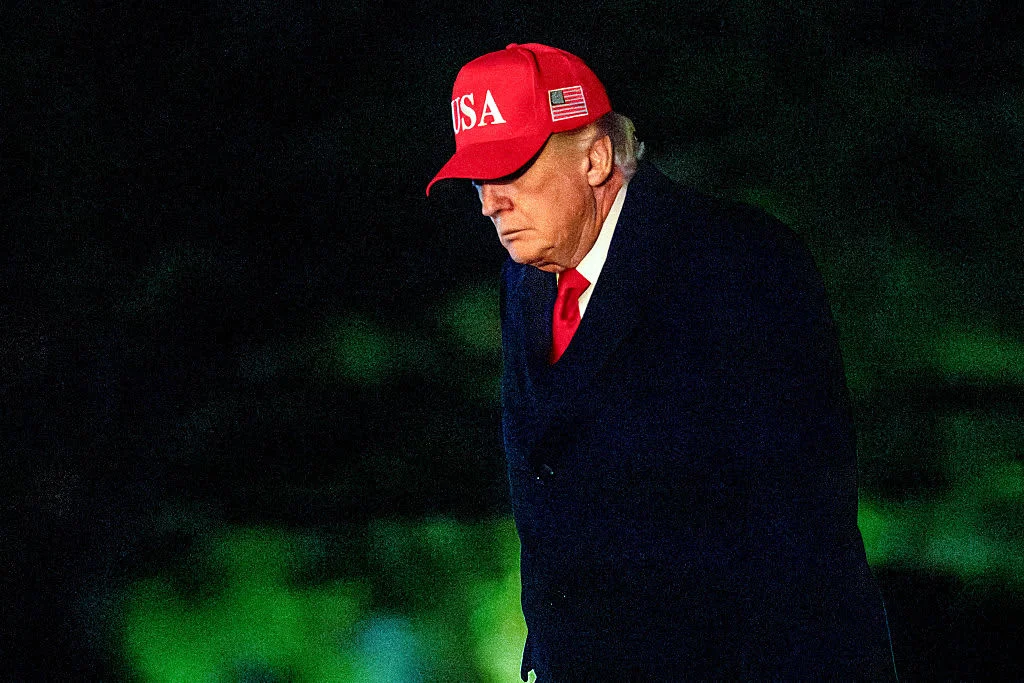
The events triggering this intensive probe are rooted in a series of market anomalies culminating on Sunday, April 12, 2026. On this day, U.S. President Donald Trump, shortly after arriving on Marine One at the White House, made a surprise announcement via Truth Social. He revealed that the United States and Iran had engaged in talks, and, crucially, he was halting planned strikes on Iranian power plants and energy infrastructure. This declaration represented a dramatic shift in rhetoric and policy regarding the simmering US-Israeli conflict with Iran, which had been characterized by heightened tensions and the specter of military escalation. Earlier that day, the President had also publicly criticized Pope Leo XIV for the pontiff’s comments on the conflict, labeling the leader of the Catholic Church "WEAK on crime," indicating the charged atmosphere surrounding the U.S. posture towards the Middle East.
Minutes before Trump’s digital pronouncement, financial markets experienced a series of peculiar events. Specifically, S&P 500 e-mini futures and West Texas Intermediate (WTI) May crude futures witnessed a sudden and isolated surge in trading volume. This activity stood out starkly against an otherwise muted premarket trading environment. The e-mini S&P 500 futures, representing the broad U.S. equity market, are highly liquid contracts, and unusual volume spikes are typically associated with breaking news or significant economic data releases. Similarly, WTI crude oil futures, a global benchmark for oil prices, are extremely sensitive to geopolitical developments, particularly those involving major oil-producing regions like the Middle East.
The market’s reaction to Trump’s announcement was immediate and dramatic. S&P 500 futures, which had shown anomalous pre-market activity, surged by more than 2.5% ahead of the official market open, reflecting a sudden reduction in geopolitical risk perceived by investors. Conversely, WTI crude oil futures, which had also seen a pre-announcement volume spike, tumbled nearly 6%. Given that crude oil prices often rise on fears of supply disruptions from conflict and fall on de-escalation, this sharp decline was a direct response to the news of halted strikes. These simultaneous, sharp reversals, preceded by unexplained volume spikes, raised immediate "eyebrows" among seasoned traders and market analysts, prompting internal reviews even before official regulatory action.
CNBC had previously reported on similar suspicious activity on March 23, highlighting an earlier instance of anomalous trading volume in stock and oil futures just minutes before another market-turning post by President Trump. This earlier report laid the groundwork for the current, broader investigation, suggesting a pattern rather than an isolated incident. The recurrence of such events underscores the urgency of the CFTC’s current probe.
The Geopolitical Backdrop: US-Iran Tensions and Market Sensitivity
To fully grasp the significance of these market movements, one must consider the volatile geopolitical context. The "US-Israeli war on Iran," as referenced in the accompanying image caption, points to a period of severe tension, likely involving military confrontations or imminent threats thereof. Such conflicts in the Middle East, a region critical for global oil supply, invariably send shockwaves through energy markets. Any news suggesting de-escalation or a pause in hostilities would naturally lead to a sharp decline in crude oil prices, as fears of supply disruptions abate. Conversely, escalation would typically drive prices higher.
President Trump’s public comments, including his strong rebuke of Pope Leo XIV on the same day for criticizing the U.S.-Israeli stance, further illustrate the high-stakes environment. The Pope’s intervention, if focused on humanitarian concerns or calls for peace, would imply significant conflict and suffering, thereby underscoring the severity of the situation that Trump’s "pause" announcement sought to alleviate. In such a charged atmosphere, any advance knowledge of a policy shift, especially one as impactful as halting military strikes, would be extraordinarily valuable information, capable of generating immense profits for those who could capitalize on it in financial markets.
The oil market, in particular, functions as a barometer for global geopolitical stability. Traders continuously price in risk premiums based on political instability, potential supply disruptions, and shifts in demand. A sudden, unexpected de-escalation in a major producing region like the Middle East would prompt an immediate unwinding of these risk premiums, causing prices to fall sharply. The magnitude of the 6% drop in WTI crude futures highlights just how significant Trump’s announcement was perceived to be by the market, further emphasizing the potential gains for those trading with foreknowledge.
Congressional Alarm and Regulatory Mandate
The gravity of the situation has not escaped the attention of Capitol Hill. Last week, influential Senators Elizabeth Warren (D-Mass.) and Sheldon Whitehouse (D-R.I.) formally called upon the CFTC to launch comprehensive investigations into these unusual trades. In their letter to the Commission, the Senators explicitly raised the specter of "recurring misappropriation of material nonpublic government information." Their concerns extend beyond mere market manipulation; they touch upon the fundamental fairness of financial markets and the potential for high-level government decisions to be compromised for private profit.
Senator Warren, a vocal advocate for consumer protection and financial market integrity, and Senator Whitehouse, known for his focus on accountability and government ethics, emphasized the national security implications of such leaks. If individuals are profiting from foreknowledge of U.S. military or diplomatic actions, it suggests a severe breach of confidentiality within the highest echelons of government. This not only undermines public trust but could also expose sensitive decision-making processes to undue influence or compromise. Their letter underscored the CFTC’s critical role in upholding market integrity and protecting investors from unfair practices, asserting that such events demand nothing less than a full and transparent investigation.
The CFTC’s regulatory mandate is broad, covering not only outright fraud but also deceptive practices and the misuse of confidential information. Insider trading, though often associated with equity markets and regulated by the Securities and Exchange Commission (SEC), can also occur in commodity markets. When nonpublic information related to government policy, especially policy that directly impacts supply and demand fundamentals, is used to trade derivatives, it constitutes a severe violation of market rules and potentially federal law. The Senators’ intervention significantly amplified the pressure on the CFTC to act decisively and thoroughly.
The Role of Exchanges and Emerging Platforms
CME Group, in its public statement to CNBC, reaffirmed its commitment to market integrity. While not commenting directly on the specific investigation into the unusual trades, a spokesperson stated, "Nothing is more important than market integrity. We vigorously surveil our markets and work closely with the CFTC to oversee trading activity." This declaration underscores the exchanges’ own responsibility in maintaining fair and orderly markets. Exchanges employ sophisticated algorithms and human analysts to monitor trading patterns, identify anomalies, and report suspicious activity to regulators.
However, CME Group also used the opportunity to advocate for a broader scope of regulatory oversight, suggesting that "any review of market behavior must include all venues, including prediction markets like Polymarket and Kalshi that list related products with little to no visibility." Prediction markets are online platforms where users can bet on the outcome of future events, including political developments, economic indicators, and even geopolitical events. These markets have gained popularity, but their regulatory status and transparency often remain ambiguous compared to traditional, regulated exchanges. CME’s argument is that if information leakage is occurring, it could potentially manifest or even be facilitated through these less-regulated platforms, making their inclusion in any comprehensive investigation crucial.
The rise of prediction markets presents a new challenge for regulators. While some argue they offer valuable insights into public sentiment, others view them as potential avenues for gambling, manipulation, or even the monetization of insider information in a less transparent environment. The CFTC has historically taken action against unregistered prediction markets, asserting jurisdiction over them as they involve commodity-like contracts. CME’s stance highlights an evolving landscape where regulators must adapt to new technologies and trading venues to ensure a level playing field across the entire financial ecosystem.
Implications for Market Integrity and National Security
The ongoing investigation carries profound implications. First and foremost, it represents a significant test for the integrity of U.S. financial markets. The public’s trust in these markets hinges on the belief that they are fair, transparent, and free from manipulation. If it is confirmed that individuals or groups profited from advance knowledge of sensitive government policy, it would erode this trust, potentially deterring legitimate investors and making markets appear rigged. Such an outcome could also lead to increased calls for stricter regulations and more aggressive enforcement actions.
Secondly, the probe touches upon critical national security concerns. The leakage of information regarding military strikes or diplomatic initiatives is not merely a financial crime; it represents a serious breach that could compromise strategic planning, endanger personnel, and undermine the effectiveness of U.S. foreign policy. Identifying the source of such a leak would be paramount, not only to prevent future occurrences but also to address any potential vulnerabilities within government agencies. The prospect of foreign adversaries or rogue actors exploiting such information for their own benefit adds another layer of gravity to the investigation.
Thirdly, this case could set important precedents for how the CFTC and other regulatory bodies approach investigations involving government-related market-moving news. It could lead to enhanced surveillance protocols, greater inter-agency cooperation (e.g., between the CFTC, SEC, and intelligence agencies), and potentially new legislative measures aimed at closing any loopholes that allow for the misappropriation of government information. The focus on prediction markets also signals a broader regulatory push to extend oversight to emerging, less traditional trading platforms.
Looking Ahead
As the CFTC’s investigation progresses, market participants, policymakers, and the public will be closely watching. The Commission’s findings could shed light on the mechanisms of sophisticated market manipulation in an era of rapid information dissemination and complex geopolitical dynamics. Should wrongdoing be confirmed, the ensuing enforcement actions would serve as a powerful deterrent against future illicit activities. Conversely, if no conclusive evidence of insider trading or manipulation is found, it would nonetheless highlight the heightened scrutiny under which financial markets now operate, especially when intertwined with high-stakes government decisions.
The outcome of this investigation will undoubtedly shape future dialogues around market regulation, information security within government, and the ethical boundaries of profiting from public service. It underscores the perpetual challenge faced by regulators: to keep pace with evolving financial technologies and increasingly sophisticated methods of exploitation, all while safeguarding the fairness and stability of the global financial system. The probe into these suspicious oil futures trades is more than just an inquiry into financial misconduct; it is a critical examination of the very foundations of market integrity and governmental trust in a rapidly changing world.
About the Author