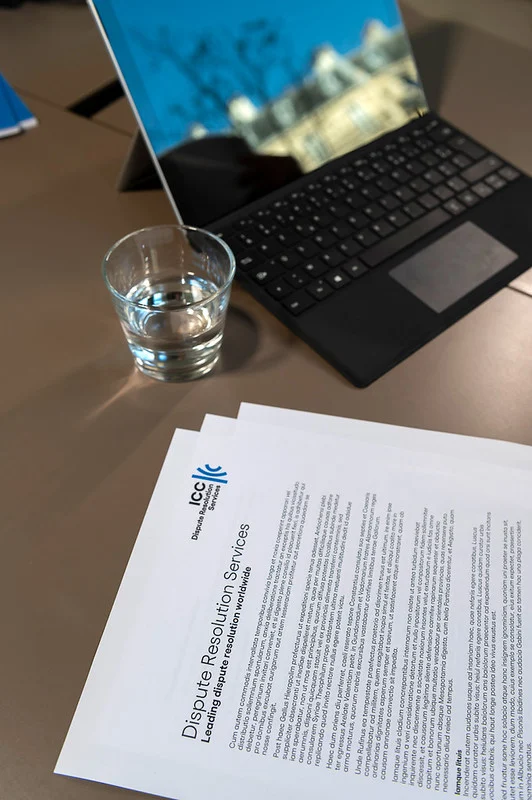
The International Chamber of Commerce (ICC) has formally announced a strategic initiative to support the economic recovery of Syria by implementing a 20% reduction on administrative expenses for eligible arbitration cases related to the nation’s reconstruction. This measure, orchestrated by the ICC International Court of Arbitration, is designed to facilitate the resolution of commercial disputes that are expected to arise as the country attempts to rebuild its decimated infrastructure and reintegrate into the global financial ecosystem. By lowering the financial barriers to high-quality dispute resolution, the ICC aims to provide a stable legal framework that can de-risk private capital investments and encourage international stakeholders to participate in Syria’s long-term stabilization. This initiative follows successful precedents set by the ICC in response to the humanitarian and economic crises in Ukraine and Lebanon, signaling a broader institutional commitment to utilizing alternative dispute resolution (ADR) as a tool for economic resilience in conflict-affected regions.
Contextual Background and the Economic Landscape of Syria
For over a decade, the Syrian economy has been characterized by severe fragmentation, international isolation, and the catastrophic degradation of physical and institutional infrastructure. According to various estimates from the United Nations and the World Bank, the cost of physical destruction in Syria is estimated to be between $250 billion and $400 billion. The conflict has resulted in a significant "brain drain" of legal and technical professionals, leaving a vacuum in the domestic capacity to handle complex international commercial disputes. As the country moves toward a phase of nascent recovery, the demand for foreign direct investment (FDI) is paramount; however, investors remain wary of the legal uncertainties inherent in a post-conflict environment.
The ICC’s decision to intervene is rooted in the understanding that economic recovery cannot occur without "legal certainty." In international trade, the ability to resolve disputes through a neutral, third-party forum is often a prerequisite for large-scale projects, particularly those involving multi-jurisdictional stakeholders. By offering a 20% discount on administrative fees, the ICC is effectively subsidizing the "entry cost" for businesses to access its world-class arbitration services, thereby making it more feasible for smaller enterprises and local Syrian entities to participate in the reconstruction process alongside global conglomerates.
Chronology of ICC Support for Crisis-Affected Economies
The Syria initiative is not an isolated policy but rather the third pillar of a programmatic approach by the ICC to support economies facing exceptional circumstances. The timeline of this evolution highlights the ICC’s growing role as a proactive participant in global economic recovery:
- August 2020: The Lebanon Economic Recovery Initiative. Following the devastating port explosion in Beirut and the subsequent collapse of the Lebanese banking sector, the ICC introduced measures to support Lebanese businesses. This included fee reductions and capacity-building efforts to ensure that the economic fallout did not result in a total cessation of international trade activities.
- March 2023: The Ukraine Reconstruction Initiative. In response to the ongoing conflict in Ukraine, the ICC launched a specialized framework to assist Ukrainian parties and international investors. This initiative focused on ensuring that the massive reconstruction efforts—estimated to cost upwards of $411 billion—would be protected by robust legal mechanisms.
- Late 2024: The Syria Recovery Initiative. Building on the lessons learned from the Ukraine and Lebanon models, the ICC has now extended this framework to Syria. This marks a significant shift in the ICC’s engagement with the Middle East, recognizing that Syria’s reintegration into global markets is essential for regional stability.
Supporting Data: The Costs of Conflict and Reconstruction
The necessity of the ICC’s intervention is underscored by the sheer scale of the economic challenges facing Syria. Before the conflict began in 2011, Syria was a middle-income country with a diversifying economy. Today, its GDP has shrunk by more than 50% in real terms.
Data from the World Bank indicates that the energy sector alone requires tens of billions of dollars in investment to return to pre-war production levels. Similarly, the transport sector—critical for Syria’s role as a regional transit hub—requires the reconstruction of thousands of kilometers of roads and rail lines. These types of projects are notoriously prone to disputes due to their complexity, long durations, and the involvement of multiple subcontractors.
In the realm of international arbitration, administrative expenses typically cover the ICC’s costs in managing the case, including the scrutiny of awards and the general oversight of the proceedings. While arbitrator fees and legal counsel costs remain the largest portion of arbitration expenses, a 20% reduction in administrative fees represents a meaningful cost-saving measure, particularly for cases where the amount in dispute is significant but the parties are operating under tight liquidity constraints.
Official Responses and Strategic Vision
John W.H. Denton AO, the Secretary General of the ICC, emphasized the humanitarian and economic imperatives behind the decision. "For too long, Syria has remained cut off from global markets," Denton stated. "This initiative will increase access to ICC’s world-class dispute resolution services, helping to de-risk private capital and accelerate the country’s reintegration into the global economy."
The ICC International Court of Arbitration, led by President Claudia Salomon, has also signaled its readiness to handle the unique challenges of Syrian recovery cases. The Court’s role will be to ensure that even in a complex geopolitical environment, the principles of the ICC Rules—efficiency, enforceability, and neutrality—are strictly upheld.
While official responses from the Syrian private sector have been cautious due to the complexities of the political situation, legal experts in the region have welcomed the move. "The primary hurdle for many Syrian businesses in international trade is the fear of the unknown," says an Amman-based legal consultant specializing in Levantine trade. "By providing a discount and a clear path to ICC arbitration, the ICC is sending a signal that Syrian recovery is a legitimate and supported international endeavor."
Targeted Sectors and Dispute Resolution Dynamics
The ICC has identified three primary sectors where reconstruction disputes are most likely to occur: infrastructure, energy, and transport.
Infrastructure
Rebuilding Syrian cities requires massive urban planning projects and the construction of housing, hospitals, and schools. These projects often involve public-private partnerships (PPPs). Disputes in this sector frequently revolve around delays, cost overruns, and material shortages. ICC arbitration provides a mechanism to resolve these issues without the perceived bias or backlog of domestic courts.
Energy
Syria’s oil and gas infrastructure, as well as its electrical grid, has been severely damaged. Reconstruction in this sector involves high-tech equipment and specialized engineering services often sourced from abroad. Contracts in the energy sector are typically high-value and long-term, making the "legal certainty" provided by the ICC a critical factor for international energy firms considering a return to the Syrian market.
Transport
As a bridge between the Mediterranean and the interior of the Middle East, Syria’s transport infrastructure is vital for regional trade. The rehabilitation of ports, airports, and highways will likely involve international consortia. The ICC’s initiative ensures that if a dispute arises regarding a shipping terminal in Latakia or a rail link to the border, there is a pre-established, cost-effective venue for resolution.
Broader Impact and Implications for Global Trade
The implications of the ICC’s move extend beyond the immediate financial savings for litigants. It represents a broader effort to standardize "Rule of Law" protections in high-risk environments.
De-risking Investment
For institutional investors and development banks, the presence of an ICC arbitration clause in a contract is a form of risk insurance. It guarantees that disputes will be settled by independent experts rather than being subject to the volatility of local political shifts. By reducing the costs associated with this protection, the ICC is effectively lowering the "risk premium" associated with Syrian projects.
Capacity Building and Local Engagement
A crucial component of the ICC’s announcement is its commitment to engage with local stakeholders. This includes training for Syrian legal professionals and public institutions in the nuances of international arbitration. By building local capacity, the ICC is ensuring that the benefits of the initiative are sustainable. Long-term, this could lead to the development of a more robust domestic legal system that is compatible with international standards.
The Enforceability of Awards
One of the most significant advantages of ICC arbitration is the enforceability of its awards under the 1958 New York Convention. Syria is a signatory to this convention, which means that an ICC award rendered in a neutral seat (such as Paris or Dubai) is, in theory, enforceable against assets in Syria or any other of the 170+ member states. This provides a level of security that domestic court judgments simply cannot match in an international context.
Analysis of Potential Challenges
Despite the ICC’s proactive stance, several challenges remain. International sanctions on Syria continue to complicate financial transactions and the movement of goods and services. While the ICC initiative focuses on "eligible" cases—presumably those that comply with international legal standards and sanctions regimes—navigating the overlap between arbitration and sanctions will require sophisticated legal maneuvering.
Furthermore, the 20% reduction applies only to administrative expenses. For many small-to-medium enterprises (SMEs) in Syria, the cost of hiring top-tier legal counsel and paying arbitrator fees may still be prohibitive. The ICC may need to explore further partnerships with pro bono legal networks or third-party funders to truly democratize access to its services in the Syrian context.
Conclusion: A Step Toward Economic Normalization
The ICC’s decision to reduce administrative fees for Syria-related arbitration is a pragmatic and principled response to one of the most challenging economic environments in the world. By leveraging its expertise in dispute resolution, the ICC is acting as a catalyst for economic normalization. The initiative acknowledges that while political solutions to conflict are often elusive, the mechanisms for economic recovery can and should be established in the interim.
As reconstruction efforts in Syria begin to take shape, the availability of high-quality, reduced-cost arbitration will serve as a vital safety net for the businesses and institutions tasked with rebuilding the nation. Through this measure, the ICC reaffirms its role not just as a court of arbitration, but as a global institution dedicated to the promotion of peace and prosperity through the rule of law and the facilitation of international commerce. The success of this framework in Syria may well provide a blueprint for future interventions in other post-conflict zones, reinforcing the idea that justice and economic stability are inextricably linked.
About the Author