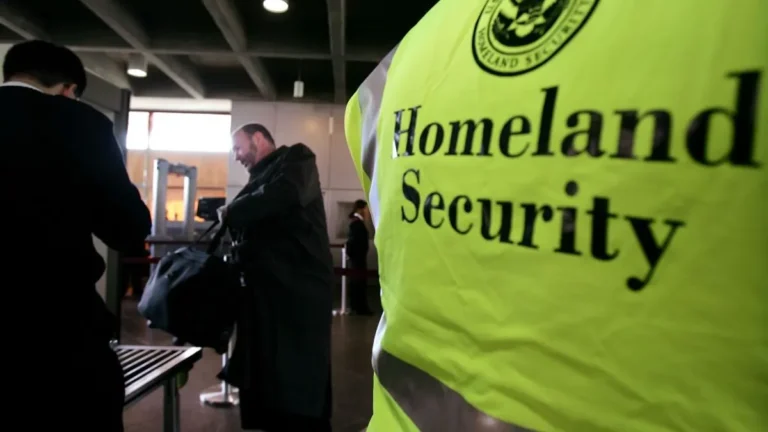
The U.S. Department of Homeland Security (DHS) has put forth a significant proposed rule change that could dramatically alter the employment landscape for highly skilled foreign workers in the United States, particularly those on H-1B visas. On Friday, September 11, 2026, DHS announced its intention to eliminate the discretionary 60-day grace period that currently allows H-1B, L-1, O-1, E, and TN visa holders to remain in the U.S. for a limited time after losing their jobs. This proposed change, published in the Federal Register, aims to streamline administrative processes and, according to DHS, better align with the original intent of these nonimmigrant visa classifications. However, immigration law experts and industry stakeholders warn that the elimination of this period could create significant uncertainty and hardship for a critical segment of the U.S. workforce and the companies that rely on their expertise.
The proposed rule, officially titled "Eliminating the Discretionary 60-Day Grace Period," suggests a return to a much shorter, 10-day grace period, which would only apply after the official validity period of the visa has ended. This shift represents a substantial reduction in the flexibility afforded to nonimmigrant visa holders, potentially leaving them with no immediate recourse to find new employment or make arrangements for departure without jeopardizing their legal status.
Background and the Evolution of the Grace Period
The 60-day grace period, a critical safety net for nonimmigrant workers, has been a de facto standard since its formalization around 2016. Prior to this, the situation for visa holders who lost their employment was often precarious. The grace period was established to provide a window of opportunity for individuals to secure new employment with a different sponsoring employer, allowing for a smoother transition and minimizing disruptions to both the worker’s life and the U.S. economy. During this period, workers could seek out new job opportunities, and if successful, their new employer could file for an H-1B transfer, allowing them to maintain their legal status without a lapse. This mobility is a cornerstone of the H-1B program, designed to attract and retain top talent in specialized fields.
The rationale behind the current 60-day grace period was to offer a reasonable amount of time for these highly skilled individuals to navigate the complex process of finding new employment and completing the necessary visa transfer procedures. This was particularly important given the often lengthy timelines associated with securing new employment and obtaining the necessary approvals from U.S. Citizenship and Immigration Services (USCIS).
DHS’s Stated Rationale for the Proposed Change
The Department of Homeland Security has articulated two primary reasons for proposing the elimination of the 60-day grace period. Firstly, the agency contends that the current system creates an administrative burden. In its Notice of Proposed Rulemaking, DHS stated that "the process of determining when the up to 60-day grace period may apply, reviewing the information submitted, and determining whether to shorten or eliminate the grace period may be time consuming and complex for the agency and confusing or unpredictable for the petitioner, alien and the alien’s dependents." This suggests a desire for greater clarity and efficiency in immigration processing.
Secondly, DHS asserts that the existence of the grace period is "inconsistent with the purpose for which Congress created the relevant nonimmigrant classifications." The agency’s position is that the grace period deviates from the fundamental principle that a nonimmigrant visa is tied to specific employment. Therefore, DHS argues that "restoring the expectation that aliens depart the United States upon cessation of the employment or activity upon which the alien’s status was based, would better promote program integrity and be more consistent with statutory purpose." This implies a desire to reinforce the employer-specific nature of these visas and discourage any perception of them as a pathway to indefinite stay without continuous employment.
The Impact of a Reduced Grace Period
The proposed rule suggests a return to a 10-day grace period, but with a crucial distinction: this period would only commence after the official expiration date of the visa’s validity. This significantly alters the landscape for workers who lose their jobs before their visa’s approved end date.

Steven Brown, partner at Reddy Neumann Brown, a law firm specializing in immigration, highlighted the stark implications of this change. "The company that lays off an H-1B employee two years into a three-year approval leaves that employee with no cushion at all," Brown explained. This scenario means that an individual could lose their job and immediately have only 10 days to find a new employer willing and able to sponsor them, and for that sponsorship to be approved, before they are required to depart the U.S.
This abrupt deadline presents several challenges:
- Job Search Uncertainty: The U.S. job market, while often robust, can be unpredictable. Finding a new position, especially one that requires specialized skills and a visa sponsorship, can take weeks or even months. The elimination of the 60-day buffer would place immense pressure on individuals to secure new employment under extremely tight deadlines.
- H-1B Portability: While the proposed rule does not explicitly abolish H-1B portability – the ability for a new employer to hire an H-1B worker who has already been approved for H-1B status – the drastically reduced grace period makes exercising this portability significantly more difficult. A worker would have to find a new employer, initiate the transfer process, and secure USCIS approval within a very narrow window.
- Impact on Families: Many H-1B visa holders are accompanied by their spouses and children. A sudden job loss and the tight timeline for departure would create immense personal upheaval for entire families, potentially disrupting children’s education and spousal employment opportunities.
- Employer Liability: Brown also noted that companies filing for H-1B visa holders "would remain liable for the reasonable cost of return transportation abroad" for individuals dismissed prior to their authorized period. This existing liability, combined with the potential for immediate departures, could add to the administrative and financial complexities for employers.
Historical Context and Data
The H-1B visa program has been a vital component of the U.S. immigration system, designed to fill critical skill gaps in industries such as technology, engineering, healthcare, and finance. In fiscal year 2023, USCIS received approximately 770,000 H-1B petitions, underscoring the program’s scale and importance. The number of approved H-1B visas fluctuates annually, but it consistently represents a significant influx of highly skilled foreign professionals.
The elimination of the grace period could have a chilling effect on the willingness of foreign talent to seek employment in the U.S. under these visa categories. Companies that rely on the H-1B program to access specialized talent may face increased competition from other countries offering more stable and predictable immigration pathways.

Reactions from Stakeholders
While DHS has not released specific reactions from external parties, it is reasonable to infer that the proposed rule will face significant opposition from various stakeholders.
- Technology and Industry Groups: Organizations representing the technology sector, which heavily utilizes H-1B visas, are likely to express concerns about the potential impact on innovation and competitiveness. They may argue that the grace period is essential for maintaining a flexible and skilled workforce.
- Immigration Advocacy Groups: These groups are expected to voice strong opposition, emphasizing the humanitarian impact on individuals and families and arguing that the grace period is a necessary measure of fairness and practicality.
- Legal and Consulting Firms: Immigration law firms, like Reddy Neumann Brown, will likely be at the forefront of advising clients and potentially advocating for the retention of the 60-day grace period. They are well-positioned to articulate the complexities and potential pitfalls of the proposed change.
Analysis of Implications
The proposed elimination of the 60-day grace period signals a shift in the U.S. immigration policy, leaning towards stricter enforcement and a more rigid interpretation of visa classifications. While the stated goal is to reduce administrative burdens and enhance program integrity, the practical consequences could be far-reaching:
- Reduced Workforce Agility: The U.S. economy benefits from the agility of its workforce. The current grace period allows for a more seamless transition for skilled workers, minimizing the economic disruption caused by job loss. Removing this buffer could lead to greater instability for both individuals and employers.
- Potential Brain Drain: If the U.S. becomes a less attractive destination for highly skilled foreign workers due to increased immigration uncertainties, there is a risk of a "brain drain," where top talent opts for countries with more supportive immigration policies.
- Increased Litigation and Uncertainty: The complexities of the proposed rule and its potential for creating ambiguous situations could lead to increased legal challenges and a prolonged period of uncertainty for visa holders and their employers as they navigate the new regulations.
Public Comment Period
The Department of Homeland Security has opened a 60-day public comment period on the proposed rule. Interested parties have until November 10, 2026, to submit their feedback, which will be taken into consideration before a final rule is issued. This period is crucial for stakeholders to voice their concerns, provide data-driven arguments, and offer potential alternatives or modifications to the proposed changes. The outcome of this comment period will be a significant indicator of the potential for the rule to be enacted in its current form or to undergo substantial revisions.
The proposed elimination of the 60-day grace period for H-1B and similar visa holders represents a significant policy development with profound implications for the U.S. immigration system and its economy. The DHS’s move, driven by a desire for administrative efficiency and adherence to statutory purpose, could introduce considerable uncertainty and hardship for a vital segment of the nation’s skilled workforce. As the public comment period unfolds, the debate over this proposed rule is expected to intensify, with a wide range of stakeholders weighing in on the future of nonimmigrant worker flexibility in the United States.
About the Author