The proliferation of artificial intelligence (AI) has fundamentally reshaped the marketing landscape, presenting both unprecedented opportunities and complex challenges for small businesses. As AI becomes increasingly integrated into search engine algorithms and content creation processes, staying competitive necessitates a strategic adoption of AI-powered Search Engine Optimization (SEO) tools. However, many small business owners find themselves navigating a crowded marketplace of AI solutions, struggling to discern which tools offer genuine value and which are merely supplementary. This guide aims to cut through the noise, highlighting the essential AI SEO tools that lean teams are leveraging to achieve more with less, from free foundational resources to comprehensive paid platforms.
The imperative for small businesses to embrace AI in their SEO strategies is underscored by compelling data. According to HubSpot’s latest "AI Trends for Marketers" report, a significant two-thirds of marketers globally are already incorporating AI into their roles. This adoption rate climbs even higher among American marketers, with 74% reporting AI integration. This trend indicates a clear shift in industry standards, where AI is no longer a niche technology but a core component of effective digital marketing. Small businesses that fail to invest in AI SEO tools, whether through time or financial resources, risk falling behind competitors who are harnessing these technologies to enhance their online visibility and customer engagement.
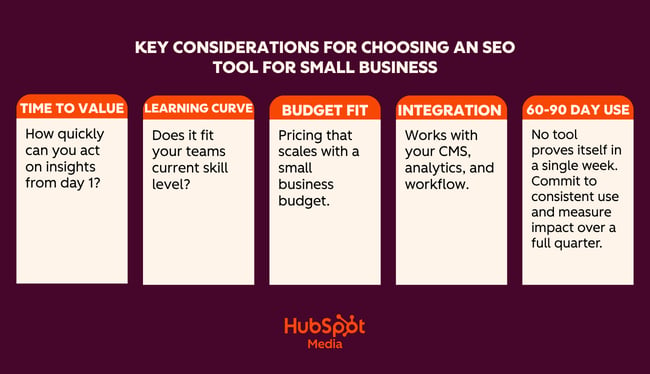
The challenge for many small businesses lies not in the availability of AI tools, but in identifying those that deliver consistent, long-term value. Effective AI SEO tools should assist in a range of critical tasks, including keyword research, content creation, page optimization, technical SEO issue resolution, and visibility tracking. The selection process hinges on several key considerations: time-to-value, learning curve, cost-effectiveness, and ease of integration with existing systems.
Prioritizing Time-to-Value and Usability
For lean teams, the speed at which a tool provides actionable insights after setup is paramount. A tool that requires extensive configuration or external expertise may negate its benefits if it consumes valuable resources without immediate return. The ideal AI SEO tool should offer a swift path to tangible results, enabling businesses to adapt their strategies quickly and efficiently.
Consider the example of Google Search Console (GSC). This free, indispensable tool provides immediate value upon setup. Once the tracking script is implemented, GSC operates autonomously, delivering critical data on website performance, search queries, and technical issues within 24 hours. Its direct access to Google’s indexing and ranking data makes it a foundational element for any website. In contrast, platforms like HubSpot, while offering a broader suite of functionalities, may require a more significant initial investment of time and potentially capital, especially for advanced features. However, the extended capabilities and integrated approach of such platforms can justify the initial setup effort, particularly when they address complex business needs and offer a unified view of marketing performance.
The key distinction lies in the scope of functionality. GSC excels at specific, critical SEO tasks, providing deep insights into Google’s perspective. HubSpot, on the other hand, offers a more holistic approach, integrating SEO with CRM, content management, and marketing automation. This integration is crucial for businesses aiming to connect SEO efforts directly to revenue and customer lifecycle management. When evaluating a tool’s time-to-value, businesses must weigh the immediate gains from simpler tools against the long-term strategic advantages of integrated platforms.
Navigating the Learning Curve and Cost Considerations
A tool’s effectiveness is intrinsically linked to the team’s ability to utilize it consistently. Overly complex platforms, often designed for large enterprises, can overwhelm small business users. The ideal AI SEO tool for a small business should offer intuitive interfaces, clear, plain-language recommendations, and actionable next steps, rather than presenting raw data that requires expert interpretation. Features such as guided workflows and automated reporting can significantly reduce the learning curve, enabling teams to derive value quickly.
Cost is another critical factor. The most effective AI SEO solutions for small businesses strike a balance between robust functionality and affordability. Businesses should seek tools that address specific pain points at a price point that aligns with their budget. Furthermore, it is essential to consider the long-term cost implications. Investing in a tool that might become prohibitively expensive with future upgrades could lead to the costly and disruptive process of migrating to a new platform down the line.
A strategic approach to cost evaluation involves identifying the top three SEO tasks that consume the most time and are not adequately addressed by existing tools. Focusing the evaluation of new platforms against these specific bottlenecks can ensure that any investment yields a significant return by solving a real business problem.
The Power of Integration
The seamless integration of AI SEO tools with existing business systems is crucial for maximizing adoption and efficiency. According to a MuleSoft report, 86% of IT leaders believe that AI agents can introduce complexity if not properly integrated. When an SEO tool connects with a business’s Content Management System (CMS) or Customer Relationship Management (CRM) platform, it feels more natural to incorporate into daily workflows, reducing the creation of data silos and the need for manual data transfer. Integrations enhance existing processes and provide a more unified view of performance, fostering greater team engagement.
Real-World Impact: The 60-to-90 Day Test
While initial demonstrations and trial periods can be enticing, the true measure of a tool’s value is its sustained usage and impact over time. Many businesses find that consistent use at the 60- to 90-day mark is the most reliable indicator of a tool’s worth. During this period, teams can assess whether the tool is being used regularly and whether it has contributed to specific, measurable outcomes. Negotiating extended testing periods or opting for monthly payment plans can provide the flexibility needed to thoroughly evaluate a tool’s long-term benefits before committing to longer-term contracts.
What AI Can and Cannot Do for Small-Business SEO
While AI offers powerful capabilities, it is essential to understand its limitations and where human oversight remains indispensable.

Content Generation and Optimization: A Collaborative Approach
AI can significantly accelerate content creation, generating drafts for blog posts, FAQs, service pages, and meta descriptions in mere minutes. This is a considerable advantage for small businesses that struggle with consistent content production. AI can effectively produce factual content on objective topics, such as definitions of SEO terms or explanations of marketing concepts.
However, for content requiring nuanced insights, expert opinions, or thought leadership, human expertise is non-negotiable. AI lacks the deep understanding of a business’s unique audience, industry nuances, and proprietary knowledge. Therefore, all AI-generated content must undergo rigorous human review to ensure accuracy, maintain brand voice, and avoid factual errors or generic phrasing. Google’s emphasis on E-E-A-T (Experience, Expertise, Authoritativeness, Trustworthiness) further necessitates human input, as AI cannot credibly replicate first-hand experience or unique perspectives.
AI can also be instrumental in optimizing existing pages, suggesting improvements to title tags, meta descriptions, and heading structures. This can breathe new life into underperforming content without requiring extensive manual effort. Yet, for critical pages, human judgment should supplement AI recommendations to ensure strategic alignment and prevent unintended consequences.
Keyword and Topic Ideation: AI as a Starting Point
AI tools excel at generating a wide array of keyword and topic ideas. They can identify keyword clusters, brainstorm customer questions, and uncover related topics that might otherwise be overlooked. This capability can dramatically reduce the time spent on manual keyword research for small teams.
Nevertheless, AI-generated keyword suggestions often lack real-world search volume data. Human marketers must validate these ideas using tools like Google Keyword Planner to confirm demand before investing in content creation. While AI can generate lists of keywords, its ability to perform deep content clustering or comprehensive SERP analysis may be limited, underscoring the need for human strategic input.
Essential AI SEO Tools for Small Businesses
The following tools have been selected for their ability to address real challenges faced by lean teams, with AI functionalities that provide genuine utility.
For Building an SEO Foundation:
Before diving into specific tools, consider downloading the HubSpot SEO Starter Pack, a free resource designed to help small businesses establish a solid SEO framework.
Tools for SEO and Technical Audits
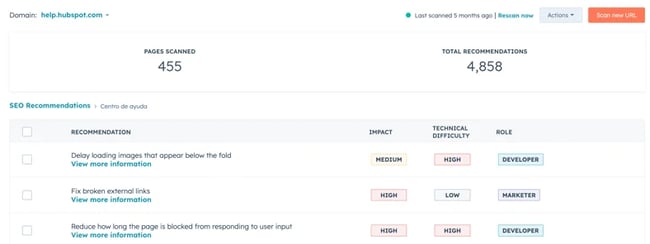
HubSpot SEO Recommendations
HubSpot’s integrated approach to SEO, embedded within its Marketing Hub, offers a powerful solution for small businesses. Unlike standalone SEO platforms that present raw data, HubSpot connects recommendations directly to the content editor, CRM, and reporting dashboard, linking SEO improvements to tangible business outcomes.
The SEO Recommendations tool automatically scans a website and prioritizes issues, such as broken links, missing meta descriptions, inadequate alt text for images, HTTPS issues, slow page load times, and incorrect heading structures. Each flagged issue comes with a clear explanation of its impact and a specific action plan. This user-friendly approach is ideal for teams without dedicated technical SEO expertise.
Key Functionalities:
- On-page Optimization: Real-time feedback within the content editor for keyword placement, readability, and internal linking opportunities.
- Technical Audits: Identification and prioritization of technical SEO issues that affect search rankings.
- Content Strategy: Tools for topic cluster planning, helping to build topical authority and compound organic traffic.
- Performance Tracking: A unified dashboard to monitor organic sessions, keyword rankings, and page performance over time.
Integration and CRM Value: The true power of HubSpot lies in its integration with the CRM. This allows businesses to directly attribute SEO efforts to leads, pipeline, and revenue, demonstrating the concrete value of organic search. For B2B companies, this connection is particularly vital for proving ROI.
Pricing: Basic SEO recommendations are available on HubSpot’s free and Starter plans. Advanced features, including topic clusters and AEO (Answer Engine Optimization) tools, require a Pro or Enterprise subscription.
Best for: Small business marketers and lean teams seeking a unified platform for SEO, content creation, CRM, and reporting.
SE Ranking
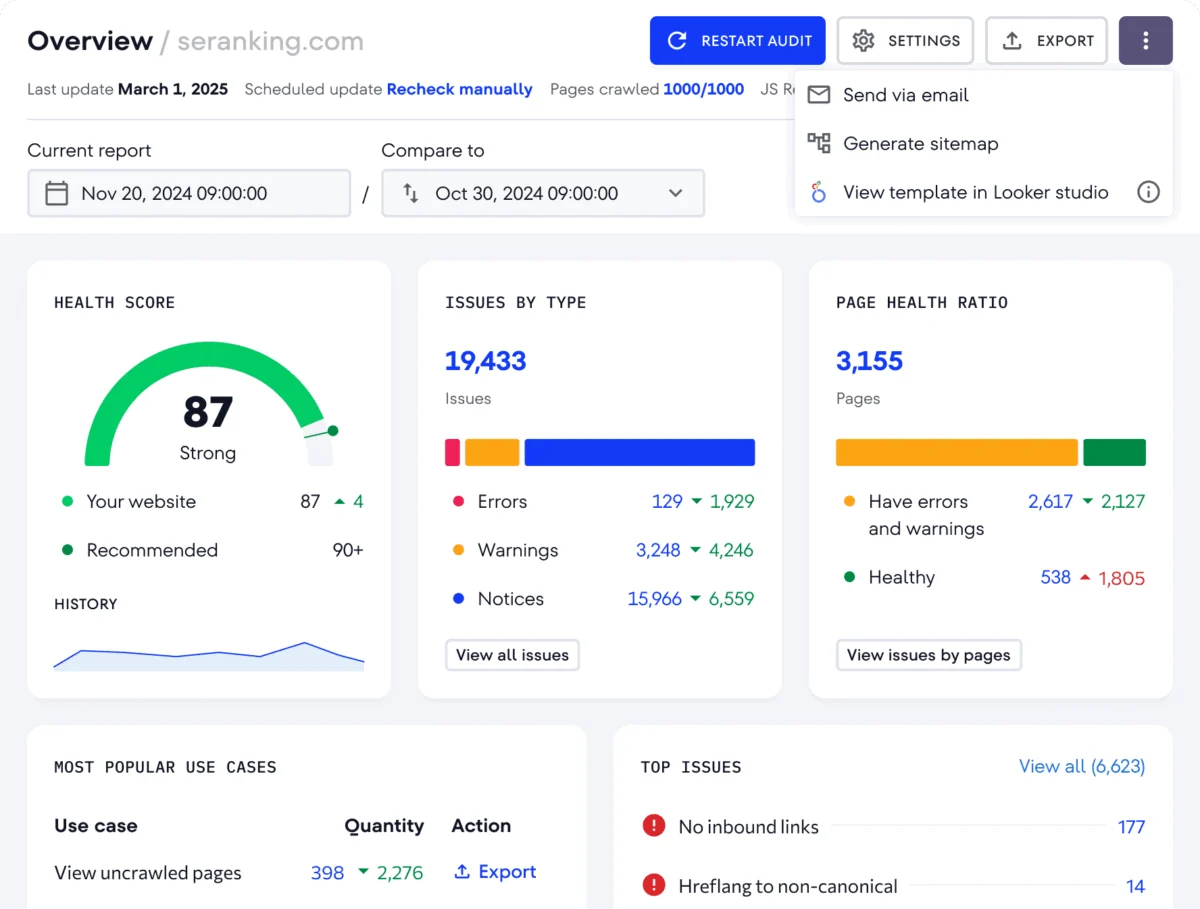
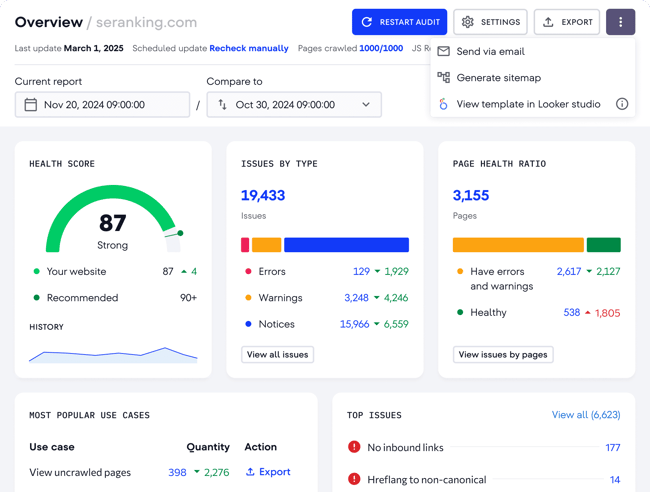
SE Ranking is a comprehensive, AI-powered platform offering a broad spectrum of SEO tools, including keyword tracking, site audits, competitive research, and AI-driven insights. Its extensive features cover keyword research, backlink analysis, competitor monitoring, and content gap identification, making it a well-rounded choice for businesses managing multiple projects or clients.
Key Features:
- Website Audits: In-depth technical and on-page SEO audits with actionable recommendations.
- Keyword Research & Tracking: Tools for identifying high-potential keywords and monitoring their rankings.
- Backlink Analysis: Monitoring and analysis of the backlink profile.
- Competitor Research: Insights into competitors’ SEO strategies and performance.
- Content Marketing Tools: Features to help identify content gaps and optimize existing content.
Pricing: Plans are tiered, starting with accessible options for small businesses. A 14-day free trial is available.
What’s Notable: SE Ranking offers the depth of enterprise-level platforms at a more accessible price point for small businesses. Its recommendations are clear and actionable, bridging the gap for teams without dedicated SEO specialists. While Semrush and Ahrefs are industry leaders, SE Ranking provides a strong alternative that balances power with affordability.
Best for: Small businesses and lean SEO teams requiring a feature-rich SEO platform without the premium cost of enterprise solutions.
Tools for Automated Content Optimization
HubSpot Content Hub
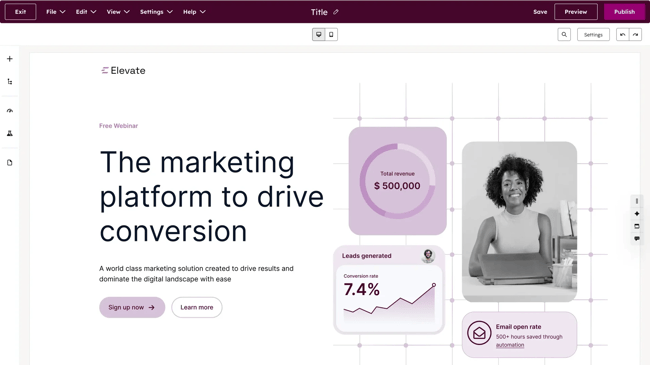
HubSpot’s Content Hub consolidates content strategy, creation, optimization, and performance measurement into a single platform, essential for lean teams. The topic cluster tool is particularly valuable, enabling businesses to build content around a central pillar page supported by interconnected cluster content, signaling topical authority to search engines.
Breeze: HubSpot’s AI Layer for Content
Breeze, the AI engine within Content Hub, acts as a co-pilot for content creators. It assists in drafting and refining on-brand content, suggesting topics, generating search-optimized drafts, and incorporating a defined brand voice. This collaborative approach ensures that AI-generated content maintains quality, accuracy, and brand consistency.
Key Features:
- AI Blog Writer: Generates structured drafts based on topics or keywords, allowing for human refinement.
- Content Remix: Repurposes existing content into various formats for different channels.
- Brand Voice: Ensures AI-generated content adheres to specific tone and language parameters.
- Topic Cluster Tool: Facilitates the creation of interconnected content for improved topical authority.
Performance Tracking Tied to Revenue: Content Hub’s integration with HubSpot’s CRM allows for tracking content performance from initial traffic to closed deals, providing clear attribution to revenue.
Pricing: Content Hub offers a free plan, with paid plans starting at $20 per user per month. Advanced AI features like Breeze are available on Pro and Enterprise editions.
Best for: Small businesses seeking a unified solution for content strategy, creation, optimization, and performance tracking, with strong CRM integration.
Yoast
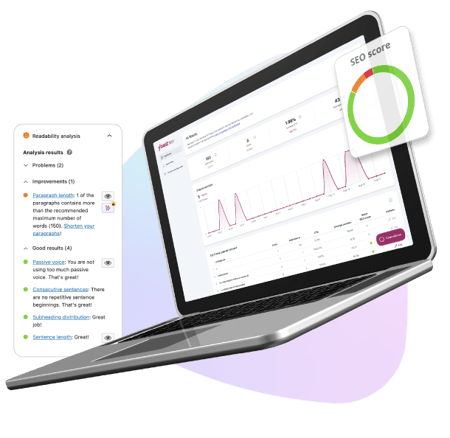
For WordPress users, Yoast is a highly accessible way to integrate AI-assisted SEO guidance directly into the content creation workflow. Recommendations appear within the WordPress editor, offering real-time feedback on on-page optimization.
Key Features:
- On-Page SEO Analysis: Real-time suggestions for optimizing content around a focus keyphrase.
- Readability Checks: Tools to improve content clarity and user engagement.
- XML Sitemaps: Automatic generation of sitemaps to help search engines crawl websites.
- AI+ Features: Enhanced content suggestions and optimization capabilities.
Pricing: A free version offers essential on-page analysis. Premium and AI+ packages are available at affordable monthly rates, starting around $9.90 per month.
What’s Notable: Yoast is an excellent optimization assistant but not a comprehensive SEO platform. It excels at polishing existing content rather than conducting keyword research, competitor analysis, or rank tracking. For businesses needing these broader capabilities, Yoast complements tools like SE Ranking. If a business already uses HubSpot’s Content Hub, Yoast may be redundant.
Best for: Small businesses using WordPress who desire real-time, on-page SEO guidance within their content workflow.
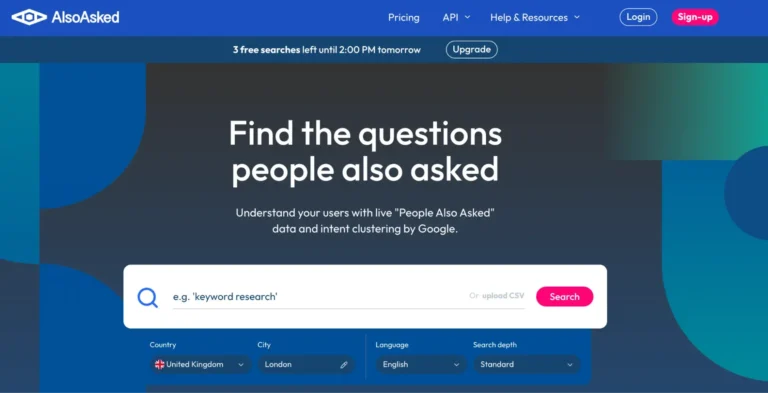
AnswerThePublic
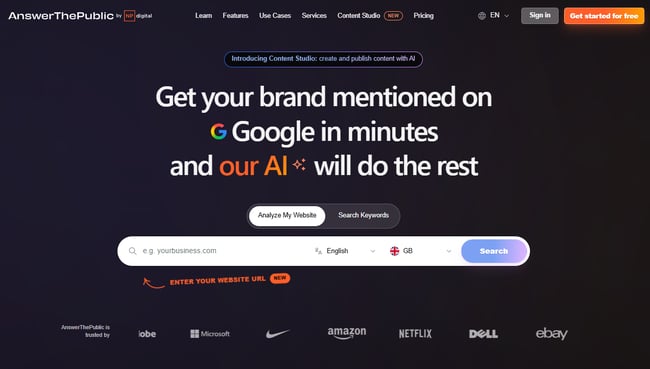
AnswerThePublic is a powerful content ideation tool that visualizes questions, prepositions, comparisons, and related searches derived from Google autocomplete data. It helps businesses quickly identify topics that their target audience is actively searching for, removing much of the guesswork from content planning.
Key Features:
- Visualizations: Presents search data in engaging visual formats (e.g., questions, prepositions, comparisons).
- Topic Discovery: Uncovers a wide range of search queries related to a given keyword.
- Content Planning: Provides ideas that naturally lend themselves to topic cluster structures.
Pricing: Offers three free searches per day, with paid packages starting at $13.33 per month for increased search volume and export features.
What’s Notable: For its price, AnswerThePublic is an efficient tool for generating content ideas based on real user queries. It pairs well with content strategy frameworks like HubSpot’s topic clusters. However, for HubSpot users, some of its functionality may be replicated within Content Hub.
Best for: Small business marketers and content teams looking to quickly discover the questions and search phrases their audience uses.
Tools for Tracking Rankings and AI Visibility
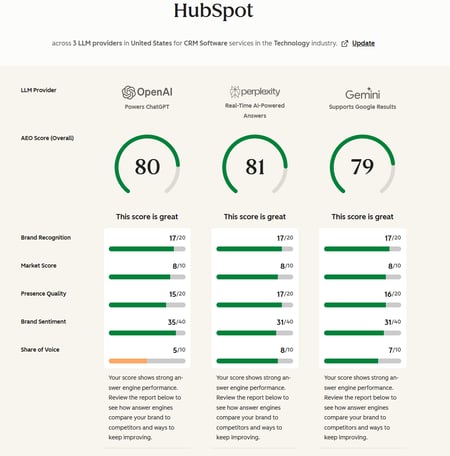
HubSpot AEO (Answer Engine Optimization)
As AI-driven search engines like ChatGPT, Perplexity, and Gemini become more prominent, optimizing for them is crucial. HubSpot AEO provides insights into how a brand appears in these AI answer engines and offers actionable steps for improvement.
Key Features:
- AI Prompt Analysis: Suggests prompts based on industry, competitors, and CRM data.
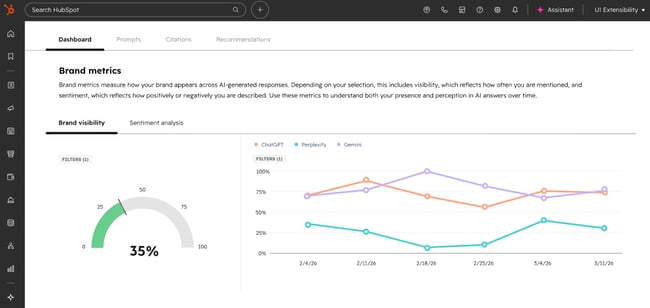
- Cross-Engine Monitoring: Tracks brand presence across ChatGPT, Perplexity, and Gemini.
- Brand Visibility Scorecard: Assesses performance across AI-driven search experiences.
- CRM Integration: Connects AI visibility insights directly to CRM data for a holistic view.
Pricing: A free 28-day trial is available. Paid plans start at $50 per month, tracking multiple prompts daily across three engines.
Best for: Small businesses and marketing teams wanting to monitor and enhance their brand’s appearance in AI-generated answers, with seamless CRM integration.
HubSpot AEO Grader
This free tool offers a quick assessment of a company’s AI visibility across major AI engines. By inputting basic company information, businesses receive a composite score out of 100, breaking down performance across five key dimensions: brand perception, factual accuracy, competitive comparison, factual citations, and overall AI presence.
What’s Notable: The AEO Grader is an invaluable diagnostic tool for understanding a brand’s current standing in AI search. It provides a clear, no-cost starting point for businesses new to AEO, highlighting areas for improvement that can inform content strategy.
Pricing: Free forever.
Best for: Any business seeking a rapid, free evaluation of their brand’s AI visibility without requiring setup or prior AEO experience.
Google Analytics (GA4)
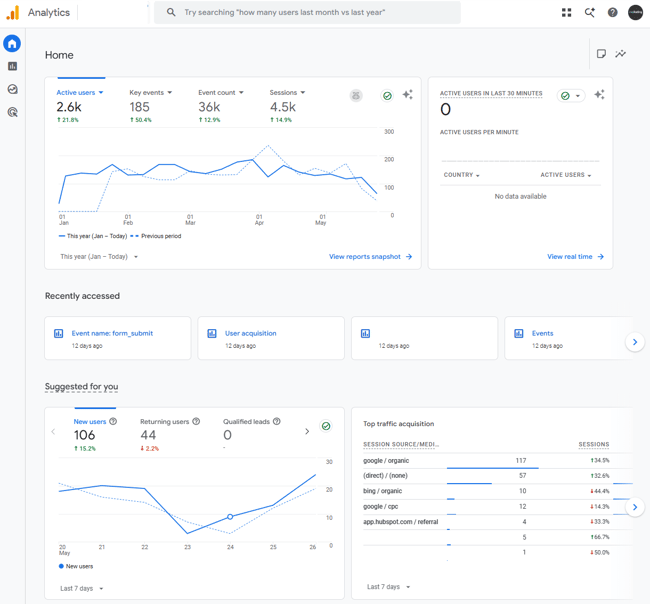
Google Analytics 4 (GA4) remains the foundational tool for website analytics. It’s free, robust, and tracks traffic sources, user behavior, and conversion outcomes. GA4’s AI-powered features, such as predictive audiences and anomaly detection, further enhance its utility for understanding user behavior and identifying trends.
Key AI Features:
- Predictive Audiences: Identifies users likely to purchase or churn.
- Anomaly Detection: Alerts users to significant changes in data.
- AI-powered Insights: Provides automated insights into user behavior and trends.
Pricing: Free forever.
What’s Notable: GA4 offers an affordable method to track the impact of AI referral traffic by segmenting audiences and monitoring conversions. This provides crucial data on the effectiveness of AI-driven marketing efforts.
Best for: Every business with a website, serving as the cornerstone of analytics.
Google Search Console (GSC)
Google Search Console is an essential tool for understanding a website’s performance within Google Search. It provides direct insights into search queries, indexed pages, technical issues, and Core Web Vitals.
Key Features:
- Performance Reporting: Detailed data on impressions, clicks, and average position for search queries.
- Index Coverage: Information on which pages are indexed and any indexing errors.
- Technical Reports: Insights into mobile usability, Core Web Vitals, and security issues.
- URL Inspection Tool: Allows for checking individual URLs and requesting indexing.
What’s Notable: GSC leverages AI to present information in plain English, making it accessible for small teams without specialized SEO knowledge. Its direct data from Google makes it the most reliable source for understanding actual search performance.
Pricing: Free forever.
Best for: Every business with a website; it is a non-negotiable setup for any online presence.
Frequently Asked Questions About AI SEO Tools for Small Businesses
Do small businesses really need multiple AI tools for SEO?
While not strictly necessary, most small businesses find value in using at least two AI tools to cover the full SEO workflow. The key is to select a combination that addresses specific internal challenges and bottlenecks without incurring excessive costs for overlapping features.
What’s the best way to get cited in AI answers fast?
To increase citation chances in AI answers, businesses should create structured, authoritative content that directly addresses user questions. Using clear definitions, breaking content into logical sections with descriptive headers, and providing concise answers can give AI systems more relevant information to cite.
How do I keep AI from changing my brand voice?
A well-defined brand voice guide is crucial. This document should outline tone, language preferences, and terminology. Most advanced AI content tools, like HubSpot’s Breeze, allow teams to input these parameters to ensure generated content aligns with the established brand identity before human review.
When should a small business invest in paid AI SEO tracking tools?
The transition from free to paid tools should occur when a specific, identified gap in capabilities cannot be met by free solutions. Paid tools should offer tangible value or significant time savings. For instance, HubSpot’s paid SEO and content tools become a worthwhile investment when a business is ready to integrate content production, SEO recommendations, and revenue attribution into a single platform.
The Right AI SEO Tool Solves Multiple Problems
For small businesses aiming to streamline their technology stack without compromising on capability, HubSpot emerges as a leading all-in-one platform. Its Marketing Hub integrates technical SEO recommendations, on-page optimization, topic cluster planning, and performance tracking. Content Hub and Breeze enhance content creation, while AEO provides AI visibility monitoring. Coupled with the free CRM for revenue attribution, HubSpot can replace multiple standalone tools, offering a cohesive and powerful solution for small businesses looking to navigate the evolving digital landscape and achieve sustainable growth. The HubSpot SEO Starter Pack offers a practical and accessible entry point for teams scaling their SEO efforts without dedicated specialists.
About the Author