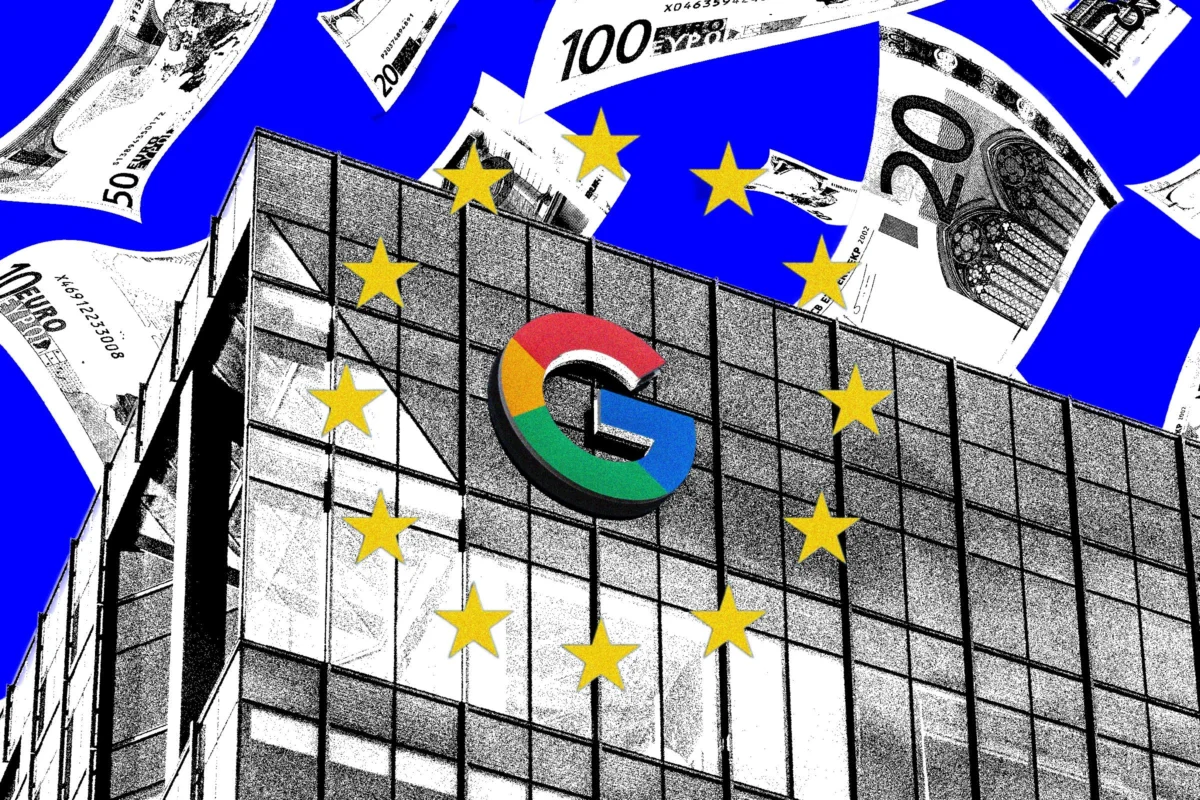
The European Commission has formally imposed a $1 billion financial penalty on Google, the technology subsidiary of Alphabet Inc., following a comprehensive investigation into the company’s alleged breaches of the Digital Markets Act (DMA). This landmark decision marks a significant escalation in the ongoing regulatory friction between the European Union and Silicon Valley’s most influential entities. The commission’s findings suggest that Google systematically leveraged its near-monopoly in the search engine and mobile application markets to provide an unfair advantage to its own proprietary services, effectively stifling competition and limiting consumer choice across the European Economic Area.
The core of the Commission’s ruling centers on the concept of "self-preferencing," a practice where a dominant platform prioritizes its own products within its ecosystem. According to the regulatory body, Google’s search algorithms were calibrated to highlight the company’s own specialized search services—including Google Shopping, Google Flights, and Google Hotels—above those of independent rivals. Furthermore, the investigation scrutinized the Google Play Store’s restrictive policies, which prevented third-party application developers from informing users about alternative, often cheaper, payment methods outside of Google’s own billing system. Under the DMA, such "anti-steering" measures are strictly prohibited to ensure a contestable and fair digital market.
The Regulatory Framework: Understanding the Digital Markets Act
To understand the gravity of this $1 billion penalty, one must look at the legal architecture of the Digital Markets Act, which came into full effect in early 2024. Unlike traditional antitrust laws that require years of litigation to prove market harm after it has occurred, the DMA is an "ex-ante" regulation. It sets out a list of "dos and don’ts" for large digital platforms designated as "gatekeepers"—companies that provide a core platform service, have a significant impact on the internal market, and serve as an important gateway for business users to reach consumers.
Google was designated as a gatekeeper in 2023, subjecting it to rigorous obligations. Article 6 of the DMA specifically prohibits gatekeepers from treating their own services more favorably in ranking than similar services of third parties. The European Commission’s recent findings indicate that Google failed to implement sufficient changes to its search results page to comply with these transparency and neutrality requirements. By placing its own vertical search boxes at the top of results, the Commission argues, Google effectively diverted traffic away from competing aggregators in the travel, transport, and retail sectors.
A Chronology of Conflict: Google’s Decade of EU Legal Battles
This latest $1 billion fine is not an isolated incident but rather the latest chapter in a long-standing confrontation between the EU’s competition czars and the search giant. Over the past decade, Google has been hit with a series of record-breaking fines that have collectively cost the company more than $9 billion.
The timeline of these interventions highlights a consistent pattern of regulatory scrutiny:
- 2017: The European Commission fined Google $2.7 billion for favoring its own comparison-shopping service.
- 2018: A record $5 billion fine (later adjusted to $4.1 billion upon appeal) was issued regarding the Android operating system. The EU found that Google forced manufacturers to pre-install Google Search and the Chrome browser to gain access to the Play Store.
- 2019: A $1.7 billion fine was levied concerning anti-competitive practices in online advertising via the AdSense platform.
- July 2024: The European Court of Justice upheld the $4.1 billion Android fine, dismissing Google’s primary arguments and reinforcing the Commission’s authority to regulate platform ecosystems.
The transition from these traditional antitrust cases to the DMA represents a shift in strategy. While previous cases took nearly a decade to resolve through the courts, the DMA allows the Commission to act with greater speed, issuing penalties and demanding behavioral changes in real-time.
Market Data and the Economics of Search Dominance
The European Commission’s decision is supported by staggering market data. In the European Union, Google Search maintains a market share of approximately 91%, according to Statcounter data from mid-2024. This level of dominance means that for most European businesses, appearing on the first page of Google results is not merely a marketing goal but a requirement for economic survival.
When Google prioritizes its own services, the impact on competitors is quantifiable. Independent travel sites and shopping portals have reported traffic drops of up to 50% when Google introduces a "OneBox" or a specialized widget that answers a user’s query directly on the search page, removing the need to click through to a third-party site. This "zero-click" search phenomenon has become a primary point of contention for European regulators, who argue that it turns Google from a directory of the web into a walled garden.
In the mobile app market, the stakes are equally high. The Google Play Store accounts for the vast majority of app downloads on Android devices. By taking a commission—ranging from 15% to 30%—on digital sales and preventing developers from "steering" users to external websites, Google secures a massive revenue stream. The Commission’s order for Google to allow outside communication is designed to break this feedback loop and introduce price competition into the app economy.
Official Reactions and Industry Pushback
The European Commission’s leadership has framed this penalty as a victory for the European consumer. Teresa Ribera, an executive vice president at the EC, emphasized the principle of meritocracy in the digital age. “The best products should succeed because they’re better, not because they’re owned by the company running the search engine,” Ribera stated. She further noted that the Commission’s role is to ensure that "European consumers have a right to be told by app developers where to sign up to the best offers, even when the app store owner does not get a cut.”
Google’s response, however, has been one of sharp dissent. Kent Walker, President of Global Affairs at Alphabet and Google, criticized the decision as a move that prioritizes the interests of a few competitors over the quality of the product for the general public. “This isn’t fair competition; it’s product degradation driven by a small group of self-serving complainants, with European businesses and consumers taking the hit,” Walker said in a statement. Google argues that its integrated search features—such as showing a map or a flight schedule directly—provide a seamless user experience that consumers value.
Trade associations have also weighed in, warning of a potential "chilling effect" on innovation. Daniel Friedlaender, Senior Vice President at CCIA Europe, an organization that represents major tech firms, suggested that heavy-handed enforcement could lead to a less functional internet for Europeans. “Reducing the quality of what Europeans have access to is not a positive outcome,” Friedlaender noted, suggesting that the DMA’s strictures might force tech companies to withhold certain features from the European market entirely to avoid legal risk.
Geopolitical Implications: The Transatlantic Trade Factor
The $1 billion fine arrives at a moment of heightened geopolitical tension. The United States has frequently criticized European tech regulation as a form of protectionism aimed at American "national champions." Recently, former U.S. President Donald Trump, who is currently seeking a return to office, vowed to impose steep new tariffs on European goods if the EU continues to "target" American technology companies.
This threat of a trade war adds a layer of complexity to the Commission’s enforcement. While the White House has not issued an official comment on this specific fine, the sentiment in Washington has often been one of bipartisan concern regarding the "targeting" of U.S. firms. Kathryn McMahon, an associate professor of law at the University of Warwick, observes that the EC’s willingness to move forward despite these threats demonstrates a commitment to regulatory sovereignty. “The latest penalty is quite a strong response in the context of the transatlantic complaints—the way that Trump can leverage fines,” McMahon said. “It shows the commission is willing to be tough.”
Future Implications and Compliance Outlook
As Google considers its appeal, the immediate focus remains on compliance. The European Commission has noted "progress" in Google’s proposed alterations to search rankings and Play Store administration, but the $1 billion fine suggests that the progress has been insufficient. Google will likely be forced to redesign its search results page for European users, potentially removing specialized widgets for shopping and travel or giving equal visual weight to rival services.
The implications extend beyond Google. Other "gatekeepers," including Apple, Meta, Amazon, and Microsoft, are under similar scrutiny. If the Commission succeeds in forcing Google to decouple its services, it sets a precedent that could lead to the fundamental restructuring of how big tech platforms operate globally.
In the long term, this enforcement action raises a fundamental question about the future of the internet in Europe: Will the DMA succeed in fostering a more diverse ecosystem of European tech startups, or will it lead to a "fragmented web" where European users receive a different, perhaps less integrated, version of global digital services? For now, the European Commission has sent a clear message: in the EU, market dominance carries a "special responsibility" to protect competition, and the price of failing that responsibility is increasingly steep.
About the Author