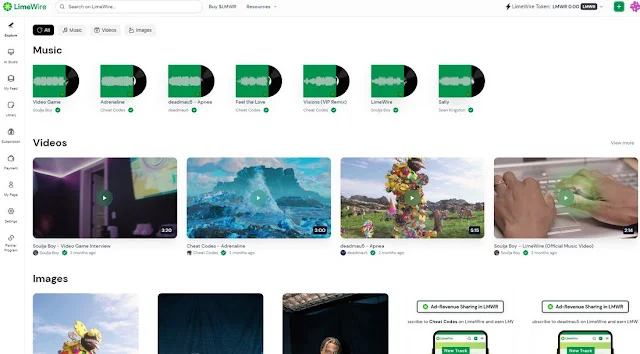
The digital landscape is witnessing a significant pivot by one of the most recognizable names of the early internet era as LimeWire transitions from its historical roots into a sophisticated generative artificial intelligence (AI) and content publishing ecosystem. This evolution marks a departure from its previous identity, positioning the platform as a comprehensive suite for creators to generate, distribute, and monetize digital assets through a combination of AI-driven tools and blockchain technology. By integrating advanced machine learning models with decentralized finance (DeFi) mechanisms, LimeWire aims to address long-standing challenges in the creator economy, particularly regarding intellectual property rights and sustainable revenue streams.
The Strategic Pivot: From Peer-to-Peer to AI-Centric Publishing
The current iteration of LimeWire is the result of a deliberate rebranding and technological overhaul following the acquisition of the brand rights by entrepreneurs Julian and Paul Zehetmayr. Unlike the original Gnutella-based file-sharing service that dominated the early 2000s, the new LimeWire is built on a centralized architecture with a focus on legal, licensed, and creator-owned content. The platform’s primary offering, the LimeWire AI Studio, serves as a centralized hub where users can engage with generative models to produce high-fidelity visual content, with imminent plans to expand into audio and video synthesis.
This transition reflects a broader trend in the technology sector where legacy brands are being revitalized to serve the "Web3" and AI markets. The platform has already secured partnerships with high-profile artists, including Deadmau5, Soulja Boy, and Sean Kingston, who have utilized the service to release exclusive digital collectibles. These collaborations signal the platform’s intent to move beyond hobbyist use and into the professional creative sphere, providing a bridge between traditional media production and algorithmic generation.
A Chronology of LimeWire’s Development and Rebirth
To understand the significance of the platform’s current trajectory, it is necessary to examine the timeline of its transformation:
- 2000–2010: The original LimeWire operated as a leading peer-to-peer (P2P) file-sharing client. At its peak, it was installed on tens of millions of computers worldwide. However, it faced intense legal scrutiny from the Recording Industry Association of America (RIAA), leading to a permanent injunction and shutdown in October 2010.
- 2021–2022: The LimeWire brand and associated domains were acquired by the Zehetmayr brothers. In mid-2022, the platform was relaunched as a curated NFT (Non-Fungible Token) marketplace, focusing on music-related digital assets.
- Early 2023: The company conducted a successful public token sale for its native cryptocurrency, LMWR, raising significant capital to fund the development of AI-integrated tools.
- Late 2023–Present: LimeWire launched the AI Studio, shifting its core focus from a pure marketplace to a generative content creation platform. This period saw the introduction of image generation tools based on Stable Diffusion and DALL-E models, alongside the implementation of an automated blockchain minting process.
Technical Infrastructure and AI Model Integration
The LimeWire AI Studio distinguishes itself through the integration of multiple industry-standard generative models. By providing a unified interface for various technologies, the platform allows creators to experiment with different aesthetic outputs without managing multiple subscriptions or complex local installations.
Current supported models include:
- Stable Diffusion 2.1 & XL: These open-source models allow for high levels of customization and are favored by creators for their ability to interpret complex prompts and generate specific artistic styles.
- DALL-E 2 & 3: Developed by OpenAI, these models are integrated to provide users with photorealistic imagery and advanced spatial understanding in generated art.
- Proprietary LimeWire Models: The platform is reportedly developing its own foundational models, which are expected to be optimized specifically for the LimeWire ecosystem’s monetization and minting requirements.
Beyond simple text-to-image generation, the studio includes advanced features such as image-to-image transformations, outpainting, and inpainting. Users can select from various "samplers" to adjust the denoising process, thereby controlling the level of detail and stylistic consistency in the final output. The interface is designed to cater to both "prompt engineers" who use intricate instructions and casual users who prefer pre-set styles like cinematic, anime, or pixel art.
Blockchain Integration and the NFT Monetization Loop
A critical component of LimeWire’s value proposition is the seamless integration of blockchain technology into the creative workflow. When a user generates an image, they are presented with the option to publish it directly to the LimeWire community. Upon publication, the platform utilizes the Polygon or Algorand blockchains to automatically "mint" the content as an NFT.
The choice of these specific blockchains is strategic. Both Polygon (an Ethereum Layer-2 scaling solution) and Algorand are known for their low transaction fees and minimal environmental impact compared to Proof-of-Work systems. This ensures that creators can mint their work without incurring the prohibitive "gas fees" often associated with digital art.
The ownership model is structured to provide ongoing value to the creator:
- Primary Sales and Subscriptions: Creators can gate their content, offering it only to premium subscribers who pay a monthly fee.
- Secondary Market Royalties: LimeWire enforces a 2.5% royalty fee on all secondary trades of the minted NFTs. This ensures that as an artist’s reputation grows and their work increases in value, they continue to benefit financially from the appreciation of their early pieces.
- Digital Provenance: By recording each creation on a public ledger, the platform provides an immutable record of authenticity, a feature increasingly vital in an era of prolific AI-generated "deepfakes" and unverified media.
Economic Analysis: The LMWR Token and Revenue Sharing
LimeWire has introduced a novel revenue-sharing model that deviates from the standard practices of platforms like Instagram or X (formerly Twitter). The platform allocates 70% of the ad revenue generated from views of a creator’s content back to the creator. This distribution is facilitated through the LMWR token, the platform’s native ERC-20 utility token.
The LMWR token serves multiple functions within the ecosystem:
- Payment Method: Users can use LMWR to purchase credits for AI generation, bypassing traditional fiat payment gateways.
- Staking and Rewards: Holders of the token can participate in a tiered loyalty program, gaining access to exclusive features and higher revenue shares.
- Governance: Token holders are expected to have a voice in the future development of the platform, including voting on new feature implementations or model integrations.
According to platform data, the revenue share for ad views is tiered based on the user’s subscription status. While free users receive a 50% share, those on the highest-tier "Pro Plus" plans can receive up to 70%. This creates a dual-income stream for creators: direct payments from subscribers and passive income from the platform’s broader traffic.
Subscription Tiers and Accessibility
To sustain its infrastructure and compensate for the high computational costs of running AI models, LimeWire employs a tiered subscription model. This structure is designed to accommodate everyone from casual experimenters to professional design studios.
- Free Tier: Provides 10 daily credits, allowing for approximately 20 image generations. It includes a 50% ad revenue share but lacks advanced features and faster processing speeds.
- Basic ($9.99/mo): Increases capacity to 1,000 credits and offers early access to new models.
- Advanced ($29/mo): Targeted at frequent creators, providing 3,750 credits and a 60% ad revenue share.
- Pro ($49/mo) and Pro Plus ($99/mo): These tiers are designed for high-volume production, offering up to 11,250 credits and the maximum 70% revenue share. Pro users also receive a "Pro" badge on their profiles, which serves as a verification of their status within the community.
Broader Impact and Industry Implications
The emergence of LimeWire as an AI powerhouse represents a broader shift in how digital content is valued and distributed. Industry analysts suggest that by lowering the barrier to entry for content creation, LimeWire is participating in the "democratization of design." However, this shift also raises questions regarding the saturation of the digital art market and the long-term value of AI-generated assets.
From a competitive standpoint, LimeWire is positioning itself against both traditional stock photo sites and newer AI platforms like Midjourney or Leonardo.ai. Its primary advantage lies in its "all-in-one" approach—combining the generation tool, the social distribution network, and the monetization engine in a single interface.
Furthermore, the platform’s planned expansion into AI-generated music and video could disrupt the current streaming and stock media industries. If LimeWire successfully implements a system where users can generate licensed, royalty-bearing music tracks using AI, it could provide a significant alternative to traditional library music services.
Conclusion and Future Outlook
LimeWire’s transformation is a testament to the rapid evolution of the technology sector. By leveraging its recognizable brand to pivot into generative AI and blockchain, the company has found a niche that addresses the needs of the modern creator economy. The integration of automated NFT minting and a high-percentage ad revenue share model provides a compelling case for artists looking to monetize their digital output.
As the platform moves toward the launch of its proprietary AI models and expands its toolkit to include audio and video, its success will likely depend on its ability to maintain a balance between ease of use and professional-grade output. For now, LimeWire stands as a unique example of a legacy brand successfully navigating the complexities of the AI revolution, offering a glimpse into a future where content creation and digital ownership are inextricably linked.
About the Author