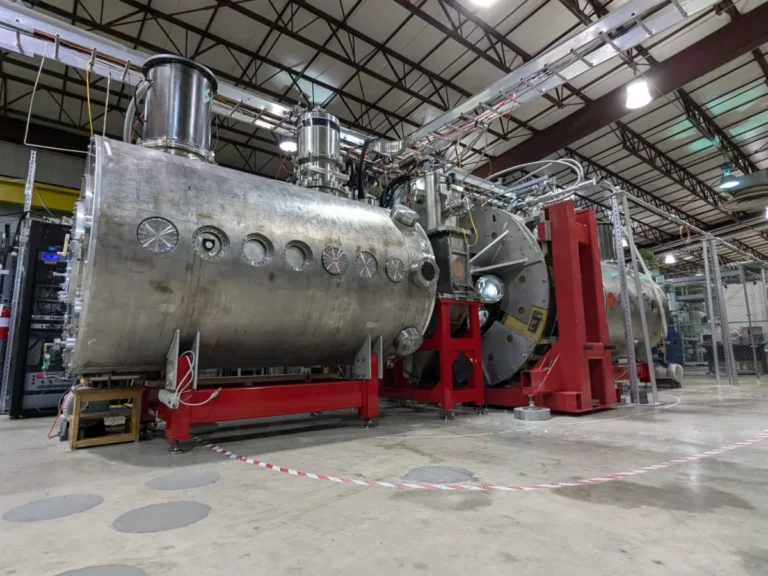
The long-held jest that fusion power is "always a decade away" has dramatically shifted in recent years, transforming from a scientific pipe dream into an increasingly tangible and tantalizing technological frontier. This fundamental change in perception has drawn a torrent of private investors off the sidelines, eager to back a technology that promises to harness the very reaction powering our sun to generate nearly limitless, clean energy here on Earth. Should these nascent startups succeed in developing commercially viable fusion power plants, they stand poised to fundamentally reshape trillion-dollar global energy markets, offering a potential solution to both energy security and climate change challenges.
For decades, the pursuit of nuclear fusion, the process by which light atomic nuclei combine to form heavier ones, releasing immense energy, has been confined largely to government-funded laboratories. The scientific and engineering hurdles are formidable: sustaining plasma at temperatures exceeding 100 million degrees Celsius and containing it long enough for more energy to be produced than consumed. However, a confluence of technological breakthroughs and a landmark scientific achievement have ignited unprecedented optimism and investment in the private sector.
The bullish wave buoying the fusion industry has been primarily driven by three critical technological advances. More powerful computer chips have enabled sophisticated simulations, allowing researchers to model complex plasma behaviors and reactor designs with unprecedented precision. The rise of more sophisticated artificial intelligence (AI) has provided the tools to manage and optimize these incredibly complex systems, from real-time plasma control to accelerating design iterations. Crucially, the development of powerful high-temperature superconducting (HTS) magnets has offered a pathway to create stronger magnetic fields in more compact devices, essential for confining the superheated plasma efficiently. Together, these innovations have facilitated the creation of more refined reactor designs, improved predictive simulations, and robust, complex control schemes, significantly accelerating progress.
A pivotal moment that validated the underlying science and further fueled investor confidence occurred at the end of 2022. The U.S. Department of Energy’s Lawrence Livermore National Laboratory (LLNL), through its National Ignition Facility (NIF), announced a groundbreaking achievement: it had produced a controlled fusion reaction that generated more energy than the lasers had imparted to the fuel pellet. This milestone, known as scientific breakeven (or Q > 1), marked the first time such a feat was accomplished in a laboratory setting. While still a considerable distance from commercial breakeven – where the reaction produces more energy than the entire facility consumes – it was a long-awaited and definitive proof that the scientific principles underpinning fusion power are sound and achievable. This singular event, widely reported globally, served as a powerful signal to both the scientific community and the investment world that fusion was no longer solely theoretical.
Building on this profound momentum, founders and innovators have propelled the private fusion industry forward at an astonishing pace. Venture capital and strategic investors, recognizing the monumental potential, have poured billions into startups exploring diverse approaches to fusion. According to data compiled by FusionX, a specialized data provider, a growing list of private companies have now successfully raised over $100 million in committed capital, illustrating the scale of this investment influx. This financial backing is not merely speculative; it reflects a belief that commercial fusion power is now within reach, albeit still requiring significant engineering and financial commitment.
Leading the Charge: The Titans of Private Fusion
The landscape of private fusion is dynamic and diverse, with companies pursuing various confinement methods. Here’s a closer look at some of the most heavily funded startups and their innovative approaches:
Commonwealth Fusion Systems (CFS): Leading the pack in terms of private capital raised, Massachusetts-based CFS has amassed an astounding $3.94 billion, representing approximately one-third of all private investment in fusion to date. A significant portion of this came from a $1.8 billion Series B round in 2021, followed by another $1 billion round in July. CFS is actively constructing Sparc, its first-of-a-kind power plant, designed to achieve "commercially relevant" power levels. The company anticipates Sparc reaching scientific breakeven (Q > 1) by 2027. CFS employs a tokamak design, which utilizes a D-shaped cross-section reactor wound with high-temperature superconducting tape. These HTS magnets, developed in collaboration with MIT (where co-founder and CEO Bob Mumgaard conducted his research), generate a powerful magnetic field to contain and compress the superheated plasma. The heat generated is then converted into steam to drive a turbine. Following Sparc’s anticipated operation in late 2026 or early 2027, CFS plans to begin construction on Arc, its commercial power plant, later this decade, aiming to produce 400 megawatts of electricity near Richmond, Virginia. Notably, Google has already agreed to purchase half of Arc’s projected output, signaling major corporate confidence. CFS boasts a robust investor roster including Breakthrough Energy Ventures, The Engine, and Bill Gates.
Helion: With an aggressive timeline, Helion, based in Everett, Washington, aims to produce electricity from its reactor as early as 2028, with Microsoft signed on as its inaugural customer. Helion utilizes a field-reversed configuration (FRC) reactor, characterized by an hourglass-shaped reaction chamber. Plasma is spun into doughnut shapes at each end, then accelerated towards each other at over 1 million mph. Their collision in the middle, aided by additional magnets, induces fusion. Uniquely, the boosted magnetic field from the fusion reaction directly induces an electrical current in the reactor’s coils, allowing for direct electricity harvesting without a steam cycle. Helion recently secured $465 million in a Series G round in June, valuing the company at $15.5 billion, adding to a $425 million round in January 2025. Its total committed capital stands at $3.2 billion, with prominent investors like Sam Altman, SoftBank Vision Fund 2, Reid Hoffman, and KKR.
TAE Technologies: Founded in 1998, TAE Technologies (formerly Tri Alpha Energy) is a veteran in the fusion landscape. Spun out of the University of California, Irvine, TAE also employs a field-reversed configuration but with a distinct modification: after the plasma shots collide, particle beams are used to stabilize the plasma in a cigar shape, extending confinement time and improving heat extraction efficiency for turbine operation. In an unexpected turn, TAE announced in December 2025 its merger with Trump Media & Technology Group in a $6 billion all-stock transaction. This deal, pending regulatory approvals, would inject $200 million into TAE immediately, with an additional $100 million upon SEC filing. Prior to the merger announcement, TAE had raised $1.65 billion, including $150 million in June 2025 from existing backers such as Google, Chevron, and New Enterprise.
Pacific Fusion: Bursting onto the scene with a reported Series A topping $1 billion, Pacific Fusion is a formidable new player. The startup is pursuing inertial confinement fusion, but instead of traditional lasers, it plans to use precisely coordinated electromagnetic pulses to compress the fuel. The technological challenge lies in the simultaneous convergence of 156 impedance-matched Marx generators, each producing 2 terawatts for 100 nanoseconds, on the target. Led by CEO Eric Lander, a renowned scientist from the Human Genome Project, and chief scientist Will Regan, Pacific Fusion’s funding is structured in tranches tied to specific milestone achievements, a common strategy in biotech.
Proxima Fusion: While tokamaks and inertial confinement have attracted significant investment, stellarators have shown immense promise in scientific experiments, notably the Wendelstein 7-X reactor in Germany. Leveraging its proximity to this success, Germany-based Proxima Fusion has raised over $682.9 million, with a July round valuing the company at $2.7 billion. Stellarators confine plasma in a twisted, ring-like shape, accommodating plasma "quirks" to achieve greater stability and longer confinement times. Proxima plans to complete Alpha, its net-energy demonstrator, in the early 2030s, followed by Stellaris, its commercial power plant, later that decade. Investors include Google, RWE, and Balderton Capital.
Shine Technologies: Taking a more pragmatic, multi-pronged approach, Shine Technologies aims to generate revenue long before selling electricity from a fusion plant. The company initially focuses on selling neutron testing services and medical isotopes, and more recently, has delved into radioactive waste recycling. Shine has intentionally not committed to a specific fusion reactor approach, instead developing foundational skills for future adoption. With a total of $1 billion raised, including a $240 million round in February led by NantWorks, Shine’s investors include Koch Disruptive Technologies and Sumitomo Corporation of Americas.
Inertia Enterprises: With Annie Kritcher, the chief scientist behind NIF’s scientific breakeven, as part of its founding team, Inertia Enterprises is poised to commercialize NIF-developed technology. Joined by Stanford professor Mike Dunne and Twilio co-founder Jeff Lawson, Inertia plans to use lasers to bombard fusion fuel pellets, mirroring Kritcher’s successful inertial confinement design. Emerging from stealth in February with $450 million in Series A funding led by Bessemer Venture Partners and GV, Inertia has signed three agreements to advance the commercialization of NIF’s groundbreaking technology.

General Fusion: A pioneer in the private fusion space, Canada-based General Fusion was founded in 2002 by physicist Michel Laberge. The company pursues magnetized target fusion (MTF), where a liquid metal wall surrounds a plasma-injected chamber. Pistons compress the liquid metal, sparking a fusion reaction. The resulting neutrons heat the liquid metal, which then generates steam for turbines. Despite a challenging period in spring 2025 that saw layoffs and a public plea for funding, General Fusion secured a $22 million lifeline in August 2025, followed by $51.1 million in SAFE notes. In a significant move, the company went public on Nasdaq in July 2026 via a reverse merger, netting $127 million and becoming the first publicly traded fusion company. Jeff Bezos and Temasek are among its investors, contributing to its over $442 million raised.
Zap Energy: Eschewing high-temperature magnets or powerful lasers for confinement, Zap Energy employs a unique "z-pinch" approach. It zaps plasma with an electric current, generating a self-confining magnetic field that compresses the plasma to about 1 millimeter, inducing ignition. Neutrons from the reaction heat a liquid metal blanket, which then produces steam. In April, Zap announced a partial pivot to pursue nuclear fission alongside fusion, and a potential hybrid power plant, aiming for earlier revenue generation. With $325 million raised from backers like Bill Gates’ Breakthrough Energy Ventures and Lowercarbon Capital, Zap is exploring diversified paths to commercialization.
Tokamak Energy: This UK-based startup innovates on the traditional tokamak by squishing it into a more compact, spherical shape, thereby reducing the aspect ratio. This "spherical tokamak" design, which resembles a steampunk Fabergé egg, requires less magnetic material, potentially reducing costs. Its ST40 prototype achieved a 100-million-degree Celsius plasma in 2022. Tokamak Energy raised $125 million in November 2024 to advance its Demo 4, which will test its REBCO high-temperature superconducting magnets in "fusion power plant-relevant scenarios." The company is also supplying magnets for the UK’s STEP Fusion program, reinforcing its position as a key technology provider. With $284 million raised, its investors include Future Planet Capital and Capri-Sun founder Hans-Peter Wild.
Focused Energy: Another German startup with roots in the National Ignition Facility, Focused Energy also uses laser pulses to compress fuel targets. Debbie Callahan, who designed NIF’s fuel target, is the company’s chief strategy officer, tasked with scaling the intricate target manufacturing process to nearly 1 million per day. Focused Energy secured an oversubscribed $240 million Series A in June, bringing its private capital to $277 million, supplemented by $200 million in grants. Investors include Prime Movers Lab and the utility RWE, which provides access to a decommissioned nuclear fission plant for research.
Marvel Fusion: This Munich-based startup also adopts an inertial confinement approach, similar to NIF’s breakthrough. Marvel Fusion fires powerful lasers at a target embedded with silicon nanostructures. These nanostructures, leveraging decades of semiconductor manufacturing expertise, cascade under bombardment, compressing the fuel to ignition. Marvel is building a demonstration facility in collaboration with Colorado State University, expected to be operational by 2027. The company has raised $208 million from investors including b2venture and Deutsche Telekom.
Type One Energy: This stellarator startup plans to build a fusion reactor capable of generating 350 megawatts of electricity on the site of a retired Tennessee Valley Authority (TVA) coal power plant, aiming for online operation by the mid-2030s. Type One distinguishes itself by planning to sell key technology to utilities like TVA, enabling them to build, own, and operate the equipment, mirroring traditional power plant development models. With $174.5 million raised, including an $82.5 million extended Series A, and currently raising a $250 million Series B, Type One is backed by investors including Bill Gates.
Kyoto Fusioneering: Recognizing that a commercially viable fusion power plant requires more than just a reactor core, Japan’s Kyoto Fusioneering focuses on developing "balance of plant" components. These are the crucial systems that sit outside the reactor, ranging from gyrotrons for plasma heating to heat extraction systems that convert fusion energy into electricity. Kyoto Fusioneering has made an early bet that a successful fusion industry will require specialized suppliers and expertise for integrating these diverse technologies. With $121 million invested, backers include 31Ventures, In-Q-Tel, and Mitsubishi, affirming the strategic importance of this niche.
First Light Fusion: Unlike many magnetic confinement approaches, UK-based First Light Fusion pursues inertial confinement but with a unique twist. While it had previously explored using a two-stage gun to fire a projectile at a target, it has since shifted its focus. First Light is now offering its core technologies to other companies building inertial confinement power plants and is developing "pulsed power capability" as a demonstrator plant with additional science and defense applications. Based in Oxfordshire, First Light has raised $140 million from investors such as Invesco and Tencent.
Thea Energy: Betting on "pixel-inspired magnets," Thea Energy aims to build a more cost-effective stellarator. While stellarators offer prolonged plasma stability, their complex, twisted magnetic fields are challenging to engineer. Thea proposes surrounding its doughnut-shaped reactor with dozens of smaller, modular magnets, using control software to create the necessary intricate magnetic kinks. This Princeton-rooted startup raised $100 million in a Series B in May, bringing its total to $120 million, with support from the U.S. Innovative Technology Fund, Prelude Ventures, and Lowercarbon Capital.
Xcimer: Colorado-based Xcimer takes a direct approach: replicate the basic science of NIF’s breakthrough but redesign the underlying laser technology from the ground up for commercial viability. The company is developing a 10-megajoule laser system, five times more powerful than NIF’s setup. Molten salt walls will surround the reaction chamber, absorbing heat and protecting the primary structure. In June, Xcimer activated Phoenix, a prototype system it claims is the world’s most powerful privately owned laser. Founded in July 2022, Xcimer has rapidly secured $101 million from investors including Hedosophia, Breakthrough Energy Ventures, and Lowercarbon Capital.
Broader Implications and the Path Ahead
The rapid influx of private capital and the recent scientific achievements underscore a fundamental shift in the global energy paradigm. Fusion power, once a distant dream, is now perceived as a credible, albeit challenging, long-term solution to the world’s burgeoning energy demands and the urgent need for decarbonization. The implications are profound: energy independence for nations, a significant reduction in greenhouse gas emissions, and a potentially inexhaustible fuel source derived from water.
However, the path to commercialization remains fraught with engineering complexities, material science challenges, and significant financial requirements. Moving from scientific breakeven to commercial breakeven, and then to a grid-ready power plant, involves scaling up systems, ensuring reliability, and achieving cost-effectiveness that can compete with established energy sources. Regulatory frameworks for fusion power are also nascent and will need to evolve rapidly to accommodate this new technology.
The diversity of approaches among these startups highlights the ongoing scientific and engineering exploration within the field. Each method – from magnetic confinement in tokamaks and stellarators to inertial confinement via lasers or electromagnetic pulses, and novel concepts like FRC and MTF – presents its own set of advantages and challenges. The coming decade will likely see critical demonstrations, prototypes, and potentially, the first truly net-energy-producing commercial-scale reactors.
The fusion power industry is at an inflection point. While challenges abound, the momentum is undeniable, driven by technological innovation, substantial private investment, and a collective global imperative for clean, abundant energy. The "decade away" joke is fading, replaced by a tangible sense of anticipation for a future powered by the stars.
About the Author