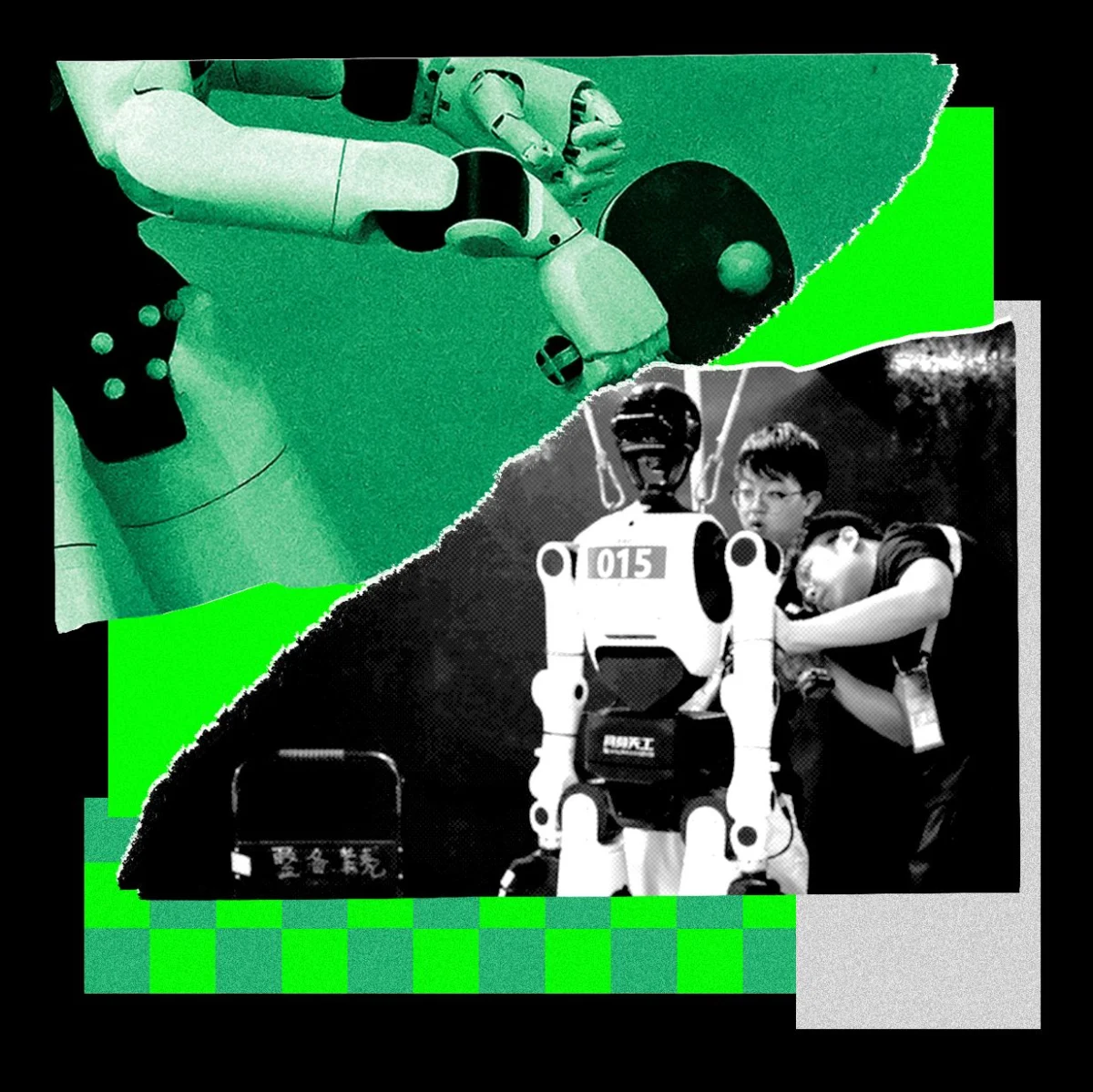
The 2024 World Humanoid Robot Games, held at the National Speed Skating Oval in Beijing, concluded on August 26, marking a significant milestone in the evolution of bipedal robotics and artificial intelligence. This five-day event, which commenced on August 22, served as a global stage for more than 600 teams from 16 countries, featuring a collective roster of over 2,000 robots. While the spectacle provided moments of levity through mechanical mishaps and "robot slapstick," the underlying objective remained strictly industrial: to accelerate the transition of humanoid systems from laboratory prototypes to practical, commercially viable deployments.
The Scope and Scale of the 2024 Beijing Games
The event highlighted China’s rapid emergence as a central hub for humanoid hardware development. According to official data from the organizers, China currently hosts more than 100 humanoid robot manufacturers, many of whom utilized the Beijing games to debut their latest iterations. The sheer volume of participants reflects a broader national strategy to dominate the "embodied AI" sector, a field where artificial intelligence is integrated into physical forms capable of navigating human environments.

The opening ceremony on August 22 set the tone for the competition, showcasing a diverse array of robots ranging from high-speed sprinters to specialized service models. Participants traveled from 15 international jurisdictions, including the United States, Japan, and several European nations, though the domestic Chinese presence remained the most dominant. The games were structured into two primary categories: athletic performance, designed to test raw physical capabilities and algorithmic stability, and "practical scenario" challenges, which focused on fine motor skills and environmental interaction.
Breaking Human Records: Athletic Achievements and Hardware Innovation
The most publicized aspect of the games involved record-breaking athletic feats that surpassed human benchmarks. The "Tiangong Ultra," a humanoid developed by the Beijing Humanoid Robot Innovation Center, captured global attention by completing the 100-meter dash in 8.86 seconds. This performance notably exceeded the human world record of 9.58 seconds, established by Usain Bolt in 2009.
Another significant contender, the "Lightning" robot developed by smartphone manufacturer Honor, recorded a time of 9.47 seconds in a preliminary test, further proving that mechanical acceleration and stride consistency have reached a tipping point. Beyond sprinting, the Tiangong platform demonstrated versatility by winning the long jump competition with a distance of 7.97 meters.

These achievements are the result of specific advancements in hardware and software:
- High-Power Actuators: The development of compact, high-torque motors has allowed robots to maintain dynamic balance at speeds previously impossible for bipedal machines.
- Reinforcement Learning in Simulation: Most of the competing robots utilized algorithms trained in "Sim-to-Real" environments. By simulating millions of hours of movement in virtual space, engineers can discover optimal gaits that, while sometimes appearing non-human, offer superior efficiency and stability.
- Dynamic Balancing: Advanced inertial measurement units (IMUs) and rapid feedback loops allow these machines to adjust their center of gravity in real-time, preventing falls during high-velocity maneuvers.
Addressing Moravec’s Paradox: The Challenge of Dexterity
While the athletic events demonstrated "brawn," a second tier of challenges was designed to test "brains" and fine motor control. These events included tasks that are trivial for humans but notoriously difficult for robots, such as plugging a power cable into a socket, picking up small beans with tweezers, and depositing garbage into a bin within a simulated bedroom environment.
Roboticists often refer to this phenomenon as Moravec’s Paradox—the discovery by AI and robotics researchers that high-level reasoning requires very little computation, but low-level sensorimotor skills require enormous computational resources.

Stefanie Tellex, a roboticist at Brown University, noted during the event that performing a backflip is, in many ways, easier for a robot than the delicate manipulation required to plug in a cable. The latter involves unpredictable variables such as friction, slippage, and tactile feedback. Humans possess an innate understanding of physics and a refined sense of touch that current robotic sensors struggle to replicate. The inclusion of these tasks in the 2024 games signals a shift in the industry’s focus toward solving the "manipulation gap" required for domestic and factory work.
Chronology of Key Events
The five-day itinerary was strategically organized to move from general demonstrations to specialized technical evaluations:
- August 22: Opening Ceremony and Hardware Exhibition. Major manufacturers showcased their latest bipedal frames, focusing on structural integrity and battery longevity.
- August 23: Track and Field Events. This day saw the record-breaking 100-meter sprints and long jump finals. The "robot vs. human" narrative dominated social media as mechanical speeds officially crossed the Usain Bolt threshold.
- August 24: Skill-Based Competitions. Robots engaged in table tennis matches against human players and participated in "cheerleading" routines designed to test synchronization and fluid range of motion.
- August 25: Industrial and Service Scenarios. Competitions moved to simulated environments, including the "Supermarket Scenario" and "Hotel Cleaning Service." Robots were tasked with stocking shelves and navigating cluttered rooms.
- August 26: Closing Ceremony and Technical Analysis. Organizers and industry leaders discussed the results, emphasizing the remaining hurdles in autonomy and battery density.
The Push for Industrial Autonomy
One of the standout participants in the service category was Galbot, a company focusing on retail and warehouse automation. Their robots participated in the Supermarket Scenario Competition, which required the machines to identify, grasp, and place items on shelves.

Yvonne Yuan, a representative for Galbot, emphasized that the goal is to move robots from "structured environments"—where every variable is known—to "unpredictable real-world applications." This involves a transition where robots must not only see an object but understand its orientation, weight, and fragility.
However, industry observers noted a critical caveat: many of the robots during the dexterity tasks appeared to be under teleoperation (remote control by a human operator). While this demonstrates that the mechanical hands are capable of delicate tasks, it also highlights the lag in true autonomous decision-making. Achieving the same level of precision without a human "in the loop" remains the primary goal for the 2025-2027 development cycle.
Global Reactions and Geopolitical Implications
The concentration of humanoid innovation in China has not gone unnoticed by the international community. Chris Atkeson, a professor at Carnegie Mellon University and a renowned figure in robotics, expressed a mix of admiration and concern regarding the momentum seen in Beijing. He noted that the games reflect a national enthusiasm for science and engineering that is currently driving rapid iteration cycles.

From a policy perspective, the Chinese government has identified humanoid robots as a "disruptive technology" similar to smartphones or new energy vehicles. The Ministry of Industry and Information Technology (MIIT) has previously outlined goals to achieve mass production of humanoid robots by 2025 and to reach a world-leading level in the technology by 2027. The World Humanoid Robot Games serve as a public-facing progress report on these state-level objectives.
Analysis: The Path to Practical Deployment
The 2024 World Humanoid Robot Games demonstrated that the hardware for humanoid robots has largely matured. The frames are faster, stronger, and more resilient than those seen just two years ago. However, the "intelligence" aspect—specifically the ability to navigate a home or factory autonomously—remains in its nascent stages.
The "robot slapstick" seen during the weightlifting and cheerleading events, where machines frequently lost balance or failed to recognize obstacles, serves as a reminder of the "brittleness" of current AI models. These systems perform exceptionally well in controlled environments but can fail when faced with slight deviations from their training data.

The broader impact of these games is twofold. First, they act as an accelerant for hardware standardization. By competing in the same events, companies are forced to converge on the most efficient designs for limbs, joints, and sensors. Second, they serve to normalize the presence of humanoid machines in the public eye. As AI continues to raise concerns regarding job displacement, events that frame robots as athletic competitors or helpful assistants are instrumental in shaping public perception and regulatory discourse.
As the event concluded, the consensus among participants was clear: the era of "gymnastic" robots—those designed purely for viral videos of backflips—is ending. The next phase of the humanoid race will be won by the companies that can master the mundane, yet complex, tasks of daily life: the wiring of a car chassis, the stocking of a retail shelf, and the autonomous navigation of the human home. For now, Beijing remains the primary arena where this future is being built, one sprint and one bean-picking task at a time.
About the Author