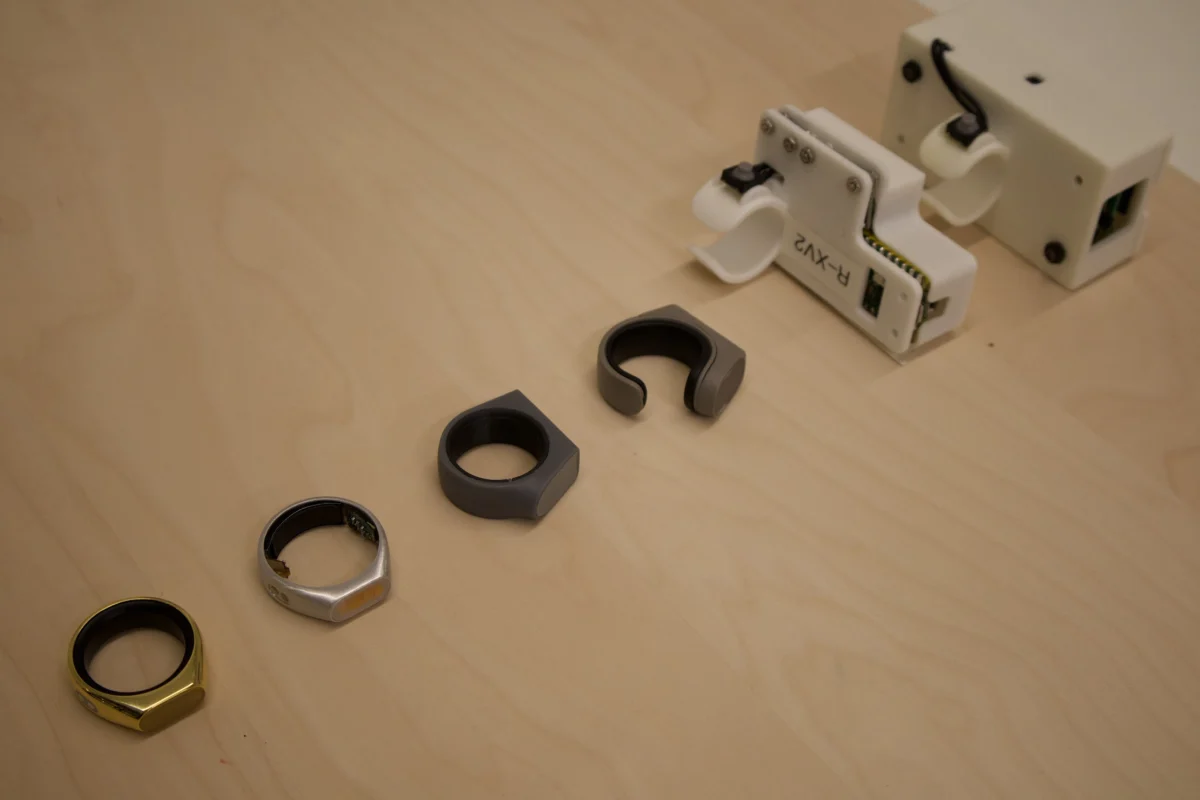
The landscape of personal productivity technology is undergoing a significant transformation, marked by the burgeoning emergence of AI-powered notetaking hardware. Over the past few years, a diverse array of devices – from credit-card-sized gadgets to discreet pendants, pins, and even transcribing earbuds – have entered the market, all promising to revolutionize how individuals capture, process, and act upon information from meetings and conversations. This initial wave, largely focused on structured environments like corporate meetings, is now giving way to a new frontier: wearable technology, particularly smart rings, designed to capture more ephemeral "stray thoughts and ideas" that often dictate personal innovation and daily workflow.
At the forefront of this evolution is Sandbar, a startup that has successfully garnered $36 million in funding for its flagship product, Stream, a private voice ring. This substantial investment includes a recent $23 million Series A round, led by prominent venture capital firms Adjacent and Kindred Ventures, signaling strong investor confidence in Sandbar’s vision and the market potential of discreet, AI-powered personal assistants. The investment underscores a broader industry pivot towards more seamless and integrated AI tools that prioritize user agency and privacy.
The genesis of AI notetaking hardware can be traced back to the confluence of several technological advancements and evolving work dynamics. The proliferation of remote and hybrid work models, catalyzed by global events in the early 2020s, significantly amplified the need for efficient digital tools to manage distributed teams and vast amounts of asynchronous communication. Traditional notetaking methods, often manual and prone to human error, struggled to keep pace with the sheer volume and speed of information exchange. Simultaneously, breakthroughs in artificial intelligence, particularly in natural language processing (NLP), speech-to-text transcription, and advanced summarization algorithms, matured to a point where they could be effectively integrated into compact, consumer-grade hardware.
Early iterations of AI notetakers typically took the form of dedicated devices designed to sit on a conference table or clip onto clothing. Companies like Otter.ai and Fathom, while primarily software-based, demonstrated the immense value of automatically transcribing and summarizing meetings, extracting key decisions, and identifying action items. Hardware counterparts sought to offer a more integrated, always-on solution. These devices, often marketed for their ability to provide "memory augmentation," aimed to free users from the burden of constant manual transcription, allowing them to engage more fully in discussions.
However, despite their initial promise, many of these early hardware devices faced significant hurdles in achieving widespread adoption. User feedback often highlighted concerns around bulkiness, obtrusiveness, battery life limitations, and the perceived "creepiness" of always-on recording. Privacy was a paramount concern; users were wary of devices that might inadvertently record sensitive conversations or store personal data without explicit consent. Accuracy in noisy environments, integration challenges with existing digital ecosystems, and a steep learning curve for some functionalities also contributed to a fragmented market where no single hardware solution truly dominated.
This landscape of challenges paved the way for a more refined approach, shifting focus towards wearables. Wearable technology, already a multi-billion-dollar industry encompassing smartwatches, fitness trackers, and hearables, offered a natural progression for AI notetaking. The inherent discreetness, constant proximity to the user, and increasing sophistication of miniaturized sensors and processors made wearables an attractive form factor. Smartwatches began incorporating enhanced voice memo features, and specialized earbuds offered transcription capabilities, but the concept of a "smart ring" for voice capture represents a particularly innovative leap.
Rings, by their very nature, are intimate and unobtrusive. Worn on the finger, they are almost an extension of the body, offering a discreet and always-present interface for interaction. Unlike a phone that needs to be pulled out, or a clip-on device that might draw attention, a ring can be activated with a subtle gesture or press, making the act of recording a fleeting thought almost subconscious. This seamless integration into daily life is a critical differentiator for devices like Sandbar’s Stream. The potential for immediate, friction-free capture of ideas, observations, or reminders – the very "stray thoughts" that often get lost in the busyness of modern life – is immense. The global smart ring market, though nascent compared to smartwatches, is projected to grow significantly, driven by demand for biometric tracking, contactless payments, and now, increasingly, voice-activated personal assistants. Analysts predict the market could exceed $200 million by the late 2020s, with a compound annual growth rate (CAGR) well into double digits, indicating a fertile ground for innovation.
Sandbar’s co-founder and CEO, Mina Fahmi, elaborated on the company’s philosophy during a recent episode of TechCrunch’s Equity podcast. Fahmi articulated a clear understanding of why previous voice hardware devices struggled to break through, attributing much of it to a failure to properly balance technological capability with user control and comfort. His core hypothesis is that success in this domain hinges on "keeping the human firmly in control." This principle underpins the design and functionality of the Stream ring, moving away from an intrusive, always-listening paradigm towards a user-initiated, private, and intuitive experience.
For Stream, "keeping the human in control" likely translates into several key design tenets. Firstly, it implies explicit user activation for recording, ensuring that conversations are only captured when the user intends them to be. This addresses a major privacy concern that plagued earlier devices. Secondly, it suggests a focus on personal, reflective notetaking rather than pervasive meeting transcription, making the device a personal assistant for thought capture rather than a surveillance tool. Thirdly, it hints at robust local processing capabilities for enhanced privacy, with optional cloud integration for advanced AI features or synchronization with other services, always with user consent. Furthermore, intuitive controls, perhaps a simple tap or press, would minimize cognitive load and make the act of recording effortless.
Sandbar’s impressive $36 million in funding, including the recent $23 million Series A, provides the company with significant runway to execute its vision. The involvement of firms like Adjacent and Kindred Ventures, known for their early-stage investments in disruptive technology and strong founding teams, signals confidence in Sandbar’s potential to carve out a substantial niche in the competitive wearable tech market. The fact that Sandbar’s team includes former Meta employees brings a wealth of experience in building and scaling consumer hardware and software products, particularly those integrating advanced AI and user experience design. This background is crucial for navigating the complexities of hardware development, software integration, and consumer adoption.
The competitive landscape for AI notetaking and wearable voice capture is dynamic and evolving. While direct competitors offering similar smart rings are still relatively few, the broader market includes established players like smartwatches with voice memo capabilities (e.g., Apple Watch, Samsung Galaxy Watch), dedicated voice recorders, and software-only transcription services. Sandbar’s differentiation lies in its specific form factor – the ring – and its explicit focus on "private voice notes" and "stray thoughts," contrasting with the meeting-centric approach of many existing solutions. The challenge will be to convince users that a dedicated ring offers a superior experience to what their smartphone or smartwatch can provide, especially given the already crowded personal tech ecosystem.
Beyond the technological and market dynamics, the ethical and regulatory implications of ubiquitous voice capture are increasingly under scrutiny. Data privacy, security, and user consent are critical considerations. Companies like Sandbar must demonstrate a steadfast commitment to privacy-by-design principles, ensuring that sensitive voice data is handled with the utmost care, with clear policies on storage, processing, and deletion. Transparency with users about how their data is used and protected will be paramount for building trust and fostering long-term adoption. The rise of privacy regulations like GDPR and CCPA also places significant responsibility on hardware developers to adhere to stringent data protection standards.
Looking ahead, the implications of AI-powered wearable notetaking are profound. Such devices could fundamentally alter how individuals manage information overload, foster creativity, and enhance personal productivity. Imagine a writer capturing a sudden plot idea mid-walk, an engineer noting a design flaw during an inspection, or a student recording a key insight from a lecture without breaking their flow. This seamless capture of information has the potential to act as an external memory, ensuring valuable thoughts are never lost. The trend aligns with the broader vision of "ambient intelligence" – a future where technology fades into the background, proactively assisting users without demanding constant attention.
However, challenges remain. User adoption will depend not only on the device’s utility but also on its aesthetics, comfort, and battery life. Integration with a myriad of existing productivity apps and platforms (calendars, to-do lists, CRM systems) will be crucial for Stream to become an indispensable tool rather than an isolated gadget. Moreover, the accuracy of AI transcription and summarization, particularly in diverse accents and noisy environments, will need continuous refinement. The long-term success of Sandbar and similar ventures will hinge on their ability to consistently deliver on these fronts while maintaining a strong user-centric and privacy-conscious approach.
The investment in Sandbar underscores a venture capital community bullish on the convergence of AI and wearable technology, particularly in solving real-world productivity challenges. Mina Fahmi’s emphasis on "keeping the human firmly in control" positions Sandbar’s Stream not just as a technological innovation, but as a thoughtful response to the complexities of modern digital life, offering a powerful tool that respects user autonomy and privacy. As AI continues to permeate every aspect of our lives, devices like the Stream ring represent a significant step towards a future where technology is not just smart, but also seamlessly integrated, intuitive, and genuinely empowering for the individual. The journey of AI notetaking hardware is far from over, but with the advent of intelligent wearables like the Stream ring, it is entering an exciting new phase of personal empowerment and ubiquitous utility.
About the Author