In the ecologically sensitive and industrially vital waters of Washington state’s Puget Sound, a sophisticated convergence of artificial intelligence and thermal imaging technology is being deployed to protect one of the region’s most iconic yet imperiled species. Known as the Southern Resident orcas, this specific population of killer whales has long faced an existential threat from the heavy maritime traffic that defines the Pacific Northwest’s shipping corridors. Now, a permanent AI-equipped thermal camera, affectionately nicknamed "Whale-E" by researchers, is providing a critical technological advantage by detecting these marine mammals in real-time, allowing massive commercial vessels to adjust their courses and speeds to avoid potentially fatal encounters.
The installation of this technology at a U.S. Coast Guard radar tower near Point Wilson marks a significant milestone in marine conservation. While previous efforts to track orcas relied heavily on human spotters and underwater acoustic monitoring, the new system—developed by the specialized firm WhaleSpotter—fills a critical gap in surveillance. By identifying the heat signatures of whale "blows" or spouts, the system can detect the presence of orcas at night, in heavy rain, or when the animals are swimming silently, conditions that typically render traditional detection methods ineffective.

The Critical State of the Southern Resident Population
The urgency behind this technological deployment is underscored by the dire population statistics of the Southern Resident orcas. As of early 2025, only 74 individuals remain in this distinct population, which is composed of three social groups known as the J, K, and L pods. Unlike other orca populations that roam the open ocean or hunt marine mammals, the Southern Residents are genetically and culturally distinct, relying almost exclusively on Chinook salmon for their diet.
Their decline is attributed to a "triple threat" of environmental stressors: a dwindling supply of their primary prey, the accumulation of chemical pollutants in their blubber, and the pervasive impact of vessel noise and physical strikes. For these whales, the Puget Sound is not just a habitat but a noisy industrial zone. Large tankers, container ships, and state ferries create a constant acoustic fog that interferes with the orcas’ ability to communicate and use echolocation to hunt. In an environment where every successful hunt is vital for survival, the disruption caused by a passing ship can be the difference between a pod thriving or starving.
Chronology of Technological Development and Implementation
The journey to the Point Wilson installation began over a decade ago at the Woods Hole Oceanographic Institution. Researchers led by Dr. Daniel Zitterbart, co-founder and chief scientist of WhaleSpotter, spent years recording thermal signatures of various whale species across the globe. This extensive research formed the foundational dataset required to train an artificial intelligence model capable of distinguishing a whale’s spout from whitecaps, sea spray, or other environmental anomalies.

In 2019, WhaleSpotter began deploying its thermal imaging systems in British Columbia, Canada, providing a proof-of-concept in the shared waters of the Salish Sea. The success of these northern installations caught the attention of Quiet Sound, a collaborative program in Washington state dedicated to reducing the impact of large commercial vessels on the Southern Residents.
The implementation at Point Wilson followed a strategic timeline:
- Research Phase (2014–2023): Accumulation of thermal data and AI training at Woods Hole.
- Regional Collaboration (2023–2024): Quiet Sound, the Port of Seattle, and the U.S. Coast Guard identified Point Wilson as a high-priority location due to its position overlooking the primary shipping lane at the entrance to Puget Sound.
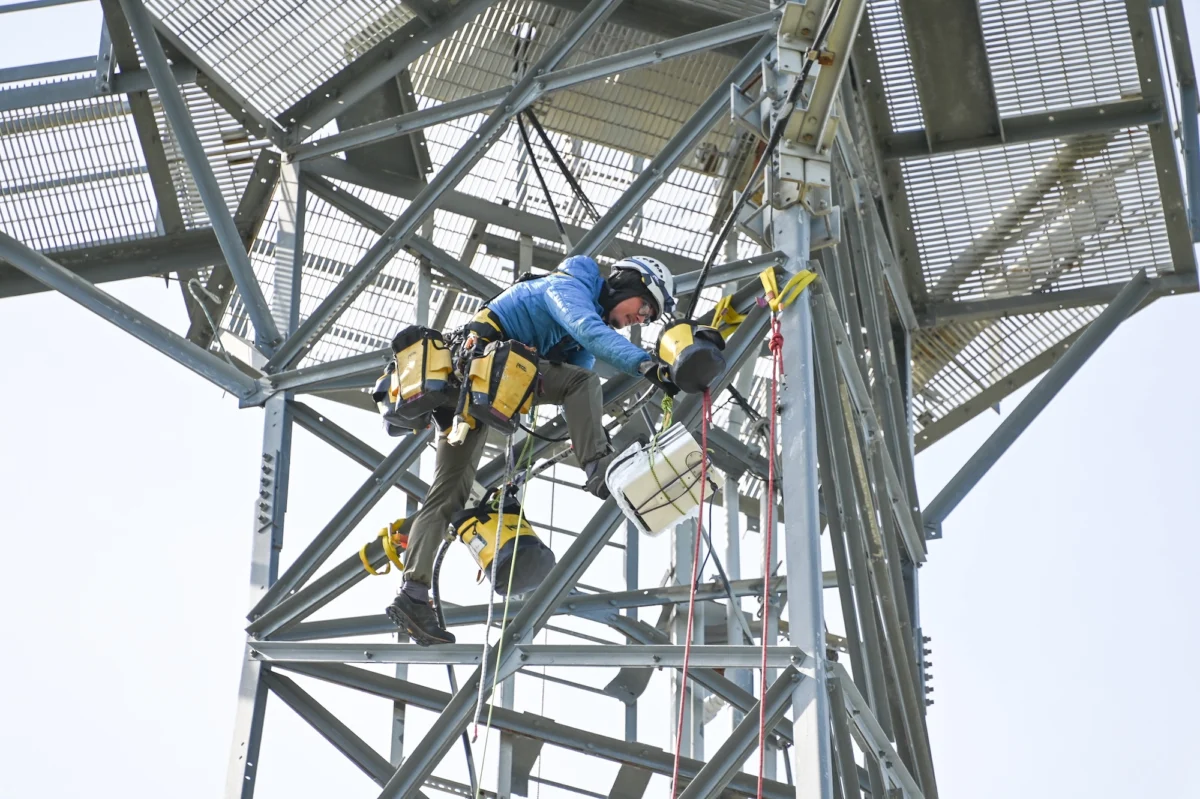
- Installation (Early 2025): The WhaleSpotter camera was mounted on a Coast Guard radar tower. Within hours of the installation being completed at 6:00 p.m., the system recorded its first whale detection at 8:00 p.m. that same evening.
Technical Specifications and the "Human-in-the-Loop" Protocol
The WhaleSpotter system operates on a sophisticated technological framework designed for maximum accuracy and minimal lag. The camera has a detection range of approximately four nautical miles. At this distance, a whale’s blow may only appear as a few pixels on a screen—a heat signature that would be invisible to the naked human eye, especially under low-light conditions.

The AI software continuously scans the horizon, analyzing thermal gradients in real-time. When a potential whale is identified, the system does not act autonomously. Instead, it triggers an alert to a global network of professional marine mammal observers. This "human-in-the-loop" protocol ensures that data remains reliable and that ship captains are not burdened with false alarms.
According to Dr. Zitterbart, the verification process is remarkably swift. Once the AI flags a detection, a human expert reviews the footage and confirms the sighting within an average of 34 seconds. This rapid verification allows the information to be transmitted to the Whale Report Alert System (WRAS), which then notifies pilots and captains of nearby commercial vessels. With a detection range of four miles, a ship captain receiving an alert has sufficient time to reduce speed or make minor course corrections—sometimes as small as one degree—to ensure a safe distance from the pod.
Supporting Data: The Impact of Vessel Noise and Speed
The correlation between vessel speed and whale safety is supported by extensive maritime and biological data. Research indicates that reducing a vessel’s speed significantly decreases the "noise footprint" it creates underwater. For many large vessels, slowing down by just a few knots can reduce underwater noise intensity by 50% or more.

Data from the Quiet Sound voluntary vessel slowdown program in the Admiralty Inlet suggests that high levels of participation from the shipping industry can lead to measurable improvements in the acoustic environment. During the 2023-2024 season, a majority of deep-sea vessels complied with slowdown requests, demonstrating a growing industry commitment to conservation. The addition of the thermal camera provides these mariners with the specific, real-time data needed to make these voluntary measures more effective.
Furthermore, the risk of lethal ship strikes is directly tied to vessel speed. Statistical models of whale-ship interactions show that the probability of a strike being fatal drops below 50% when a ship is traveling at 10 knots or less. By providing an early warning system that extends up to four miles, the WhaleSpotter technology effectively expands the "reaction zone" for mariners, turning a potential collision into a routine navigational adjustment.
Official Responses and Stakeholder Perspectives
The deployment of Whale-E has garnered positive reactions from conservationists, government agencies, and the maritime industry alike. Gonzalo Banda-Cruz, the program manager for Quiet Sound, emphasized that the technology is a vital "piece of the puzzle" in a broader strategy to ensure the coexistence of nature and commerce.

"This is an exciting example of AI being used for good," Banda-Cruz stated, noting that the camera’s ability to operate in total darkness provides a level of protection that was previously impossible.
The maritime industry, represented by organizations like the Pacific Merchant Shipping Association and the Washington State Ferries, has generally expressed support for data-driven conservation tools. For ship operators, the primary challenge of whale avoidance is the "surprise factor." When whales are detected only when they are within a few hundred yards of a bow, the options for safe maneuvering are limited. The thermal camera removes this element of surprise, providing a predictable and manageable stream of information that can be integrated into standard bridge operations.
However, challenges remain, particularly regarding the financial sustainability of expanding the network. While the Point Wilson camera is a success, Quiet Sound officials acknowledge that installing a comprehensive "ring of protection" around the Puget Sound will require significant ongoing investment and public-private partnerships.

Broader Implications and Future Outlook
The success of the Whale-E project in the Puget Sound has implications that reach far beyond the Pacific Northwest. As global shipping volumes continue to rise, the conflict between maritime trade and marine conservation is intensifying worldwide. From the North Atlantic right whales off the coast of New England to blue whales in the Indian Ocean, the threat of ship strikes and noise pollution is a global crisis.
The AI-driven thermal imaging model pioneered by WhaleSpotter offers a scalable solution that could be implemented in other high-traffic corridors. Unlike hydrophones, which are limited by the whales’ vocalization patterns, or satellite tracking, which can be expensive and lack the resolution for real-time navigation, thermal imaging provides a consistent and relatively cost-effective means of surveillance.
In the long term, the survival of the Southern Resident orcas will depend on more than just avoiding ships. It will require the restoration of salmon runs and the cleanup of toxic legacy pollutants. However, the AI technology currently standing watch at Point Wilson provides the most immediate defense against the physical and acoustic threats of the shipping lanes. By leveraging the power of artificial intelligence to bridge the gap between human observation and animal behavior, researchers are giving these 74 remaining whales a fighting chance to navigate a world that is becoming increasingly crowded and loud.

The "ghostly" thermal images captured by Whale-E represent more than just data points; they are a testament to the potential for technological innovation to serve as a guardian for the natural world, ensuring that the iconic dorsal fins of the Southern Residents continue to break the surface of the Puget Sound for generations to come.
About the Author