Asia-Pacific markets are largely poised for declines on Thursday, reacting to signals from Iran indicating its unwavering disinterest in holding direct talks with the United States regarding a hypothetical conflict scenario. This diplomatic stalemate, occurring within a simulated geopolitical framework that analysts are tracking, has cast a shadow of caution over investor sentiment, even as Tehran reportedly reviews an American proposal aimed at de-escalation. The nuance of indirect communication versus formal negotiations remains a critical point of contention, influencing global risk assessments.
The Diplomatic Impasse: Iran’s Firm Stance on Dialogue
Iranian Foreign Minister Abbas Araghchi underscored the Islamic Republic’s position, stating that the exchange of messages between the two nations through various mediators "does not mean negotiations with the U.S.," as reported by Reuters. This clarification serves to temper any expectations of an immediate breakthrough in direct diplomatic engagement, reinforcing Iran’s long-standing preference for indirect channels when dealing with Washington on sensitive issues. The statement follows earlier reports from Iranian state media on Wednesday, which indicated that the country would reject a U.S. ceasefire offer related to the hypothetical conflict and had, in turn, outlined its own set of conditions for ending the simulated hostilities.
This posture reflects a carefully calibrated diplomatic strategy by Iran, which often seeks to avoid direct engagement with the U.S. that could be perceived domestically or regionally as a concession or a legitimization of American pressure tactics. The reliance on intermediaries, frequently including nations like Oman, Qatar, or European powers, has been a hallmark of U.S.-Iran relations during periods of heightened tension or negotiation, allowing both sides to convey messages and proposals without the political cost of direct, face-to-face interaction. The current situation suggests a continuation of this pattern, albeit within the context of a highly scrutinized and hypothetical military scenario.
Contextualizing the "Hypothetical Conflict": A Scenario for Risk Assessment
It is crucial to clarify that the "war" referred to in the context of this financial news article and the analyst commentary is widely understood within financial and geopolitical analysis circles as a hypothetical conflict scenario or a simulated geopolitical escalation. This interpretation is strongly suggested by the original article’s internal reference to a CNBC link dated "2026/03/25/iran-war-us-trump.html," indicating a future-dated scenario, possibly from a strategic planning document, a war game exercise, or a long-term geopolitical forecast being considered by market participants. It does not refer to an active, kinetic military conflict currently underway between the United States and Iran.
Such hypothetical scenarios are routinely developed by think tanks, intelligence agencies, and financial institutions to model potential outcomes of geopolitical flashpoints, assess their economic ramifications, and inform risk management strategies. The U.S. and Iran have a complex and often adversarial relationship marked by decades of tension, including the 1979 Iranian Revolution, the hostage crisis, the Iran-Iraq War, the development of Iran’s nuclear program, the imposition of international sanctions, and regional proxy conflicts. These historical and ongoing points of friction often form the basis for constructing hypothetical scenarios of escalation, allowing analysts to gauge potential impacts on global oil supplies, shipping lanes, trade routes, and overall market stability.
The current discussions surrounding a "U.S. ceasefire offer" and Iran’s "conditions for ending the war" should therefore be viewed through the lens of a sophisticated scenario analysis. Market participants are reacting not to an immediate military engagement, but to the perceived likelihood of such a scenario unfolding in the future, or the diplomatic intractable nature of the underlying tensions that could lead to such a scenario. The protracted nature of indirect diplomacy, even in a hypothetical framework, signals persistent geopolitical risk, which naturally triggers a cautious response in global financial markets.
Market Reactions Across Asia-Pacific: A Wave of Caution
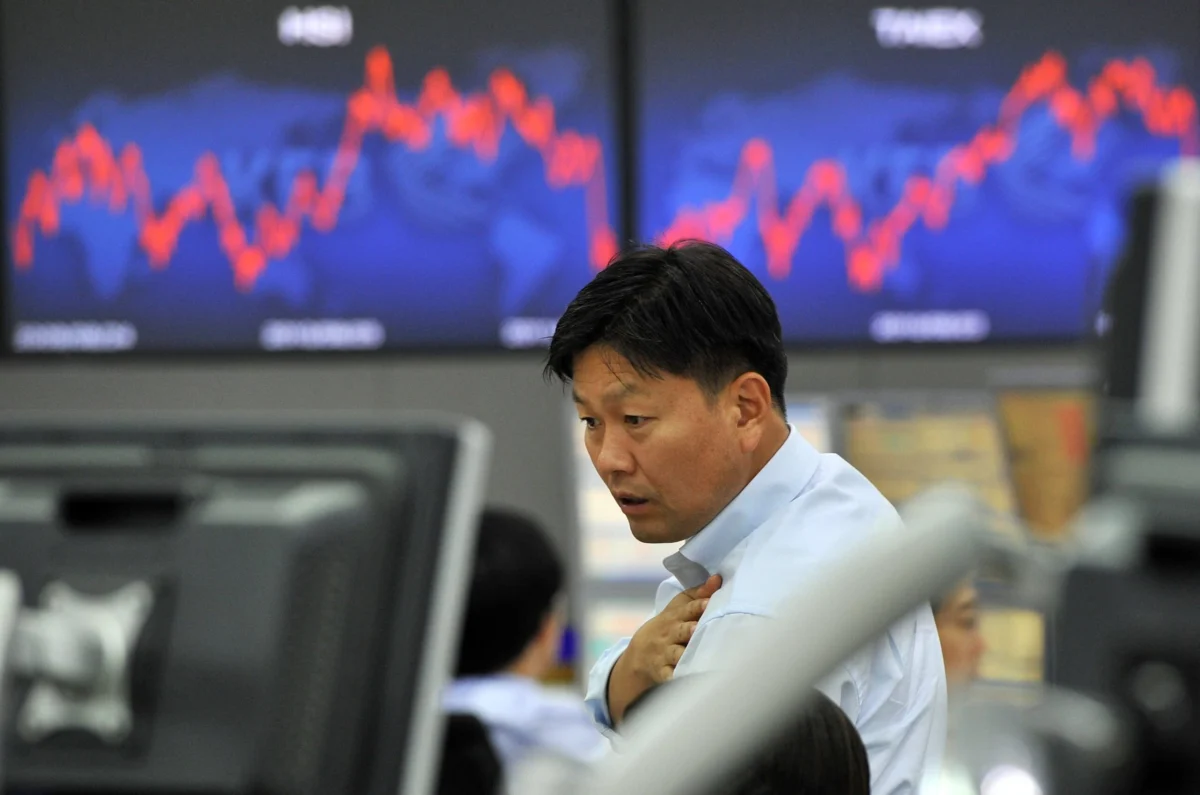
The signals from Tehran have translated into a discernible wave of caution across Asia-Pacific markets, with several key indices expected to face downward pressure. Investor sentiment in the region is particularly sensitive to geopolitical developments involving major oil producers and critical trade routes, given the region’s heavy reliance on energy imports and extensive global supply chains.
- Japan’s Nikkei 225 was poised for a decline, with futures contracts indicating a retreat from its previous close of 53,749.62. The Chicago futures contract was noted at 53,520, while the Osaka contract stood at 53,600. Japan, a major net importer of energy, is highly vulnerable to any perceived instability in the Middle East, even if hypothetical, as it can fuel concerns about oil price volatility and supply disruptions. Companies reliant on international trade and those in the manufacturing sector often bear the brunt of such anxieties.
- Hong Kong’s Hang Seng index futures were at 25,268, down from the index’s last close of 25,335.95. As a global financial hub with significant exposure to international trade and capital flows, Hong Kong’s market is acutely sensitive to geopolitical risks that could impact global economic growth and investor confidence. The ongoing diplomatic friction, even in a simulated context, can deter foreign investment and dampen local market sentiment.
- Australia’s S&P/ASX 200 remained largely flat in early trade, showing a relatively muted immediate reaction compared to its regional counterparts. Australia, a significant exporter of commodities, including natural gas and coal, sometimes experiences a more complex reaction to geopolitical tensions. While global instability can generally be negative, certain commodity prices might see upward pressure, potentially offsetting some of the broader market downturn. However, sustained uncertainty would likely weigh on broader economic activity and consumer confidence.
The collective downward pressure across these diverse markets underscores a prevalent risk-off sentiment. Investors tend to reallocate capital towards safer assets or adopt a wait-and-see approach when confronted with prolonged geopolitical uncertainty, irrespective of whether the immediate threat is kinetic or hypothetical. This cautious stance can lead to selling pressure in equities, particularly in sectors highly exposed to global trade, energy, and cross-border investment.
Oil Market Stability Amidst Uncertainty: A Complex Dynamic
Despite the heightened geopolitical rhetoric and the ongoing discussions surrounding a hypothetical conflict, oil prices exhibited stability during Asia trading hours. West Texas Intermediate (WTI) crude futures were up a modest 0.72% at $91 per barrel. This relative calm in the energy markets might seem counterintuitive given the implications of Middle East tensions for global oil supply.
Several factors could contribute to this stability:
- Hypothetical Nature: The market’s understanding that the "conflict" is a hypothetical scenario, rather than an immediate kinetic war, could be preventing a panic-driven surge in prices. Traders may be factoring in the long lead times and diplomatic efforts that would precede any actual military action.
- Existing Supply Levels: Global oil inventories, strategic reserves in major consuming nations, and the production capabilities of OPEC+ members and non-OPEC producers (like the U.S. shale industry) might be perceived as sufficient to cushion against immediate supply shocks, even in a heightened risk environment.
- Demand-Side Concerns: Broader global economic concerns, such as potential slowdowns in major economies, could be capping demand expectations. If a hypothetical conflict were to impact global growth, it could paradoxically reduce overall oil demand, thus mitigating price increases.
- Strategic Calculations: Oil markets are highly sophisticated, and traders often discount political rhetoric, focusing instead on concrete developments that directly impact supply and demand. The absence of immediate, tangible disruptions to oil production or shipping routes might be contributing to the stable pricing.
However, sustained diplomatic impasses and the continued discussion of hypothetical conflict scenarios inherently carry the risk of future price volatility. Any perceived shift from a hypothetical scenario to a more tangible threat could rapidly trigger significant upward movement in oil prices, given the Middle East’s central role in global energy supply.
Analyst Perspectives on Escalation and Dialogue: The "Talk and Fight" Phase
Analyst commentary highlights the complexity of the current situation, suggesting a prolonged period of strategic maneuvering rather than an imminent resolution. Thierry Wizman, global FX and rates strategist at Macquarie Group, articulated this perspective, stating that a ceasefire is "not imminent." His analysis suggests that the situation is likely to escalate before any significant de-escalation, even within the confines of a hypothetical framework.
Wizman posited that "an intensification of military action by the U.S. as it tries to nudge Iran toward making important concessions is likely over the next two weeks, before major combat operations succeed, perhaps in mid-April." This projection, again, needs to be interpreted within the context of scenario planning. "Intensification of military action" in a hypothetical context could refer to a range of strategic moves: increased cyber operations, more aggressive naval posturing in international waters, enhanced support for regional proxies, or even rhetorical escalation designed to pressure the adversary. The timeframe of "next two weeks" and "mid-April" implies a simulated operational timeline, suggesting that the analysts are working within a predefined war game or strategic projection.
Wizman further elaborated, suggesting that "The War may now enter its third phase of ‘talk and fight,’ rather than talk only, or fight only." This "talk and fight" paradigm is a well-recognized concept in geopolitical strategy, where diplomatic overtures and negotiations occur concurrently with various forms of pressure, coercion, or limited military actions. In a hypothetical U.S.-Iran scenario, this could manifest as:
- Continued indirect diplomatic exchanges through mediators, while simultaneously,
- Escalated cyber activity targeting critical infrastructure or military networks,
- Increased military exercises or deployments designed to send a deterrent message,
- Economic sanctions enforcement or the introduction of new punitive measures,
- Support for regional opposition groups or proxy forces.
This analytical framework suggests a period of heightened tension and strategic complexity, where both sides are attempting to gain leverage through a combination of coercive actions and conditional dialogue, without necessarily committing to full-scale kinetic warfare. Such a protracted and multifaceted approach, even in simulation, inherently injects uncertainty into financial markets.
Overnight US Market Performance: A Divergent Trend
In contrast to the cautious outlook in Asia-Pacific, U.S. markets recorded gains overnight. The Dow Jones Industrial Average rose by 305.43 points, or 0.66%, closing at 46,429.49. The S&P 500 advanced 0.54% to 6,591.90, and the Nasdaq Composite climbed 0.77% to end at 21,929.83.
This divergence in performance can be attributed to several factors:
- Domestic Focus: U.S. markets often exhibit a stronger focus on domestic economic data, corporate earnings, and Federal Reserve policy. Positive economic indicators or strong corporate results can outweigh geopolitical concerns originating outside the immediate region, especially when those concerns pertain to a hypothetical scenario.
- Sectoral Strength: The U.S. market, particularly the Nasdaq, is heavily weighted towards technology and growth stocks. These sectors might be less directly exposed to the immediate impacts of Middle East geopolitical tensions compared to, for example, energy or shipping sectors, which are more prominent in some Asian economies.
- Perception of Risk: U.S. investors might perceive the hypothetical U.S.-Iran conflict as less of an immediate or direct threat to the U.S. economy compared to how Asian markets, heavily reliant on global trade and energy imports, might view it. The geographical distance and the U.S.’s own energy independence could also play a role.
- Flight to Safety within Equities: In some instances of global uncertainty, U.S. equities, particularly large-cap stocks, can paradoxically be seen as a relative safe haven for international capital compared to riskier emerging markets or more volatile regional indices.
While U.S. markets showed resilience, the interconnected nature of the global economy means that prolonged geopolitical uncertainty, even if hypothetical, can eventually ripple through all financial systems, affecting trade, investment, and commodity prices worldwide.
Broader Economic and Geopolitical Implications (Hypothetical):
The ongoing diplomatic stalemate and the prospect of a prolonged "talk and fight" phase in a hypothetical U.S.-Iran conflict scenario carry significant broader implications, even if the conflict itself is currently simulated.
- Global Trade and Supply Chains: Any actual or perceived disruption in the Strait of Hormuz, a critical chokepoint for global oil shipments, would have immediate and severe consequences for global trade. Even in a hypothetical scenario, the discussion of such disruptions can prompt companies to reassess logistics, diversify supply routes, and increase insurance costs, ultimately impacting consumer prices.
- Investment Climate: Persistent geopolitical uncertainty erodes investor confidence. It can lead to capital flight from perceived high-risk regions, dampen foreign direct investment, and encourage a preference for liquid, short-term assets over long-term commitments. This can hinder economic development, particularly in emerging markets.
- Regional Stability: The hypothetical scenario underscores the fragility of regional stability in the Middle East. Any escalation, even rhetorical, can embolden various state and non-state actors, leading to a wider ripple effect of instability, proxy conflicts, and humanitarian crises.
- Energy Security: While oil prices are currently stable, a genuine escalation of tensions would immediately threaten global energy security. Nations would scramble to secure alternative supplies, potentially drawing down strategic reserves, and prices would surge, impacting industries and consumers worldwide.
- Policy Challenges: Governments and central banks would face immense pressure to formulate responses to prolonged geopolitical uncertainty. This could involve fiscal measures to support affected industries, monetary policies to stabilize financial markets, and diplomatic efforts to de-escalate tensions. The complexity is magnified when dealing with a blend of real and hypothetical threats.
In conclusion, the current market reactions across Asia-Pacific underscore the profound impact that geopolitical rhetoric and hypothetical conflict scenarios can have on investor sentiment. Iran’s firm stance against direct talks with the U.S., even as proposals are reviewed, signals a protracted period of strategic maneuvering. While U.S. markets exhibited resilience, the global financial system remains highly sensitive to the complex interplay of diplomacy, perceived threats, and economic realities, particularly when major powers are engaged in a delicate dance of "talk and fight" within a framework of ongoing geopolitical risk assessment.
About the Author