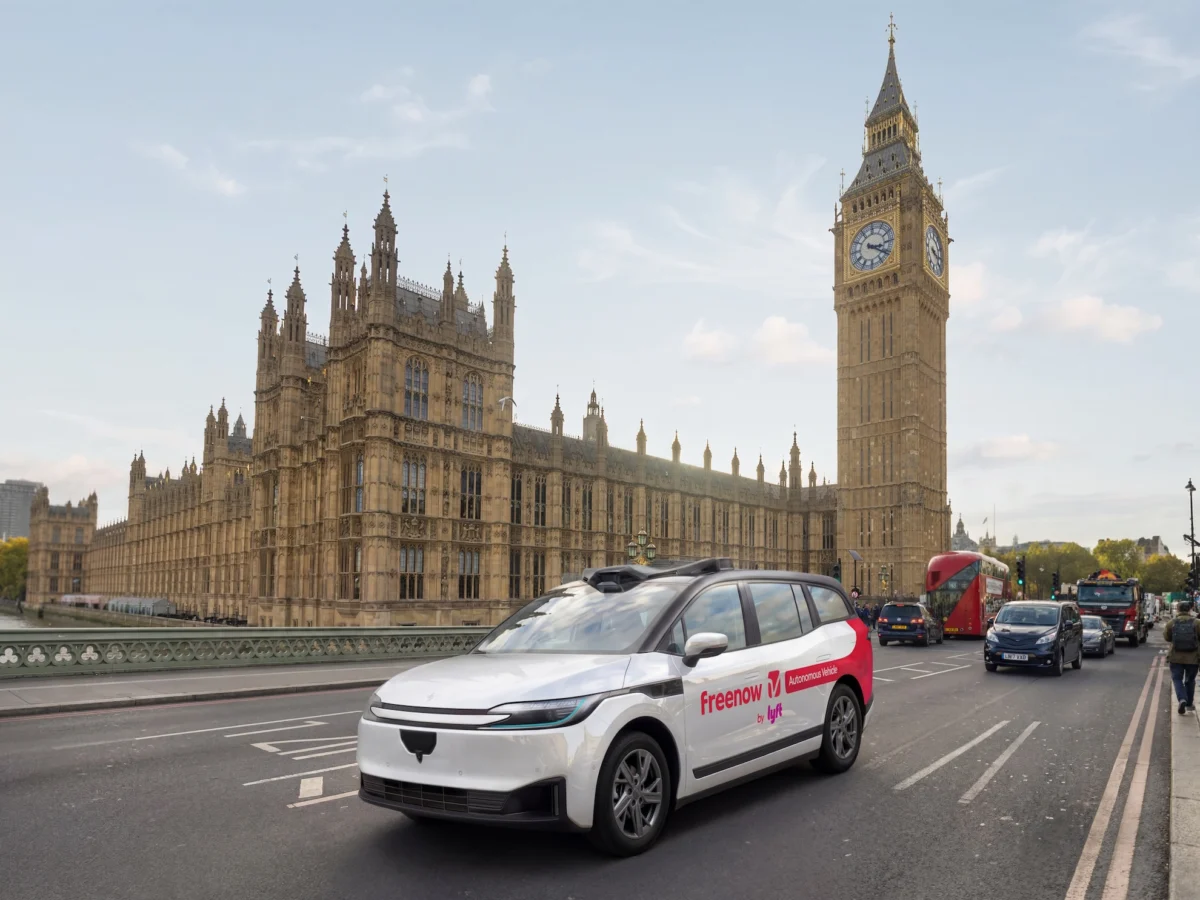
Chinese technology titan Baidu has commenced testing of its autonomous vehicles within the bustling streets of London, marking a significant step in its strategic partnership with Lyft and Freenow, the German multi-mobility app now under Lyft’s ownership. This development positions Baidu as the latest prominent player to engage in self-driving technology trials in the United Kingdom, a crucial prelude to the anticipated commercial deployment of robotaxi services across the region.
The testing phase, which commenced with human safety operators present in the vehicles, signifies a tangible progression from the strategic alliance formed nearly a year ago between Baidu and Lyft. This collaboration aims to introduce Baidu’s purpose-built Apollo Go RT6 robotaxis to key European markets, leveraging the extensive reach of the Lyft platform. Ultimately, these autonomous vehicles are slated to become accessible to the public through Freenow, a strategic acquisition by Lyft in 2025 for approximately $197 million. This acquisition granted Lyft a substantial foothold in Europe’s competitive ride-hailing sector, an arena where several well-funded entities are aggressively vying for leadership in the emerging robotaxi market.
London, in particular, is emerging as a pivotal theater for this technological arms race. The city’s proactive stance on embracing new mobility solutions, coupled with its dense urban environment and significant transportation needs, makes it an ideal testing ground. Baidu’s entry follows closely on the heels of other major players. In April, Waymo, a subsidiary of Alphabet Inc. and a pioneer in autonomous driving technology, initiated its own testing of self-driving vehicles in London, also with human safety operators. Furthermore, ride-hailing giant Uber, in collaboration with its AI partner Wayve, has publicly announced its intention to launch a robotaxi service in London this year. Customers can already register their interest for this initial service, which will initially feature human safety operators before transitioning to fully driverless operations.
The joint venture between Baidu and Freenow by Lyft has indicated a projected timeline for public access to their robotaxi services, aiming for an invitation-only rollout in 2027. While specific details regarding the phased implementation remain undisclosed, both entities acknowledge that the final launch will be contingent upon securing the necessary regulatory approvals from relevant UK authorities. This cautious approach underscores the complex regulatory landscape surrounding autonomous vehicle deployment, a landscape that is actively being shaped by governments worldwide.
Currently, the initial testing efforts are concentrated within the London Borough of Brent, where dozens of Baidu’s autonomous test vehicles are operating. Representatives from Lyft and Freenow have confirmed ongoing dialogues with key safety and city officials, including Transport for London (TfL) and the Centre for Connected and Autonomous Vehicles (CCAV). The UK government is actively engaged in the development of comprehensive autonomous vehicle regulations. In May, the government opened applications for companies interested in participating in an AV pilot program, designed to facilitate the testing of self-driving vehicles under stringent governmental oversight. This program is a critical step towards enabling broader commercial deployments and ensuring public safety and confidence.
Upon its eventual launch, Freenow by Lyft intends to operate a hybrid network model. This approach, mirroring the strategy employed by competitors like Uber, involves integrating autonomous vehicles with existing human-operated taxis and private-hire vehicles. This hybrid model is expected to provide a seamless transition for passengers while also addressing concerns about the impact of automation on the livelihoods of professional drivers.
Thomas Zimmermann, CEO of Freenow by Lyft, articulated the company’s commitment to this integrated approach. "As a platform with deep roots in the taxi industry, our priority is ensuring that autonomous technology supports the professional drivers who keep London moving," Zimmermann stated in a press release. This statement signals a strategic effort to foster a collaborative ecosystem rather than a purely disruptive one, aiming to mitigate potential friction between traditional taxi services and the advent of autonomous fleets.
Background and Strategic Significance
The burgeoning robotaxi market represents a significant shift in the future of urban mobility, promising increased efficiency, reduced congestion, and potentially lower transportation costs. Baidu, a leading Chinese technology conglomerate with extensive investments in artificial intelligence and autonomous driving, views its expansion into European markets as a critical component of its global strategy. The Apollo platform, Baidu’s open-source autonomous driving ecosystem, has been instrumental in accelerating its development and testing capabilities. The Apollo Go robotaxi service has already seen deployment in several Chinese cities, providing valuable real-world operational data and experience.
Lyft’s acquisition of Freenow was a strategic maneuver to bolster its presence in Europe, a market where it has historically faced stronger competition from local and global players. By partnering with Baidu, Lyft aims to accelerate its entry into the autonomous ride-hailing space in Europe, leveraging Baidu’s mature technology and vehicle hardware. The European market, with its diverse regulatory environments and established transportation networks, presents both significant opportunities and complex challenges for autonomous vehicle deployment.
The Competitive Landscape in London
London’s adoption of autonomous vehicle testing reflects its position as a global hub for innovation in transportation. The city’s regulatory framework, while still evolving, has shown a willingness to support the development and testing of advanced automotive technologies. This has attracted a formidable array of companies vying for a share of the future robotaxi market.
- Waymo: The Google-backed company, considered a frontrunner in the autonomous driving sector, has been meticulously testing its vehicles in controlled environments and is now expanding its real-world trials in London. Its extensive experience in cities like Phoenix and San Francisco provides a strong foundation for its European ambitions.
- Uber and Wayve: The partnership between Uber, a dominant force in ride-hailing, and Wayve, a UK-based AI startup specializing in end-to-end deep learning for autonomous driving, represents a potent combination of operational expertise and cutting-edge AI. Their planned London launch signifies a direct challenge to established players.
- Baidu and Freenow by Lyft: Baidu’s technological prowess, combined with Lyft’s ride-hailing infrastructure and Freenow’s established local presence, creates a formidable contender. Their approach, emphasizing a hybrid model and collaboration with existing drivers, could prove to be a key differentiator.
The competition in London is not merely about deploying technology; it is also about navigating public perception, regulatory hurdles, and the integration of autonomous services with existing urban transportation systems. Success will likely depend on a company’s ability to demonstrate safety, reliability, and a clear value proposition to both consumers and regulatory bodies.
Supporting Data and Industry Trends
The global autonomous vehicle market is projected to experience substantial growth in the coming years. According to various industry reports, the market size is expected to reach hundreds of billions of dollars by the end of the decade. This growth is driven by advancements in AI, sensor technology, and increasing investments from both technology giants and traditional automotive manufacturers.
- Investment: Global investment in autonomous driving technology has been on an upward trajectory. Venture capital funding, corporate acquisitions, and government grants are all contributing to the rapid pace of innovation.
- Regulatory Progress: Governments worldwide are grappling with the complex task of creating appropriate regulatory frameworks for autonomous vehicles. Countries like the UK, Germany, and the United States are at the forefront of establishing guidelines for testing and deployment.
- Technological Milestones: The development of higher-resolution sensors, more sophisticated AI algorithms, and improved vehicle-to-everything (V2X) communication are crucial enablers for safe and efficient autonomous operation.
The testing in London by Baidu, alongside other major players, highlights a global trend towards the commercialization of autonomous mobility. While fully driverless operations on a large scale are still some years away, the current testing phases are critical for gathering data, refining technology, and building public trust.
Analysis of Implications
Baidu’s foray into London signifies more than just a technological expansion; it represents a strategic push to establish a significant presence in the Western autonomous vehicle market. For Lyft, the partnership is a crucial step in its European revitalization and its pursuit of leadership in the future of mobility. The success of this venture could influence Lyft’s global strategy and its ability to compete effectively against rivals like Uber.
The involvement of Freenow, with its deep ties to the traditional taxi industry, suggests a thoughtful approach to integrating autonomous technology. The "hybrid network" model proposed by Freenow by Lyft is particularly noteworthy. This strategy acknowledges the continued importance of human drivers and aims to create a symbiotic relationship, potentially easing the transition for the professional driving community and fostering greater public acceptance. By assuring drivers that autonomous technology will complement, rather than entirely replace, their roles, Freenow by Lyft could mitigate potential labor disputes and build a more inclusive autonomous mobility ecosystem.
The competitive intensity in London underscores the city’s role as a bellwether for the future of urban transportation. The outcomes of these trials and the subsequent regulatory decisions will likely set precedents for other cities globally. The race to deploy the first commercially viable robotaxi service in London is not just about market share; it is about demonstrating the safety, efficiency, and societal benefits of autonomous vehicles. The decisions made by companies like Baidu, Lyft, Waymo, Uber, and Wayve, and the responses from regulators and the public, will shape the trajectory of autonomous mobility for years to come.
The ongoing testing in Brent, a diverse and populous borough, will provide invaluable data on how autonomous vehicles perform in varied urban conditions, including different road layouts, traffic patterns, and pedestrian activity. The insights gained from these trials will be critical for refining the technology and informing regulatory frameworks. The eventual public launch, expected in 2027, will be a culmination of years of research, development, and rigorous testing, marking a significant milestone in the evolution of transportation.
About the Author