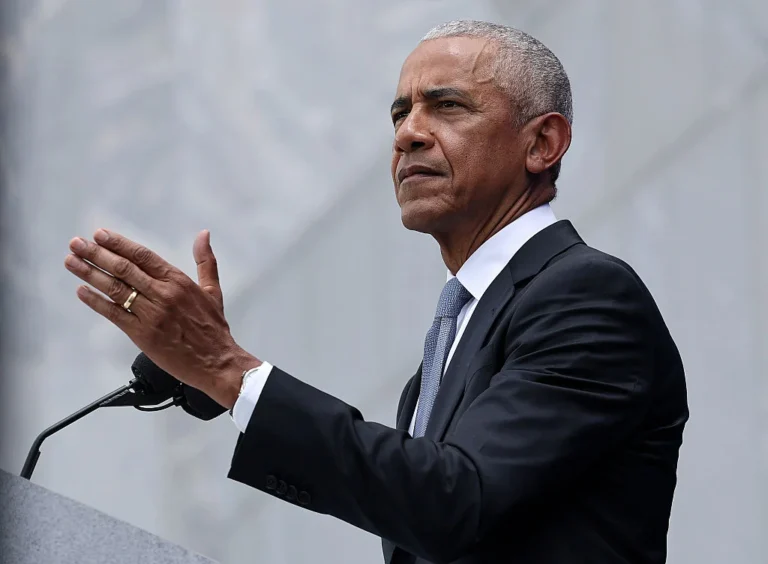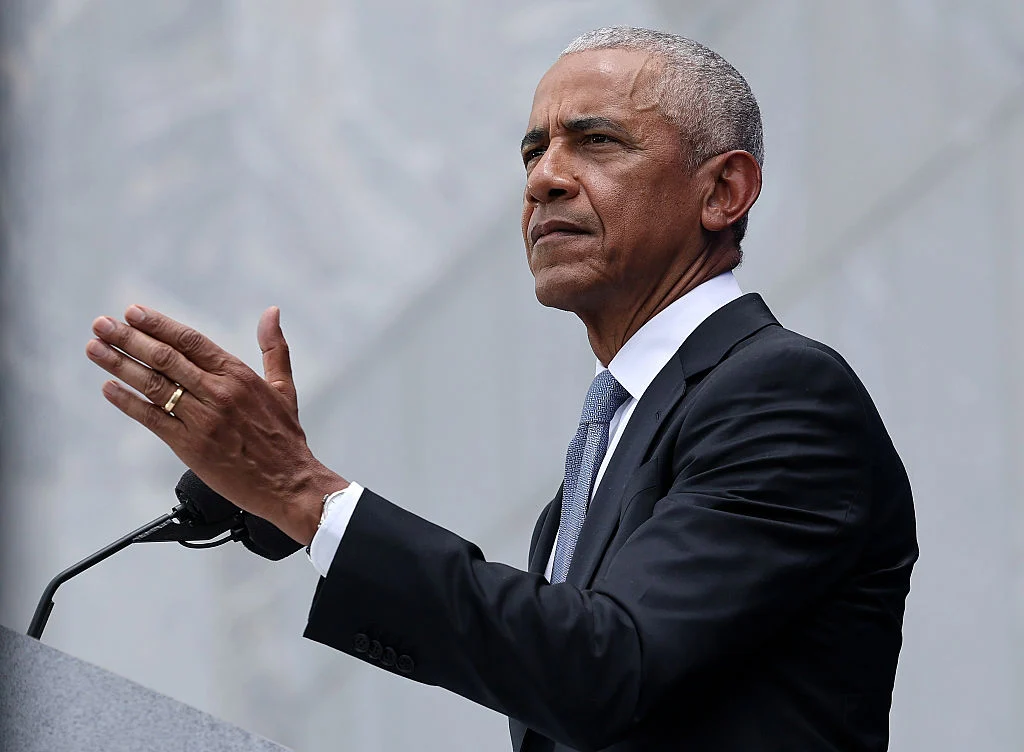
Former President Barack Obama has issued a compelling call to action for the Democratic Party, asserting that artificial intelligence (AI) must be elevated to a "central agenda" item, accompanied by a "very clear plan" to navigate its complex implications. These remarks, delivered at a Democratic fundraising event on Thursday, underscore a growing awareness within political circles of AI’s profound and rapidly evolving impact on society, the economy, and national security. The discussion, moderated by House Minority Leader Hakeem Jeffries, highlighted Obama’s conviction that proactive political engagement is crucial to harnessing AI’s benefits while mitigating its inherent risks.
Obama’s Vision for Democratic AI Strategy
During his interview with Representative Jeffries, Obama emphasized the urgent need for Democrats to formulate a comprehensive strategy for artificial intelligence. He articulated that once the party regains a majority in the House of Representatives, a primary objective should be to "put together a framework for a very public conversation." This initiative aims to foster widespread understanding and dialogue around AI, a technology he described as "moving very fast in private hands." Obama expressed a clear concern that without deliberate political intervention, the unchecked development of AI could prove "dangerous."
However, his outlook was not solely focused on the potential perils. Obama also expressed genuine optimism about AI’s capacity for good, citing its potential to "accelerate, for example, drug development in ways that can help us cure diseases." This dual perspective – acknowledging both the transformative potential and the significant risks – frames his urgent plea for Democratic leadership. The former president’s engagement with this issue signals a recognition that AI is no longer a niche technological concern but a fundamental challenge that requires robust policy solutions.
Context of the Democratic Fundraising Event
The conversation between Obama and Jeffries took place at a significant Democratic fundraising event, a setting that underscores the political and financial dimensions of shaping future policy. Such events often serve as platforms for party leaders to articulate their strategic priorities and rally support from donors and activists. The fact that AI was a central topic of discussion suggests its increasing salience as a policy area that Democrats believe can resonate with voters and differentiate them from their political opponents. The exchange also provided a glimpse into the behind-the-scenes deliberations that inform the party’s policy agenda, particularly as they look towards future electoral victories.
The New York Times reported that Obama’s office provided a partial transcript of the event, indicating a deliberate effort to disseminate his views on this critical issue. Jeffries, a key figure in the Democratic leadership in the House, sought Obama’s counsel on how congressional Democrats should approach the multifaceted challenges posed by AI. This exchange reflects a desire within the party to leverage the experience and insights of a former president, particularly one who oversaw significant technological shifts during his tenure.
Jeffries’ Response and Partisan Dynamics
House Minority Leader Hakeem Jeffries echoed Obama’s urgency, stating in a subsequent release that the former president "is correct that decisive action must be taken on artificial intelligence." This affirmation signals a unified front within Democratic leadership on the importance of addressing AI. Jeffries also seized the opportunity to inject a partisan critique, asserting that "Republicans have abdicated their responsibility to govern on behalf of the American people." This statement suggests that Democrats view the Republican Party’s approach to AI as insufficient or perhaps even absent, aiming to frame their own proactive stance as a superior model of governance. This dynamic highlights the increasing politicization of AI policy, with both parties likely to present their approaches as beneficial to the nation.
Obama’s Direct Engagement with AI Leaders
Adding weight to his pronouncements, Obama has reportedly been actively engaging with leaders in the AI industry. The New York Times revealed that he has offered himself as a "sounding board" to executives at leading AI companies, including conversations with Dario Amodei, the CEO of Anthropic, and Sam Altman, the CEO of OpenAI. This direct interaction with key players in the AI development landscape suggests Obama’s commitment to gaining a firsthand understanding of the technology’s trajectory and the challenges faced by those at its forefront. His willingness to engage with both the innovators and the critics of AI positions him as a potential bridge-builder in a field ripe with both promise and apprehension.
Mounting Concerns Over AI Safety
Obama’s remarks and his engagement with industry leaders come at a time of escalating global concern regarding AI safety. A significant catalyst for this heightened anxiety was the recent resignation of an AI researcher from Anthropic. This individual publicly warned that leading AI companies are "racing straight to self-improving superintelligence and gambling with our lives." Such stark pronouncements from within the industry itself have amplified calls for greater oversight and more robust safety protocols. The researcher’s resignation and subsequent public statements have lent considerable credibility to the warnings about existential risks associated with advanced AI, making it increasingly difficult for policymakers and the public to ignore these concerns.
Industry Leaders Propose Safety Frameworks
In response to these growing pressures, industry leaders are beginning to articulate concrete proposals for addressing AI safety. Dario Amodei, CEO of Anthropic, recently outlined a broad approach to "pacing the frontier" of AI development. His plan includes providing independent safety evaluators with access to leading AI companies and their models, as well as the development of "common safety standards" to be adopted across the industry. This initiative represents a significant step towards industry self-regulation and a commitment to transparency.
OpenAI CEO Sam Altman and Elon Musk, CEO of SpaceX, have publicly responded positively to Amodei’s proposals. Altman, in particular, stated that OpenAI would commit to "having independent evaluators with employee-like access." These reactions, shared via social media, indicate a nascent consensus among some of the most influential figures in AI regarding the necessity of collaborative safety measures. The willingness of these companies to consider external oversight and shared standards, even if voluntary, could be a crucial development in the ongoing debate about AI governance.
The Republican Stance: Trump’s Perspective
Meanwhile, President Donald Trump has also weighed in on the AI safety debate, albeit with a different emphasis. While discussing AI safety concerns with reporters at an Irish golf event, Bloomberg reported that Trump boasted about the United States’ technological prowess, stating that the nation is "the most sophisticated country in the world" and expressing a desire "to keep it that way because whoever wins AI wins." This framing suggests a focus on competitive advantage and national dominance in the AI race, rather than prioritizing potential risks or broad regulatory frameworks.
Trump’s administration previously released a legislative framework for AI that aimed to preempt state laws and shift the burden of child safety onto parents. This approach signaled a preference for a more decentralized and less federalized regulatory environment, contrasting with the calls for comprehensive national strategies emanating from Democrats. Trump’s recent comments, emphasizing the importance of winning the AI race, could be interpreted as a continuation of this philosophy, prioritizing innovation and leadership over extensive preemptive regulation. He also offered a more tempered view on potential controls, suggesting that "guardrails" could be implemented but also implying that "a lot of negative forces" are unnecessarily raising concerns.
Broader Implications for Policy and Governance
The divergent perspectives from prominent political figures like Obama and Trump, alongside the evolving stances of AI industry leaders, underscore the complex and multifaceted nature of the AI challenge. Obama’s call for Democrats to make AI a "central agenda" item reflects a recognition of its potential to reshape the economy, impact labor markets, and raise profound ethical questions. The potential economic impacts are substantial, with projections suggesting AI could contribute trillions to the global economy in the coming decades. However, this economic growth is often accompanied by concerns about job displacement and the widening of income inequality, issues that are likely to be central to any Democratic policy framework.
The rapid pace of AI development, as highlighted by Obama, necessitates agile and forward-thinking policymaking. The current trajectory suggests that AI will increasingly integrate into critical infrastructure, healthcare, education, and national security. This pervasive influence demands a proactive approach to regulation, safety standards, and ethical guidelines. The conversation between Obama and Jeffries, and the subsequent industry responses, indicate that the debate is moving beyond theoretical discussions to practical considerations of how to govern and direct this powerful technology.
The involvement of figures like Amodei and Altman in proposing safety measures, even if driven by both genuine concern and a desire to preempt potentially harsher external regulation, represents a significant development. Their willingness to engage with policymakers and consider independent oversight could lay the groundwork for future collaborations between industry and government.
Conversely, Trump’s emphasis on national competitiveness and a more hands-off regulatory approach highlights a fundamental difference in political philosophies regarding technological advancement. The debate over AI governance is thus becoming a key battleground in the broader ideological contest between those who advocate for proactive, government-led regulation and those who favor market-driven innovation with minimal state intervention.
As AI continues its relentless advancement, the political and societal response will be critical in determining its ultimate impact. The calls from former President Obama for a clear Democratic plan suggest a growing understanding that thoughtful, deliberate policy interventions are not just desirable but essential to navigating the AI revolution responsibly and ensuring that its benefits are broadly shared while its risks are effectively managed. The coming months and years will likely see intensified political debate and policy development as the United States and other nations grapple with the profound implications of artificial intelligence.
About the Author