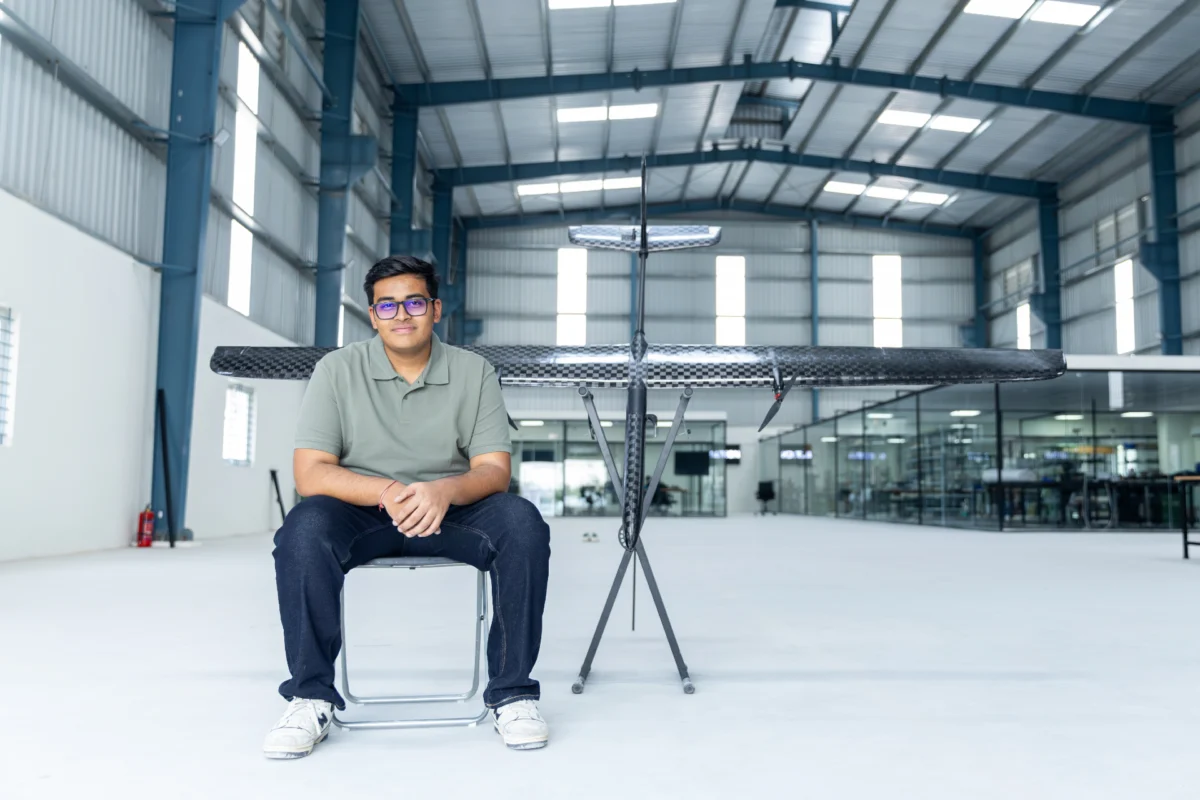
A Bengaluru-based startup, Alteon, is embarking on an audacious mission to redefine aerial endurance: developing autonomous aircraft capable of staying aloft for over a year by harnessing energy directly from ocean winds. This ambitious endeavor has attracted significant early investment, with prominent solo investor Lachy Groom leading a $2.5 million pre-seed funding round. The round also saw participation from Together Fund, signaling growing confidence in deep tech ventures tackling fundamental challenges in aviation.
The Vision: Perpetual Flight Through Nature’s Ingenuity
At the heart of Alteon’s innovation is the concept of "dynamic soaring," a highly efficient flight technique perfected by seabirds like albatrosses. Unlike conventional aircraft that are tethered by the finite energy reserves of fuel tanks or batteries, Alteon’s small, fixed-wing autonomous aircraft are designed to continuously extract energy from the wind shear above the ocean. This maneuver involves repeatedly transitioning between layers of air moving at different speeds, effectively "surfing" the wind to gain momentum and altitude without expending onboard power.
Samay Sanghvi, the 20-year-old founder of Alteon, articulates the transformative potential: "Once you build airplanes that can stay in the air for more than a year, there are millions of things you can do with them." The initial application targeted by Alteon is maritime surveillance, offering governments unprecedented, real-time visibility into activity across vast oceanic territories. This promises a paradigm shift in how nations monitor their exclusive economic zones, combat illegal activities, and conduct search and rescue operations.
Lachy Groom’s Swift Endorsement and the Significance of Early Investment
The pre-seed funding round underscores a notable belief in Alteon’s high-risk, high-reward proposition. Lachy Groom, an investor known for his keen eye for disruptive technologies and early-stage bets, committed to the investment within the first 30 minutes of his initial meeting with Sanghvi, as the young founder recounted. This rapid decision highlights not only the compelling nature of Alteon’s vision but also the perceived strength and conviction of its founding team. Groom’s involvement, alongside Together Fund, lends significant credibility and strategic backing to the nascent startup as it navigates the complex path of aerospace innovation. Such early-stage investments are crucial for deep tech companies, providing the capital necessary for extensive research, development, and iterative prototyping.
Demystifying Dynamic Soaring: Nature’s Blueprint for Endurance
Dynamic soaring is a fascinating aerodynamic phenomenon. Albatrosses, renowned for their incredible ability to circumnavigate the globe with minimal effort, exploit the varying wind speeds found at different altitudes above the ocean surface. By descending into slower air near the water and then climbing into faster air higher up, they generate kinetic energy, much like a glider accelerating downhill. This continuous cycle allows them to maintain flight for extended periods, sometimes for months, covering immense distances without a single wingbeat.
Alteon’s aircraft aims to replicate this natural mastery. The initial design involves a drone with approximately a three-meter wingspan, engineered to fly close to the ocean’s surface. It will then climb and turn through faster-moving air, repeating this dynamic cycle to continuously gain energy from the wind. Looking ahead, Alteon plans to integrate propellers that can double as turbines, converting some of the harvested wind energy into electricity to recharge onboard batteries. This dual functionality ensures that even in periods of less favorable wind conditions, the aircraft can draw on stored power, maintaining its perpetual flight capability. The ability to generate and store energy while airborne is a critical differentiator, promising true independence from ground-based charging or refueling.
The Pursuit of Perpetual Flight: A Holy Grail in Aviation
The concept of an aircraft capable of year-long flight represents a "holy grail" in aerospace engineering. Current long-endurance unmanned aerial vehicles (UAVs) primarily rely on solar power, offering flight times measured in weeks or, in some exceptional cases, a few months. While impressive, solar-powered drones are constrained by daylight hours, cloud cover, and the inherent limitations of battery storage and panel efficiency. Fuel-powered drones, conversely, are limited by fuel capacity and require periodic refueling, increasing operational costs and complexity.
Alteon’s dynamic soaring approach sidesteps these limitations by tapping into a ubiquitous, continuous energy source: atmospheric wind shear over the oceans. This could unlock unprecedented operational advantages, including:
- Reduced operational costs: Eliminating fuel or frequent battery replacements drastically lowers expenses.
- Continuous data collection: Uninterrupted surveillance or environmental monitoring.
- Enhanced resilience: Less vulnerable to ground infrastructure dependencies.
- Environmental benefits: Zero emissions during flight, aligning with global sustainability goals.
The implications extend beyond just cost savings. Imagine persistent surveillance over critical shipping lanes, continuous monitoring of remote marine ecosystems, or acting as high-altitude communication relays during disaster relief efforts, all without the need for human intervention for over 365 days.
Initial Applications: Revolutionizing Maritime Surveillance
The global maritime surveillance market is a critical sector, projected to reach significant valuations in the coming years, driven by increasing geopolitical tensions, illegal fishing, piracy, and the imperative for border security. Traditional methods of maritime surveillance, such as patrol boats, manned aircraft, and satellite imagery, each have their limitations. Patrol boats are expensive to operate and have limited range and speed. Manned aircraft offer greater speed but are costly, require human crews, and have endurance constraints. Satellites provide broad coverage but often lack the persistent, high-resolution, real-time data needed for actionable intelligence.

Alteon’s long-endurance drones could fill this crucial gap. By providing "real-time visibility into activity in their waters," these autonomous aircraft could:
- Deter illegal fishing: Continuously monitor vast fishing grounds, identifying and reporting illicit activities.
- Combat piracy: Maintain persistent watch over high-risk zones, aiding in early detection and response.
- Enhance border security: Monitor maritime boundaries for unauthorized crossings.
- Support search and rescue: Provide long-duration aerial observation during emergencies, significantly increasing success rates.
- Environmental monitoring: Track ocean currents, marine life, and pollution levels over extended periods, offering invaluable data for climate science and conservation.
The ability to operate autonomously for a year drastically reduces the logistical footprint and human resource requirements, making persistent surveillance more economically viable and effective for nations with extensive coastlines and maritime interests.
Navigating the Technical Hurdles: Test Flights and Expert Scrutiny
While the vision is compelling, the path to year-long dynamic soaring is fraught with complex technical challenges, as acknowledged by both the investor and external experts. Alteon has, however, made tangible progress. The startup recently completed a significant test flight over the Bay of Bengal. During this trial, their autonomous flight system successfully executed seven O-shaped cycles at speeds exceeding 62 miles per hour, maintaining an impressively low altitude of within one meter of the water’s surface. This demonstrated proficiency in autonomous control and precise low-altitude flight, crucial prerequisites for dynamic soaring.
The next major milestone for Alteon is achieving "energy-neutral dynamic soaring." This means the aircraft must be able to fly continuously with its propulsion system switched off, extracting enough energy from the wind to remain aloft indefinitely. This is where the true test of their technology lies.
Dr. Gabriel Bousquet, a Silicon Valley-based aerospace and robotics engineer who conducted his PhD research on dynamic soaring at MIT, offered a cautious but optimistic assessment. He described Alteon’s low-altitude flight over water as a "promising first result." However, he emphasized that the greater challenge will be proving the aircraft’s ability to reliably extract sufficient energy from real-world wind conditions to sustain flight for prolonged durations. Flying at such low altitudes, Bousquet noted, presents unique difficulties. The aircraft must contend with unpredictable turbulence, dynamic wave patterns, salt spray, rain, and rapidly changing light conditions, all while continuously sensing and reacting to a moving ocean surface. This demands an extremely robust and adaptive autonomous navigation and control system.
Dr. Bharath Swaminathan, who earned his PhD from IIT Madras studying the stability of dynamic soaring, reiterated that the underlying physics of the technique is well-established, commending Alteon’s ambitious effort. He highlighted that even keeping an aircraft airborne for several days using dynamic soaring would constitute "a very big step, and a big achievement." Swaminathan echoed concerns about the variability of wind conditions. While large-scale wind patterns might be predictable, local wind shear and turbulence can fluctuate substantially, complicating the aircraft’s ability to consistently extract energy. He suggested that some of these challenges might only become fully apparent through extensive real-world flight testing, indicating a necessary iterative process of development and refinement.
Lachy Groom, in his assessment, acknowledged the inherent technical risks associated with such a pioneering venture. "Ambitious problems are always going to come with risks," he stated. Yet, his investment decision ultimately came down to his belief in the team: "For me, it came down to believing Samay and the Alteon team are the ones to figure them out." This speaks to the venture capital ethos of backing exceptional founders even when the technological path is unproven.
The Journey of a Young Founder: Samay Sanghvi and Alteon’s Genesis
The story of Alteon is also a testament to youthful ambition and relentless dedication. Samay Sanghvi, a 20-year-old, began working on the foundational ideas for Alteon straight out of high school in 2023. His journey into aerospace engineering was largely self-taught, starting with building and, crucially, crashing numerous radio-controlled models. This hands-on, iterative process provided invaluable practical experience and an intuitive understanding of aerodynamics and control systems.
He formally founded Alteon in 2025, quickly securing early backing from notable accelerators and investors like Emergent Ventures and 1517. These early supporters recognized the potential in Sanghvi’s vision and capacity for execution.
Today, Alteon has rapidly scaled its operations. The company boasts a team of 20 dedicated individuals in Bengaluru, operating from a substantial 10,000-square-foot facility. This rapid expansion and significant physical footprint underscore the intensity of their development efforts. Sanghvi revealed that the startup is currently building four to five aircraft per week for testing purposes, and has conducted more than 200 test flights in the past 30 days alone. This aggressive testing schedule highlights a lean, agile development methodology focused on rapid prototyping, data collection, and continuous iteration – a common hallmark of successful deep tech startups.
Broader Impact and Future Outlook
Alteon’s endeavor, if successful, could usher in a new era for autonomous aerial vehicles, extending far beyond maritime surveillance. The ability to achieve year-long endurance opens up a plethora of possibilities:
- Persistent Atmospheric Research: Long-term data collection on weather patterns, climate change indicators, and atmospheric composition over remote and challenging environments.
- Communication Infrastructure: Operating as high-altitude pseudo-satellites (HAPS) to provide continuous internet connectivity or emergency communication relays over underserved regions or during disaster recovery.
- Environmental Stewardship: Monitoring deforestation, wildlife migration, and pollution in inaccessible areas for extended periods.
- Disaster Management: Providing continuous aerial assessment of disaster zones, aiding in damage assessment, search and rescue coordination, and relief efforts.
The environmental implications are also significant. By leveraging renewable wind energy, Alteon’s aircraft would operate with zero direct carbon emissions, contributing to a cleaner, more sustainable future for aviation, particularly for persistent missions that currently rely on fossil fuels. Economically, the reduced operational costs of such systems could democratize access to sophisticated aerial data collection and surveillance, benefiting a wider range of governmental, scientific, and commercial entities.
Alteon represents a fascinating intersection of biomimicry, advanced robotics, and sustainable engineering. The journey from initial concept to a commercially viable, perpetually flying aircraft will undoubtedly be long and challenging, requiring breakthroughs in sensor technology, autonomous control algorithms, material science, and energy conversion efficiency. However, with the backing of visionary investors like Lachy Groom and a rapidly iterating team led by a driven young founder, Alteon is well-positioned to push the boundaries of what is currently considered possible in the realm of aerial endurance. The world will be watching as this Bengaluru startup attempts to turn a dream of perpetual flight into a tangible reality, potentially reshaping our relationship with the skies and the oceans.
About the Author