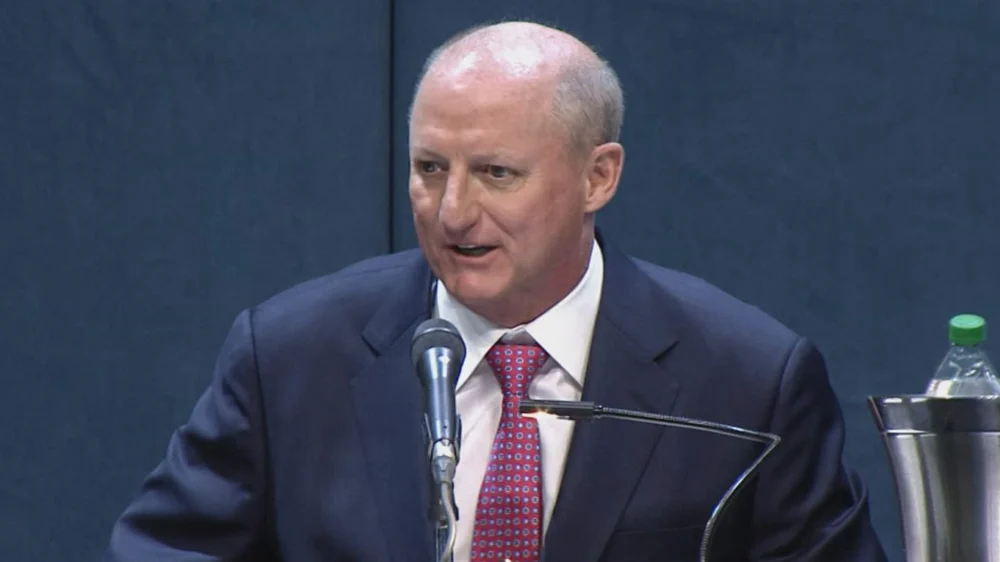
Omaha, Nebraska – Berkshire Hathaway, the sprawling conglomerate led by its new Chief Executive Officer Greg Abel, announced Thursday a significant resumption of its share repurchase program, marking the first such activity since the second quarter of 2024. This strategic move, confirmed through a regulatory filing, coincided with a separate disclosure revealing that Mr. Abel personally invested $15 million in Berkshire Hathaway stock, an amount equivalent to his after-tax annual salary. This dual announcement is being widely interpreted as a strong signal of confidence in the company’s valuation and a clear demonstration of leadership alignment with shareholder interests as the firm navigates its post-Warren Buffett era.
The decision to reactivate the buyback program, a hallmark of Berkshire’s capital allocation strategy under its iconic chairman Warren Buffett, comes at a pivotal time. Investors have been closely scrutinizing the company’s direction following the formal leadership transition at the start of January, which saw the 62-year-old Abel step into the CEO role while the 95-year-old Buffett remains Chairman of the Board. The company’s stated policy allows for share repurchases whenever the chief executive, after consultation with the chairman, believes the stock is trading below its intrinsic value. Mr. Abel confirmed this adherence to established protocol, telling CNBC’s "Squawk Box," "I absolutely talked to Warren. So how I approached it was, obviously looking at the value, having a view of intrinsic value [and then] consulted with Warren relative to the value and the timing."
The specific timing of the repurchases began on Wednesday, according to the regulatory filing, encompassing both Class A and Class B shares. This move is particularly noteworthy given that Berkshire had ceased buybacks for several quarters, leading to growing investor calls for the company to deploy its colossal cash reserves, which had swelled to an astounding $373.3 billion. The accumulation of such a massive cash hoard has long presented a capital allocation dilemma for Berkshire, with Mr. Buffett often lamenting the scarcity of attractive "elephant-sized" acquisitions that meet the company’s stringent criteria. The resumption of buybacks indicates that the leadership team now views Berkshire’s own shares as one of the most compelling investment opportunities available.
Mr. Abel further elaborated on the unusual transparency surrounding the announcement, stating, "We felt it was important to communicate to our shareholders, our partners, our owners, with the transition of leadership." This intentional disclosure suggests a proactive effort by the new CEO to reassure the market and maintain open communication channels during a period of significant change. The market responded positively, with Berkshire’s Class B shares adding 1% in early trading Thursday following the news, reflecting investor approval of the actions.
Greg Abel’s Personal Commitment and "Skin in the Game"
Beyond the corporate buyback, Mr. Abel’s personal stock purchase holds profound symbolic weight. His $15 million investment, equivalent to his entire after-tax annual salary, significantly increases his personal stake in the conglomerate. In a separate filing, this transaction was formally disclosed, addressing a long-standing point of discussion among some investors regarding whether Mr. Buffett’s successor possessed a comparable level of "skin in the game." Mr. Buffett famously owns approximately 37.5% of Berkshire’s Class A shares, an stake he has repeatedly stated represents roughly 99.5% of his net worth, excluding his substantial charitable giving. This unparalleled personal alignment has been a cornerstone of investor trust in Berkshire for decades.

Mr. Abel directly addressed this issue, emphasizing the importance of this alignment. "Absolute alignment with our shareholders, our partners, our owners, is critical," he told CNBC. "I already have some shares, but the goal was to continue to demonstrate alignment with them… As the CEO, I absolutely, obviously, believe in Berkshire, with the transition from Warren, and I inherited a company that has an incredible foundation." This statement not only underscores his personal conviction in Berkshire’s future but also serves to bridge any perceived gap in commitment between his and Mr. Buffett’s ownership levels.
Before this latest purchase, FactSet data indicated that Mr. Abel, a longtime Berkshire executive who previously oversaw the company’s non-insurance operations, held approximately $164.4 million worth of Berkshire stock. His pledge to continue investing his full after-tax salary into Berkshire shares every year for as long as he leads the company, which he hopes will be "20 years," solidifies his long-term commitment. He noted that both Mr. Buffett and the board were "obviously very supportive" of his salary reinvestment plan, with their reaction being, "This is so Berkshire." This anecdote reinforces the idea that Abel’s actions are deeply rooted in the company’s established culture and values.
Navigating the Leadership Transition: Continuity and Confidence
The dual announcements come just days after Mr. Abel issued his first annual shareholder letter as CEO over the weekend. In that letter, he explicitly vowed to maintain Mr. Buffett’s revered culture of financial conservatism and disciplined investing "into perpetuity." This emphasis on continuity has been a central theme of his early tenure, aiming to reassure a vast investor base deeply accustomed to Mr. Buffett’s unique leadership style and long-term vision.
However, while many investors appreciated Abel’s commitment to upholding Buffett’s principles, some had expressed a desire for more "bold moves" from the new CEO in his initial period. The resumption of significant share repurchases and his substantial personal investment appear to be precisely the kind of decisive, yet fundamentally "Berkshire-esque," actions that can assuage those concerns. These moves demonstrate that while the leadership has transitioned, the core philosophy of prudent capital allocation and strong shareholder alignment remains firmly in place.
The context of these decisions is also important. Shares of Berkshire have faced some pressure recently, falling 3% this year and 10% from their record high last May. This downward trend was exacerbated earlier this week when the firm reported a near 30% decline in its operating earnings for the fourth quarter, largely attributable to weakness in its insurance business. The immediate response from the company’s leadership—a renewed commitment to share buybacks and a significant personal investment from the CEO—can be seen as a powerful counter-narrative, signaling that management believes the stock is undervalued despite recent performance dips.
Berkshire’s Capital Allocation Strategy: A Historical Perspective

Berkshire Hathaway’s approach to share repurchases has always been deeply rooted in its intrinsic value philosophy, a principle championed by Warren Buffett for decades. Unlike many corporations that might repurchase shares to boost earnings per share or simply return capital to shareholders regardless of valuation, Berkshire’s policy is explicitly tied to management’s assessment of the company’s true worth. This means buybacks are only executed when the stock price falls below an internal calculation of intrinsic value, ensuring that repurchases genuinely enhance value for continuing shareholders rather than merely supporting the stock price.
This disciplined approach has been a hallmark of Berkshire’s financial stewardship. Mr. Buffett has often argued that buying back shares at a discount to intrinsic value is one of the most effective ways to allocate capital, especially when attractive external investment opportunities are scarce. The hiatus in buybacks since the second quarter of 2024 likely indicated that, for a period, the stock’s market price was not sufficiently below its intrinsic value to trigger repurchases under this strict policy. The current resumption therefore implies a renewed conviction from Mr. Abel and Mr. Buffett that Berkshire’s stock is currently trading at an attractive valuation.
The company’s unique structure, with its Class A and Class B shares, also plays a role. Class A shares, with their higher price and voting rights, are rarely traded and often held by long-term investors. Class B shares, fractionalized and more accessible, offer broader market liquidity. The buyback program applies to both classes, reflecting a comprehensive strategy to manage the company’s capital structure.
Implications for Berkshire’s Future
The recent actions by Greg Abel offer a significant glimpse into the future of Berkshire Hathaway under his stewardship. They demonstrate several key elements:
- Continuity with Buffett’s Philosophy: Abel’s consultation with Buffett on the buyback, his adherence to the intrinsic value principle, and the board’s "This is so Berkshire" reaction to his personal investment all underscore a strong commitment to the core tenets that have defined the conglomerate for decades. This will likely be reassuring to the vast majority of Berkshire shareholders.
- Proactive Leadership: Despite inheriting a company with an "incredible foundation," Abel is not merely resting on past laurels. His decision to resume buybacks and to personally invest demonstrates a proactive approach to capital allocation and shareholder alignment, especially in the wake of recent market pressures and investor expectations.
- Confidence in Valuation: The most direct implication of the buyback is management’s belief that Berkshire Hathaway stock is undervalued. This signal from within the company can be a powerful catalyst for investor confidence.
- Addressing Capital Allocation Challenges: With the persistent challenge of deploying its massive cash hoard, the buyback program provides a reliable mechanism for returning capital to shareholders in a value-accretive manner when other opportunities are not present.
- Strengthening Shareholder Alignment: Abel’s personal investment directly addresses any lingering questions about his commitment, establishing a clear personal financial stake in the company’s long-term success that mirrors, in spirit if not in scale, Mr. Buffett’s legendary alignment.
In conclusion, the dual announcements of renewed share repurchases and CEO Greg Abel’s substantial personal stock investment mark a crucial moment in Berkshire Hathaway’s leadership transition. These actions not only reinforce the company’s long-standing principles of disciplined capital allocation and intrinsic value but also firmly establish Mr. Abel’s leadership style as one deeply committed to continuity, transparency, and unwavering shareholder alignment. As Berkshire Hathaway continues its journey into a new era, these early strategic moves by its new CEO lay a solid foundation for investor confidence and the company’s enduring legacy.
About the Author